Is a Deep Cycle Battery Lead Acid?
Yes, many deep cycle batteries are lead acid, but 'deep cycle' describes how a battery is built to be used, not the chemistry inside it. A lead acid deep cycle battery can use flooded, AGM, or gel construction, while a deep cycle battery can also be lithium.
On this page (12 sections)
- Is a deep cycle battery lead acid?
- What does deep cycle mean if it is not a chemistry?
- Where does AGM fit in lead acid batteries?
- How do flooded, AGM, and gel lead acid batteries differ?
- What does the Renogy 100Ah AGM model tell us?
- How does lithium change the deep cycle comparison?
- When should you choose lead acid despite lithium?
- What should you check before you buy a deep cycle battery?
- How do you size a battery bank in plain terms?
- Can you mix lead acid and lithium in one bank?
- What about cold weather and self heating lithium?
- Which deep cycle battery should you pick?
Yes, many deep cycle batteries are lead acid, but deep cycle describes the job a battery is built for, not the chemistry inside it. A battery can be lead acid or lithium and still be deep cycle if it is designed for repeated discharge and recharge.
That distinction matters when you compare storage options. You are really comparing two choices at once: the chemistry, such as lead acid or lithium, and the cycling design, such as deep cycle or starting.
Is a deep cycle battery lead acid?
A deep cycle battery is built to give up a large share of its stored energy, then be recharged, over and over. A starting battery is built to deliver a short, powerful burst and then be recharged quickly by an alternator.
Lead acid deep cycle batteries are common because the charging equipment is widely available, and sealed AGM versions need little routine care. Lithium deep cycle batteries are also common now, especially for RV house power and solar storage.
So ask what chemistry you want first, then ask whether that model is deep cycle and what discharge limit its maker sets.
What does deep cycle mean if it is not a chemistry?
Deep cycle refers to how much of the stored energy a battery can safely release before it needs a recharge. That depends on plate design, electrolyte design, and, for lithium models, the battery management system.
A deep cycle lead acid battery can handle repeated discharge to its recommended limit. A starting lead acid battery is not made for that pattern, even though it uses the same basic chemistry.
When you shop, look for both pieces of information: chemistry on one hand, and deep cycle, marine house, solar, or RV house power on the other.
Where does AGM fit in lead acid batteries?
AGM is a sealed lead acid construction, not a separate chemistry. In an AGM battery, the electrolyte is held in a fiberglass mat between the plates, which helps limit spills and reduces the need for topping up water.
The Renogy 12 Volt 100Ah Deep Cycle AGM Battery is a lead acid AGM model for RV, solar, marine, and off grid use. It is a 12 volt battery with 100 amp hours of capacity, and it weighs 63.9 pounds.
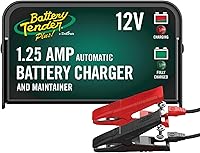
AGM suits buyers who want a sealed lead acid battery with simple charging and familiar care. For keeping a battery charged in storage, compare a maintainer and trickle charger.
The trade off is weight and usable capacity.
How do flooded, AGM, and gel lead acid batteries differ?
All three are lead acid chemistries, but the electrolyte and case design change how you maintain and place them. Flooded batteries have free liquid electrolyte and usually need water checks.
AGM holds electrolyte in a mat. Gel uses a gelled electrolyte.
AGM is often the easier choice for an RV or cabin because it is sealed and needs no routine water top ups. That sealed design also helps with vibration and mounting in many mobile setups.
Flooded batteries can cost less in some sizes, but they need ventilation and regular checks. Gel batteries are sealed too, yet they need charging settings matched to gel, not to AGM.
Our guide to types of inverter battery helps you see how battery construction affects charging, placement, and maintenance choices.
What does the Renogy 100Ah AGM model tell us?
The Renogy model shows what a modern deep cycle lead acid AGM battery offers in a common 12 volt size. It provides 100 amp hours at 12 volts, and Renogy positions it for RVs, cabins, solar, marine, and off grid systems.
Renogy says the battery can power appliances such as a fridge, microwave, CPAP, coffee maker, and laptop. Actual run time depends on the load, the inverter, wiring losses, and how much charge you choose to use.
Renogy says the model supports series connections without a stated limit and parallel connections up to 4P. It also says connected batteries should have the same capacity, voltage, and type, ideally from the same brand.
How does lithium change the deep cycle comparison?
Lithium deep cycle batteries keep the same cycling idea but change the chemistry, weight, charging profile, and usable depth. A LiFePO4 battery is the type most buyers compare with lead acid for RV and solar house power.
The SUPER EMPOWER 12V 100Ah LiFePO4 Battery is a 12.8 volt, 100 amp hour battery for RV, marine, trolling motor, solar, and off grid energy storage. It weighs 21.6 pounds, compared with 63.9 pounds for the Renogy AGM model above.
SUPER EMPOWER says the battery has a built in 100 amp battery management system. That system protects against overcharge, over discharge, overcurrent, short circuit, and temperature problems.
Lithium is not automatically better for every buyer. It costs more upfront in many sizes, and it needs a charger or solar controller set to lithium.
When should you choose lead acid despite lithium?
Lead acid is a sensible pick when you want a familiar system, simple charging, and a sealed AGM design. It can suit a backup load, a small solar setup, or an RV house battery where weight is not the main concern.
AGM also avoids the low temperature charging issue that affects many lithium batteries. SUPER EMPOWER says charging is disabled below 32 degrees Fahrenheit by its battery management system, so cold weather charging needs care.
Lead acid has clear limits, though. Renogy recommends not discharging its AGM battery below 50 percent.
That means less of the nameplate capacity is available for daily use.
Our deep cycle battery vs lithium guide compares usable capacity, charging, weight, and care in more detail.
What should you check before you buy a deep cycle battery?
Start with voltage, capacity, chemistry, charger profile, and physical size. A 12 volt system needs a 12 volt battery, but that alone does not make every 12 volt battery a match.
Check the charge controller or charger settings next. AGM, flooded, gel, and lithium each use different voltage and absorption steps.
Using the wrong profile can shorten life or trigger protection shutdowns.
Then check dimensions, terminal type, cable size, and fuse placement. The Renogy AGM battery measures 13.1 x 6.9 x 8.6 inches.
The SUPER EMPOWER LiFePO4 battery measures 6.49 x 10.24 x 8.98 inches and uses M8 terminals. For enclosure sizing on a larger pack, see 200Ah lithium battery boxes.
For 12 volt RV and solar builds, our best deep cycle battery 12v picks can help you compare common sizes. For larger banks, best large deep cycle battery covers bigger capacity options.
How do you size a battery bank in plain terms?
Size a bank by the loads you run, the hours you run them, and the discharge limit you will follow. A 100 amp hour battery at 12 volts holds about 1,200 watt hours before losses, but lead acid buyers often plan to use only part of that.
If you follow Renogy's 50 percent guidance for its AGM model, plan around roughly 600 watt hours of usable energy from that battery in daily use. Inverters, cables, and age reduce what reaches your appliances.
Lithium banks can often use more of the nameplate capacity, but you still need headroom for cold weather and days with little sun.
A battery monitoring system can help you track voltage, current, and state of charge so you learn how your bank behaves in real use.
Can you mix lead acid and lithium in one bank?
You should not mix lead acid and lithium in the same bank. Each chemistry needs different charging voltages, absorption times, and discharge limits.
Mixing them can cause one battery to take too much charge while the other stays underfilled.
Renogy gives similar advice for AGM banks: use batteries with the same capacity, voltage, and type. That rule applies even within one chemistry when models differ.
If you want to move from lead acid to lithium, plan the change as a full switch for that bank. Replace the batteries, set the charger or solar controller to lithium, and check that the inverter and cables suit the new discharge current.
Marine buyers should also read what is deep cycle marine battery before choosing between a starting battery and a house battery.
What about cold weather and self heating lithium?
Cold weather changes the choice because many lithium batteries stop charging below freezing to protect the cells. Lead acid batteries can charge in cold weather, though performance and capacity still drop as temperature falls.
SUPER EMPOWER says its LiFePO4 battery pauses charging below 0 degrees Celsius, or 32 degrees Fahrenheit, and stops discharge at minus 20 degrees Celsius. It resumes above 5 degrees Celsius.
That protection is a safety feature, not a flaw. It means winter solar charging needs a plan for battery temperature or cabinet placement.
If you expect freezing weather, compare best self heating lifepo4 battery options and best lifepo4 battery heater solutions before you buy a standard lithium model.
Which deep cycle battery should you pick?
Pick lead acid AGM if you want sealed, familiar, low fuss house power and you can accept more weight and a shallower discharge limit. The Renogy 100Ah AGM model is a clear example of that path.
Pick LiFePO4 if you want a lighter bank, more usable capacity, and a built in battery management system. The SUPER EMPOWER 100Ah model fits that path, provided you use a lithium charger and plan for cold weather charging.
For a direct side by side read, start with deep cycle battery vs lithium. Then narrow your shortlist with best deep cycle battery 12v if your system is 12 volts.
Frequently asked questions
Is a deep cycle battery lead acid?
Many are, especially AGM and flooded models, but deep cycle is a use design rather than a chemistry. It means the battery is built for repeated deep discharges and recharges.
Lithium deep cycle batteries use the same cycling idea with a different chemistry.
Can a deep cycle battery be lithium?
Yes. Lithium deep cycle batteries, including LiFePO4 models, are built to discharge and recharge repeatedly for house power.
They need a lithium charging profile and low temperature charging protection.
Lead acid models need different voltage settings and depth of discharge limits.
Is AGM a type of lead acid battery?
Yes. AGM means absorbent glass mat, a lead acid construction where electrolyte is held in a mat between the plates.
The sealed design reduces spills and maintenance.
It still follows lead acid charging rules and should not be discharged to zero.
How deep should you discharge a lead acid deep cycle battery?
Renogy recommends not discharging its 12V 100Ah AGM below 50 percent to avoid shortening cycle life. Other lead acid designs vary, so use the depth limit for your exact model.
Keeping discharge shallower usually helps the battery last longer.