Types of Inverter Battery: Batteries and Chargers Guide
The main types of inverter battery are AGM lead-acid, flooded lead-acid and lithium LiFePO4 deep cycle batteries. Pick AGM for simple, low-maintenance power, and pick lithium for lighter weight, deeper usable discharge and longer cycle life. Size by your inverter load and run time, not by battery label alone.
On this page (11 sections)
- What are the types of inverter battery and how do they differ?
- Which inverter battery type suits RV, solar and home backup use?
- What kind of battery is deep cycle for inverter work?
- How do AGM inverter batteries work and when are they a good pick?
- How do lithium LiFePO4 inverter batteries work and when are they a good pick?
- What size battery do you need for a 2000W inverter?
- What size is a Group 31 battery and why does group size matter?
- How do you size an inverter battery bank for RV, marine and solar loads?
- Which chargers and monitors do inverter batteries need?
- How do you install, connect and care for an inverter battery bank?
- Which type of inverter battery should you buy?
The main types of inverter battery are AGM, flooded lead-acid and lithium LiFePO4 deep cycle options. Each type handles weight, discharge depth, weight and cold weather in a different way.
Your inverter turns battery power into household AC power. The battery decides how long that power lasts.
Choose chemistry first, then size it for your load and run time.
This is the complete Batteries and Chargers guide for Travel & BBQ. It links each buying topic below, from chemistry and group sizes to chargers and monitoring.
What are the types of inverter battery and how do they differ?
The types of inverter battery differ mainly in chemistry, discharge depth, weight and charging rules. AGM and flooded batteries are lead-acid.
Lithium inverter batteries usually use LiFePO4 chemistry for RV, solar and off-grid storage.
A starter battery is not a deep cycle battery. A starter battery gives a short, strong burst to crank an engine.
For a generator's starting battery, see Champion generator battery replacements.
A deep cycle battery gives steady power for hours and is built for repeated discharge and recharge.
Lead-acid inverter batteries are the traditional choice. For keeping one charged, see battery maintainer vs battery charger.
They are widely stocked, work with many chargers and chargers can be set for common lead-acid profiles.
Their main limits are weight and usable capacity.
Is a deep cycle battery lead acid? Our guide on is a deep cycle battery lead acid explains why many deep cycle batteries are lead-acid, and why lithium is now a common alternative.
Lithium LiFePO4 batteries are lighter for the same usable energy. They can often be discharged deeper than lead-acid, which means a smaller bank can do the same work.
Their charger settings and low-temperature charging rules are different.
That difference matters for deep cycle battery vs lithium decisions. Use our deep cycle battery vs lithium comparison before you switch chemistry in an existing system.
The sealed design of AGM also changes installation. There is no electrolyte to top up and no routine water check.
That design appeals to owners who store an RV between trips and want fewer moving parts to manage.
Chemistry also sets the voltage you plan around. A nominal 12V lead-acid AGM and a 12.8V LiFePO4 can both serve a 12V inverter, but their charge voltages and cutoff points are not the same.
Which inverter battery type suits RV, solar and home backup use?
An inverter battery type suits a use when its weight, sealed design, temperature range and charge profile match the install. RV house power, solar storage and home backup have different trade-offs.
For RV use, weight and space are tight. A lighter lithium bank frees payload and is easier to lift.
An AGM bank may be simpler if your charger already uses lead-acid settings and you do not want to change them.
For solar storage, cycle life over many days matters. Lithium is often chosen for daily solar cycling because it tolerates deeper discharge.
AGM can still work well for weekend or backup use where cycles are fewer.
For home backup, hold time during an outage is the key question. You need amp hours for the fridge, lights, phones and other loads you choose to run.
Chemistry matters less than total usable capacity and inverter efficiency.
Our best battery to use with power inverter guide helps you match battery chemistry to inverter type. The next step is sizing, because a good chemistry in the wrong size will still disappoint you.
Marine use adds vibration and moisture to the list. A sealed AGM case and a lithium battery with a BMS both suit auxiliary power, but neither should be used as a starter battery when the maker limits it to energy storage.
Off-grid cabin use adds temperature swings. An AGM rated for discharge from -4 to 140°F handles cold mornings differently from a LiFePO4 battery whose charging pauses below 32°F.
Plan for the coldest charging condition, not just the coldest discharge.
What kind of battery is deep cycle for inverter work?
A deep cycle battery is made to discharge slowly and recharge fully, again and again. That is the whole job for inverter, RV house, solar and trolling motor power.
Deep cycle plate design spreads discharge over time. It does not try to deliver a starter burst.
This design protects capacity over repeated cycles.
AGM deep cycle batteries seal the electrolyte inside a mat. There is no topping up water.
They can be mounted in more positions than flooded batteries, but you still need secure mounting and ventilation for the install space.
Flooded deep cycle batteries need water checks. They can gas more during charging.
Many buyers choose sealed AGM or lithium to avoid that maintenance task.
Lithium deep cycle batteries use a battery management system, or BMS. The BMS limits overcharge, over-discharge and overcurrent.
It also handles low-temperature charging protection on many models.
If you are shopping by capacity first, start with our best deep cycle battery 12v picks. Then check whether 12V is the right bank voltage for your inverter and cable runs.
A deep cycle rating also explains why a large starter battery may fail in inverter service. It was not built for repeated deep discharge, so its capacity fades faster under house loads.
For inverter work, the useful question is how many amp hours remain after discharge depth limits. A 100Ah AGM used to 50% gives a different usable total than a 100Ah LiFePO4 used much deeper.
How do AGM inverter batteries work and when are they a good pick?
AGM inverter batteries are sealed lead-acid deep cycle batteries with the electrolyte held in a glass mat. They need no water topping and are a common RV and solar choice.
The Renogy 12 Volt 100Ah Deep Cycle AGM is a 12V, 100Ah lead-acid AGM battery. Renogy lists it at 63.9 lb in the specs and 13.1 x 6.9 x 8.6 inches.
It uses M8 x 1.25 x 20 mm terminal bolts.
Renogy says the sealed design reduces intricate internal troubleshooting compared with lithium. It also reports a self-discharge rate below 3% per month at 77°F.
That helps if the battery sits between trips.
Discharge depth is the main care rule here. Renogy recommends not discharging below 50% to avoid shortening cycle life.
That means a 100Ah AGM gives about 50Ah of conservative usable capacity, even though the nameplate says 100Ah.
Temperature range is a practical plus. Renogy rates discharge performance from -4 to 140°F.
It lists a 1100A maximum discharge current for 5 seconds, which shows it can handle short appliance surges within its ratings.
For more AGM options in this class, see our best agm deep cycle battery guide. If you want a specific 100Ah AGM size, compare our best agm deep cycle battery 100ah picks.
AGM suits buyers who want familiar lead-acid charging and sealed, low-maintenance use. It is less suited to buyers who need maximum usable capacity per pound.
The model number RNG-BATT-AGM12-100-US helps you confirm the exact 12V 100Ah AGM version before you order cables or a battery box. The listed 50A amperage in the specs is a separate rating from capacity, so read both fields when you check inverter compatibility.
Renogy also notes that all batteries connected together should share the same capacity, voltage and type, and ideally the same brand. That rule prevents one weaker battery from dragging down a mixed bank.
How do lithium LiFePO4 inverter batteries work and when are they a good pick?
Lithium LiFePO4 inverter batteries provide lighter deep cycle storage with a built-in BMS for protection. They are common for RV house power, marine auxiliary power and solar storage.
The SUPER EMPOWER 12V 100Ah LiFePO4 uses a 12.8V nominal rating and 1280Wh capacity. It weighs 21.6 lb and measures 6.49 x 10.24 x 8.98 inches.
That is far lighter than a 100Ah AGM of similar capacity.
Its built-in 100A BMS manages charging, discharging and temperature conditions. SUPER EMPOWER says the BMS protects against overcharge, over-discharge, overcurrent, short circuit and temperature extremes.
The battery is for energy storage only, not engine starting or cranking.
Charging rules are strict. Use a 12V LiFePO4 charger at 14.4 to 14.6V in CC/CV mode, or an MPPT or PWM controller set to lithium mode.
Non-lithium chargers are not recommended.
Cold charging needs attention. Charging pauses below 32°F, and discharge stops at -20°C.
SUPER EMPOWER says operation resumes above 5°C. Plan heater, insulation or shore charging if you camp in freezing weather.
Expansion is another advantage. This model supports up to 4 in series and 4 in parallel, for a 51.2V 400Ah configuration.
All batteries in a bank should match in capacity, voltage and type, as Renogy also notes for AGM banks.
For lithium-specific shopping, see our best lithium deep cycle battery guide. For broader 12V shortlist help, our best deep cycle battery 12v guide covers both chemistries.
The Group 24 footprint helps this model fit standard battery boxes without modification. M8 terminals match many existing cable lugs, which can simplify a drop-in replacement for a lead-acid battery.
Grade A cells and a 40 milliohm resistance rating are part of the listed design for stable storage performance. The 5 year warranty and 24 hour support response are also listed for this model, so check the warranty terms for your use case.
How does the BMS change lithium use?
The BMS is the control layer inside the lithium case. It watches cell voltage, current and temperature while the battery charges and discharges.
That protection explains why low-temperature charging pauses on this model. The BMS stops charging below 32°F to protect the cells, rather than relying on the inverter or charger to notice the cold.
The BMS also limits continuous current. A 100A BMS rating means a single battery is limited to that continuous range, so parallel batteries are needed for higher continuous loads within the 4P limit.
Balancing inside the BMS helps four cells in the battery stay aligned over time. In a larger 4S4P bank, that balancing and the protection logic help the bank run as one storage unit.
What size battery do you need for a 2000W inverter?
What size battery for 2000w inverter use depends on your real watt load and how many hours you want to run. A 2000W rating is a maximum, not your everyday draw.
Start with the loads you will actually run. A fridge, lights, phone chargers and a laptop have a very different draw from a microwave, coffee maker and hair dryer at the same time.
Use this simple check. DC amps are roughly AC watts divided by battery voltage, then add about 10 to 15% for inverter losses.
At 12V, 2000W is about 185A after losses.
That math shows why 100Ah is small for a full 2000W load. A 100Ah bank at a true 185A draw would last well under an hour, and lead-acid usable capacity is less than nameplate capacity.
Lithium usable capacity is closer to nameplate, but current limits still apply.
Run time changes the answer. For a few phones and lights, 100Ah may be plenty.
For a fridge through an outage, you may need 200Ah or more, or a 24V or 48V bank to cut current.
Cable size also follows current. High current at 12V needs short, thick cables and secure terminals.
A higher-voltage bank lowers current for the same watts, which can simplify wiring.
If your inverter is part of a larger backup plan, compare generator options such as our Top 7 Watt Dual Fuel Generator Under 1000 guide. A generator can recharge a battery bank while you run heavy loads.
Short surges matter too. A fridge compressor or microwave can draw more at startup, so the bank and BMS must handle peak current as well as average current.
A 1100A 5 second rating on the Renogy AGM shows a lead-acid model can meet short surge needs, but that does not extend run time at full 2000W load. Surge rating and amp hour capacity solve different problems.
What size is a Group 31 battery and why does group size matter?
Group size tells you the tray footprint and terminal layout, not the amp hours inside. Two Group 31 batteries can have different capacity and chemistry.
BCI group numbers help you check physical fit. Measure length, width, height and terminal positions.
Also check hold-downs, cable reach and clearance for a box or cover.
What is a group 31 battery in plain terms? It is a common large battery size used in RV, marine, solar and trucking auxiliary power.
The group label helps you order a replacement that fits the tray.
Capacity still needs a separate check. Read amp hours, voltage, chemistry and recommended discharge depth.
A Group 31 AGM and a Group 31 lithium will not behave the same in your inverter system.
Our what is a group 31 battery guide covers fit and use cases in more detail. For a smaller footprint, our best group 27 battery guide covers the next common size down.
Large capacity buyers should also compare our best large deep cycle battery picks. Larger banks help when a fridge, CPAP or power tools must run for many hours.
U1 batteries are another compact option. See our best deep cycle u1 battery guide when tray space is tight and you need a smaller case.
Group 24 is the size listed for the SUPER EMPOWER lithium model in this guide. That smaller footprint can fit boxes that a larger group size cannot, which matters in compact RV and marine installs.
Weight follows group size and chemistry together. A Group 24 lithium at 21.6 lb is easier to carry than a larger AGM, while a 100Ah AGM at 63.9 lb needs a tray and hold-down built for that load.
How do you size an inverter battery bank for RV, marine and solar loads?
Size an inverter battery bank by usable amp hours, maximum current and physical fit. Nameplate amp hours alone will mislead you.
First, list each load in watts and estimate run time. Separate must-run loads, such as fridge or medical devices, from nice-to-run loads.
Size for the must-run list first.
Second, convert watts to amp hours for your bank voltage. For a 12V bank, amp hours used are roughly watts times hours divided by 12, then divided by inverter efficiency.
Do the same math at 24V or 48V for a higher-voltage bank.
Third, apply usable capacity. For AGM, plan around 50% discharge if you want longer lead-acid cycle life.
For LiFePO4, you can often use more of the nameplate capacity, but follow the maker's BMS limits.
Fourth, check current. A battery bank must supply the DC current your inverter draws at peak load.
A 100A BMS, for example, will limit a lithium bank to 100A continuous unless you add parallel capacity.
Fifth, check expansion rules. Renogy allows AGM series connections with no stated limit and parallel up to 4P.
SUPER EMPOWER allows up to 4S4P for its LiFePO4 model. Match amp hours, voltage and chemistry in mixed banks.
For RV house power, our best rv house battery guide focuses on this size math. For boat use, compare our best marine deep cycle battery picks.
For solar storage, see our best deep cycle battery for solar guide. Solar banks cycle daily, so discharge depth and charge settings matter more.
Energy in watt hours helps compare chemistries. A 12V 100Ah AGM holds about 1200Wh by nameplate, while the 12.8V 100Ah lithium lists 1280Wh, but usable energy differs after discharge limits are applied.
Trolling motor use adds continuous draw during a day on the water. The lithium model in this guide is listed for trolling motor and marine storage, while the Renogy AGM is listed for RV, solar, marine and off-grid applications.
Which chargers and monitors do inverter batteries need?
Inverter batteries need the right charger profile, correct cables and a way to track state of charge. Chemistry-specific charging is not optional.
AGM batteries use a sealed lead-acid profile. Renogy advises using SLD battery settings on a charge controller for its AGM model.
Overcharging lead-acid can cause gassing and shorten life.
Lithium batteries need a LiFePO4 profile. SUPER EMPOWER specifies 14.4 to 14.6V CC/CV charging and lithium mode on solar controllers.
A generic lead-acid profile may undercharge or overcharge the bank.
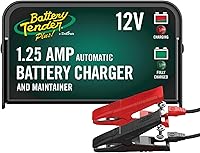
A smart charger also helps during storage. Our best smart battery charger guide covers maintainers for seasonal RV and boat use.
For deep cycle banks, compare our best deep cycle battery charger picks.
A battery monitor shows volts, amps, amp hours used and time remaining. Our what is battery monitoring system guide explains shunt-based monitors and why voltage alone is a weak gauge.
Battery boxes and hold-downs protect the bank. Our best deep cycle battery box guide covers vented, sealed and secured storage options.
Always secure batteries so they cannot shift in a crash or rough travel.
Weize is another AGM brand many RV owners ask about. Compare our best weize deep cycle batteries guide before you choose between AGM brands.
A monitor is especially useful with AGM care rules. It shows when you approach the 50% discharge point that Renogy recommends, so you can stop or recharge before you shorten cycle life.
For lithium, a monitor helps you track the BMS limits in real use. It shows amp hour consumption against the 100A continuous rating and helps you plan parallel expansion before you hit a cutoff.
How do you install, connect and care for an inverter battery bank?
Install an inverter battery bank with secure mounting, correct polarity, matched connections and chemistry-correct charging. Most early failures trace back to wiring or settings, not the battery nameplate.
Start with physical fit. Measure the tray, box and terminal access before you order.
Confirm the battery cannot tip, slide or short against metal.
Connect series and parallel banks carefully. Series raises voltage.
Parallel raises capacity. All batteries in a bank should share voltage, amp hours and chemistry, and ideally come from the same maker.
Renogy's AGM model includes M8 terminal bolts and allows series connections and up to 4 in parallel. SUPER EMPOWER's LiFePO4 model uses M8 terminals and supports up to 4S4P.
Match those rules to your inverter's voltage rating.
Set the charger before first use. Choose AGM, flooded or lithium mode to match the bank.
Renogy recommends charging its AGM to 100% before storing and recharging after three months if unused.
Check connections as part of care. Clean terminals, confirm torque, and look for heat or corrosion.
A loose high-current connection can fail under load even when the battery is healthy.
Special loads need special planning. Sump pump backup buyers should read our best deep cycle battery for sump pump guide.
Gate opener buyers should check our best deep cycle battery for gate opener guide.
If your portable generator needs a starting battery, that is a different job. See our best portable generator battery replacement guide, and compare generator options such as our Top 7 Watt Dual Fuel Generator Under 1000 picks.
Storage care differs by model. Renogy reports below 3% monthly self-discharge at 77°F for its AGM, while lithium storage should follow the maker charge and temperature guidance for the BMS.
Ventilation and placement still matter for lead-acid banks. Keep batteries upright where required, secure them against movement, and keep metal tools and loose hardware away from terminals.
Which type of inverter battery should you buy?
Choose AGM if you want sealed lead-acid simplicity and familiar charger settings. Choose lithium if you want lighter weight and deeper usable discharge.
Pick the Renogy 12 Volt 100Ah Deep Cycle AGM if you want a sealed 100Ah lead-acid bank for RV, solar or off-grid use. Its 50% discharge guidance and 63.9 lb weight are the trade-offs to plan around.
Pick the SUPER EMPOWER 12V 100Ah LiFePO4 if you want a lighter 21.6 lb Group 24 lithium bank with a 100A BMS. Its LiFePO4 charger and low-temperature rules are the trade-offs to plan around.
Do not buy by group size, brand or nameplate amp hours alone. Buy by usable capacity, current rating, charger profile and tray fit.
Next, confirm your inverter voltage and your heaviest load. That pair tells you whether 12V, 24V or 48V makes more sense.
Then size amp hours for your run time.
If you remember one rule from this guide, it is this: match the battery type to the charger, and match the bank size to the load. That choice matters more than any single product name.
Check the terminal size before you buy cables. Both models in this guide use M8 terminals or bolts, but confirm thread length and lug fit for your inverter cables.
Also confirm the warranty and support terms listed for the exact model. The Renogy AGM lists a 2 year prorated warranty, while the SUPER EMPOWER lithium lists a 5 year warranty.
Frequently asked questions
What are the main types of inverter battery?
The main types are AGM, flooded lead-acid and lithium LiFePO4 deep cycle batteries. AGM is sealed and low maintenance, flooded is familiar and lower cost per amp hour, and lithium gives lighter weight and deeper discharge.
The best choice depends on space, weight, temperature and your charge settings.
What kind of battery is deep cycle?
A deep cycle battery is built to be discharged and recharged many times, unlike a starter battery built for short cranking bursts. Deep cycle designs use thicker plates or lithium cells and can supply steady power for hours.
Inverter, RV, solar and marine house power all rely on deep cycle chemistry.
What size battery do I need for a 2000W inverter?
A 2000W inverter needs enough amp hours for your planned run time at real load, not just its peak rating. As a starting check, 2000W from a 12V bank draws roughly 185A before losses, so 100Ah will run that full load for well under an hour.
Add amp hours or move to a higher voltage bank for longer run time.
What size is a Group 31 battery?
Group 31 is a BCI battery size class, not a capacity rating. Batteries in that group share a similar tray footprint, but amp hours and chemistry can differ by maker.
Measure length, width, height and terminal position before you buy, and compare our guide to what is a group 31 battery.