What Is a Group 31 Battery?
A Group 31 battery is a BCI battery size, not a voltage or chemistry. It is a large 12-volt battery class used for starting trucks and generators and for deep cycle auxiliary power in RVs, boats, and off-grid setups.
On this page (9 sections)
- What does Group 31 mean in battery sizing?
- What is a group 31 battery used for?
- How do Group 31 starting and deep cycle batteries differ?
- How do AGM, flooded, and lithium Group 31 batteries compare?
- What size is a Group 31 battery and how do you measure fit?
- How do you charge and maintain a Group 31 battery?
- What cables do you need for a Group 31 battery?
- What should you know before you buy a Group 31 battery?
- What is a group 31 battery: final decision rule
A Group 31 battery is a large 12-volt BCI size used for truck, generator, RV, and marine power. It names the case size and terminal layout, not the chemistry or capacity inside.
What is a group 31 battery in plain terms? It is a physical size class.
You will see the name on the label because fit matters for trays, hold downs, and cable reach.
What does Group 31 mean in battery sizing?
Group 31 is a BCI group number that fixes case dimensions and terminal position. BCI is Battery Council International, and group numbers help you order a battery that fits.
The case is long and wide enough for high capacity lead acid cells. Terminal location matters as much as size, because cables must reach without stretching or rubbing.
Capacity still varies inside that case. One Group 31 battery may hold more amp hours than another, depending on plate design and chemistry.
That is why you should check group size first, then voltage, capacity, and chemistry. A battery can fit and still be wrong for the job.
For a broad view of battery types and uses, see types of inverter battery in our batteries and chargers guide. That guide helps you match chemistry to the load.
What is a group 31 battery used for?
A Group 31 battery is built for high demand starting and auxiliary power. You will find them in diesel trucks, buses, commercial vehicles, generators, RVs, boats, and backup systems.
Starting use needs a short burst of high current to turn a starter motor. Group 31 size gives room for plates that can deliver that burst.
Auxiliary use needs steady current for lights, pumps, inverters, and electronics. The same large case can hold enough capacity for longer runs.
Many owners use one bank for starting and a separate bank for house loads. That split protects starting power when auxiliary loads run for hours.
Compare options by job in best group 31 rv battery for coach power. For cranking power, see best group 31 starting battery instead.
How do Group 31 starting and deep cycle batteries differ?
Starting and deep cycle Group 31 batteries differ in plate design and discharge pattern. Starting plates are thin and numerous for short high current.
Deep cycle plates are thicker for repeated discharge and recharge.
A starting battery can be damaged by daily deep discharge. Its plates are not made to give up most of their charge over and over.
A deep cycle battery can start a vehicle in some cases, but it may not match a dedicated starting battery for cold cranking current. Trade offs are real.
Dual purpose batteries sit in the middle. They are a compromise for owners who need one battery to do both jobs.
Our picks for steady power are in best deep cycle battery group 31. Read that page if your load runs lights, fans, or an inverter for hours.
How do AGM, flooded, and lithium Group 31 batteries compare?
Chemistry changes how you charge, handle, and maintain a Group 31 battery. Flooded lead acid needs water checks and ventilation.
AGM is sealed and spill proof. Lithium is lighter and needs lithium settings.
AGM batteries resist vibration and do not need water. They are common in RVs, boats, and trucks where maintenance access is limited.
Flooded batteries often cost less and can be serviced. You must check water levels and clean terminals to keep them healthy.
Lithium batteries give more usable capacity for their weight. They also need a charger, alternator settings, and battery management system made for lithium.
Compare sealed options in best group 31 agm battery. Compare lighter options in best group 31 lithium battery before you switch chemistry.
The Mighty Max Battery ML18-12 is a 12V 18AH sealed lead acid battery. It measures 7.17 x 3.03 x 6.57 inches and uses nut and bolt terminals.
It is not a Group 31 battery, and that point matters. Group size is about case fit, so a smaller battery will not replace a Group 31 tray fit.
Use it as a reminder to measure first. Check length, width, height, and terminal location before you order any replacement.
How do you pick the right chemistry for your use?
Pick chemistry by charging system, maintenance access, and weight limits. If you charge from an alternator, check what voltage profile it uses.
If the battery sits in a closed compartment, sealed AGM or lithium may suit better than flooded. If weight is limited, lithium has a clear edge.
If you want the simplest swap, stay with the chemistry your vehicle or charger already supports. Mixing chemistry in one bank is a bad idea.
What size is a Group 31 battery and how do you measure fit?
Fit means case length, width, height, terminal location, and hold down points. Compare Group 27 battery size before choosing a tray.
A Group 31 battery will not fit a Group 24 or Group 27 tray.
Measure the tray, not just the old battery. Check cable length after you place the new battery, because terminal position can shift reach.
Marine and RV installs also need a secure tray. Vibration can crack cases and loosen terminals if hold downs are weak.
For boat installs, see best group 31 battery tray marine. A proper tray keeps the battery fixed and terminals accessible.
How do posts and terminal nuts affect fit?
Posts and nuts affect cable fit, torque, and service access. A Group 31 battery often uses stud terminals, so the correct nut size matters.
Too small a nut will not seat. Too large a nut can strip threads or leave the terminal loose.
Use group 31 battery post to match post type to your cables. Use group 31 battery terminal nut to get thread size and seating right.
Tighten to the maker spec, then check for movement. A loose terminal can cause voltage drop and heat under load.
How do you charge and maintain a Group 31 battery?
Charge a Group 31 battery with a charger matched to its chemistry and size. Large batteries need more current than a small maintainer can give in a short time.
A smart maintainer is best for storage. It charges in stages, then floats without overcharging.
That helps batteries sit for weeks without losing charge.
A larger charger is better for recovery after deep discharge. Check the charger output against the battery maker limits.
For generator starting batteries, see how to charge a generator starting battery. The steps are similar, but access and ventilation differ.
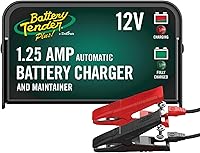
The Battery Tender Plus 12V 1.25 AMP Car charger uses a 4 step smart program. See battery maintainer vs trickle charger for how that approach differs from a trickle charger.
Battery Tender says it adapts to battery needs and is smarter than a trickle charger.
It includes fused ring terminal and alligator clip cables, plus a quick disconnect harness. The two color LED shows charge state.
At 1.25 AMP, it is a maintainer first, not a fast recovery charger. A large Group 31 battery that is deeply discharged will take longer at this output.
How do you set up charging in a tight space?
Set up charging so cables reach without pulling on terminals. Long extension cables help when the charger outlet is far from the battery.
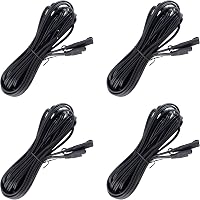
The Battery Tender 25 Foot Extension SAE Cable comes in a 4 pack. It is made for Battery Tender chargers such as Junior, Plus, and multi bank units.
Use the quick connect plugs to connect and forget it while charging. Do not use it with units that use hard wired clips or white quick disconnect plugs.
Keep cables away from moving parts and hot surfaces. Route them so you can disconnect power before you work on terminals.
What cables do you need for a Group 31 battery?
You need cables sized for current, length, and terminal type. Group 31 batteries can carry high starting current, so thin cables will cause voltage drop.
Short battery cables should be as short as practical. Long runs need heavier gauge to limit loss.
Check group 31 battery cable for sizing by length and load. Match lug size to the battery post or stud.
Use fused cables where the maker calls for protection. Keep positive cables covered and routed away from metal edges.
Inspect cables for corrosion, cracked insulation, and loose lugs. Clean terminals and apply protection made for battery posts.
What should you know before you buy a Group 31 battery?
Before you buy, confirm group size, voltage, chemistry, capacity, and terminal layout. Then confirm charger and alternator compatibility.
Ask how the battery will be used. Starting, deep cycle, and dual purpose Group 31 batteries are not the same product.
Check weight and handling. Large Group 31 batteries are heavy, and install access can be tight in trucks, RVs, and boats.
Check warranty and support terms from the brand. Battery Tender backs the charger and maintainer above with a 10 year manufacturer warranty and lifetime customer support.
What is a group 31 battery: final decision rule
What is a group 31 battery comes down to fit first, job second, chemistry third. The group number tells you it fits.
The rest tells you if it will do the work.
Pick a starting Group 31 battery for cranking. Pick a deep cycle Group 31 battery for RV, boat, and backup loads.
Pick dual purpose only if one battery must do both.
Match the charger to the chemistry, size the cables for the load, and secure the battery in a proper tray. Those steps protect capacity, terminals, and starting power for the long run.
Frequently asked questions
What does Group 31 mean on a battery?
Group 31 is a BCI group size that sets the battery case length, width, height, and terminal location. It does not set voltage, capacity, or chemistry, so two Group 31 batteries can differ in amp hours and type.
Is a Group 31 battery a deep cycle or starting battery?
It can be either. Starting versions supply short high cranking current, while deep cycle versions supply steady power for longer use.
Dual purpose designs try to do both, but they trade off against a dedicated type.
What is the difference between Group 31 AGM and lithium?
AGM is a sealed lead acid design that needs no water checks and tolerates vibration. Lithium is lighter and can accept charge faster, but it needs a charger and system settings made for lithium chemistry.
How do you charge a Group 31 battery?
Use a charger matched to the battery chemistry and follow its voltage and current limits. A smart maintainer helps during storage, while a larger charger may be needed to recover a deeply discharged large battery.