Group 27 Battery Size: How to Check the Fit
A Group 27 battery is about 12 to 13 inches long, 6 to 7 inches wide, and 7 to 9 inches tall, depending on the maker. Measure your tray, cable reach, hold-down and lid clearance before you order, because the group number sets the case size but not every detail.
On this page (11 sections)
- What size is a Group 27 battery in inches?
- What does the Group 27 number actually mean?
- How do you measure the battery tray before you buy?
- What clearances should you leave around a Group 27 battery?
- Where should the terminals sit on a Group 27 battery?
- Can a Group 27 battery replace a Group 24 or Group 31?
- How does chemistry affect Group 27 size and fit?
- What should you check on the label and specs?
- How do you keep a Group 27 battery charged and maintained?
- What mistakes cause a Group 27 battery not to fit?
- What is the fit checklist before you order a Group 27 battery?
A Group 27 battery is about 12 to 13 inches long, 6 to 7 inches wide, and 7 to 9 inches tall. Those ranges cover most common cases, but you should still measure your own space before you buy.
The group number is a size code. It tells you the footprint and terminal pattern the maker used, so you can match a replacement to the tray.
It does not tell you the exact height, capacity, or chemistry of every battery sold under that number.
That is why fit checks matter more than a single chart. A battery can be the right group and still be too tall, too wide, or have terminals your cables cannot reach.
A few measurements at home will prevent a return.
We compared common Group 27 dimensions and checked how makers describe case size, terminal layout, and hold-downs. The steps below follow the order you should use in the driveway, garage, or RV bay.
What size is a Group 27 battery in inches?
A Group 27 battery case is usually 12 to 13 inches long, 6 to 7 inches wide, and 7 to 9 inches tall. Length and width are the most consistent parts of the size.
Height is where models differ most.
Older flooded batteries often sit near the lower end of the height range. Some AGM and lithium Group 27 batteries use taller cases to carry more capacity in the same footprint.
That extra height can matter under a seat, a lid, or a hold-down bar.
Terminal location also matters. Most Group 27 batteries use a top-post layout, but the posts are not always spaced the same way.
A cable that reached the old battery may not reach a new one if the posts sit farther back or closer to one side.
Use this quick reference when you start shopping.
| Measurement | Common Group 27 range | Why it matters |
|---|---|---|
| Length | 12 to 13 in | Tray length and end clearance |
| Width | 6 to 7 in | Side clearance and hold-down fit |
| Height | 7 to 9 in | Lid, strap, and cable clearance |
| Terminals | Usually top post | Cable reach and polarity |
Do not treat the chart as a guarantee. Measure the battery you have now, then compare it with the exact replacement you plan to buy.
If the old battery is missing, measure the tray and the space above it instead.
Rule: buy by measured inches, not by the group number alone.
How to measure a Group 27 battery case
Measure length from end to end, width from side to side, and height from the bottom to the top of the case. Include caps or terminal posts if they are the highest point.
Use a tape measure at the widest point, not at a tapered top. Many trays have a lip or ridge, and the case must clear that lip as you lower it in.
Write down the numbers in inches with fractions. A quarter inch can decide whether a hold-down sits flat or bends a cable.
What does the Group 27 number actually mean?
The Group 27 number means the battery was built to a standard case size for that group. Battery makers use group sizes so replacements share a common footprint, terminal type and shape.
It does not mean every Group 27 battery has the same capacity. Two batteries in the same case can hold different amounts of charge and use different chemistry, such as flooded lead acid, AGM or lithium.
That is why our guides separate size from type. If you want a chemistry comparison, start with types of inverter battery and then return to fit.
Size gets the battery into the tray. Chemistry affects how it charges and how it handles deep use.
Group numbers also help you shop by vehicle or equipment. A parts counter or old battery label may list Group 27 even when the brand is gone.
Still, check the exact specs for the replacement. Some makers list overall height with terminals, while others list case height only.
That small difference can affect a tight lid or hold-down.
How do you measure the battery tray before you buy?
Measure the tray length, width, and depth with the old battery out. You need the full inside space, not just the top opening, because many trays narrow at the bottom.
First, remove the hold-down and cables. Note which way the positive terminal faced, and take a photo before you disconnect anything.
Second, measure inside the tray from wall to wall. Add the tray floor length and width, then measure depth from the floor to the lowest part above the battery, such as a lid, strap or shelf.
Third, check the hold-down points. A battery that fits the tray can still fail if the bar lands on a terminal or presses on a cap.
Mark where the bar sits.
Fourth, check cable reach. Lay the positive and negative cables over the tray and see how far they extend.
Keep a little slack, since a cable pulled tight can loosen over time.
What clearances should you leave around a Group 27 battery?
Leave clearance for the hold-down, terminals, cables, and any lid or strap above the case. A Group 27 battery should not touch a metal lid, and cables should not rest on a terminal where they can short.
Measure from the top of the old battery to the lid or shelf above it. If the new battery is taller, the lid may press on caps or terminals.
Check the sides next. The tray should hold the case without squeezing it, with room for any side strap.
Keep cables away from terminals of the opposite polarity. A cable that bends sharply at the terminal can crack or loosen over time.
Heat and ventilation matter in enclosed bays. Follow the battery maker's placement guidance for your chemistry.
For lithium batteries exposed to cold, compare LiFePO4 battery heaters.
How much top clearance does a Group 27 battery need?
Top clearance should let the hold-down sit flat and let you remove the battery without scraping caps. Measure to the lowest point above the tray, which may be a lid, a brace, or a cable bundle.
If your new battery is taller than the old one, compare the difference in inches. Even a half inch can change a hold-down from flat to angled.
Do not stack anything on top of the battery. A tool, a charger, or a storage bin can press on caps and create a short or heat problem.
Where should the terminals sit on a Group 27 battery?
Terminals should sit where your cables can reach them with the correct polarity and without bending sharply. Positive goes to positive, and the cable should not cross over the battery top to get there.
Group 27 batteries most often use top posts, but post spacing and position can vary. Some place posts near one end, while others center them.
Record polarity before you order. Note whether the positive post, often marked with a plus sign or a red cover, was on the left or right.
If the replacement has reversed polarity, your cables may not reach. Turning the battery around only works if the tray, hold-down and cable lengths still work.
Some models use side terminals instead of top posts. Those need different cables and connectors.
Our guide to Group 31 battery posts explains terminal types in plain terms and can help you confirm your setup.
Can a Group 27 battery replace a Group 24 or Group 31?
A Group 27 battery can replace a Group 24 or Group 31 only if the tray, hold-down, cables, and top clearance fit the new case. The group numbers are different sizes, so the swap is not automatic.
Group 24 cases are shorter than Group 27 cases. If your tray was built for Group 24, a Group 27 battery may be too long or may push the cables too far.
Check tray length first.
Group 31 cases are larger and often taller than Group 27. A tray built for Group 31 may fit a Group 27, but the hold-down may not press down in the right place.
You may need a spacer or a different hold-down.
Do not use a larger battery just because it has more capacity. A battery that does not sit flat, or cannot be held down, is not a safe fit for a vehicle or an RV.
Check charger settings too, since a replacement with different chemistry may need a different charge profile.
How does chemistry affect Group 27 size and fit?
Chemistry affects height, terminal style, and charging needs inside the same Group 27 footprint. Flooded, AGM and lithium models can share length and width but differ in height and top layout.
Flooded batteries have caps on top, so height includes those caps. AGM batteries are sealed, so the top can be flatter, but some taller AGM cases carry more capacity.
Lithium models often use a different case design and terminal arrangement. Check exact height and post position before you order.
Charging settings matter as much as fit. A charger set for flooded batteries may not suit lithium, and vice versa.
Check the maker's charge guidance before you install.
If you are comparing chemistry for RV use, our best Group 27 batteries for RVs guide breaks down which types suit house loads. For AGM fit and care, see how to choose a Group 27 AGM battery.
For lithium models, see best Group 27 lithium batteries.
What changes when you switch from flooded to AGM or lithium?
The main changes are height, terminal position, and charge profile. The length and width often stay close to the Group 27 standard, but the top of the case can change.
AGM batteries can often be mounted in more positions than flooded batteries, but your tray and hold-down still need to keep the case secure. Mounting position does not fix a tray that is too small.
Lithium batteries may have a built-in management system and different terminal hardware. Some use studs instead of posts, so your cables may need new connectors.
Always follow the new battery maker's mounting and charging guidance. A battery that fits the tray can still be wrong for the system if the charge settings do not match.
What should you check on the label and specs?
Check overall length, width, height, terminal type, polarity, weight, and chemistry on the specs for the exact model. The group number alone is not enough to confirm fit.
Look for full dimensions, not just the group size. Some pages list case height without terminals, while others include full height.
That difference matters when a lid sits low.
Check weight too. Group 27 batteries can be heavy, and a tray, shelf, or mount should support the load.
A lithium model may weigh less than a flooded model, but the mount still needs to hold it during travel.
Check terminal type and polarity in product photos and specs. Photos can show post position, but specs should confirm it.
If posts are not shown clearly, ask the seller before you order.
Our best Group 27 batteries roundup helps you compare models after you confirm size. Use it to narrow chemistry and capacity options, not to skip the fit check.
If the specs do not show height and terminal position, do not assume they match your tray.
How do you keep a Group 27 battery charged and maintained?
Keep a Group 27 battery charged with a maintainer matched to its chemistry and size. A battery that sits unused can lose charge, and a deep discharge can shorten its life.
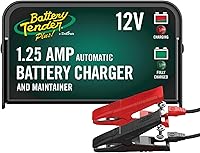
The Battery Tender Plus 12V 1.25 AMP Car is a 12-volt, 1.25 amp charger and maintainer for automotive, motorcycle, and ATV batteries. Battery Tender says its 4-step program charges and maintains the battery and that it is smarter than a trickle charger.
It includes a fused ring terminal and alligator clip accessory cables, plus a quick disconnect harness. The two-color LED shows charge status, and charging resumes if battery voltage drops too far under load.
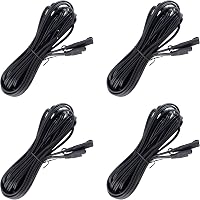
The Battery Tender 25 Foot Extension SAE Cable extends reach by 25 feet and is designed for Battery Tender chargers such as Junior, Plus, 2-Bank, 4-Bank, 5-Bank, and 10-Bank. It uses quick connect plugs for easy connection.
This cable helps when the outlet is across the garage. It is not for use with hard-wired clips, and Battery Tender says not to use it with 6-volt Plus units or units with white quick-disconnect plugs.
The Mighty Max Battery ML18-12 is a 12-volt, 18Ah sealed lead acid rechargeable battery for a Champion generator 9000 7000. Its dimensions are 7.17 inches by 3.03 inches by 6.57 inches, and it uses nut and bolt terminals.
Mighty Max says the SLA battery is spill proof, can be mounted in any position, and resists shocks and vibration. The listing includes the battery and screws only.
This is not a Group 27 battery, and its case is much smaller. Use it as a size comparison for a small tray, not as a Group 27 replacement.
Rule: use a maintainer that matches the battery chemistry, and keep connections clean and tight.
What mistakes cause a Group 27 battery not to fit?
The most common mistake is ordering by group number without measuring height and terminal position. A Group 27 battery can be the right group and still hit a lid or leave cables too short.
Another mistake is measuring only the top of the tray. The bottom may be narrower, so measure full depth and the tray floor.
Ignoring the hold-down is also common. The bar must sit flat and press on the case in the right spot, not on a cap or terminal.
Switching chemistry without checking charge settings can also cause problems. AGM and lithium models may need different profiles, and the wrong profile can shorten battery life.
Do not force cables to reach. A cable pulled tight can loosen, so fix the layout before you install.
Work with power off, keep metal tools away from terminals, and follow generator safety guidance such as our how to check generator carbon monoxide safety and what do you need to check generator carbon monoxide safety pages when a generator is part of the setup.
What is the fit checklist before you order a Group 27 battery?
Use this checklist in order, and stop if any item fails. The goal is a battery that sits flat, stays secure, and connects without strain.
First, write down the old battery length, width, and height, then measure tray length, width, and depth with the old battery out. Compare new specs with those numbers, not with a chart alone.
Second, check top clearance to the lid, strap, or shelf. Confirm the hold-down sits flat and does not touch caps or terminals, and check polarity against your cable layout.
Third, confirm chemistry and charge profile. Make sure charger or alternator settings match the new battery type, and check whether the tray or mount can support its weight.
Fourth, check included parts. Some batteries include screws only, while others include cables or mounting hardware.
Fifth, plan maintenance. Decide how you will keep the battery charged in storage, and whether you need a maintainer or an extension cable for reach.
When all five checks pass, you can order with confidence. If one fails, choose a different model or fix the tray, cables, or hold-down first.
Our best Group 27 battery lithium page can help if you prefer lithium, but size still comes first.
Frequently asked questions
What size is a Group 27 battery?
A Group 27 battery is commonly about 12 to 13 inches long, 6 to 7 inches wide, and 7 to 9 inches tall. Exact height and terminal position can vary by maker and chemistry, so measure your tray and check the replacement specs before you order.
What is a Group 27 battery used for?
A Group 27 battery is a 12-volt automotive size used for starting, RV house loads, marine and off-grid backup depending on the model. The group number describes the case size and terminal layout, not the capacity or chemistry inside.
Will a Group 27 battery fit where a Group 24 was?
It may fit only if the tray, hold-down, cables and lid have enough extra space. Group 27 cases are longer than Group 24 cases, so check length and terminal reach first and do not force a battery into a tray that is too small.
Can a Group 27 battery be too tall for the tray?
Yes. Height varies across Group 27 models, and extra height can cause a hold-down, strap, lid or cable to block proper seating.
Measure from the tray floor to the lowest part above it and leave room for the hold-down.