6 Best LiFePO4 Battery Heaters (November 2026)
The best lifepo4 battery heaters include the Generac 7101 Battery Heater Pad For 9kW–22kW for Generac standby generators, the Zerostart 2800063 Electric Battery Blanket Battery Heater for large vehicle batteries, and the Facon 8-1/2'' x 5-1/2'' Silicone Battery Heater for small trays with auto shut-off.
On this page (8 sections)
- How we compared these LiFePO4 battery heaters
- The best LiFePO4 battery heaters for cold weather use
- How we compared external heaters for LiFePO4 batteries
- Can a battery heater warm a LiFePO4 battery safely?
- Is a self-heating LiFePO4 battery better than an external heater?
- What size battery heater do you need?
- How do you install and care for a battery heater?
- Which battery heater should you buy for a LiFePO4 battery?
The best LiFePO4 battery heater for most owners is a self-heating battery, not an external pad or blanket. External heaters can help an existing battery in cold weather, but you must check case material, thermostat range and power access first.
That caution matters here. Some pads in this group are made for lead-acid, AGM or vehicle starting batteries.
Others are made for a specific standby generator. A LiFePO4 battery has different charging limits, so a heater that is fine for a truck battery may not be fine for your house battery.
For the chemistry tradeoffs, see LiFePO4 vs lithium-ion batteries.
If you already own a LiFePO4 battery and it sits in an unheated space, start with placement and insulation. Move it away from an outside wall if you can.
If you need a protective enclosure, compare 200Ah lithium battery boxes.
Keep the charger from charging a cold battery. Then decide if an external heater is truly allowed by both makers.
Our score weighs specs, features and buyer feedback against what you are shopping for. It does not override the compatibility warnings below.
Our picks at a glance
-
1
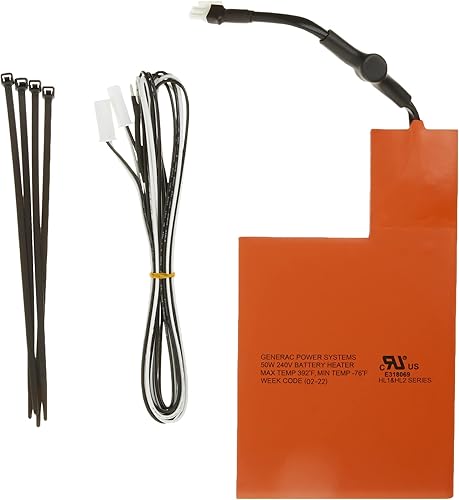 Best for Generac standby generators
Generac 7101 Battery Heater Pad For 9kW–22kW
9.7/10 our score
See it on Amazon -
2
 Best for large vehicle batteries
Zerostart 2800063 Electric Battery Blanket Battery Heater
9.6/10 our score
See it on Amazon -
3
 Best for small trays with auto shut-off
Facon 8-1/2'' x 5-1/2'' Silicone Battery Heater
9.2/10 our score
See it on Amazon
- 4
 Check it
Zerostart 2800055 Electric Battery Blanket Battery Heater
Best for smaller vehicle batteries - 5
 Check it
Maichis 8-1/2'' x 7-7/8'' Silicone Battery Heater
Best for wider small battery trays - 6
 Check it
Kat's 22400 60 Watt 5.5"x 8.5" Battery
Best for simple under-battery placement
How we compared these LiFePO4 battery heaters
We compared size, wattage, thermostat range, power source and stated fit. We also flagged any stated limit on lithium batteries, ABS cases or insulated boxes.
That limit is a deal breaker for many LiFePO4 owners.
Cold weather charging is the main risk for LiFePO4 batteries. Many makers block charging below a set temperature.
Heat alone does not fix that block unless the battery itself warms up.
Read our types of inverter battery guide if you are mixing battery chemistries in one system. Chemistry matters for chargers, monitors and heaters alike.
The best LiFePO4 battery heaters for cold weather use
External heaters help most when power is available and the battery case allows them. Self-heating batteries help most when you can replace the battery.
Use the list below to match the heater type to your setup.
Generac 7101 Battery Heater Pad For 9kW–22kW: Best for Generac standby generators
- Turns on at 40 F and off at 55 F
- Fits under the battery
- For 9kW to 22kW air-cooled standby generators from 2008 or later
- 10 x 6 x 3 inches
A targeted pad for Generac home standby systems that sits under the battery and cycles with temperature.
Pros
- Automatic temperature control
- Made for standby generator batteries
- Compact under-battery design
Cons
- Narrow generator compatibility
- Not a general RV or solar battery heater
The Generac 7101 suits a home standby generator, not a typical RV battery bank. It fits under the battery in Generac 9kW to 22kW air-cooled standby generators made in 2008 or later, so year and model matter more than battery footprint alone here.
Its thermostat turns on at 40 F and off at 55 F. That narrow band keeps the starting battery ready without running heat all day.
The pad is not needed for AGM-style batteries, so check your battery type first before you assume every generator battery needs it.
The package size is 10 x 6 x 3 inches and the pad weighs 3.2 ounces. That compact size helps it sit under a generator battery without taking much room.
If you replace old cold weather kit components, remove the old component before installing the new one.
Buy it for a Generac standby system in cold weather. Do not buy it as a general LiFePO4 heater for an RV or solar bank.
The fit is too specific for that job, and a pad made for a standby starting battery does not solve cold charging limits in a house bank.
Zerostart 2800063 Electric Battery Blanket Battery Heater: Best for large vehicle batteries
- 36-inch wrap, 80 watts, 120 volts
- Thinsulate thermal insulation
- Warms battery core 60 to 70 F above ambient
- CSA approved
A long 80 watt blanket for larger batteries that need more wrap area than a small pad provides.
Pros
- Long wrap for large batteries
- Insulated blanket design
- CSA approved
Cons
- Needs 120V AC power
- Wrap fit must be measured
The Zerostart 2800063 suits large vehicle batteries that need a wrap, not a small pad. It is 36 inches long, 5 inches high and runs at 80 watts on 120 volts, so size and power both point toward larger cases rather than compact trays.
Zerostart says the blanket warms the battery core 60 to 70 F above ambient. Thinsulate insulation helps hold that warmth around the case.
A 30-inch ground cord gives you reach to an outlet, but you still need 120 volt, 15 amp AC power nearby.
It fits Series 24, 24F, 24H, 24R, 24T, 25, 27, 27F, 27H, 31, 34, 34R, 35, 38 and 74. Measure the circumference of your battery to confirm the length before you order.
Extra length can bunch and trap heat, and a 5 inch height will not cover a taller battery top.
Buy it for a large battery with 120V AC nearby. Skip it if you need a low-voltage DC heater for an off-grid RV bank.
Its wrap style also spreads heat around the sides, which a small under-battery pad cannot do for a large case.
Facon 8-1/2'' x 5-1/2'' Silicone Battery Heater: Best for small trays with auto shut-off
- 8.5 x 5.5 inches, 60 watts, 120V
- Thermostatically controlled
- 72-inch cord
- 1.8mm thin silicone pad
A slim 60 watt pad for small battery trays, with a thermostat and a long cord for outlet reach.
Pros
- Very thin pad
- Auto shut-off thermostat
- Long 72-inch cord
Cons
- Not intended for lithium-ion batteries
- Not for ABS cases or insulated boxes
The Facon pad suits a small battery tray where a thin pad can slide under the battery. It measures 8.5 x 5.5 inches and runs at 60 watts on 120V, with a 72-inch cord and a 2-prong plug for standard outlet reach.
The built-in thermostat warms the battery, then shuts off on its own. Facon says it warms to about 68 F in 10 to 30 minutes.
That auto shut-off is the main practical benefit here, because you do not need to guess when to unplug it on a cold morning.
The silicone pad is 1.8mm thin and resists oil and battery acid. That thin shape is useful in tight trays, but it also means less thermal mass than a blanket.
Facon warns not to use it above 50 F, and it is designed for standard lead-acid and AGM batteries.
Buy it for a small tray with a compatible battery chemistry. Do not use it with lithium-ion batteries, Ni-Cd batteries, ABS cases or inside an insulated box.
Those limits are stated directly, so they outweigh the convenient thin design for many LiFePO4 owners.
Zerostart 2800055 Electric Battery Blanket Battery Heater: Best for smaller vehicle batteries
- 28-inch wrap, 50 watts, 120 volts
- Thinsulate thermal insulation
- Warms battery core 60 to 70 F above ambient
- CSA approved
A shorter 50 watt blanket for smaller batteries that need wrap coverage without excess length.
Pros
- Shorter wrap for smaller batteries
- Insulated blanket design
- CSA approved
Cons
- Needs 120V AC power
- Lower wattage than the 36-inch model
The Zerostart 2800055 suits smaller vehicle batteries that need wrap coverage. It is 28 inches long, 5 inches high and runs at 50 watts on 120 volts, so it draws less power than the 36-inch model while using the same blanket approach.
Zerostart says it warms the battery core 60 to 70 F above ambient. Thinsulate insulation helps maintain temperature in warm or cold weather.
The 30-inch ground cord helps with outlet placement, and the plug type is 120 volt, 15 amp.
It fits Series 22NF, 26, 26R, 51, 51R and 70. Measure your battery first, since a wrap that is too long will not sit flat.
A 28 inch wrap also means less side coverage than the 36 inch model, which is why this size is aimed at smaller cases.
Buy it for a smaller battery that needs a blanket and has 120V AC access. Skip it if your battery needs more wrap length than 28 inches provides.
Lower wattage can also mean slower warming in very cold ambient conditions, so match the size to the actual battery.
Maichis 8-1/2'' x 7-7/8'' Silicone Battery Heater: Best for wider small battery trays
- 8.5 x 7.87 inches, 60 watts, 120V
- Thermostat on at 32 F, off at 122 F
- Silicone construction
- 2-prong cord
A wider 60 watt silicone pad that covers more tray area than the narrower Facon pad.
Pros
- Wider coverage area
- Thermostat control
- 60 watts for small trays
Cons
- Not recommended for lithium-ion batteries
- Not for ABS cases or insulated boxes
The Maichis pad suits a wider small tray than the Facon pad. It measures 8.5 x 7.87 inches and runs at 60 watts on 120V, so the extra width covers more footprint area on larger small batteries.
Its thermostat turns on at 32 F and off at 122 F. That high off temperature is a key trade-off.
It regulates heat, but it can let a battery get much warmer than the Facon pad. For a LiFePO4 battery, that upper range needs close attention against the battery maker's limits.
The silicone pad sits in the tray with the battery on top. A 2-prong cord connects to a power source, with no ground on the cord as listed.
That simple setup works well where outlet access is easy, but it gives you less cord length than the Facon 72 inch cord.
Buy it for a wider tray when you can monitor temperature. Do not use it with lithium-ion batteries, nickel cadmium batteries, ABS cases or in an insulated battery box.
Those exclusions, plus the wide thermostat range, make it a poorer LiFePO4 fit than its size alone suggests.
Kat's 22400 60 Watt 5.5"x 8.5" Battery: Best for simple under-battery placement
- 60 watts, 5.5 x 8.5 inches
- Silicone covered
- Fits most car and truck batteries
- Made in the USA
A simple 60 watt pad you place under the battery, with a pliable silicone cover that resists acid and oil.
Pros
- Simple placement
- Acid and oil resistant cover
- Fits most car and truck batteries
Cons
- No thermostat stated
- Needs a 120-volt outlet
Kat's 22400 suits buyers who want simple under-battery placement. It measures 5.5 x 8.5 inches and runs at 60 watts on a 120-volt outlet, so the size matches the Facon pad while the approach is simpler.
The pad is silicone covered and pliable, so it bends to fit under a battery. Silicone resists acid and oil, which helps in a vehicle tray.
Kat's says it fits most car and truck batteries, and the product is made in the USA.
You place it under the battery and plug it in. There is no thermostat stated in the product data, so you must manage run time yourself.
That missing control is the main trade-off against the Facon and Maichis pads, especially where overnight heating could overheat a case.
Buy it for a simple vehicle battery in winter. Skip it if you want automatic shut-off or confirmed lithium battery use.
Without a stated thermostat or lithium compatibility, it is best treated as a basic starting battery warmer, not a LiFePO4 solution.
How we compared external heaters for LiFePO4 batteries
We checked thermostat range first, then size and wattage. A heater with no stated thermostat needs more attention from you.
We also checked stated battery types. A pad for lead-acid or AGM batteries is not automatically safe for LiFePO4 batteries.
Placement matters as much as power. Under-battery pads heat from below.
Blankets wrap the sides. Neither heats the inside of a large battery bank evenly.
Power access is the next limit. Every product here needs 120V AC.
Off-grid RV use often needs DC power, so these heaters may not fit that setup.
Our best lithium deep cycle battery guide helps if you are deciding between an external heater and a new battery. A replacement battery may solve the cold charging problem in one step.
Can a battery heater warm a LiFePO4 battery safely?
Yes, but only within the limits set by both the battery maker and the heater maker. Heat helps only if the battery cells actually warm up above the charging limit.
External heat can create hot spots. A pad under one corner can warm that corner while the other side stays cold.
Blankets spread heat around the sides, but they still may not warm the core evenly.
Check the case material before you buy. Some heaters are not intended for ABS cases.
Many LiFePO4 batteries use plastic cases, so that warning can rule out several pads.
Also check the battery's charging temperature limit. If your charger will charge a cold battery, a heater must warm the battery before charging starts.
If the battery blocks cold charging on its own, heat is less urgent.
If you need to charge a generator battery in winter, our guide on how to charge a generator starting battery covers the basics for starting batteries. That advice is for starting batteries, not house LiFePO4 banks.
What temperature range should you look for?
Look for a thermostat that cycles in a narrow band. The Generac pad cycles at 40 F to 55 F.
That band is easy to understand and limits overheating.
The Maichis pad cycles at 32 F to 122 F. That range is much wider, so you need to watch the upper end closely.
The Facon pad shuts off after warming to about 68 F. That is a mild target for a small battery.
How long should a battery heater run?
Run it only until the battery is above the charging limit. Then let the thermostat or battery system take over.
A heater that runs all night can waste power and overheat a case. Use a monitor to check battery temperature if your system allows it.
Our what is a shunt battery monitor guide explains how monitors track charge flow. Temperature sensors can add useful context in winter.
Is a self-heating LiFePO4 battery better than an external heater?
A self-heating battery is usually better for RV and solar use. Heat is applied inside the case, and the battery can block charging until it is warm.
External heaters need 120V AC in this group. Self-heating batteries use power from the system itself, which fits off-grid use better.
External heaters also depend on fit. A self-heating battery is built for its own cells, so there is no guesswork about case material.
The trade-off is cost and replacement. You must replace the battery instead of adding a pad.
For a new system, that may be the smarter spend.
See our best self heating LiFePO4 battery guide for that comparison. It covers built-in heat and low temperature charging protection.
When does an external heater make sense?
An external heater makes sense for an existing battery you want to keep. It also makes sense for a vehicle or generator battery with 120V AC nearby.
It makes less sense for a new RV build. In that case, built-in heat is simpler and safer.
When should you replace the battery instead?
Replace the battery if cold charging is a repeat problem. Also replace it if the case material blocks use of external heaters.
A new self-heating battery can remove the need for pads, blankets and outlet access. That simplifies winter setup.
What size battery heater do you need?
Measure the tray length, width and height first. Then measure the battery footprint and height.
For a pad, the pad should sit under the battery without folding. A folded pad can trap heat and wear out early.
For a blanket, measure the circumference of the battery. The Zerostart models list wrapped lengths of 28 inches and 36 inches, so pick the length that matches your battery.
Height matters too. A 5-inch blanket will not cover a tall battery.
Heat will leak from the uncovered top.
Use our what is deep cycle marine battery guide if your battery is for marine use. Marine trays and ventilation differ from RV trays.
How do you measure for a wrap?
Wrap a tape around the battery at mid-height. That number is your starting point.
Add a little slack for corners and cord exit. Too much slack will bunch.
Too little slack will pull the blanket tight and limit heat transfer.
How do you measure for a pad?
Place a sheet of paper under the battery and trace the footprint. Then compare that shape to the pad size.
A pad that is much larger than the footprint will fold at the edges. A pad that is much smaller will leave cold spots.
How do you install and care for a battery heater?
Place the pad flat in the tray before you set the battery down. Keep the cord away from sharp edges and moving parts.
For a blanket, wrap it snugly around the battery and secure it without compressing the case. Keep the cord clear of terminals.
Plug it in only when you need heat. Unplug it when the battery is warm or when you leave the area for a long time.
Check the pad or blanket for cracks, stiffness or worn insulation. Replace it if the silicone cracks or the cord frays.
Keep the heater dry and clean. Wipe off acid spills and dirt before they build up on the surface.
Which battery heater should you buy for a LiFePO4 battery?
The best LiFePO4 battery heater is often a self-heating battery. If you must use an external heater, pick one that allows your exact battery and case material.
Pick the Generac 7101 for a Generac standby generator. Pick the Zerostart 36-inch blanket for a large vehicle battery with 120V AC.
Pick the Facon pad for a small tray only if your battery chemistry allows it.
Compare Renogy and Victron options in our best Renogy LiFePO4 battery guide and our best Victron LiFePO4 battery guide. Those guides cover batteries with built-in cold weather features.
Measure first, check case material second, and check thermostat range third. That order will help you avoid a heater that fits the tray but not the battery.
Our top 3 picks at a glance
-
1
Best for Generac standby generators
Generac 7101 Battery Heater Pad For 9kW–22kW
9.7/10 our score
See it on Amazon -
2
Best for large vehicle batteries
Zerostart 2800063 Electric Battery Blanket Battery Heater
9.6/10 our score
See it on Amazon -
3
Best for small trays with auto shut-off
Facon 8-1/2'' x 5-1/2'' Silicone Battery Heater
9.2/10 our score
See it on Amazon
Frequently asked questions
Can you use a battery heater pad on a LiFePO4 battery?
Only if the heater maker and the battery maker both allow it for your exact battery and case material. Several pads in this guide are not intended for lithium-ion batteries.
Check the case material, thermostat range and charger limits before any external heat is added.
What temperature should a LiFePO4 battery heater reach?
Aim to keep the battery above the battery maker's minimum charging temperature, not to make it warm to the touch. Use the thermostat range and the battery manual as your limits.
A heater that cycles off early is safer than one that runs all night.
Do I need a heater or a self-heating LiFePO4 battery?
A self-heating battery is usually the cleaner answer for RV and solar use, because heat is applied inside the case and charging is blocked until the battery is warm. An external pad can help an existing battery, but fit, power access and case material limit its use.
How do I choose the right size battery heater?
Measure the battery tray and the battery footprint first, then match the pad or wrap length to that space. A pad that is too large can fold or trap heat.
A blanket that is too short leaves one side cold.
Measure the circumference for wrap models.