How to Choose a Box for a 200Ah Lithium Battery
A 200ah lithium battery box should be chosen by exact battery dimensions, cable space and ventilation, not by amp-hour rating alone. Measure length, width, height and terminal position first, then pick a case with at least 1 inch of extra room around the battery and safe mounting points.
On this page (13 sections)
- What dimensions should you check before you buy a 200Ah lithium battery box?
- Why do 200Ah lithium batteries come in different sizes?
- What materials work best for a large lithium battery case?
- How much extra space do cables and terminals need?
- Should a 200Ah lithium battery box be ventilated?
- How should you mount a box for a 200Ah lithium battery?
- What safety checks should you do before you first use the box?
- Can you store tools or chargers inside the same box?
- Which products help with care around a large battery box?
- How do you compare a 200Ah lithium battery box with smaller battery boxes?
- What mistakes should you avoid when choosing a battery box?
- How should you care for a 200Ah lithium battery box over time?
- Which 200Ah lithium battery box should you pick?
A 200ah lithium battery box should be chosen by exact battery dimensions, cable space and ventilation, not by amp-hour rating alone. Measure length, width, height and terminal position first, then pick a case with at least 1 inch of extra room around the battery and safe mounting points.
The first 100 words matter because a 200Ah lithium battery box is not a standard size. Two batteries with the same capacity can have different footprints, terminal layouts and cable needs.
A box that fits one may be too small for another.
Start with your battery, not with a box listing. Write down its length, width, height, weight and terminal locations.
Add the space needed for thick cables, connectors and any terminal protection you plan to use.
What dimensions should you check before you buy a 200Ah lithium battery box?
Check inside length, inside width and inside height against your battery's outside measurements. Leave extra room so the lid closes without bending cables or pressing on terminals.
Measure the battery with a tape measure, including any handles, straps or raised terminal posts. Compare those numbers to the inside size of the box, not the outside size.
Allow space at the terminal end for battery cables to bend. A tight 90-degree bend can stress the cable and the terminal, and it can make the lid hard to close.
Leave room for a hold-down strap or mounting blocks. Those parts keep the battery from shifting during travel, and they need space beside the battery.
Rule: buy only when the inside dimensions are larger than the battery in all three directions.
If you are comparing battery types, our guide on types of inverter battery helps explain how battery design affects size and use. That context helps you understand why capacity alone does not set box size.
Why do 200Ah lithium batteries come in different sizes?
200Ah lithium batteries differ because makers set different heights, widths and terminal positions for similar capacity. Capacity tells you energy, not physical fit.
Some batteries are tall and narrow, while others are short and wide. A box built for one shape may waste space or leave the battery loose in another shape.
Terminal position also changes the fit. Top terminals need more headroom under the lid, while side terminals need side clearance for cables.
Check the battery's weight as well. A large lithium battery can be heavy enough to shift a light box during braking or rough travel.
Mounting holes may not line up between brands. Do not drill new holes in a box until you confirm that drilling will not damage insulation, vents or a seal.
Rule: treat amp-hour as a power spec, and use physical measurements for box fit.
What materials work best for a large lithium battery case?
Choose hard plastic, coated metal or reinforced composite that holds its shape and resists impact. The box should protect terminals and keep the battery from sliding.
Plastic cases often weigh less and resist corrosion, which helps in damp storage areas. Metal cases can feel sturdier, but edges need to be smooth and internal parts should not touch terminals.
Look for a lid that latches securely and a base that sits flat. A warped lid can leave a gap, and a rocking base can let the battery move.
Check for drainage or moisture control if the box will live outdoors. Water should not pool around terminals or sit against the battery case.
Avoid repurposed containers with unknown damage or sharp edges. A damaged box may not hold a heavy battery safely.
Rule: pick a case that is rigid, corrosion-resistant and free of sharp edges near cables.
For smaller power setups, our best deep cycle battery box guide shows how box design changes with battery size. The same fit checks apply, even though the battery in this guide is larger.
How much extra space do cables and terminals need?
Leave extra length and bend room at the terminal end of the box. Thick power cables need space to curve without pressing against the lid.
Measure from the terminal to the edge of the battery, then add room for the connector and the bend. A cable that must turn sharply in a small gap will be hard to install and inspect.
Plan for terminal protection. Covers and boots help prevent accidental contact, but they add height and width around the posts.
Check the best lifepo4 battery terminals when you need connectors that match your cable size and battery posts. Correct terminal size helps the cable sit flat and reduces strain at the connection.
Add best lifepo4 battery terminal cover protection where tools, straps or loose metal parts could touch a post. Protection is a practical safety step, not an extra to skip.
Rule: measure cable bend space as part of the box size, not as an afterthought.
Run cables through grommets or sealed ports where the box design allows it. This keeps edges from cutting insulation and helps the lid close evenly.
Should a 200Ah lithium battery box be ventilated?
Ventilation should be built into the box design or added only as the maker allows. Airflow helps limit heat build-up, but open gaps can also let in dust and water.
Check the battery maker's guidance on operating temperature, storage temperature and charging conditions. Follow those limits before adding vents or sealing the box.
Look for vents placed to move air across the battery without directing it at terminals. Blocked vents lose their purpose, so keep them clear during use.
If the box is for transport, a secure lid matters more than wide-open airflow. Close and latch the box, then keep it upright unless the battery maker says another position is safe.
Do not drill vent holes in a sealed or insulated case unless the maker confirms that change is safe. Drilling can create sharp edges or damage a protective layer.
Rule: keep vents clear, keep the lid latched, and follow the battery maker's temperature limits.
Moisture control matters as much as airflow in outdoor use. Wipe up water promptly, check terminals for corrosion and let the box dry with the lid open when conditions allow.
How should you mount a box for a 200Ah lithium battery?
Mount the box so the battery cannot slide, tip or lift out during movement. A loose large battery can damage cables and terminals.
Use the mount points built into the box where possible. Screws, straps or brackets should be rated for the combined weight of the box and battery.
Place the box on a flat, level surface that can support the load. A weak shelf or loose floor panel can fail under a heavy battery.
Keep the box away from heat sources and moving parts. Clearance around the box also makes it easier to check cables and terminals.
Do not place the battery on a surface that can puncture the case. Check for exposed screws, sharp brackets or debris under the box.
Rule: secure the box and the battery inside it before you move the vehicle or trailer.
A hold-down strap inside the box helps stop small movement. Tighten it enough to stop sliding, but not so much that it deforms the battery case.
What safety checks should you do before you first use the box?
Do a full fit check before you connect any cables. Place the battery in the box, close the lid and confirm that nothing is pinched or pressed too hard.
Check each cable for cuts, bends and contact with sharp edges. Route cables so they do not rub the rim of the box or sit under the battery.
Confirm that terminals are clean, tight and protected. Loose hardware can heat under load, and exposed posts can short against tools or straps.
Check that the battery is upright or in a position approved by the maker. Follow the maker's guidance for transport, storage and charging.
Keep a charger that is approved for your battery type and voltage. A box does not replace correct charging equipment.
Rule: if the lid, cables or terminals do not fit cleanly, stop and change the box or cable route.
How do terminal covers and boots help?
Terminal covers and boots help prevent accidental contact and keep dirt off the posts. They are most useful when the box will be opened often or when tools are stored nearby.
Fit covers that match your terminal size and style. A loose cover can fall off, while a cover that is too tight can be hard to remove during checks.
Use covers that do not trap water against the metal. Lift the cover during routine checks, clean the post if needed and refit it firmly.
How should you route cables through the box?
Route cables with smooth curves and protected edges. Avoid sharp bends, rubbing points and contact with battery terminals.
Use grommets where cables pass through holes. Without edge protection, vibration can wear through insulation over time.
Leave a small service loop where you need to lift the lid or check a terminal. That loop prevents tension when the lid opens.
Can you store tools or chargers inside the same box?
Store only items that cannot touch terminals or puncture the battery case. Loose tools in a battery box create a short-circuit risk.
Keep chargers, cables and accessories in a separate compartment or pouch if the box design allows it. Make sure they do not rest on the battery or press against terminals.
Do not store fuel, solvents or other items that could leak or create fire risk. A battery box should hold the battery and its electrical accessories only.
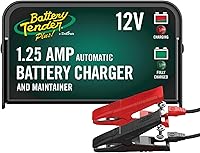
For charging and maintenance, compare approved equipment rather than guessing. The Battery Tender Plus 12V 1.25 AMP Car is a 12V maintainer with a 4-step program and fused ring terminal and alligator clip cables, and Battery Tender says it adapts to the needs of a 12V battery.
Rule: keep the inside of the box limited to the battery, its cables and approved accessories.
If a charger lead must reach the battery, an extension can help with placement, but only when it is approved for your charger. The Battery Tender 25 Foot Extension SAE Cable extends reach by 25 feet and is designed for use with Battery Tender chargers such as Junior, Plus, 2-Bank, 4-Bank, 5-Bank and 10-Bank units.
Which products help with care around a large battery box?
Use care products that match your battery type and voltage. A box protects the battery in place, while care products support charging, connection and storage.
The Mighty Max Battery ML18-12 is a 12V 18Ah sealed lead acid battery measuring 7.17 x 3.03 x 6.57 inches, and Mighty Max says it is a rechargeable, maintenance-free battery with nut and bolt terminals. It is not a 200Ah lithium battery, so it does not replace your 200Ah lithium battery box.
Use a smaller battery like this to check your measuring method. Measure its footprint, then apply the same checks to your larger lithium battery before you buy.
For marine power needs, our what is deep cycle marine battery guide explains deep-cycle use in plain terms. That background helps you match battery type to the way you plan to use the box.
Rule: match every care product to the battery chemistry, voltage and size you actually own.
Do not use a lead acid product as proof that a lithium battery will fit. Size, weight and charging needs differ, so use each product only for its stated purpose.
How do you compare a 200Ah lithium battery box with smaller battery boxes?
Compare boxes by inside dimensions, weight limit, ventilation and mounting, not by capacity labels. A smaller box can be right for a small battery and wrong for a 200Ah lithium battery.
A group 27 size battery gives a useful contrast. Our group 27 battery agm guide shows how a common AGM size differs from a large lithium battery.
Check weight limits before you load a box. The box, battery, cables and accessories all add to the total load on a shelf, floor or vehicle mount.
Compare lid design, handle strength and strap points. A large battery box needs a handle and latch that can support the full load without bending.
Look at whether spare parts are available for straps, grommets or latches. Replaceable parts help you keep a box in service as hardware wears.
Rule: choose the box that fits your battery and load, even if a smaller box costs less.
Outdoor power setups may also involve generator connections. Our Best Generator Inlet Box For Dual Fuel Generators and Best Generator Inlet Box For Outdoor Use guides cover different equipment, so keep battery storage separate from generator inlet hardware.
What mistakes should you avoid when choosing a battery box?
Avoid buying by amp-hour label, skipping terminal space or drilling a case without maker guidance. Those mistakes cause poor fit, cable strain or safety risk.
Do not assume a box for a 200Ah lithium battery will fit every 200Ah lithium battery. Measure your battery first and compare the inside dimensions of the box.
Do not ignore cable thickness. Large cables need more bend room than small starter cables, and a small terminal gap can make installation unsafe.
Do not load a box with loose metal tools. A wrench that slips across terminals can cause a short, so keep tools in a separate pouch or compartment.
Do not place a box where it can slide into heat, water or moving parts. Anchor it, keep vents clear and check the fit after the first short trip.
Rule: measure first, then buy, then test the fit with the lid closed before you connect cables.
How should you care for a 200Ah lithium battery box over time?
Care for the box by checking fit, straps, vents and terminals on a regular schedule. Small problems are easier to fix before they damage cables or the battery.
Open the box and check that the battery has not shifted. Tighten straps and mounts, then confirm that the lid still closes without pressure on cables.
Clean dust from vents and wipe moisture from the base. Check cable insulation for rubbing at edges, grommets and hold-down points.
Inspect terminals for corrosion, loose hardware and damaged covers. Clean and refit connectors as the battery maker directs, and replace covers that no longer fit.
Store the battery according to the maker's temperature and charge guidance. A box does not change those requirements.
Rule: check the box, battery and cables together, because a problem in one part affects the others.
Keep a simple record of the battery model, box model and cable sizes. That record helps you order correct parts and avoid repeat fit problems.
Which 200Ah lithium battery box should you pick?
Pick the box that matches your battery's exact dimensions, cable space, ventilation and mounting needs. That fit is more important than the capacity printed on the battery.
Choose a rigid case with a secure lid, smooth cable paths and protected terminals. Skip a box that requires sharp cable bends, loose mounting or drilled vents.
Use care products only when they match your battery type and voltage. For a 200Ah lithium battery box, the right choice is the case that holds your specific battery firmly, keeps terminals protected and leaves room for safe checks.
Final rule: measure your battery, add cable and terminal space, then buy the smallest box that still fits safely and holds firm.
Frequently asked questions
What size box do I need for a 200Ah lithium battery?
You need a box that matches your exact battery length, width and height, plus extra room for cables and terminal covers. Many 200Ah lithium batteries differ in size, so measure your battery and compare those numbers to the inside dimensions of the case before you buy.
Can I use any battery box for a lithium battery?
You can use a sturdy battery box if it fits the battery, allows safe cable routing and holds the battery firmly. Check that the box does not squeeze the battery, block vents or create sharp edges near terminals, and follow the battery maker's storage and mounting guidance.
Do I need a charger for a 200Ah lithium battery box?
A box alone does not charge or maintain a battery, so you may also need a suitable charger or maintainer for your battery type. Check the battery maker's charging requirements and voltage limits before connecting any charger, and never use a charger that is not approved for lithium batteries.
Should a 200Ah lithium battery box be ventilated?
Ventilation helps limit heat build-up and protects terminals from dust and contact, while drainage can help if moisture enters the case. Keep vents clear during use, keep the box closed in transit, and check the battery maker's temperature and storage instructions for your exact model.