How to Use a Generator to Charge Batteries
Yes, you can use a generator to charge batteries by powering an external battery charger from the generator's AC outlet. Set the generator outdoors, plug in a charger matched to your battery type, and connect the charger to the battery before starting power.
On this page (9 sections)
- Can a generator charge a battery directly?
- How do you power an external battery charger from a portable generator?
- What size generator and charger do you need?
- How do you charge a 12V lead acid battery with a generator?
- How do you charge a lithium or LiFePO4 battery with a generator?
- What cables and connectors do you need?
- How long does it take to charge a battery from a generator?
- What safety steps matter when charging batteries outdoors?
- How do you choose the right battery and setup for your needs?
Yes, you can use a generator to charge batteries by powering an external battery charger from the generator's AC outlet. Set the generator outdoors, plug in a charger matched to your battery type, and connect the charger to the battery before starting power.
The generator makes alternating current, the external charger turns it into direct current, and the battery gets the right voltage.
Can a generator charge a battery directly?
No, a portable generator cannot charge a battery directly through its engine or starter system. Its AC outlet is the useful part, and an external charger does the charging work.
A built in charging port, when fitted, is usually only for its own small starter battery. It is not built to charge a large house or RV battery bank.
Use an external charger plugged into a household style outlet on the generator. The charger limits voltage and current and protects the battery in ways a generator outlet cannot.
Keep the generator outdoors and away from open windows. Exhaust contains carbon monoxide, which you cannot see or smell.
How do you power an external battery charger from a portable generator?
Power an external charger from a portable generator by placing the generator outdoors, connecting the charger to the battery, then plugging the charger into the generator. Connect in that order so the charger is never live while you attach its clamps.
Start with the generator off and cool on level ground. Check fuel and make sure air can move around the vents.
Connect the clips or ring terminals, positive to positive and negative to negative, unless the manual gives a different grounding instruction. Plug in the charger, start the generator, and watch for its normal charging light.
If it clicks or sparks, stop and check connections.
What size generator and charger do you need?
You need a generator and charger matched to the battery size and the job. Charger output in amps matters more than generator size for charge time.
A 1.25 amp maintainer suits topping up a small 12V battery. It will be slow on a large, deeply discharged bank.
Check the generator watt rating against the charger input needs in its manual. Do not overload the outlet with other tools.
Think in amp hours. A battery that is 50 amp hours flat needs about 50 amp hours put back, which takes far longer at 1.25 amps than at a higher output.
How do you charge a 12V lead acid battery with a generator?
Charge a 12V lead acid battery with a generator using a 12V lead acid or AGM charger for your battery type. Match the charger mode to the battery label, since flooded, AGM, and gel batteries do not share one profile.
Read the label and clean corrosion from the posts so current can flow. Connect the charger, run the generator outdoors, and let it move through bulk, absorption, and float, with ventilation for gas.
Our picks for the best battery maintainer for lithium battery cover lithium models instead.
Which charger suits car and motorcycle batteries?
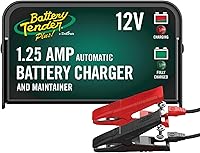
The Battery Tender Plus 12V 1.25 AMP Car & Motorcycle Battery Charger and Maintainer suits car, motorcycle, lawn mower, and ATV batteries you want to keep topped up. It uses a 4 step charging program and a two color light to show charge state.
Battery Tender says the charger adapts to the battery and resumes full output if voltage drops too far under load. It includes fused ring terminal and alligator clip cables, and the brand backs it with a 10 year warranty.
The trade off is speed. At 1.25 amps, it maintains and recovers small batteries well, but a large or deeply flat battery will take a long time.
For a generator starter battery that has been sitting for months, check how to charge a generator starting battery before you assume one session will fix it.
How do you charge a lithium or LiFePO4 battery with a generator?
Charge a lithium battery with a generator using a charger made for lithium or LiFePO4 chemistry. The charger profile is the key step, because lithium batteries need different voltage limits than lead acid batteries.
Do not use a flooded lead acid charger on a LiFePO4 battery, as it can overcharge cells and cold charging can damage them. A dedicated lithium charger watches voltage and stops at the correct point.
Many owners choose one of the best LiFePO4 battery chargers for RV and solar banks. For a 100Ah bank, our guide to the best 100ah lithium battery charger explains why a small maintainer is usually too slow.
How do you charge a 100Ah lithium battery bank?
Charge a 100Ah lithium bank with a lithium charger that can deliver enough amps for the task. A 1.25 amp maintainer can take days to refill a flat 100Ah bank, so plan on a higher output charger for that size.
Match the charger voltage to the bank voltage, not just the cell count in your head. A 12V bank needs a 12V charger, and a 24V bank needs a 24V charger.
Run the generator in planned sessions and check the battery state between runs. Lithium batteries accept charge quickly in the middle range, then taper near full.
What cables and connectors do you need?
You need sound cables, correct connectors, and enough length to keep the charger and generator in safe spots. A 25 foot extension can let you place the generator away from the battery while the charger stays close to it.
SAE and ring terminal connectors are a common choice because they connect fast and stay put. Ring terminals bolt to the posts and resist vibration.
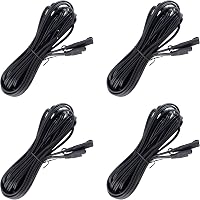
The Battery Tender 25 Foot Extension SAE Cable extends reach by 25 feet for use with Battery Tender chargers. The brand lists compatibility with Junior, Plus, 2 Bank, 4 Bank, 5 Bank, and 10 Bank chargers.
Battery Tender says this cable is not for products with hard wired clips or 6 volt Plus units with white quick disconnect plugs. Check your charger plug shape before you order, since a mismatched plug will not seat fully.
Keep cords out of walkways, off hot surfaces, and away from exhaust. If a cord must cross a path, cover it or reroute it so no one trips or pulls it loose.
How do you connect a charger to battery posts safely?
Connect a charger to battery posts safely by working with the generator off, matching positive to positive, and tightening each connection by hand first. Work one terminal at a time and keep metal tools away from both posts at once.
A wrench that touches both posts can short the battery and throw sparks. Keep jewelry and loose metal away from the top of the battery.
Fused ring terminals add protection because the fuse limits damage if a cable shorts. The Battery Tender Plus set includes fused ring terminal cables for this purpose.
How long does it take to charge a battery from a generator?
Charge time depends on battery size, charge state, charger amps, and efficiency losses. Use amp hours divided by charger amps as a rough estimate, then add time for the slower final stage.
A small 18Ah battery at half charge needs about 9 amp hours replaced. At 1.25 amps, that is over 7 hours before losses, while at 5 amps it is under 2 hours in theory.
Battery Tender notes the Plus charger delivers 1.25 amps, compared with 750 milliamps on its Junior model. That extra output helps larger motorcycle batteries recover faster, while still providing float maintenance.
Fuel use follows run time, not charge amount alone.
What safety steps matter when charging batteries outdoors?
Follow basic outdoor safety steps and treat the generator as an electrical and exhaust hazard. Keep the generator outside, keep cords dry, and never touch connections while the charger is running.
Place the generator so exhaust blows away from doors and windows. Carbon monoxide can drift with light wind, so check the direction before starting and again if it shifts.
Use ground fault protected outlets where provided and keep plugs off wet ground. Inspect cords for cuts, cracks, or loose prongs before each use.
If a battery will not hold a charge, the cause may be age, a bad cell, or a parasitic draw. Our guide on why is my generator battery not charging covers common causes, and charging is done when the full or float light shows and voltage holds steady.
How do you choose the right battery and setup for your needs?
Choose a replacement battery by voltage, capacity, size, and terminal type, not by brand alone. The battery must fit the tray, match the system voltage, and offer enough capacity for the loads you plan to run.
A generator starter battery must crank the engine reliably. A house or RV bank must run lights, fans, and devices for hours.
Our roundup of best deep cycle battery chargers covers chargers for deep cycle banks. Our guide on types of inverter battery helps you match battery labels to the right charger mode.
Which battery fits a generator starting role?
The Mighty Max Battery ML18-12 is a 12V 18AH sealed lead acid rechargeable battery made for generator starting roles, including the Champion Generator 9000 7000 named in its title. Dimensions are 7.17 x 3.03 x 6.57 inches, with nut and bolt terminals.
Mighty Max describes it as a sealed lead acid battery with high discharge rate and deep discharge recovery. The listing includes the battery and screws only, with no wire harness or mounting accessories.
That high discharge trait suits cranking, where a short burst of power matters more than hours of runtime. Owners who need a larger bank for house loads should look at the best 12v 100ah lithium battery options instead.
For a car, motorcycle, or ATV in storage, the Battery Tender Plus is a simple maintainer choice. For reach, add the 25 foot extension when the generator must sit far from the battery.
Frequently asked questions
Can a generator charge a battery?
Yes, when it powers an external charger suited to the battery. The generator supplies AC power, the charger converts it to the voltage and profile the battery needs, and the connections do the rest.
Never connect a generator directly to battery terminals.
How long should a generator run to charge a battery?
It depends on how flat the battery is, the charger output, and the battery size. A small maintainer may need many hours, while a higher output charger works faster.
Check voltage and follow the charger guidance instead of guessing by time alone.
Can I charge a lithium battery with a generator?
Yes, if the charger is made for lithium or LiFePO4 batteries. Use a charger with the right charging profile and low temperature protection where required.
A standard lead acid charger may not charge lithium correctly.
Is it safe to charge batteries from a generator?
It is safe when the generator stays outdoors, the charger matches the battery, and cables stay dry and undamaged. Keep exhaust away from doors and windows, use a ground fault protected outlet where available, and disconnect before moving cables.