What Is a Shunt Battery Monitor?
A shunt battery monitor measures current flowing in and out of a battery through a shunt, then tracks amp-hours used and remaining to show state of charge. It gives you a much better picture than voltage alone, especially under load.
On this page (11 sections)
- How does a shunt measure current to track charge?
- Where does the shunt sit in the wiring?
- Why is amp-hour counting better than voltage alone?
- Can a shunt monitor tell you state of charge?
- How do you install a shunt battery monitor safely?
- Do you need WiFi or Bluetooth to use a shunt monitor?
- Which products help you keep a monitored battery healthy?
- How should you read amp-hours, amps, and percent remaining?
- Buying guide: what should you check before you buy a shunt monitor?
- How do you keep a starting battery ready without a shunt?
- Final choice: what is a shunt battery monitor worth to you?
A shunt battery monitor measures current flowing in and out of a battery through a shunt, then tracks amp-hours used and remaining to show state of charge. If you are asking what is a shunt battery monitor, think of it as a fuel gauge that counts what leaves and what returns.
Voltage alone can mislead you. A battery can read near full at rest, then sag under a load.
A shunt watches the actual flow, so you know if you are at 80 percent or 40 percent before the lights dim.
How does a shunt measure current to track charge?
A shunt works because current creates a small, measurable voltage drop across a low-resistance resistor. The monitor reads that drop, turns it into amps, and adds up amp-hours over time.
That counting matters. A 10 amp load for 2 hours records 20 amp-hours used.
A charger putting 5 amps back for 1 hour records 5 amp-hours returned.
Compare used amp-hours to rated capacity. A 100 amp-hour bank with 30 amp-hours used shows about 70 percent remaining.
This is why a what is battery monitoring system guide starts with a shunt.
Where does the shunt sit in the wiring?
The shunt sits in series on the negative or positive main line, so all battery current passes through it. If current can bypass the shunt, the count will be wrong.
In most RV and marine installs, it goes on the negative side between the bank and the loads. Sense wires connect it to the monitor for voltage reference.
Keep it away from heat, water, and moving parts, and use the cable size and fuse ratings specified by the maker.
Solar, alternator, and shore charger current should also pass through the shunt.
Why is amp-hour counting better than voltage alone?
Amp-hour counting is better because voltage is a rough estimate, while counted charge reflects what you actually used. Voltage changes with load, temperature, charging state, and battery age.
Flooded lead-acid, AGM, and lithium batteries behave differently, so one fixed voltage chart can misread another type. A shunt count works across chemistries as long as you enter the correct capacity.
It still needs a correct capacity setting, a full-charge sync, and an occasional reset. For daily decisions such as running the furnace fan or inverter, counted amp-hours are easier to trust.
This is also why types of inverter battery matter. Your capacity number must match the actual bank installed.
Can a shunt monitor tell you state of charge?
Yes, a shunt monitor estimates state of charge by subtracting counted use from rated capacity. It is an estimate, not a direct chemical measurement, and it drifts if settings are off.
Set rated amp-hours, charge efficiency, and full-charge sync voltage for your battery type. Sync when the battery is truly full, usually after a complete charge with no load.
For details, see how to charge an RV battery.
Watch for drift. If it shows 100 percent but behavior suggests less, recalibrate.
For a best battery monitor with shunt shortlist, check for amps, amp-hours used, amp-hours remaining, and state of charge.
What settings affect accuracy most?
Capacity, efficiency, and sync settings affect accuracy most. A wrong capacity number shifts every percentage that follows.
A wrong efficiency setting makes solar or alternator charging look stronger or weaker than it is.
Use the battery maker's recommended settings for your chemistry. Lead-acid banks often need a lower charge efficiency than lithium.
If you change battery types, update the settings the same day.
How do you install a shunt battery monitor safely?
Install the shunt with power off, on the main battery line, using correct fusing and torque. This is not a place to save time with undersized wire or loose terminals.
Plan the layout first. Mount the shunt where you can reach it, keep it dry, and route sense wires away from sharp edges.
Follow the maker steps for polarity, fuse size, and calibration. Many monitors need a zero-current calibration before they track correctly.
Test with a known load. Turn on a light or fan with a known amp draw and confirm the monitor shows a similar current.
Do you need WiFi or Bluetooth to use a shunt monitor?
No, you do not need WiFi or Bluetooth for accurate counting, but the display can make daily checks easier. A wired display works where you park, while a phone app helps when the battery is in a compartment.
Bluetooth suits RV and marine setups because a phone is already on board. WiFi can help with remote checks, but it may need a gateway, extra power, and a stable signal.
If you compare battery monitor with wifi options to Bluetooth models, check range, app clarity, and whether counting continues when your phone is away. Our best bluetooth battery monitor guide covers phone-friendly displays for the helm or campsite.
Which products help you keep a monitored battery healthy?
A monitor tells you the state of charge. Chargers, cables, and a correct replacement battery keep that charge useful.
These three products fit that support role.
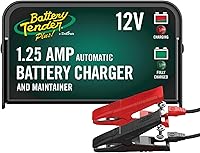
The Battery Tender Plus 12V 1.25 AMP Car charger uses a 4-step program and adapts to the battery's needs. It includes fused ring terminal and alligator clip cables, plus a quick disconnect harness.
That 1.25 amp output suits maintenance and recovery of smaller 12V batteries. Battery Tender says it is smarter than a trickle charger because it resumes full output if voltage drops too far under load.
Who should choose the Battery Tender Plus?
Choose the Battery Tender Plus if you store a car, motorcycle, lawn mower, or ATV and want simple float maintenance. Its 12 volt output, 1.25 amp rating, and two-color charge status light fit seasonal use.
Skip it if you need fast charging for a large depleted bank. A 1.25 amp charger will maintain well but will take longer to refill a deeply discharged battery.
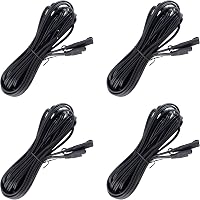
The Battery Tender 25 Foot Extension SAE Cable comes in a 4 pack and extends reach by 25 feet. It is designed for Battery Tender Junior, Plus, 2-Bank, 4-Bank, 5-Bank, and 10-Bank chargers.
That length helps when the charger outlet is across the garage or the battery sits in a compartment. Quick connect plugs make it easy to connect and forget it while charging.
Check compatibility before you order. Battery Tender says this cable is not for units that use hard-wired clips, and it should not be used with the 6 Volt Battery Tender Plus or units with white quick-disconnect plugs.
The Mighty Max Battery ML18-12 is a 12 volt, 18 amp-hour sealed lead acid rechargeable battery. Mighty Max says it is UL certified, maintenance free, and spill proof as an SLA and AGM style battery.
It can mount in any position and resists shocks and vibration, which helps in generator and powersports use. The battery and screws are included, with no wire harness or mounting accessories.
Mighty Max backs this battery with a full one year warranty. Measure your tray and check terminal placement before ordering, since the case size is fixed.
How should you read amp-hours, amps, and percent remaining?
Read the three numbers together. Amps show present flow, amp-hours show total used or left, and percent remaining shows the quick decision number.
If your bank is 100 amp-hours and the monitor shows 30 amp-hours used, you have about 70 amp-hours left. At a 10 amp load, that is about 7 hours before the low limit, in theory.
In real use, stop earlier. Lead-acid batteries should not be deeply discharged on a regular basis if you want longer life.
Lithium banks allow deeper use, but the maker limits still apply.
Use the percent reading to set habits. If you routinely hit 20 percent, you need more capacity, a faster charger, or smaller loads.
Buying guide: what should you check before you buy a shunt monitor?
Buy for correct shunt rating, clear display, and settings that match your battery type. A low-cost meter that cannot be calibrated may cost more in wrong decisions.
Check the shunt rating first. It must handle your largest load plus charging current, since an undersized shunt can overheat or read inaccurately at high current.
Check the display next. You want amps, amp-hours used, amp-hours remaining, state of charge, and voltage, plus settings for capacity, chemistry, charge efficiency, and sync behavior.
For marine use, compare our best marine battery monitor picks for sealed displays and corrosion-resistant hardware. For RV use, see best battery monitor for rv for compact displays.
How do you keep a starting battery ready without a shunt?
A starting battery usually does not need a shunt. It needs a clean charge, sound terminals, and a maintainer if storage is long.
If your generator or vehicle sits for weeks, a smart maintainer can help. See How to Charge a Generator Starting Battery? for steps that fit starting use.
The Battery Tender Plus fits this role for 12 volt car, motorcycle, and ATV batteries. Its float charge keeps the battery ready without constant topping.
Check the battery first. If an old starting battery cannot hold a charge, a monitor will not fix it.
Replace it with the correct size, such as the Mighty Max ML18-12 for the generator models it fits.
Final choice: what is a shunt battery monitor worth to you?
A shunt battery monitor is worth it if you run loads from a battery bank and need to know how much charge is left. It turns guesswork into counted amp-hours.
Pick a monitor with a shunt rated for your system, a readable display, and settings you can adjust. Pair it with a maintainer for storage batteries and the right replacement battery when capacity fades.
That simple setup gives you clear readings, better charging habits, and fewer surprise dead batteries.
Frequently asked questions
What is a shunt battery monitor?
A shunt battery monitor is a meter that tracks battery charge by measuring current through a shunt resistor. It counts amp-hours in and out, then calculates how much charge remains.
That count is more useful than voltage under load.
How does a shunt measure battery current?
The shunt is a low-resistance resistor placed in the main battery line. As current passes, it creates a tiny voltage drop.
The monitor reads that drop, converts it to amps, and integrates amps over time to track amp-hours.
Is a shunt monitor better than voltage alone?
Yes, for most RV, marine, and backup use. Voltage drops fast under load and rises after charging, so it can mislead you.
A shunt counts actual charge used, so you see remaining capacity more clearly during real use.
Do I need a shunt for a generator starting battery?
Usually no. A starting battery only cranks for a few seconds, and a simple check or maintainer may be enough.
A shunt helps more on house, solar, RV, or marine banks that run loads for hours.