How to Choose a Dual Group 27 Battery Tray
A dual group 27 battery tray should fit two batteries at the exact spacing, footprint and hold down pattern your batteries need. Measure the pair first, then match tray size, strap style and mounting holes to those numbers.
On this page (11 sections)
- How do you measure two Group 27 batteries for a dual tray?
- What interior dimensions should a dual Group 27 tray have?
- How do mounting holes and hold down kits work on a dual tray?
- How much spacing do you need between two batteries?
- What strap style works best for two Group 27 batteries?
- How do you choose between a boat tray and an RV or trailer tray?
- How does battery chemistry affect tray choice?
- How do you plan cable routing around a dual tray?
- How do you maintain a dual tray after installation?
- What mistakes should you avoid when you buy a dual Group 27 tray?
- Which dual Group 27 tray should you pick for your setup?
A dual group 27 battery tray should be chosen by paired footprint, not by battery group alone. You need the length, width and gap of two batteries side by side to match the tray interior.
Start with two batteries on a flat bench. Push them together the way you plan to run them.
Measure the outside length of the pair, the width across both, and the height to the top of the terminals.
Those three numbers decide almost everything. A tray that looks right in a photo can still fail if the strap slots land over a terminal or the mounting holes sit too close to a frame rail.
Our team checked specs, compared tray styles and looked at buyer patterns for mounting and hold down kits. We do not test trays hands on, so we rely on dimensions and maker details you can verify at home.
How do you measure two Group 27 batteries for a dual tray?
Measure the pair as one unit, because a dual tray holds the pair, not two separate batteries. Put both batteries in position, then measure length, width and height.
Write down the base length of each battery. Add the gap between them.
That sum is the minimum interior length your tray needs.
Measure width across both batteries at the widest point. Battery cases can taper, so check near the base and near the top.
Use the larger number for tray width.
Measure height from the tray mounting surface to the highest point. Include terminal posts and caps, not just the case top.
A strap or lid that clears the case can still hit a terminal.
Use a tape measure, not a guess from group size. Group 27 describes a battery class, but case details and terminal placement still vary by model.
Our best Group 27 batteries guide can help you confirm the battery before you size the tray.
Rule: never order a dual tray until you have the paired length, width and terminal height on paper.
What interior dimensions should a dual Group 27 tray have?
Interior size should match your paired measurements with a small working gap for straps and swelling room. Too tight can stress the case, and too loose lets the batteries shift.
Compare the tray interior length with your paired length. You want room for the hold down pads and a little side play, but not so much that the batteries can slide.
Check width the same way. A wide tray may let a pair rock side to side.
A narrow tray may force you to remove terminal caps or bend cables sharply.
Look for a raised lip or side wall height. A short lip gives less side support than a deeper wall.
For boats and trailers, that support matters more than it does on a flat bench.
If the maker does not publish interior dimensions, measure the base you plan to use and plan to return the tray if the pair does not sit flat. One practical line: check the exact inches before you order.
Rule: buy only when tray interior length and width match your paired numbers in writing.
How does tray material affect fit and care?
Plastic trays resist corrosion and are light, which helps in marine and RV use. They can flex, so check that the base stays flat under the weight of two batteries.
Steel trays are stiff and hold shape well. They need coatings to resist rust, and sharp edges can be a concern near cable insulation.
Aluminum trays are light and corrosion resistant. Cost is higher, and you still need to confirm hole spacing and strap slots.
Material does not change the fit rule. It changes how the tray handles vibration, moisture and repeated removal for charging.
Rule: pick a material you can clean and inspect, then confirm interior size before anything else.
How do mounting holes and hold down kits work on a dual tray?
Mounting holes must land on solid material you can reach from below or with bolts. A tray with perfect interior size still fails if the holes sit over a hollow panel or a wire loom.
Count the holes and note their pattern. Four holes spread near the corners usually give better stability than two holes in the middle.
Check hole diameter against the bolts you plan to use. Oversized holes let the tray shift.
Undersized holes force you to drill, which can weaken the tray edge.
Hold down kits use cross straps, J bolts or a top bar. The kit must reach across both batteries without pressing on caps or vent covers.
Read what the tray includes. Some trays ship with straps, some ship bare, and some include only a base.
Price the missing kit before you decide.
For cable sizing after the tray is fitted, our group 31 battery cable guide covers cable choice for larger battery banks.
Rule: match hole pattern and strap reach to your mounting surface before you pay for the tray.
How much spacing do you need between two batteries?
Spacing between batteries should be enough for straps, cables and inspection, without wasting tray length. Zero gap can make straps hard to seat and heat harder to check.
A small gap lets a strap pad sit flat on each top. It also gives you room to run a short jumper between positives or negatives without a sharp bend.
Too much gap wastes interior length and can let the pair spread under load. The hold down should close that gap and keep both batteries aligned.
Keep terminals reachable. If you place positives on the same side, cables run shorter.
If you place them on opposite sides, you may need longer cables and more bend space.
Measure the gap at the base and at the top. Tapered cases can look tight at the top and loose at the bottom.
The tray lip should support the wider part.
If you plan to mix battery types, check our group 27 battery agm guide first. Chemistry does not change tray size, but charger settings and terminal layout can change your setup.
Rule: set one gap on the bench, measure it, and use that gap for every tray comparison.
What strap style works best for two Group 27 batteries?
Strap style should press across both batteries without covering vents, caps or terminals. A strap that crosses a vent can trap gas or block inspection.
Cross straps that run lengthwise can hold a pair evenly. They need slots at both ends of the tray to stay aligned.
Top bar styles use a flat bar across the tops. They work well when terminal placement leaves a clear path for the bar.
J bolt styles hook through tray slots and press down on pads. They adjust well, but they need clearance under the tray for the hooks.
Check strap width and pad size. Narrow straps can dig into soft cases.
Wide pads spread pressure and sit better on flat tops.
Plastic straps resist corrosion. Steel straps last long but need rust protection.
Either style works if the reach and pad placement match your pair.
Rule: choose a hold down that presses on flat case areas only, never on caps or terminals.
How do you check strap clearance before you drill?
Dry fit the batteries, tray and straps on a bench first. Look for straps that touch vents, caps or cable clamps.
Slide the straps into their slots. Confirm the straps stay aligned when you lift one corner of the tray.
Check the underside. J bolts and strap ends need room below the tray.
A tray mounted flat on a panel can block that room.
Add cables to the dry fit. A strap that looks fine on bare batteries can hit a clamp once cables are attached.
Rule: if a strap touches a cap or terminal in a dry fit, change the strap style or tray.
How do you choose between a boat tray and an RV or trailer tray?
Boat and RV trays differ in vibration, moisture and access, not just size. A boat tray faces waves and spray, while an RV tray faces road shock and dust.
Boats need corrosion resistant material and hardware. Salt water punishes bare steel quickly.
Drainage matters too, because water can collect under batteries.
Trailers and RVs need strong hold downs for braking and rough roads. A tray that sits flat in a parked RV can still shift on a washboard road.
Access differs as well. Boat compartments can be tight and damp.
RV compartments can be wide but hard to reach from below.
Our best Group 27 battery trays for boats roundup shows tray styles made for marine use. Compare those interior sizes with the RV style you plan to buy.
Rule: buy for the motion and moisture of your install, not for the label on the tray.
How does battery chemistry affect tray choice?
Chemistry does not change Group 27 case size, but it changes charging, venting and terminal care. Those factors affect strap placement and cable routing.
AGM batteries are sealed and spill resistant. They still need secure mounting and correct charger settings.
Lithium batteries are lighter and often have different terminal layouts. Check cap height and strap clearance carefully.
Flooded lead acid batteries need vent access and electrolyte checks. A strap or lid must not block vents.
Our best Group 27 lithium batteries guide can help you confirm terminal position before you choose a tray. Terminal height can be the tallest point in the whole setup.
Rule: confirm chemistry and terminal height first, then choose straps that clear those parts.
How do you plan cable routing around a dual tray?
Cables should reach terminals without sharp bends or contact with tray edges. A good tray leaves space for cables to rise, bend and enter clamps in a straight line.
Plan positive and negative paths before you mount the tray. Shorter paths usually mean fewer bends and less stress on clamps.
Keep cables off sharp tray edges. A metal edge can wear insulation over time, especially under vibration.
Leave service loops. A little slack helps when you remove a battery for charging or replacement.
Separate signal and charger leads from heavy starter cables where you can. Heat and vibration hurt thin wires first.
Rule: dry fit cables with the tray and straps in place, and fix routing before you drill.
How do you maintain a dual tray after installation?
Check the tray on a schedule, because loose straps and rust start small and end with a shifting battery. A few minutes each month protects cables and terminals.
Look at straps for cracks, fraying or stretched holes. Replace a strap that no longer holds the pair flat.
Check mounting bolts for looseness. Snug them to the tray and surface maker guidance, and avoid over tightening plastic trays.
Look for corrosion at terminals and tray edges. Clean terminals with tools made for that job, and rinse away acid residue.
Check for water pooling under the tray. Dry the area, find the source and confirm the tray drains or can be lifted for drying.
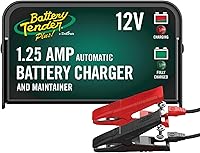
Use a smart maintainer between uses. The Battery Tender Plus uses a 4 step program and float charge for 12V automotive, motorcycle and ATV batteries.
It includes fused ring terminal and alligator clip cables, plus a quick disconnect harness. That setup suits stored boats, trailers and seasonal vehicles.
For background on battery types, read types of inverter battery in our batteries and chargers guide.
Rule: inspect straps, bolts and terminals monthly, and replace parts at the first sign of looseness.
What mistakes should you avoid when you buy a dual Group 27 tray?
The most common mistake is ordering by group size without paired measurements. Dual means two batteries, but it does not promise a fit for your two.
A second mistake is ignoring terminal height. A tray and strap can clear the case and still hit a tall terminal or cap.
A third mistake is buying a bare tray without pricing the hold down kit. Straps, J bolts and pads cost money and time.
A fourth mistake is mounting over a weak surface. Plywood, thin fiberglass and hollow panels need backing plates or a stronger base.
A fifth mistake is skipping a dry fit. Cables, clamps and charger leads change clearance in ways a dimension chart cannot show.
If your setup also needs generator power planning, our dual fuel or tri fuel generator guide and propane or gasoline for a dual fuel generator guide cover fuel choices for larger power systems.
Rule: if you cannot verify interior size, hole pattern and strap reach, do not buy that tray.
Which dual Group 27 tray should you pick for your setup?
Pick the tray that matches your paired length, width, terminal height and mounting surface in writing. That match matters more than brand, color or price tier.
For a boat, favor corrosion resistant material, drainage and a hold down that handles motion. For an RV or trailer, favor a stiff base, strong straps and bolts you can check often.
For flooded batteries, keep vents clear and leave room for checks. For AGM or lithium, keep strap pads off caps and confirm terminal height.
Bring your measurements to every product page. Compare tray interior size, hole count, strap style and included hardware side by side.
Our best Group 27 battery roundup can help you lock in the batteries first, so your tray measurements stay final.
Rule: choose the tray that fits your measured pair and your install surface, then add the matched hold down kit and dry fit cables before you drill.
Frequently asked questions
What size is a dual Group 27 battery tray?
A dual Group 27 tray must match the length and width of two Group 27 batteries plus the gap between them. Measure each battery base and the side to side spacing, then compare those numbers with the tray interior.
Do not order by the word dual alone.
Can one tray hold two different battery sizes?
A tray designed for two Group 27 batteries may not hold a different size safely. Different footprints change strap angle and side support.
Measure both batteries and buy a tray made for that exact pair.
Do I need a hold down kit with a dual tray?
Yes, most dual trays need a hold down kit or cross straps that match the tray holes. The kit keeps the pair from moving under braking, waves or rough roads.
Check what is included and what you must buy next.
How do I measure battery spacing for a dual tray?
Place both batteries on a flat surface with the gap you plan to use. Measure from the outer edge of one battery to the outer edge of the other.
That total length is the key number for tray fit.
Can I use cables to check a tray before mounting it?
Yes, you can dry fit cables and clamps with the batteries and tray on a bench. Check terminal access, cable bend space and strap clearance.
Fix routing problems before you drill mounting holes.