
How Do You Choose Between Propane or Gasoline for a Dual Fuel Generator?
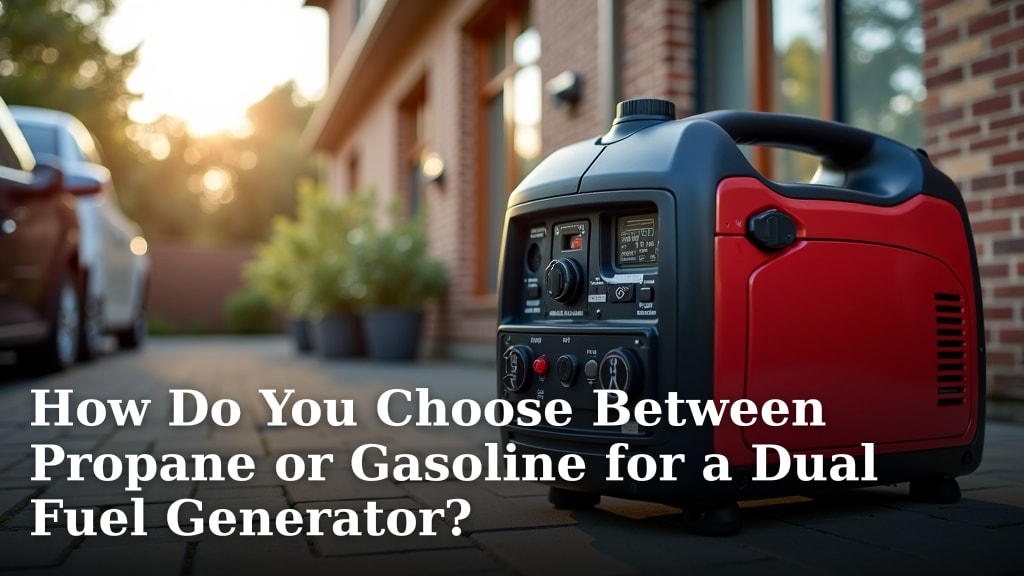
To choose between propane or gasoline for a dual fuel generator, consider your priorities: Propane offers longer storage life and cleaner burning, while gasoline provides more power and is easier to find during everyday use. The best choice often depends on your specific needs, like how long you need backup power or how often you’ll refuel.
Making the right fuel choice for your dual fuel generator can seem tricky, but it boils down to understanding the pros and cons of each. We found that both fuels have distinct advantages for different situations. What works best for a weekend camping trip might not be ideal for a long-term power outage. You want to make sure you’re ready for anything, right?
- Propane stores longer, but gasoline is more energy-dense.
- Gasoline is widely available; propane requires special tanks.
- Propane burns cleaner, leading to less engine wear.
- Gasoline generators generally offer more raw power.
- Consider your local fuel access and storage safety.
Let’s walk through the details of each fuel type. This will help you decide which option is truly best for your dual fuel generator. We’ll help you make an informed decision and be prepared when the power goes out.
Making the Right Fuel Choice for Your Dual Fuel Generator
Deciding between propane and gasoline for your dual fuel generator comes down to your personal priorities and typical use cases. Each fuel has distinct advantages that make it better suited for different situations. Let’s break it down to help you make an informed choice.
Understanding Gasoline: Power and Accessibility
Gasoline is a familiar fuel, readily available at almost any gas station. You likely already use it for your car or lawnmower. For generators, it’s known for its higher energy density, meaning a smaller volume of gasoline can produce more power than the same volume of propane. This often translates to more watts per gallon for your generator.
Advantages of Gasoline for Generators
When you need quick, high-output power, gasoline often leads the way. We found several key benefits that make it a popular choice for many generator owners.
- Higher Power Output: Gasoline typically allows your generator to run at its maximum rated wattage. If you need to power many appliances or heavy-duty tools, gasoline might be your go-to.
- Easy to Find: During normal times, gas stations are everywhere. This makes topping off your fuel supply very convenient.
- Familiarity: Most people are comfortable handling and storing gasoline, as it’s a common household fuel.
Disadvantages and Concerns with Gasoline
While gasoline offers power and convenience, it also comes with some drawbacks you should consider. These can be significant, especially during emergencies or long-term storage.
- Poor Shelf Life: Gasoline degrades over time, often becoming unusable after 3-6 months without stabilizers (U.S. Department of Energy). This means you can’t just keep a tank in the garage for years on end.
- Flammability and Storage Risks: Gasoline is highly volatile and flammable. Storing large quantities safely is a serious concern, requiring approved containers and well-ventilated areas away from ignition sources.
- Environmental Impact: Gasoline produces more emissions when burned compared to propane, contributing more to air pollution. It also creates a distinct, stronger exhaust smell.
- Engine Maintenance: Over time, gasoline can leave deposits in your generator’s carburetor and fuel lines, potentially leading to more frequent maintenance or repair issues if not properly stored or used.
Exploring Propane: Cleanliness and Longevity
Propane, or Liquid Petroleum Gas (LPG), is stored under pressure in tanks. It’s also a common fuel, used for BBQ grills, outdoor heaters, and sometimes home heating. For generators, propane shines in areas where gasoline falls short, particularly regarding storage and emissions.
Advantages of Propane for Generators
Thinking about a long-term power solution? Propane might be your best friend. Its benefits often come to light when gasoline runs into problems.
- Excellent Shelf Life: Propane can be stored almost indefinitely without degradation. This makes it ideal for emergency preparedness, as you can keep tanks on hand for years.
- Cleaner Burning: Propane burns much cleaner than gasoline. This means less carbon buildup in your generator’s engine, which can extend its lifespan and reduce maintenance needs.
- Safer Storage (in some ways): While still very flammable, propane is stored in sealed tanks, reducing the risk of spills and evaporation. A leak is often detectable by its odor additive before it becomes a major problem.
- Readily Available (if you know where to look): Propane is widely distributed for home heating and grilling, often found at hardware stores, gas stations, and dedicated propane dealers.
Disadvantages and Considerations with Propane
No fuel type is perfect, and propane has its own set of challenges. Understanding these can help you better plan your fuel strategy.
- Lower Power Output: Generators running on propane typically produce slightly less wattage compared to gasoline. If maximum power is your primary concern, this is something to note.
- Lower Energy Density: You’ll need more propane by volume to achieve the same run time as gasoline. This means carrying more tanks for extended use.
- Specialized Tanks: Propane requires heavy, specialized tanks, which can be cumbersome to transport and store, particularly larger sizes. Refilling these tanks can also be less convenient than simply pumping gas.
- Evaporation in Extreme Cold: Propane can have issues vaporizing properly in extremely cold temperatures, which might affect your generator’s starting ability or performance. For very cold climates, consider a heated enclosure or specialized propane system.
Comparing Propane vs. Gasoline: Key Factors to Consider
Now that you know the ins and outs of each fuel, let’s look at how they stack up side-by-side using key decision factors. We want to help you align your choice with your specific needs.
| Feature | Gasoline | Propane |
|---|---|---|
| Power Output | Higher (usually max watts) | Slightly Lower (usually ~90% of max watts) |
| Storage Life | 3-6 months (without stabilizer) | Indefinite |
| Availability | Very High (gas stations) | High (hardware stores, gas stations, dealers) |
| Emissions | Higher (more fumes, smell) | Lower (cleaner burn, less smell) |
| Fuel Costs | Varies, often higher per hour of run-time than propane for some generators | Varies, often lower per hour of run-time than gasoline for some generators |
| Engine Maintenance | More often advised (carburetor issues) | Less often advised (cleaner burn) |
| Safety | Flammable liquid, spill risk | Pressurized gas, heavy tanks |
When to Lean Towards Gasoline
You might find yourself gravitating towards gasoline if certain situations describe your typical generator use. Think about what you need immediately and how often you’ll be using the generator.
- Short-Term Power Needs: For brief outages or quick tasks where you need maximum power for a few hours, gasoline is a solid choice.
- Maximum Power Output Required: If you absolutely need every watt your generator can produce to power large appliances or tools, gasoline usually delivers.
- Readily Accessible Fuel: If you live in an area with easy access to gas stations and don’t anticipate long-term fuel storage needs, gasoline is convenient.
When to Favor Propane
Propane shines in different scenarios, especially when planning for emergencies or seeking a more environmentally friendly option for a dual fuel generator. We often recommend it for preparedness.
- Emergency Preparedness Kits: Propane’s indefinite shelf life makes it perfect for storing alongside your emergency supplies. No need to rotate fuel every few months!
- Extended Power Outages: Having multiple propane tanks allows for longer run times without needing to refuel as often as you might with gasoline.
- Cleaner Operation: If you’re sensitive to exhaust fumes or concerned about minimizing your environmental footrpint, propane is the cleaner option. It also means less gunk in your engine (Environmental Protection Agency).
- Reduced Maintenance: Because it burns cleaner, propane can help extend the life of your generator’s engine and reduce the frequency of maintenance.
Maximizing Your Dual Fuel Generator’s Versatility
Remember, the beauty of a dual fuel generator is its flexibility! You don’t have to pick just one fuel forever. You can use both, strategicially. For instance, some people start their generator on propane because it’s gentler on the engine, then switch to gasoline for higher power demands.
Many experts recommend keeping both fuel types available, especially for emergencies. This way, if one fuel source becomes scarce or runs out, you have a backup. It’s like having a plan B, and a plan C!
Your Generator Fuel Checklist
Ready to make your decision? Use this quick checklist to guide your final choice for your dual fuel generator. Think about what matters most to you.
- Do you need maximum wattage for heavy loads? (Gasoline)
- Is long-term fuel storage a priority for emergencies? (Propane)
- How often are you willing to perform generator maintenance? (Propane requires less)
- Is easy, everyday refueling your main concern? (Gasoline)
- Are you sensitive to fumes or concerned about emissions? (Propane)
- Do you live in an area with reliable access to both fuel types?
Conclusion
Choosing between propane and gasoline for your dual fuel generator really comes down to your priorities. We’ve seen that gasoline offers raw power and easy local access for immediate needs, while propane provides unmatched storage life and a cleaner burn for long-term preparedness and reduced maintenance. Think about your typical use, your storage capabilities, and how often you’ll need to refuel.
The best strategy for many is to embrace the versatility of your dual fuel generator. Keep both options available. Equip yourself for any scenario by having tanks of propane for extended outages and a fresh supply of stabilized gasoline for maximum wattage. Your preparedness depends on understanding these differences and planning ahead.
Frequently Asked Questions
Can I switch between propane and gasoline while my dual fuel generator is running?
Generally, yes, most dual fuel generators are designed to allow you to switch fuel types while the engine is running. However, it’s often recommended to let the engine run for a minute or two on the old fuel to clear the fuel lines before introducing the new one. Always check your generator’s specific owner’s manual for the manufacturer’s recommended procedure.
Does using propane affect my generator’s warranty?
No, using propane on a dual fuel generator specifically designed for it will not void your warranty. These generators are built to operate safely and effectively on both fuel types. Ensure you are using the correct connections and following all safety guidelines outlined in your generator’s manual.
How can I safely store gasoline for my dual fuel generator long-term?
For long-term gasoline storage, you should always use certified, airtight fuel containers. Add a high-quality fuel stabilizer, and store the cans in a cool, dry, well-ventilated area away from direct sunlight, heat sources, and ignition sources. Remember to rotate your fuel supply every 6-12 months, even with stabilizers.
What size propane tank should I use for my dual fuel generator?
The ideal propane tank size depends on your generator’s run time at specific loads and how long you anticipate needing power. For casual use, a standard 20lb BBQ tank might suffice. For extended outages, larger 30lb, 40lb, or even 100lb tanks, or connecting to an existing home propane supply, would be more practical to avoid frequent refilling.
Will my dual fuel generator produce less noise on propane than on gasoline?
The noise level of your dual fuel generator is primarily determined by its engine design and load, not necessarily the fuel type. While propane burns cleaner, it doesn’t significantly impact the decibel output. Some users report a slightly smoother engine sound on propane, but the overall noise level usually remains consistent between fuels under similar load conditions.
