8 Best Self-Heating LiFePO4 Batteries (November 2026)
The best self heating LiFePO4 batteries include the Litime 12v 100Ah RV Self-Heating LiFePO4 Lithium for most RV owners, the VATRER POWER 12.8V 300Ah Self-Heating LiFePO4 Lithium Battery for high capacity on a budget footprint, and the ECO-WORTHY EnergyRock 12V 280Ah Metal Case LiFePO4 for rugged metal case mounting.
On this page (8 sections)
- How self-heating LiFePO4 batteries work
- How we compared these self-heating batteries
- What heating temperature range does a self-heating LiFePO4 battery use?
- How much capacity do you need for cold-weather RV use?
- Self-heating vs low-temperature protection: which do you need?
- How do brands and sizes compare for RV and off-grid use?
- How should you set up and care for a self-heating battery?
- Verdict: which self-heating LiFePO4 battery should you buy?
The best self heating LiFePO4 battery for most RV owners is the Litime 12V 100Ah model, because it combines two heating modes with a standard Group 24 fit. You get cold-weather charging without rewiring your battery box.
Self-heating matters because standard LiFePO4 batteries should not be charged below freezing. For a broader chemistry comparison, see our LiFePO4 vs lithium-ion batteries guide.
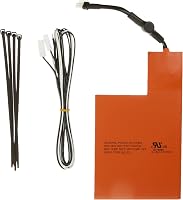
The built-in heating film warms the cells first, then normal charging starts.
Our score weighs specs, features and buyer feedback against what you are shopping for. We checked capacities, heating triggers, BMS ratings, weights and fit, then ranked each pick for cold-weather RV and off-grid use.
If you are still comparing battery types, our guide to types of inverter battery explains how these packs pair with inverters. For a wider look at deep cycle options, see our best lithium deep cycle battery roundup.
Our picks at a glance
-
1
 Best for most RV owners
Litime 12v 100Ah RV Self-Heating LiFePO4 Lithium
9.7/10 our score
See it on Amazon -
2
 Best for high capacity on a budget footprint
VATRER POWER 12.8V 300Ah Self-Heating LiFePO4 Lithium Battery
9.6/10 our score
See it on Amazon -
3
 Best for rugged metal case mounting
ECO-WORTHY EnergyRock 12V 280Ah Metal Case LiFePO4
9.5/10 our score
See it on Amazon
- 4
 Check it
VATRER POWER 12V 300AH Deep Cycle LiFePO4 Lithium
Best for detailed cold-charge control - 5
 Check it
VATRER POWER 12.8V 460Ah Self-Heating LiFePO4 RV
Best for large RV power banks - 6Check it
Litime 12V 100Ah Self Heating RV LiFePO4
Best for Group 24 drop-in replacement - 7
 Check it
VATRER POWER 12V 600AH Self-Heating APP LiFePO4 Lithium
Best for maximum off-grid capacity - 8
 Check it
ECO-WORTHY 12V 314AH LiFePO4 Lithium Battery Bluetooth
Best for status LEDs and expansion
How self-heating LiFePO4 batteries work
A self-heating LiFePO4 battery warms its own cells before it accepts a charge in cold weather. The BMS watches cell temperature and switches on a heating film when you connect a charger.
The Litime models heat below 41°F (5°C) on Regular mode and stop at 50°F (10°C) to begin charging. The VATRER POWER 300Ah model heats below 32°F (0°C) when charging current exceeds 10A, then stops at 41°F (5°C).
The VATRER POWER 460Ah model activates heating from -4°F to 41°F. The 600Ah model activates below 32°F and stops at 41°F.
That trigger range is the key spec to compare. A lower trigger lets you charge earlier in a cold snap, while a higher stop temperature gives the cells more warm-up time.
Some batteries in this group do not heat at all. The ECO-WORTHY models use low-temperature protection that cuts off charging below a set temperature instead of warming the cells.
What the heating cycle means for energy use
Heating draws power before charging begins. In practice, that means the first part of a cold charge goes to warming the pack, and only then does stored capacity rise.
The trigger and stop points change how long that warm-up lasts. A pack that stops at 50°F will spend more time warming than one that stops at 41°F.
For RV use, that trade-off matters on short trips. If you only plug in briefly in very cold weather, a higher stop point can use a larger share of the session just to warm the cells.
For off-grid use, the same point protects long-term cell health. Warming first avoids charging a cold pack, which is the damage the BMS is designed to prevent.
Litime 12v 100Ah RV Self-Heating LiFePO4 Lithium: Best for most RV owners
- 12V 100Ah capacity
- Two heating modes
- Bluetooth 5.0 monitoring
- Group 24 fit
- 4000+ cycles at 100% depth of discharge
A 100Ah self-heating battery that fits a Group 24 box, with two heating modes for cold-weather charging and Bluetooth monitoring through the LiTime app.
Pros
- Two heating modes
- Standard Group 24 fit
- Bluetooth monitoring
- Expandable to 16 batteries
Cons
- Not for starting batteries
- 100Ah suits smaller loads than the larger picks
This Litime battery suits RV owners who want a direct lead-acid replacement in a standard Group 24 box. At 100Ah and 12.8V, it runs lights, fans and a fridge for a weekend without a large bank.
Its two heating modes are the main reason it ranks first here. Regular mode heats below 41°F and stops at 50°F, while Energy-Efficient mode uses less power for milder cold.
Bluetooth 5.0 monitoring through the LiTime app shows real-time status. That helps you catch a low charge before a shutdown on a cold morning.
At 21.8 lb, it is far lighter than a lead-acid equivalent and saves space. It is rated for 4000+ cycles at 100% depth of discharge and carries a 5-year warranty.
The IP65 rating means dust and water resistance for rain, saltwater and humidity. Against the larger picks, the trade-off is capacity, so heavy users should look at the 300Ah and larger options below for longer runtime.
VATRER POWER 12.8V 300Ah Self-Heating LiFePO4 Lithium Battery: Best for high capacity on a budget footprint
- 12.8V 300Ah capacity
- Built-in self-heating
- APP monitoring
- 200A BMS
- Over 5000 cycles at 100% depth of discharge
A 300Ah battery with self-heating and app monitoring, sized for RV, marine, solar and off-grid use where one large battery replaces several smaller ones.
Pros
- 300Ah in one unit
- App monitoring
- 200A BMS
- Includes two tie-down straps
Cons
- Not recommended in series for golf carts
- 54.7 lb needs a solid mount
This VATRER POWER battery suits buyers who want 300Ah without wiring three 100Ah packs together. One unit at 12.8V 300Ah replaces a large bank and cuts down on cables.
The built-in self-heating function supports smooth charging and discharging in low temperatures. VATRER POWER says it shields the battery from cold-induced damage.
App monitoring shows current, voltage, temperature and cycle count. You can check the pack from your phone instead of opening a battery compartment.
A 200A BMS protects against overcharging, over-discharging, low and high temperature, overcurrent and short circuits. It is rated for over 5000 cycles at 100% depth of discharge.
At 54.7 lb and 15.12 x 7.64 x 9.76 in, it needs a fixed mount, and the box includes two tie-down straps. VATRER POWER does not recommend series use in golf carts.
Against the 100Ah Litime picks, it offers three times the capacity but needs more floor space and a stronger mount.
ECO-WORTHY EnergyRock 12V 280Ah Metal Case LiFePO4: Best for rugged metal case mounting
- 12V 280Ah capacity
- Metal case
- Safety switch
- Bluetooth monitoring
- 200A BMS with low-temperature protection
A 280Ah battery in a metal case with a safety switch and Bluetooth monitoring. It protects against low temperatures by stopping charging rather than heating.
Pros
- Metal case, no battery box needed
- Safety switch disconnects output
- Shock and vibration resistant
Cons
- Low-temperature protection stops charging instead of heating
- 68.6 lb is heavy for portable use
This ECO-WORTHY EnergyRock suits RV and camper owners who want a metal case instead of a plastic box. The heavy-duty metal enclosure adds heat resistance and fire protection.
It is a 12V 280Ah pack with a max of 3584Wh. ECO-WORTHY says Grade A LiFePO4 cells provide reliable performance for RV, camper and off-grid use.
A safety switch lets you disconnect the discharge circuit with one touch. That helps during installation, maintenance or storage, and ECO-WORTHY says to make sure the low-current switch is on before use or checking voltage.
The reinforced case and internal cell holders resist shock and vibration on the road. Four mounting feet allow direct installation without an extra battery box.
Be clear on the cold-weather behavior, though. The 200A BMS stops charging in low temperatures rather than heating the cells, so true self-heating picks suit cold charging better than this one.
VATRER POWER 12V 300AH Deep Cycle LiFePO4 Lithium: Best for detailed cold-charge control
- 12V 300Ah capacity
- Self-heating below 32°F
- APP monitoring
- 200A BMS
- Charges from lithium charger, solar or generator
A 300Ah deep cycle battery whose self-heating starts when the temperature drops below 32°F and charging current exceeds 10A, then stops at 41°F.
Pros
- Heating tied to charger current above 10A
- Three charging methods
- App shows capacity, voltage, current, power and temperature
Cons
- Not suitable for golf carts in series
- Heating needs a charger connected
This VATRER POWER 300Ah model suits buyers who want precise control over when heating starts. Heating activates after charger connection when current exceeds 10A and temperature drops below 32°F.
The heating film draws power from the charging current. Heating stops and standard charging resumes when the temperature rises to 41°F.
App monitoring shows remaining capacity, voltage, current, power, fault alerts and temperature. That data helps you confirm the pack has warmed before a full charge.
It charges three ways: a 14.6V lithium charger, solar power or a generator. VATRER POWER says a 14.6V 70A charger takes about 4.3 hours for a full charge, while solar at 800W or more takes about 4.8 hours.
The built-in 200A BMS adds overcharging, over-discharging, overcurrent, short circuit and extreme temperature protection, plus intelligent cell balancing. It is not suitable for golf carts in series.
Against the other 300Ah pick, its main difference is this documented heating trigger and its three stated charging methods.
VATRER POWER 12.8V 460Ah Self-Heating LiFePO4 RV: Best for large RV power banks
- 12.8V 460Ah capacity
- Automatic self-heating
- APP monitoring
- 300A BMS
- SPCC case with main switch
A 460Ah RV battery with automatic self-heating from -4°F to 41°F and a 300A BMS, built to power high-draw appliances such as air conditioners and ovens.
Pros
- 460Ah equals five 100Ah batteries in less space
- 300A continuous discharge
- Expandable to 51.2V 1840Ah
Cons
- 104.7 lb needs a fixed installation
- Large footprint at 18.9 x 10.82 x 9.84 in
This VATRER POWER 460Ah battery suits large RVs that run air conditioners, TVs and ovens on battery power. At 12.8V 460Ah, it equals five 100Ah batteries in about 1.1 cubic feet of space.
Automatic self-heating activates when connected to a charger between -4°F and 41°F. Heating stops at 41°F, then formal charging begins.
An upgraded 300A BMS supports 300A continuous discharge. That higher current rating matters when you run high-draw appliances through an inverter.
The high-quality SPCC case is wear-resistant, and a main switch turns output on or off at the touch of a button. App monitoring shows current, voltage, temperature and cycle life.
At 104.7 lb, this is a fixed installation, not a portable pack. It expands to a 51.2V 1840Ah system in 4P4S for very large banks, with 24-hour customer service listed.
Against the 600Ah pick, it gives up peak capacity but keeps a wider stated heating range and a more compact footprint at 18.9 x 10.82 x 9.84 in.
Litime 12V 100Ah Self Heating RV LiFePO4: Best for Group 24 drop-in replacement
- 12V 100Ah capacity
- Two heating modes
- Bluetooth 5.0 monitoring
- 4000+ cycles
- Includes manual, washers, caps and terminal bolts
A 100Ah self-heating battery for campers and travel trailers, with the same two heating modes and Group 24 fit as the top pick, plus hardware in the box.
Pros
- Two heating modes
- Hardware included
- IP65 dust and water resistance
- 20+ safety protections
Cons
- Not for starting batteries, golf carts or jacks
- 100Ah capacity limits runtime for large loads
This Litime 100Ah model suits camper and travel trailer owners who want the same heating system as the top pick in a slightly different package. It uses Regular and Energy-Efficient heating modes.
Regular mode heats below 41°F and stops at 50°F to start charging. Energy-Efficient mode suits milder cold where you want to save charging power.
Bluetooth 5.0 monitoring through the LiTime app tracks status in real time. Litime says to charge with a lithium-activation or MPPT charger to activate Bluetooth after first receipt.
At 21.8 lb, it is 63% lighter than a 12V 100Ah lead-acid battery. It fits standard Group 24 boxes with no modifications, and it is rated for 4000+ cycles at 100% depth of discharge.
The box includes a manual, two flat washers, two insulation caps and two M8 terminal bolts. It is not suitable for starting batteries, golf carts or jacks.
Against the top Litime pick, the trade-off is the same 100Ah limit, so it suits smaller loads and simple replacements rather than large banks.
VATRER POWER 12V 600AH Self-Heating APP LiFePO4 Lithium: Best for maximum off-grid capacity
- 12V 600Ah capacity
- Automatic self-heating below 32°F
- 300A BMS
- Grade-A automotive cells
- 5000+ cycles
A 600Ah battery with automatic self-heating that stops at 41°F, designed for energy storage in marine, RV, camper and off-grid systems rather than starting.
Pros
- Largest capacity in this group
- 300A BMS with heating pads
- 5000+ cycles
Cons
- 107.7 lb and 25 in long
- For energy storage, not starting
This VATRER POWER 600Ah battery suits off-grid cabins and large home storage systems where runtime matters most. At 12V 600Ah, it is the largest pack in this group.
Automatic self-heating activates below 32°F and stops at 41°F. That lets you charge in low temperatures without restricting where the battery can work.
Grade-A automotive LiFePO4 cells pair with an upgraded 300A BMS with heating pads. Protection covers overcharging, over-discharging, overcurrent and short circuits.
VATRER POWER rates it at 5000+ cycles, compared with 300 to 500 cycles for lead-acid. At 107.7 lb, it is about 30% lighter than a lead-acid battery of the same capacity.
It measures 25 x 9.61 x 8.66 in, so plan floor space before ordering. VATRER POWER positions it for energy storage rather than starting.
Against the 460Ah pick, it adds capacity for large banks but keeps the same 300A BMS class, so check inverter and cable ratings before sizing the rest of the system.
ECO-WORTHY 12V 314AH LiFePO4 Lithium Battery Bluetooth: Best for status LEDs and expansion
- 12V 314Ah capacity
- Bluetooth monitoring
- SOC and status LED display
- 200A BMS with low-temperature protection
- 4019Wh energy
A 314Ah battery with Bluetooth, an LED status display and low-temperature charging cut-off below 19.4°F, expandable to 4P2S or 2P4S.
Pros
- LED status display plus app
- Built-in buzzer for fault alerts
- Expandable to 32.15kWh
Cons
- Low-temperature protection stops charging instead of heating
- Not a true self-heating model
This ECO-WORTHY 314Ah battery suits home backup and RV owners who want on-box status readouts. An intelligent LED display shows battery level and status at a glance.
Bluetooth monitoring through the ECO-WORTHY app gives remote access to vital information. A built-in buzzer alerts you to battery faults, while the app helps you check status and troubleshoot issues.
It stores 4019.2Wh and expands to 4P2S or 2P4S for 32.15kWh. Grade A cells give it a lifespan more than 3 times that of lead-acid.
The 200A BMS provides high and low voltage, overload and high and low temperature protection. Charging cuts off automatically below -7°C (19.4°F).
At 60.4 lb and 16.3 x 8.5 x 10.2 in, it is lighter than lead-acid equivalents but still a fixed install. That cut-off is not self-heating.
If you need to charge in freezing weather, one of the heated models above fits better than this one.
How we compared these self-heating batteries
We compared capacity, heating trigger, BMS rating, weight, fit and expansion across all 8 picks. Heating behavior got the most weight because it is the reason you are shopping for this type.
We checked whether each model heats the cells or simply stops charging. Two ECO-WORTHY models stop charging, while six models in this group include a heating function.
We also compared app monitoring, cycle ratings and warranty length where the brands publish them. Litime lists a 5-year warranty, and ECO-WORTHY lists 3 years on both of its picks.
Our score weighs specs, features and buyer feedback against what you are shopping for. The Litime 100Ah models score highest because heating, fit and monitoring come together at a manageable size.
How capacity, weight and BMS rating interact
Capacity alone does not decide runtime in daily use. The BMS rating sets the current limit for your inverter and appliances, so a 200A pack and a 300A pack behave differently under the same load.
Weight changes how you install the bank. The 100Ah Litime packs at about 21.8 lb can go in a standard box, while the 460Ah and 600Ah packs above 100 lb need a fixed, low mount.
Footprint is the other limit to check early. A 300Ah pack at 15.12 in long fits many RV compartments, while the 600Ah pack at 25 in long needs a clear floor run.
Expansion also changes the comparison. Some packs expand in parallel or series combinations, so check the stated system voltage and total capacity before buying a second unit.
What heating temperature range does a self-heating LiFePO4 battery use?
A self-heating LiFePO4 battery typically heats below 32°F to 41°F and stops at 41°F to 50°F. The exact range decides how cold it can get before charging starts.
The VATRER POWER 460Ah model allows the widest cold range, from -4°F. The Litime models stop heating at 50°F, which gives cells the most warm-up time.
How the heating triggers differ
Litime heats below 41°F in Regular mode and stops at 50°F. VATRER POWER's 300Ah model heats below 32°F when charging current exceeds 10A.
VATRER POWER's 460Ah and 600Ah models stop heating at 41°F. That means they start normal charging sooner than the Litime models.
Pick a lower stop temperature if you want faster charging, and a higher stop temperature if you want more cell warm-up before charging.
How much capacity do you need for cold-weather RV use?
For most RV owners, 100Ah to 300Ah covers weekend trips with lights, fans and a fridge. Larger banks suit full-time travel or home backup.
A 100Ah pack at 12.8V stores about 1280Wh. That suits a camper with modest loads, while 300Ah stores about 3840Wh for longer runs.
The 460Ah and 600Ah models suit high-draw appliances like air conditioners. Their 300A BMS ratings handle larger inverter loads than the 200A models.
If you already own a best battery monitor with shunt, you can track usage from any of these packs. Otherwise, use the built-in app monitoring on most picks here.
Capacity options in this group
The Litime models offer 100Ah in a Group 24 fit for simple replacements. The VATRER POWER 300Ah models triple that capacity in one unit.
The ECO-WORTHY 280Ah and 314Ah models sit between those sizes. The 460Ah and 600Ah models serve large RV and off-grid banks.
Self-heating vs low-temperature protection: which do you need?
Self-heating warms the cells so charging can start in cold weather. Low-temperature protection stops charging to protect the cells, but it does not warm them.
If you camp below freezing and need to recharge, choose a true self-heating model. The Litime and VATRER POWER heated picks do this.
If you store the battery in a heated space or only charge in mild weather, low-temperature protection may be enough. The ECO-WORTHY models fit that use.
A best lifepo4 battery heater is another option for batteries that lack built-in heating. It wraps or pads the battery to keep it warm.
How do brands and sizes compare for RV and off-grid use?
Litime focuses on Group 24 fit and two heating modes. Its 100Ah models suit direct replacements in RVs, campers and travel trailers.
VATRER POWER focuses on large capacities with app monitoring. Its range here runs from 300Ah to 600Ah for RV, marine and off-grid systems.
ECO-WORTHY focuses on metal cases and LED status displays. Its picks suit rugged RV mounting and home backup with visible status.
If you prefer a specific ecosystem, compare our best renogy lifepo4 battery and best victron lifepo4 battery guides for brand-specific options.
Size options for different setups
A 100Ah pack suits a 12V 100Ah replacement in a standard box. Our best 12v 100ah lithium battery guide covers that size in more depth.
For a larger 12V bank, our best 12 volt lithium battery guide compares capacities across brands. Check your compartment dimensions first.
How should you set up and care for a self-heating battery?
Connect a lithium-compatible charger and let the BMS run the heating cycle before charging. Do not force a charge below the battery's approved temperature.
VATRER POWER says its 300Ah heating model needs charging current above 10A to activate heating. Litime says to use a lithium-activation or MPPT charger to wake Bluetooth after first receipt.
Secure the battery so it cannot shift on the road. The ECO-WORTHY metal case uses mounting feet, while the VATRER POWER 300Ah model includes tie-down straps.
Check status through the app or LED display before a trip. That shows capacity, voltage, current and temperature without opening the compartment.
Charging and monitoring checks before a cold trip
Use the charger settings stated for your pack. ECO-WORTHY lists 14.6V absorption for its 280Ah model, with float disabled or set to 13.8V.
Wake monitoring after storage or first receipt. Litime notes that Bluetooth may need a lithium-activation or MPPT charge to activate.
Confirm the pack has warmed before expecting a full charge. The app data on the VATRER POWER and ECO-WORTHY picks shows temperature alongside capacity and voltage.
Verdict: which self-heating LiFePO4 battery should you buy?
Pick the Litime 12V 100Ah model if you want a Group 24 drop-in replacement with two heating modes. It is the best self heating LiFePO4 battery for most RV owners.
Pick the VATRER POWER 12.8V 300Ah model if you want triple the capacity in one unit. Pick the 600Ah model for large off-grid storage.
Choose the ECO-WORTHY EnergyRock if a metal case matters more than active heating. Its low-temperature protection stops charging instead of warming cells.
Measure your battery box first, then match capacity to your loads. Schedule a full charge before your first cold-weather trip so the heating cycle can run without rush.
Our top 3 picks at a glance
-
1
Best for most RV owners
Litime 12v 100Ah RV Self-Heating LiFePO4 Lithium
9.7/10 our score
See it on Amazon -
2
Best for high capacity on a budget footprint
VATRER POWER 12.8V 300Ah Self-Heating LiFePO4 Lithium Battery
9.6/10 our score
See it on Amazon -
3
Best for rugged metal case mounting
ECO-WORTHY EnergyRock 12V 280Ah Metal Case LiFePO4
9.5/10 our score
See it on Amazon