Battery Maintainer vs Trickle Charger: Which to Choose? (November 2026)
Choose a battery maintainer for long storage and a simple trickle charger only for short, supervised top-ups. A maintainer watches voltage and cycles on and off, while a plain trickle charger keeps pushing current and can overcharge a battery left connected for weeks.
On this page (10 sections)
- Battery maintainer vs trickle charger: the quick side by side
- Charging control: float charging vs steady current
- Storage suitability: what can stay connected for months
- Recovery speed: amps decide how fast a flat battery returns
- Battery types: lead-acid, AGM, gel and LiFePO4
- Amps and size: choosing 1A, 1.25A, 2A or 5A
- Cables, clamps and setup in real garages and sheds
- Who should buy which of these four
- Trade-offs and honest limits
- Final verdict: maintainer vs trickle charger
Choose a battery maintainer for long storage and a simple trickle charger only for short, supervised top-ups. In a battery maintainer vs trickle charger comparison, control matters more than the label, because a maintainer stops and rests while a basic trickle charger keeps pushing.
A trickle charger sends a small, steady current. That current can top off a battery in a day or two, but it does not watch voltage the way a smart maintainer does.
Over weeks, that steady push can cause overcharging, water loss in lead-acid batteries and shorter life.
A maintainer uses float charging. It charges until the battery is full, then drops to a low float state or switches off.
When voltage falls, it resumes. You can leave that type connected for seasonal storage with far less risk.
Our score weighs specs, features and buyer feedback against what you are shopping for. We compared amps, voltage, battery types, cable lengths and recovery features across four units, from 1A to 5A.


Battery maintainer vs trickle charger: the quick side by side
A maintainer controls voltage and cycles; a trickle charger supplies steady low current. That one difference decides storage safety.
| Point | Battery maintainer | Trickle charger |
|---|---|---|
| Charging control | Float charge, on and off by voltage | Steady low current |
| Long storage | Suited to weeks or months | Risky without voltage control |
| Recovery speed | Depends on amp rating | Usually slow |
| Battery types | Many models list lead-acid and LiFePO4 | Check the exact profile |
| Best use | Seasonal cars, bikes, RVs, boats | Short top-up before a trip |
The four units here blur the line on purpose. The NOCO GENIUS models act as charger, maintainer, trickle charger and desulfator in one box.
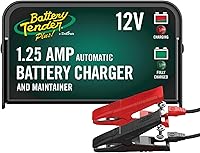
The Battery Tender Plus is a charger and maintainer built around float charging. Even so, the control logic matters more than the word on the box.
If you want the broader comparison first, our guide to types of inverter battery helps you match charger type to battery chemistry. That context matters before you pick amps.
Charging control: float charging vs steady current
Float charging protects a full battery; steady current does not know when to stop. That is why maintainers suit storage.
The Battery Tender Plus uses a 4-step program. It charges, then moves to float maintenance.
Battery Tender says its two-color LED shows charge state, and charging resumes at full output if voltage drops too far under load. In plain terms, it rests a full battery instead of cooking it.
The NOCO GENIUS5, GENIUS1 and GENIUS2 monitor voltage too. NOCO says each unit constantly monitors the battery and can stay connected indefinitely for maintenance.
An integrated thermal sensor adjusts charge based on ambient temperature, which helps prevent overcharging in heat and undercharging in cold.
A plain trickle charger without that logic has no feedback loop. It may be fine for a weekend top-up, but it is the wrong tool for a car stored from November to April.
The difference shows up as dry plates, swelling and a battery that dies a season early.
Storage suitability: what can stay connected for months
For storage longer than two weeks, pick a maintainer with float control. Leave a simple trickle charger unplugged once the battery is full.
Seasonal vehicles are the classic case. A classic car, a motorcycle, an ATV or a boat battery loses charge sitting still.
A maintainer replaces only the lost charge. The Battery Tender Plus, at 1.25 AMP, is aimed at automotive, motorcycle and lawn mower batteries in that exact role.
The NOCO units suit the same job with different speeds. The GENIUS1 at 1A and the GENIUS2 at 2A maintain small and mid-sized batteries for months.
The GENIUS5 at 5A maintains larger batteries and recovers them faster after storage.
Check our battery maintainer vs battery charger guide if you also need to revive a dead battery. Maintainers keep a good battery good.
Chargers bring a flat one back. Many smart units here do both, but at different speeds.
Recovery speed: amps decide how fast a flat battery returns
Higher amps recover a deeply discharged battery faster; 1A is for maintenance, not rescue. Pick amps by battery size and deadline.
The GENIUS5 delivers 5A. NOCO says it can charge batteries from as low as 1 volt, and Force Mode can manually charge a completely dead battery down to zero volts.
That matters after a vehicle sits all winter and drops too low for a gentle maintainer to wake.
The GENIUS2 at 2A and the GENIUS1 at 1A offer the same Force Mode and low-voltage charging. They will recover a battery, but more slowly.
For a small powersport battery, that pace is fine. For a truck or RV bank, plan on longer.
The Battery Tender Plus at 1.25A sits in the maintenance range. It is a top choice for maintaining car batteries during storage, but a large diesel bank may charge slowly.
If your deadline is this weekend, a higher-output unit like the 5A GENIUS5 is the safer pick.
Battery types: lead-acid, AGM, gel and LiFePO4
Match the charger profile to your battery chemistry before you connect anything. The wrong profile can damage a battery even at low amps.
The NOCO GENIUS5, GENIUS1 and GENIUS2 list 6-volt and 12-volt lead-acid batteries, including AGM, gel, SLA and VRLA, plus lithium-ion LiFePO4 batteries. That covers flooded, maintenance-free, deep-cycle, marine and powersport batteries.
The Battery Tender Plus lists 12V automotive, motorcycle, lawn mower and ATV use. Its data here does not list LiFePO4, so treat it as a lead-acid unit unless the exact model documentation for your battery says otherwise.
For lithium, our guide to best self heating lifepo4 battery options can help you confirm chemistry and charging needs. A maintainer that suits LiFePO4 is not automatic just because it suits AGM.
For a larger lithium setup, see 200Ah lithium battery boxes.
If you store vehicles off-grid, a best solar battery maintainer may fit better than a wall-plug unit. Solar maintainers suit boats and RVs parked without mains power.
Amps and size: choosing 1A, 1.25A, 2A or 5A
Choose 1A to 2A for small batteries and maintenance, and 5A for larger batteries or faster recovery. Amps are not a quality score by themselves.
The GENIUS1 at 1A weighs 15.2 ounces and measures 4.02 x 3.43 x 6.73 inches. Its 110-inch DC cable gives you reach, and integrated eyelet terminals make permanent mounting simple.
It suits batteries up to 30 amp-hours, per NOCO.
The Battery Tender Plus at 1.25A weighs 1.5 pounds and measures 2.9 x 2.15 x 4.4 inches. It delivers 1.25A versus the smaller Junior model's 750mA, so it recovers a bit faster while keeping the same float maintenance.
The GENIUS2 at 2A weighs 1.2 pounds and measures 3.43 x 4.25 x 6.97 inches. It suits batteries up to 40 amp-hours.
The GENIUS5 at 5A weighs 1.6 pounds and suits batteries up to 120 amp-hours. Bigger is faster, not automatically better for a tiny battery.
Cables, clamps and setup in real garages and sheds
Good cables and a quick disconnect decide whether you will actually use the maintainer. A unit in a drawer does not maintain anything.
The Battery Tender Plus includes fused ring terminal and alligator clip accessory cables, plus a quick disconnect harness. That lets you leave ring terminals on the battery and snap the charger on and off in seconds.
Battery Tender backs it with a 10-year warranty and lifetime customer support.
The GENIUS5 includes a 72-inch AC cable and an 80-inch DC cable with battery clamps and integrated eyelet terminals, plus a mounting bracket and screws. The GENIUS2 has the same cable lengths and bracket.
The GENIUS1 includes a direct wall plug-in and a 110-inch DC cable, but no mounting bracket.
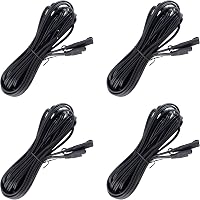
If your outlet is far from the battery, best battery maintainer extension cables can close the gap. Measure the distance first, because cable length is the limit most owners hit.
Our best smart battery charger roundup covers more smart models if you want a wider field. For this comparison, focus on the four units above and their amp ratings.
Who should buy which of these four
Buy the Battery Tender Plus for 12V car storage, the GENIUS1 for small batteries, the GENIUS2 for balance and the GENIUS5 for faster recovery. Each fits a clear job.
Choose the Battery Tender Plus if you store a 12V car, motorcycle or ATV and want simple float maintenance with a quick disconnect. Its 1.25A output and 4-step program suit seasonal vehicles, and the fused cables add safety.
Choose the NOCO GENIUS1 if you maintain a small 6V or 12V battery, such as a motorcycle, scooter or lawn mower. Its 1A output is gentle, its cable is long and its weight is light.
Choose the NOCO GENIUS2 if you want 6/12V flexibility with a bit more speed than the GENIUS1. At 2A, it splits the difference for cars, boats and RVs without jumping to 5A.
Choose the NOCO GENIUS5 if you need to recover a larger or deeply discharged battery. Its 5A output, Force Mode and thermal sensor make it the rescue pick in this group, and it still maintains once full.
Trade-offs and honest limits
No single maintainer is best for every battery size, chemistry and deadline. Trade-offs are normal here.
Low-amp units are gentle and efficient for maintenance, but they recover slowly. A 1A unit on a large bank can take many hours or more, and it may not wake a battery that has fallen very low.
The GENIUS5 solves that with 5A and Force Mode, but it is larger and more output than a small battery needs.
Dual-voltage units cover 6V and 12V, which helps with older equipment. The Battery Tender Plus here is 12V only.
If you own a 6V classic, the NOCO models cover you and the Battery Tender does not.
Warranties differ. Battery Tender lists 10 years for the Plus.
NOCO lists 3 years for the GENIUS units. Longer is better, but fit for your battery matters more than the warranty gap.
All four here need a wall outlet. That rules them out for a boat or RV stored without mains power.
In that case, a solar maintainer is the honest alternative, not a longer extension cord.
Final verdict: maintainer vs trickle charger
Pick a maintainer for storage and a trickle charger only for short top-ups, then size amps to your battery. That rule settles most cases in this battery maintainer vs trickle charger choice.
If the vehicle sits for weeks, buy a maintainer with float control. The Battery Tender Plus 12V 1.25 AMP Car is the storage pick for 12V cars and bikes.
The NOCO GENIUS2 2A 6/12V is the balance pick for mixed 6V and 12V use. The NOCO GENIUS5 5A 6/12V is the recovery pick when a battery is flat.
The NOCO GENIUS1 1A 6/12V is the small-battery pick.
If you only need a quick top-up before a weekend trip and you will unplug it, a simple trickle charger can do the job. Do not leave it connected for months.
Move to a maintainer for winter, and your battery will last longer.
Next, check your battery label for voltage, chemistry and amp-hours. Then match amps and profile to that label.
That one check prevents most charger mistakes.
Frequently asked questions
Is a battery maintainer better than a trickle charger for storage?
Yes, for storage longer than a few weeks a maintainer is safer because it cycles on and off based on voltage. A plain trickle charger can keep adding charge and dry out or damage a battery.
Choose a maintainer for seasonal vehicles and check its amp rating matches your battery size.
Can I leave a trickle charger connected all winter?
Not safely with a simple trickle charger that has no float control. It may overcharge over months and shorten battery life.
Use a maintainer with float charging in winter, and still check the battery and connections monthly for corrosion or loose terminals.
What amp rating do I need for a car battery?
A 1.25A to 2A maintainer suits most car and motorcycle batteries for maintenance, while 5A recovers a deeply discharged car battery faster. Larger banks need more current.
Match the rating to battery capacity and how soon you need the vehicle ready.
Do smart maintainers work on lithium batteries?
Some do, including the NOCO models here, which list LiFePO4 compatibility. The Battery Tender Plus here lists 12V automotive use without lithium in its data, so check the exact battery type before you connect it.
Never assume a lead-acid profile suits lithium.
How often should a maintainer check the battery?
A maintainer checks voltage continuously and resumes charging when voltage drops, so you do not need a fixed schedule. Still inspect monthly.
Look for clean terminals, a secure mount and a status light that shows normal float behavior rather than constant charging.