Battery Maintainer vs Battery Charger: Which Do You Need? (November 2026)
Choose a battery maintainer to keep a stored battery ready, and a battery charger to refill a depleted battery faster. In this battery maintainer vs battery charger comparison, the job you need today decides the pick more than the name on the box.
On this page (11 sections)
- The quick verdict on battery maintainer vs battery charger
- The two jobs side by side
- Charging speed: why amps decide recovery time
- Storage maintenance: how float charging works
- Dead battery recovery: charge from 1 volt and Force Mode
- Battery types and voltage: 6V, 12V, lead acid and lithium
- Smart features that matter in daily use
- Cables, connectors and setup in real garages
- The AA and AAA outlier: POWEROWL in context
- Who should buy which model
- The verdict for battery maintainer vs battery charger
Choose a battery maintainer to keep a stored battery ready, and a battery charger to refill a depleted battery faster. The job you need today decides the pick.
A maintainer watches voltage in storage and tops up in small bursts. For a closer comparison with a basic trickle charger, see maintainer vs. trickle charger.
A charger pushes more current into a low battery, so it returns to use sooner. Many modern units do both, but amps, voltage and battery type still separate them.
The quick verdict on battery maintainer vs battery charger
Pick the maintainer for storage and the higher amp charger for recovery. Storage needs gentle top ups, while recovery needs more current in less time.
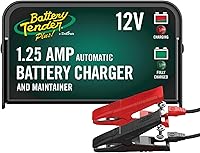
The Battery Tender Plus 12V 1.25 AMP Car is the storage pick, with 1.25 amps, a 4-step program and float charging.
The NOCO GENIUS5 5A 6/12V Smart Battery Charger is the recovery pick, with 5 amps, 6V and 12V support and charging from as low as 1 volt.
The NOCO GENIUS1 1A 6/12V Smart Battery Charger suits small batteries. The POWEROWL 8 Bay AA AAA Battery Charger charges NiMH and NiCD AA and AAA cells through USB.
The two jobs side by side
A maintainer preserves charge; a charger restores charge. That single difference explains most buying mistakes in this category.
| Point | Battery maintainer | Battery charger |
|---|---|---|
| Main job | Keep a charged battery ready during storage | Refill a depleted battery for use |
| Typical output here | 1A to 1.25A | 5A in this group |
| Storage use | Stays connected for weeks or months | Can stay connected if it is a smart model |
| Dead battery use | Slow on a deeply discharged battery | Faster, with modes for very low voltage |
| Best fit | Seasonal vehicles and stored powersport batteries | Batteries that need recovery before starting |
A smart charger can cross into maintainer work once the battery is full. NOCO describes the GENIUS5 and GENIUS1 as charger, maintainer, trickle charger and desulfator in one unit.
Battery Tender describes the Plus as smarter than a trickle charger. It uses a 4-step program and resumes full output power when battery voltage drops too far under load.
That overlap is useful, but it does not erase the amp gap. A 1 amp unit and a 5 amp unit will not recover the same battery in the same time.
Charging speed: why amps decide recovery time
Amps set how much charge flows each hour, so higher amps recover a battery faster. A maintainer's low amps are a feature for storage and a limit for recovery.
The GENIUS5 delivers 5 amps. That is 4 times the 1.25 amps from the Battery Tender Plus and 5 times the 1 amp from the GENIUS1.
In simple terms, the GENIUS5 can push about 5 amp hours in an hour under ideal conditions. Real charging slows as the battery fills, but the gap matters when you need a vehicle for a trip.
When low amps are the right choice
Low amps suit small batteries and long storage. A motorcycle, ATV or lawn mower battery does not need a high current blast to stay ready.
The GENIUS1 gives 1 amp and lists a 10 hour charge time in its specs. The Battery Tender Plus gives 1.25 amps for a 12V battery.
That gentle pace also helps avoid overcharging during storage. Both brands describe monitored charging that reduces current as the battery fills.
When low amps cause a wait
A large car battery that is deeply discharged will not return quickly on 1 amp. If you also need to check physical fit, see Group 27 battery size.
You may wait through the night and still need more time. Battery Tender notes large diesel battery banks may charge slowly on 1.25 amps.
A higher output charger is the faster path. NOCO lists an 8 hour charge time for the GENIUS5 and support for batteries up to 120 amp hours.
Storage maintenance: how float charging works
Float charging keeps a battery near full by adding small top ups only when voltage falls. That is the core of this decision for stored vehicles.
Battery Tender uses a 4-step program for a 12V battery. Its two-color LED shows charge state, and charging resumes when voltage drops too far under load.
NOCO says its smart chargers constantly monitor the battery and can stay connected safely. Without top ups, a battery parked for months can fall too low to start the vehicle.
Storage use for cars and seasonal vehicles
A car stored for winter benefits from a maintainer that is already connected. The Battery Tender Plus is aimed at automotive, motorcycle and lawn mower batteries.
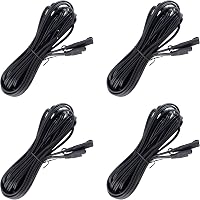
Its quick disconnect harness makes daily connection and removal easier. You can leave the harness on the battery and plug the charger in when storage starts.
The fused ring terminal cable is also included. That gives you a fixed connection point instead of using clips each time.
Storage use for powersport and small batteries
Motorcycles, ATVs and lawn mowers often sit unused for long stretches. Their smaller batteries can lose charge faster relative to their size.
The GENIUS1 supports 6V and 12V lead acid and lithium batteries, including powersport batteries. Its 1 amp output matches that smaller scale.
NOCO also lists flooded, maintenance-free, deep-cycle, marine and powersport batteries as supported types. Check your battery label before you choose a mode.
Our guide to types of inverter battery helps if your storage question involves backup power batteries rather than a vehicle battery.
Dead battery recovery: charge from 1 volt and Force Mode
A recovery charger needs modes for very low voltage batteries. A simple maintainer may not recognize a battery that has fallen too far.
The GENIUS5 and GENIUS1 can charge from as low as 1 volt. Both offer Force Mode to manually charge completely dead batteries down to zero volts.
NOCO says Force Mode is for deeply discharged or neglected batteries. Use it only when the battery and manual allow that approach.
The Battery Tender Plus does not list a 1 volt recovery claim. Its strength is float maintenance after a battery has been charged.
What to do before Force Mode
Check the battery type and voltage first. Confirm whether it is 6V or 12V, and whether it is lead acid or LiFePO4 lithium.
Clean corrosion from the terminals if it blocks a solid connection. A poor connection can stop even a capable charger from working.
Our post on group 31 battery post helps if terminal choice is part of your setup.
Recovery for generator starting batteries
A generator that will not start often needs a recovered starting battery, not just maintenance. For replacement options for a WEN unit, see WEN generator batteries.
A 5 amp charger can refill that battery faster than a 1 amp maintainer. Our guide on how to charge a generator starting battery covers connection and safety steps.
If the battery still will not hold charge, check the charging system. Our post on why is my generator battery not charging covers common causes.
Battery types and voltage: 6V, 12V, lead acid and lithium
Voltage and chemistry decide whether a charger can do the job at all. Amps matter only after those basics match.
The Battery Tender Plus is a 12V unit. It will not serve a 6V battery, and its data does not list lithium support.
The GENIUS5 and GENIUS1 support 6V and 12V batteries. Both list AGM, Gel, SLA and VRLA lead acid types, plus lithium-ion LiFePO4.
That wider range helps on mixed fleets. A garage with a 6V classic, a 12V car and a lithium powersport battery can use one NOCO unit across them.
Why battery type settings matter
Lead acid and lithium batteries want different charging profiles. A charger with a lithium mode can adjust its charge for LiFePO4 batteries.
NOCO lists lithium-ion LiFePO4 support for both GENIUS models. Battery Tender's Plus data does not list lithium support, so lead acid is the safe assumption for that model.
Voltage mistakes to avoid
A 12V charger on a 6V battery can damage the battery. A 6V setting on a 12V battery will not charge it properly.
Match the charger voltage to the battery label every time. Do not guess from the vehicle size or from a battery's physical size.
If your battery sits in a solar setup, our best solar battery maintainer guide covers solar powered maintenance for off grid storage.
Smart features that matter in daily use
Smart features mainly reduce your workload and protect the battery during long connections. They do not replace correct voltage and chemistry settings.
The GENIUS5 and GENIUS1 use an integrated thermal sensor. It adjusts charge based on ambient temperature to prevent overcharging in heat and undercharging in cold.
Both NOCO models also use precision pulse charging to detect and reverse sulfation and acid stratification.
The Battery Tender Plus uses a 4-step program and a two-color LED. The LED shows charge state so you can check status without a meter.
Desulfation and battery health
Sulfation builds when a lead acid battery sits discharged. Pulse charging aims to reverse that buildup and improve performance over time.
NOCO lists desulfator as a core function on both GENIUS models. Battery Tender focuses its claims on adaptive smart charging and extended battery life.
These features help most on batteries that were neglected for a while. They cannot save a battery with internal damage or a shorted cell.
Temperature and garage conditions
A battery in a hot garage charges differently from one in a cold shed. Temperature compensation helps the charger adjust instead of using one fixed profile.
NOCO says the thermal sensor prevents overcharging in hot weather and undercharging in cold weather. That matters for batteries stored in unheated spaces.
The Battery Tender Plus does not list a thermal sensor in its product data. Its 4-step program still manages charge stages without that sensor.
Cables, connectors and setup in real garages
Connectors decide how easy the charger is to use each time. A charger you avoid using will not maintain anything.
The Battery Tender Plus includes fused ring terminal and alligator clip cables, plus a quick disconnect harness for seasonal storage.
The GENIUS5 includes a 72-inch AC cable, an 80-inch DC cable with clamps, eyelet terminals and a mounting bracket. The GENIUS1 has a direct wall plug-in and a 110-inch DC cable, which helps when the outlet is far from the battery.
Which connector fits your battery
Alligator clips are quick for occasional use. Ring terminals or eyelets are better for a battery you maintain often.
Consider terminal size and access before you choose. A charger with the wrong connector can still work, but setup takes longer each time.
Our best smart battery charger guide compares more smart models if you want a wider shortlist before you buy.
The AA and AAA outlier: POWEROWL in context
The POWEROWL 8 Bay AA AAA Battery Charger is not a vehicle battery charger. It charges small rechargeable cells, so it should not be compared by amps with 12V chargers.
It charges NiMH and NiCD AA and AAA rechargeable batteries in 8 independent bays.
Its input is DC 5V 2A through USB, with a 5V 2A plug recommended. You can power it from a laptop, car charger or phone charger.
The output is 250mA per battery. That low current suits small cells and extends battery life through trickle charging.
When this charger makes sense
This charger fits homes that use rechargeable AA and AAA cells in remotes, flashlights and toys. It charges any number from 1 to 8.
Its LED indicators show charge status per slot, and the smart chip stops charging when a battery is full.
It does not work on disposable alkaline cells or 12V lead acid batteries. If you need a car, motorcycle or generator battery, skip this model.
Who should buy which model
Match the model to the battery size, voltage and job you have most often. Amps and voltage range should lead the choice.
Choose the Battery Tender Plus 12V 1.25 AMP Car for a 12V lead acid battery in long storage. It suits cars, motorcycles, lawn mowers and ATVs stored for weeks or months.
Choose the NOCO GENIUS5 5A 6/12V Smart Battery Charger for a depleted 6V or 12V battery that needs recovery. It suits larger car and RV batteries and neglected batteries.
Choose the NOCO GENIUS1 1A 6/12V Smart Battery Charger for a smaller 6V or 12V battery. It suits motorcycles, ATVs, lawn mowers and seasonal powersport batteries.
Choose the POWEROWL 8 Bay AA AAA Battery Charger for NiMH and NiCD AA and AAA cells. Our battery tender vs battery charger post goes deeper on Battery Tender.
The verdict for battery maintainer vs battery charger
Buy a maintainer for storage and a higher amp smart charger for recovery, and many buyers need the recovery charger first. A maintainer cannot fix a battery already too low for the job ahead.
For one stored vehicle, the Battery Tender Plus 12V 1.25 AMP Car is the simplest storage pick. Its 1.25 amps, float charging and quick disconnect harness fit long storage on 12V batteries.
For a dead or deeply discharged battery, the NOCO GENIUS5 5A 6/12V Smart Battery Charger is stronger. Its 5 amps, 6V and 12V support and Force Mode cover recovery and later maintenance.
For smaller batteries, the NOCO GENIUS1 1A 6/12V Smart Battery Charger gives the same smart approach more gently. Start by checking voltage, chemistry and how low the battery is.
Frequently asked questions
Can a battery maintainer charge a dead battery?
It can raise a low battery over time, but a 1 to 1.25 amp maintainer will take much longer than a 5 amp charger. If the battery will not start the vehicle, use a charger with enough output first, then switch to maintenance for storage.
Can I leave a smart charger connected all winter?
Smart chargers and maintainers in this guide are built to monitor and maintain a battery while connected. NOCO says the GENIUS5 and GENIUS1 can stay connected indefinitely, and Battery Tender uses float charging.
Follow the manual for ventilation and connection steps.
Is a maintainer the same as a trickle charger?
No. A maintainer monitors the battery and adds charge only when voltage falls, while a basic trickle charger can keep pushing current.
Our battery maintainer vs trickle charger guide explains why that difference matters during long storage.