5 Best Tri Fuel Inverter Generators (November 2026)
The best tri fuel inverter generators include the Champion for higher gasoline output, the Westinghouse 8200 Peak Watt Tri-Fuel Portable Inverter for 50A home backup, and the GENMAX 10500 Peak Watt Tri Fuel Open for automatic start options.
On this page (3 sections)
The best tri fuel inverter generators combine gasoline, propane and natural gas with inverter power quality. For most home backup needs, the Westinghouse iGen8200TFc balances 6,600 running watts on gasoline, less than 3% THD and a 50A outlet.
Choose a model by the fuel you can access, the running watts you need on that fuel, and the outlets your equipment requires. If propane is your preferred fuel, compare portable propane generators.
A generator's highest gasoline figure may not reflect its output on propane or natural gas.
Our picks at a glance
-
1

-
2
 Best for 50A home backup
Westinghouse 8200 Peak Watt Tri-Fuel Portable Inverter
9.3/10 our score
See it on Amazon -
3
 Best for automatic start options
GENMAX 10500 Peak Watt Tri Fuel Open
9.3/10 our score
See it on Amazon
- 4
 Check it
GENMAX 13500W Tri-Fuel Inverter Generator(2026 Model )
Best for high output across three fuels - 5
 Best for 120V/240V and EV useCheck it
Which tri fuel inverter generators stand out?
The Champion leads for gasoline output, while Westinghouse combines a 50A home backup outlet with low THD. The remaining picks suit buyers who need specific output levels, start methods or a 120V/240V configuration.
For a lower-output inverter option, see 5,000-watt inverter generators.
Champion: Best for higher gasoline output
- 11,000 starting and 9,000 running watts on gasoline
- Gasoline, propane and natural gas
- Wireless remote start up to 80 ft
- Less than 3% THD
Champion combines strong gasoline output with three fuel choices, wireless remote start and inverter power with less than 3% THD.
Pros
- 9,000 running watts on gasoline
- Includes propane and natural gas hoses
- CO Shield auto shutoff
Cons
- Running output drops on propane and natural gas
- Weighs 212.3 lb
Champion is the highest-scoring choice here because it combines 9,000 running watts on gasoline with three fuel options and less than 3% THD. Output is 8,100 running watts on propane and 7,290 on natural gas, so size your load around the fuel you expect to use.
The included wireless key fob starts and stops the generator from up to 80 ft away. Champion also includes natural gas and propane hoses, plus CO Shield carbon monoxide auto shutoff.
Its outlets include two 120V 20A GFCI household duplex outlets, a 120/240V 30A locking outlet and a 120/240V 37.5A outlet. Match the outlet and generator capacity to your transfer equipment and planned loads before setup.
Choose Champion for higher gasoline output and remote operation. Its 212.3 lb weight makes placement and movement worth planning.
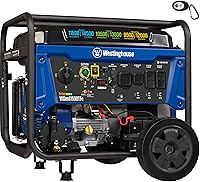
Westinghouse 8200 Peak Watt Tri-Fuel Portable Inverter: Best for 50A home backup
- 6,600 running watts on gasoline
- 50A 120/240V outlet
- Less than 3% THD
- Up to 17 hours at 25% load on gasoline
Westinghouse pairs inverter power and less than 3% THD with a 50A outlet for home backup. It also has a 30A RV outlet and remote start.
Pros
- 50A outlet is transfer-switch or interlock ready
- Less than 3% THD
- Remote electric start
Cons
- Lower gasoline running output than the higher-wattage picks
- Weighs 134.5 lb
Westinghouse is a practical home backup pick for buyers who need a 50A 120/240V outlet and cleaner inverter power. For its gasoline and propane models, compare Westinghouse dual-fuel generators.
Its gasoline output is 6,600 running watts, with 5,940 on propane and 5,280 on natural gas.
The generator has less than 3% THD and a 30A RV outlet alongside a standard GFCI duplex outlet. Remote electric start and a digital display add useful controls, while the stated runtime reaches up to 17 hours at 25% load on its 3.9-gallon gasoline tank.
Its 134.5 lb weight is lower than the other listed models, though it still needs a suitable place to operate outdoors. For more options in this category, compare our best tri fuel portable generators.
Choose Westinghouse when the 50A outlet and lower stated weight fit your setup. Its running wattage is lower than the larger-output models here.
GENMAX 10500 Peak Watt Tri Fuel Open: Best for automatic start options
- 7,800 running and 10,500 peak watts
- Gasoline, LPG and natural gas
- One-button, remote and recoil start
- THD of 3% or less
The GM10500XiT offers 7,800 running watts, three fuel choices and several start methods, including a two-wire automatic start function.
Pros
- Three start methods
- THD of 3% or less
- Includes natural gas and LPG hoses
Cons
- Open-frame design
- Weight is 120.9 lb
The GENMAX GM10500XiT suits buyers who want several start options with a mid-range output. It provides 7,800 running watts and 10,500 peak watts, supports gasoline, LPG and natural gas, and states THD of 3% or less.
You can start it with one button, a remote or recoil. Its two-wire automatic start and stop function can support compatible setups, so confirm system and wiring requirements before planning around automatic operation.
GENMAX states a runtime of up to 13.5 hours at 25% load. The open-frame design and 120.9 lb weight are practical factors when choosing its storage and operating location.
Choose this GENMAX for flexible starts and 7,800 running watts. Verify that its outlets and automatic-start connections fit the equipment you plan to use.
GENMAX 13500W Tri-Fuel Inverter Generator(2026 Model ): Best for high output across three fuels
- 11,500 running watts on gasoline
- 9,500 running watts on natural gas
- Bluetooth app and remote start
- THD of 3% or less
This GENMAX offers the highest stated gasoline output here and keeps natural gas running output at 9,500 watts. It includes five start methods and a 50A outlet.
Pros
- High running output on all three fuels
- Bluetooth app, key fob and ATS two-wire start
- CO Shield auto shutdown
Cons
- Weighs 273.7 lb
- Largest physical commitment among these picks
This GENMAX is the highest-output pick on gasoline, with 11,500 running watts and 13,500 peak watts. It also provides 10,500 running watts on propane and 9,500 on natural gas, so it retains substantial output when using those fuels.
Start options include push-button electric start, remote key fob, Bluetooth app control, recoil and ATS two-wire auto-start. Its inverter output is stated at 3% THD or less, and its outlets include a 120/240V 50A connection.
At 273.7 lb, it is the heaviest model in this group. Plan where it will sit and how it will be moved before making it the main backup source.
Choose it when high output on natural gas matters as much as gasoline capacity. Its weight calls for a fixed, planned operating location.
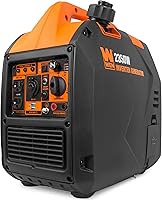
WEN: Best for 120V/240V and EV use
- 10,500 running watts on gasoline
- 120V/240V bonded-neutral configuration
- Electric start and CO Watchdog
- Level 2 charging use
WEN's 120V/240V bonded-neutral setup suits transfer switches, emergency backup and Level 2 charging for battery and hybrid electric vehicles.
Pros
- 10,500 running watts on gasoline
- Three fuel choices
- Electric start and CO shutdown sensor
Cons
- Runtime is up to 7.7 hours at half load
- Weighs 246.9 lb
WEN is a fit for buyers who need a 120V/240V bonded-neutral configuration for transfer switches, emergency backup or Level 2 charging for battery and hybrid electric vehicles. For its gasoline and propane models, see WEN dual-fuel generators.
On gasoline it supplies 10,500 running watts, with 9,000 on propane and 8,000 on natural gas.
The 550cc engine has electric start, and the CO Watchdog sensor shuts the generator down if it detects dangerous carbon monoxide levels. The 7.1-gallon tank provides up to 7.7 hours at half load.
Outlets include a 120/240V 14-50R, a 120V L5-30R, two 120V 5-20R outlets, a 120V 10-50R, 12V DC and two USB ports. At 246.9 lb, it needs a planned storage and operating spot.
Choose WEN for the stated bonded-neutral configuration and EV charging use. Compare its fuel-specific output with your load before selecting it for backup.
What should you compare before buying a tri fuel inverter generator?
Compare fuel-specific running watts, THD, outlets and start options before choosing a model. Those details determine whether a generator fits your actual backup plan.
How much running wattage do you need?
Running watts describe the power available for loads that operate at the same time. List the appliances you need during an outage and add their running demand, then account for any higher starting demand and check the generator's figures for your intended fuel.
Keep a margin for loads you may add later. If the generator will serve a transfer switch, confirm its output and outlet match the switch and the circuits you plan to back up.
Do gasoline, propane and natural gas give the same output?
No. Each model here reports different running wattage by fuel, so use the number for the fuel you expect to rely on.
For example, Champion drops from 9,000 running watts on gasoline to 7,290 on natural gas. The Westinghouse figures are 6,600 on gasoline and 5,280 on natural gas, while GENMAX's 13,500W model provides 9,500 on natural gas.
Natural gas can reduce the need to store gasoline, but a compatible and properly installed connection is essential. Check the required hose, fittings, supply and operating instructions before making it your backup fuel.
What does low THD mean for electronics?
THD, or total harmonic distortion, describes how much a power signal differs from a clean sine wave. The Champion, Westinghouse and both GENMAX models state less than or equal to 3% THD, which each describes as suitable for sensitive electronics.
That figure is one selection factor, not a substitute for checking your device's power needs. Follow the generator and appliance instructions, and confirm compatibility for equipment that has strict power requirements.
For a closer look at the design, read what a dual fuel inverter generator is and how it works. The inverter explanation also helps clarify why power quality and generator output are separate checks.
Which outlets should you check?
Match the outlet type and voltage to your equipment and home backup connection. A 50A 120/240V outlet may fit one transfer setup, while RV owners may need a TT-30R outlet.
The Westinghouse has a 14-50R 50A outlet and TT-30R 30A RV outlet. WEN includes a 14-50R 120/240V outlet and an L5-30R, while Champion has 30A locking and 37.5A 120/240V outlets.
Do not connect a generator directly to household wiring. Use the appropriate transfer switch or interlock and have the setup installed according to applicable instructions and requirements.
Are remote start and automatic start the same?
Remote start lets you start the generator from a distance, while automatic start depends on compatible equipment and wiring that signal the generator. Champion's wireless key fob works up to 80 ft, and the two GENMAX models list remote start features.
The GENMAX picks also describe two-wire automatic start functions, and the larger one lists ATS two-wire auto-start. Confirm compatibility with your transfer equipment before relying on an automatic backup arrangement.
If remote operation is a priority, see our guide to the best tri fuel generator with remote start.
Where will the generator operate?
Operate fuel-powered generators outdoors and follow the manufacturer's safety instructions, including safe distance from doors, windows and vents. Carbon monoxide can be deadly, and a built-in sensor does not replace safe placement.
The models here include CO protection features: Champion has CO Shield auto shutoff, Westinghouse has a CO sensor, GENMAX lists a CO alarm or CO Shield, and WEN includes CO Watchdog. Store and operate the unit where its weight, clearance and fuel connections are manageable.
Which tri fuel inverter generator should you choose?
Choose the Westinghouse if a 50A home backup outlet, 6,600 gasoline running watts and less than 3% THD match your needs. Pick Champion for 9,000 gasoline running watts and wireless remote start, or WEN for its bonded-neutral 120V/240V configuration and stated Level 2 charging use.
For higher output on natural gas, compare the larger GENMAX with the Champion's fuel-specific figures and your planned load. If low THD is your main concern, see our guide to the best low THD tri fuel generator.
Scores weigh specifications, features and buyer feedback against what shoppers need from a tri fuel inverter generator.
Our top 3 picks at a glance
-
1
-
2
Best for 50A home backup
Westinghouse 8200 Peak Watt Tri-Fuel Portable Inverter
9.3/10 our score
See it on Amazon -
3
Best for automatic start options
GENMAX 10500 Peak Watt Tri Fuel Open
9.3/10 our score
See it on Amazon
Frequently asked questions
What makes a tri fuel inverter generator different?
A tri fuel inverter generator can run on gasoline, propane and natural gas while using inverter technology to supply power. The fuel options give you more ways to keep it running, while the inverter design can provide cleaner power for electronics.
Compare running watts on each fuel, since output can change when you switch.
Can a tri fuel inverter generator power sensitive electronics?
Several models here state THD of 3% or less, a power quality figure relevant to sensitive electronics. Westinghouse, Champion and both GENMAX picks provide that stated figure.
Check the exact model's specs and your equipment's requirements before connecting devices.
Can I connect a tri fuel generator to my home's natural gas?
Some tri fuel generators support natural gas, but the connection method, hose and installation details depend on the model and your home setup. Champion and GENMAX include natural gas hoses, while you should verify the right fittings and instructions for your specific unit.
Use a qualified professional for home connections where required.
How do I choose the right generator wattage?
Add the running watts for the appliances you plan to power, then check their starting demand as well. Compare that load with the generator's output on the fuel you expect to use, because gasoline, propane and natural gas figures can differ.
A transfer switch or interlock also needs to match your home's electrical setup.
Is a tri fuel inverter generator better than a dual fuel model?
Tri fuel adds natural gas as a third option alongside gasoline and propane, which can suit a home with a compatible gas connection. Dual fuel models may fit buyers who only need gasoline and propane.
Compare output, setup needs and fuel access.
Our guide explains which is better, dual fuel or tri fuel.