
Which Is Better Dual Fuel or Tri Fuel Generator?
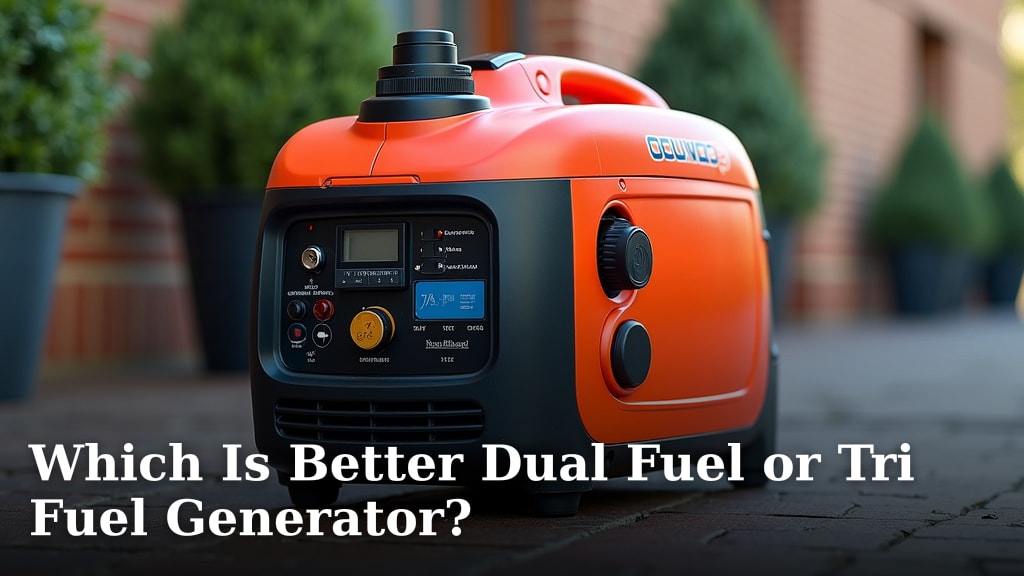
Choosing between a dual fuel or tri fuel generator often comes down to your specific needs and fuel access. For most homeowners, a dual fuel generator offers an excellent balance of convenience and reliability. Tri fuel models provide more flexibility but might be overkill for casual use.
We found that dual fuel generators are simpler to operate and maintain. They let you switch between gasoline and propane, which is very practical during power outages. Tri fuel generators add natural gas as a third option, offering maximum versatility if natural gas lines are available.
- Dual fuel generators are practical for most homes.
- Tri fuel generators offer ultimate fuel flexibility.
- Consider your fuel access and typical needs.
- Propane and natural gas offer longer run times.
Let’s dive into the details to help you decide which generator type best suits your situation. We’ll explore the pros and cons of each, ensuring you make an informed choice.
Comparing Dual Fuel and Tri Fuel Generators
The main difference between these generators boils down to their fuel options. Dual fuel generators use two types, while tri fuel generators add a third. Your choice depends on your specific needs and what fuel is readily available.
Let’s break down each type. We’ll look at what makes them tick and how they can serve you.
Understanding Dual Fuel Generators
Dual fuel generators are designed to run on two types of fuel: gasoline and propane. This flexibility is a major plus, especially during emergencies. You can easily switch between them, giving you more options if one fuel type runs low.
The Benefits of Dual Fuel
Choosing a dual fuel generator comes with several practical advantages. You get versatility without complexity.
- Fuel Flexibility: You can use gasoline or propane. If you run out of one, you have the other. This is great for longer outages.
- Propane’s Perks: Propane stores well for extended periods. It doesn’t degrade like gasoline. It also burns cleaner, meaning less engine maintenance over time.
- Easier Storage: Propane tanks are safer to store than gasoline cans. They also have a longer shelf life.
- Cost-Effective: These models are generally more affordable than tri fuel options. This makes them a popular choice for many homeowners.
Potential Drawbacks of Dual Fuel
While great, dual fuel generators aren’t perfect for every situation. You should know their limitations too.
- Fuel Quantity: You still need to store fuel. Propane tanks need refilling. Gasoline needs replenishment.
- Propane Runtime: Generators burn propane faster than natural gas. A standard 20-pound tank might only last a few hours, depending on the load.
- Power Output: Often, you’ll see a slight drop in power output when running on propane compared to gasoline. Always check the specs.
Exploring Tri Fuel Generators
Tri fuel generators take fuel flexibility to the next level. They can run on gasoline, propane, and natural gas. This third option, natural gas, is often a game-changer for those with access to it.
The Advantages of Tri Fuel
If you’re looking for the ultimate in versatility, tri fuel is hard to beat. Especially if you have a natural gas line at your property.
- Unlimited Natural Gas: If your home has a natural gas line, your generator can run for days or even weeks without needing refueling. No more trips for gasoline or propane tanks!
- Clean Burning: Natural gas is one of the cleanest-burning fuels. This means less wear and tear on your engine components.
- Convenience During Outages: With natural gas, you don’t need to store large amounts of fuel. Just hook it up and let it run. This offers immense peace of mind.
- Environmentally Friendlier: Natural gas produces fewer emissions than gasoline or propane. This can be a factor for environmentally conscious users.
We found that having the natural gas option significantly reduces the hassle during prolonged power outages. It’s like having an endless fuel supply right from your home (CDC).
Considerations for Tri Fuel
While impressive, tri fuel generators come with their own set of factors to weigh.
- Higher Cost: Expect to pay more upfront for a tri fuel generator. The added technology means a higher price tag.
- Natural Gas Installation: If you don’t already have one, installing a natural gas line connection can be complex and costly. This might need a professional.
- Power Output Variation: Similar to propane, natural gas operation may result in a slightly lower power output compared to gasoline.
- Portability: Connecting to a natural gas line often means the generator is less portable. It’s usually a more stationary setup.
Key Differences: A Quick Comparison
Let’s put them side-by-side. Seeing the differences visually helps you decide.
| Feature | Dual Fuel Generator | Tri Fuel Generator |
|---|---|---|
| Fuel Types | Gasoline, Propane | Gasoline, Propane, Natural Gas |
| Initial Cost | Lower | Higher |
| Fuel Storage | Requires stored gasoline/propane | Can use natural gas line (no storage needed) |
| Runtime Potential | Limited by stored fuel | Potentially unlimited (with natural gas line) |
| Maintenance | Moderate | Lower (especially with natural gas) |
| Installation | Plug and play (no special installation for fuel types) | May require professional natural gas line connection |
Choosing Your Generator: What to Think About
The “better” choice truly depends on your unique situation. There’s no one-size-fits-all answer here. Consider these points carefully.
Your Fuel Access
Do you have a natural gas line at your property? This is perhaps the biggest deciding factor. If yes, a tri fuel model offers unmatched convenience. If not, the natural gas option might be less appealing.
- Natural Gas Availability: Is it already piped to your home? Is it an option to install?
- Propane Supply: How easy is it for you to get and store propane tanks?
- Gasoline Storage: Are you comfortable storing gasoline for emergencies? How often can you rotate it?
Budget Considerations
Your wallet definitely plays a role. Tri fuel generators are more expensive up front. Factor in potential installation costs for natural gas hookups too. Sometimes, a simpler, more affordable dual fuel unit is all you really need.
Typical Usage Scenarios
How often do you expect to use it? For occasional power outages lasting a few hours, a dual fuel generator is often perfectly adequate. For longer, more frequent outages, a tri fuel might offer the peace of mind you’re looking for (NIH).
- Emergency Backup: How critical is continuous power? For medical equipment, perhaps maximum runtime is key.
- Recreational Use: For camping or tailgating, portability and lighter fuel storage (propane) might sway you towards dual fuel.
- Job Site Power: Do you need robust power for tools? Consider the output differences between fuels.
Checklist for Deciding
Run through these questions to guide your purchase. It’s like a personal consultant!
- Do you have a natural gas line at your home?
- What’s your budget for the generator and potential installation?
- How long do power outages typically last in your area?
- Are you comfortable storing and handling various fuels?
- Is portability important, or will it be a stationary unit?
- What are your essential power needs during an outage?
Conclusion
Deciding between a dual fuel or tri fuel generator boils down to your specific circumstances. If you value simplicity, affordability, and reliable backup for typical outages, a dual fuel generator is often your best bet. However, if your home has natural gas access and you desire maximum run time and ultimate convenience during extended power loss, investing in a tri fuel model offers unparalleled peace of mind. We encourage you to review your fuel availability and budget carefully. Choose the generator that genuinely supports your power needs and provides the most practical solution for you.
Frequently Asked Questions
Is it worth paying more for a tri fuel generator?
It depends on your access to natural gas. If you have a natural gas line at your property, the extra cost for a tri fuel model can be very worthwhile. It offers nearly unlimited runtime without needing to store or replenish fuel, which is a major convenience during long outages.
Can I convert my existing gasoline generator to a dual fuel or tri fuel?
Yes, conversion kits are available to modify many gasoline-only generators. These kits allow them to run on propane or be converted to tri fuel. However, we found that professional installation is often recommended to ensure safety and proper operation.
Do dual fuel or tri fuel generators lose power on propane or natural gas?
Generally, generators will produce slightly less power when running on propane or natural gas compared to gasoline. This is due to differences in fuel energy density. Always check the generator’s specifications for the exact power output ratings for each fuel type.
Are dual fuel generators safer to operate than gasoline-only generators?
Using propane with a dual fuel generator can be safer in some ways. Propane does not degrade like gasoline, and its tanks are less prone to spills. It also burns cleaner, reducing carbon buildup. However, proper ventilation and safe handling are always essential regardless of fuel type.
How long can a tri fuel generator run continuously on natural gas?
If connected to a municipal natural gas line, a tri fuel generator can theoretically run for as long as the natural gas supply is uninterrupted. This provides an extraordinary advantage during very long power outages compared to relying on stored gasoline or propane tanks.
