9 Best WEN Dual Fuel Generators (November 2026)
The best WEN dual fuel generators include the WEN for transfer-switch backup, the WEN Quiet and Lightweight 4800-Watt RV-Ready Portable for quiet gasoline RV power, and the WEN for whole-home fuel flexibility.
On this page (6 sections)
The best WEN dual fuel generator for most home backup needs is the WEN DF475T, with 4,750 starting watts, 3,800 running watts on gasoline, electric start and 120V/240V output. Choose an inverter model for quieter power and sensitive electronics, or a larger unit when your load calculation calls for more running watts.
The right WEN generator depends on 4 choices: required running watts, fuel access, portability and the type of output your equipment needs. If you are comparing brands, see our DuroMax dual fuel generators guide.
Dual-fuel models let you switch between gasoline and propane, while inverter models focus on clean power and quieter operation.
For the wider brand lineup, compare these picks with our guide to the best WEN generators. If you are deciding between conventional and inverter output, our guide to the best WEN inverter generators explains that difference.
Our picks at a glance
-
1

-
2
 Best for quiet gasoline RV power
WEN Quiet and Lightweight 4800-Watt RV-Ready Portable
9.3/10 our score
See it on Amazon -
3

- 4
 Check it
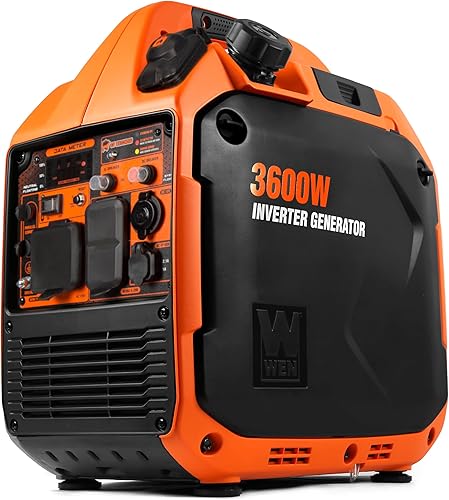
WEN Quiet and Lightweight 3600-Watt Dual Fuel
Best for lightweight dual-fuel RV power - 5
 Check it
WEN 2500-Watt Inverter Generator
Best for light portable loads - 6
 Check it
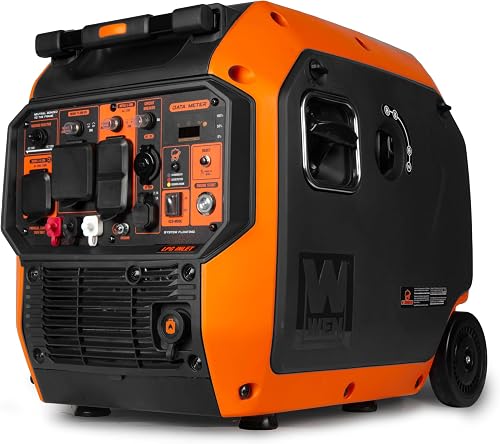
WEN 6800-Watt Dual Fuel RV-Ready Electric Start
Best for high-output RV backup - 7
 Check it
WEN DF451i Super Quiet 4500-Watt Electric Start
Best for quiet automatic fuel selection - 8
 Check it
WEN 2800-Watt Inverter Generator
Best for compact clean power - 9
 Check it
WEN 8000-Watt 120V/240V Dual Fuel Portable Generator
Best for large emergency loads
The best WEN dual fuel generators for different needs
The DF475T is the best all-around choice for many households, while the larger WEN models suit heavier loads and the smaller inverter models fit RV travel and camping. The strongest match depends on your running-wattage target, not just the largest surge number.
Our score weighs specs, features and buyer feedback against what you're shopping for. We compared the output, fuel choices, controls, portability, receptacles and intended use shown for each model.
| Product | Best for | Gasoline output | Propane output | Fuel tank | Our score |
|---|---|---|---|---|---|
| WEN | transfer-switch backup | 4,750 surge / 3,800 running watts | 4,350 surge / 3,500 running watts | 4 gal | 9.7 |
| WEN Quiet and Lightweight 4800-Watt RV-Ready Portable | quiet gasoline RV power | 9.3 | |||
| WEN | whole-home fuel flexibility | 14,500 surge / 11,500 running watts | 12,500 surge / 10,300 running watts | 9.1 | |
| WEN Quiet and Lightweight 3600-Watt Dual Fuel | lightweight dual-fuel RV power | 3,600 surge / 2,900 rated watts | 3,500 surge / 2,600 rated watts | 8.9 | |
| WEN 2500-Watt Inverter Generator | light portable loads | 8.8 | |||
| WEN 6800-Watt Dual Fuel RV-Ready Electric Start | high-output RV backup | 6,800 surge / 5,100 rated watts | 6,000 surge / 4,500 rated watts | 8.7 | |
| WEN DF451i Super Quiet 4500-Watt Electric Start | quiet automatic fuel selection | 4,500 surge / 3,500 rated watts | 4,500 surge / 3,150 rated watts | 8.6 | |
| WEN 2800-Watt Inverter Generator | compact clean power | 8.6 | |||
| WEN 8000-Watt 120V/240V Dual Fuel Portable Generator | large emergency loads | 8,000 surge / 6,500 rated watts | 7,200 surge / 5,850 rated watts | 7.9 |
WEN: Best for transfer-switch backup
- 4,750 starting watts on gasoline
- 3,800 running watts on gasoline
- 120V/240V output
- Electric start
The DF475T balances home backup power, transfer-switch readiness and manageable size. Its electric start and dual-fuel selection make it a practical first choice for many households.
Pros
- 120V/240V output
- Electric start
- Up to 11 hours at half load on gasoline
Cons
- Heavier than the smaller inverter models
- Not an inverter generator
The DF475T is the best WEN dual fuel generator for a household that wants transfer-switch-ready 120V/240V output without moving to the largest generator in this group. Gasoline produces 4,750 surge watts and 3,800 running watts, while propane produces 4,350 surge watts and 3,500 running watts.
Its electric start powers the 224cc 4-stroke OHV engine with a key. A 4-gallon tank provides up to 11 hours of half-load runtime, and the wheel and handle kit makes the 105.8 lb unit easier to move across a prepared surface.
The panel includes two 120V GFCI outlets, a 120V/240V NEMA 30A twist lock, and a 12V DC plug. The included 47-inch LPG connection hose supports propane setup, while the voltage selector lets you choose 120V or 240V for the task.
Choose this model when home backup and transfer-switch compatibility matter more than inverter operation. Before connecting a transfer switch, have the installation handled according to local electrical requirements.
WEN Quiet and Lightweight 4800-Watt RV-Ready Portable: Best for quiet gasoline RV power
- 4,800 surge watts
- 4,000 rated watts
- Clean inverter power
- RV-ready TT-30R outlet
This gasoline inverter generator suits RV owners who want clean power, onboard wheels and a pull handle. It is not dual fuel, but it is a strong alternative when quiet operation matters more than fuel choice.
Pros
- Clean inverter power
- RV-ready outlet
- Fuel shutoff
Cons
- Gasoline only
- Recoil start
The 4800-watt model is the best gasoline alternative for RV owners who want clean inverter power, wheels and a telescoping pull handle. It produces 4,800 surge watts and 4,000 rated watts from a 224cc engine.
This model is gasoline only, so it does not offer the fuel flexibility of the dual-fuel picks. Its 1.9-gallon tank provides up to 7 hours at half load, and the fuel shutoff uses remaining carburetor fuel before shutdown.
The fully enclosed design is rated at 62 dB at quarter load. Four 120V receptacles, an RV-ready TT-30R outlet, a 12V DC receptacle and two 5V USB ports support common camping and backup connections.
That panel layout suits a mix of RV loads and smaller devices at the same time. The TT-30R covers the RV connection, while the standard outlets and USB ports handle chargers, lights and household items without extra adapters.
Wheels and the telescoping handle help when the generator moves from a storage area to a campsite or driveway. At 72.7 lb, it still needs a planned lift or roll, but it is easier to place than a larger conventional unit.
Eco mode can help the engine adjust fuel use as the connected load changes. That matters during long quiet hours when only a few appliances are running.
Choose it when quiet, clean power and RV connections matter more than propane operation. For broader inverter options, compare its layout with our guide to the best WEN inverter generator.
WEN: Best for whole-home fuel flexibility
- 14,500 surge watts on gasoline
- Propane and natural gas support
- 120V/240V output
- Electric start
The TF-1450 is the high-capacity choice for buyers who need more than a typical portable generator can supply. Its tri-fuel design adds natural gas to gasoline and propane.
Pros
- Highest output here
- Three fuel options
- 120V/240V transfer-switch-ready outlets
Cons
- Large 500cc engine and cabinet
- More generator than light RV use requires
The TF-1450 is the strongest choice when a standard dual-fuel generator does not provide enough capacity. It produces 14,500 surge and 11,500 running watts on gasoline, 12,500 surge and 10,300 running watts on propane, and 10,500 surge and 8,750 running watts on natural gas.
That three-fuel design gives you more fuel options for extended home backup. The 500cc 4-stroke OHV engine uses electric start, and the 8.2-gallon tank provides up to 12 hours at half load.
The panel includes four 120V outlets, a 120V/240V NEMA L14-30R outlet, a 120V/240V NEMA 14-50R outlet and a 12V DC automotive outlet. The 28.8 x 28.3 x 25.8 in cabinet is much larger than the portable inverter models, so plan storage before choosing it.
Choose the TF-1450 for high-demand residential or commercial backup. It is excessive for basic phone charging, a few lights or a small RV load.
WEN Quiet and Lightweight 3600-Watt Dual Fuel: Best for lightweight dual-fuel RV power
- 3,600 surge watts on gasoline
- 2,900 rated watts on gasoline
- Clean inverter power
- CO Watchdog
The DF360iX gives RV and camping users dual-fuel flexibility in a 49 lb package. Its inverter output, RV receptacle and fuel shutoff keep the focus on portable use.
Pros
- 49 lb weight
- Gasoline and propane operation
- RV-ready outlet
Cons
- Lower output than the larger picks
- No electric start listed in the title
The DF360iX is the best WEN dual fuel generator here for lightweight RV and camping use. It weighs 49 lb and produces 3,600 surge and 2,900 rated watts on gasoline, or 3,500 surge and 2,600 rated watts on propane.
Its inverter design produces clean power for sensitive electronics, while the 149cc engine operates at 65 dB at quarter load. The fuel shutoff helps use remaining carburetor fuel before shutdown, which can simplify routine storage care.
The panel has two 120V receptacles, an RV-ready TT-30R outlet, a 12V DC receptacle and two 5V USB ports. A tool-free LPG quick-connector makes switching to propane simpler when the proper fuel connection is ready.
The CO Watchdog sensor adds automatic shutdown if dangerous carbon monoxide levels are detected. That feature supports safer use near tents, RVs and covered outdoor areas, though outdoor operation still matters.
At 49 lb, this is a practical carry for two people or a short wheel-assisted move. Its compact body also leaves more room in a car trunk, truck bed or RV storage bay.
Choose it when portability is a bigger priority than whole-home output. Its rated watts are better suited to selected appliances and RV equipment than to a large collection of home loads.
WEN 2500-Watt Inverter Generator: Best for light portable loads
- 2,500 surge watts
- 1,900 rated watts
- 37.5 lb weight
- Fuel shutoff
This compact inverter generator fits light camping and residential loads where gasoline is easy to keep on hand. It is not dual fuel, so choose it for size and simplicity rather than fuel flexibility.
Pros
- Lightest generator here
- Clean inverter power
- Two USB ports
Cons
- Gasoline only
- Lowest rated output in the group
The 2500-watt model is the most portable choice in this group, weighing 37.5 lb. Its 80cc engine produces 2,500 surge watts and 1,900 rated watts, which fits light camping and residential loads.
This model is gasoline only, with no propane option. Its 1-gallon tank provides up to 4.4 hours at half load, while the fuel shutoff helps reduce stagnant fuel in the carburetor before storage.
The inverter design produces clean power for smartphones, tablets and laptops. Two 120V receptacles, two 5V USB ports and an hour meter cover basic connections and maintenance tracking.
The small tank means runtime planning matters more than it does on larger models. Short runs suit evening lights, phone charging and a few small devices, but overnight backup needs a closer look at fuel supply.
Eco mode helps the engine match fuel use to the load that is actually plugged in. That can stretch the tank when the generator is powering chargers rather than larger appliances.
At 37.5 lb, it is the easiest unit here to carry into a tent area, load into a vehicle or store in a closet. The trade off is lower rated output for anything with a motor or compressor.
Choose it for transport between storage and camp, especially when your load stays under 1,900 running watts. Do not size it by the 2,500-watt surge figure alone if your equipment has a strong startup demand.
WEN 6800-Watt Dual Fuel RV-Ready Electric Start: Best for high-output RV backup
- 6,800 surge watts on gasoline
- 5,100 rated watts on gasoline
- Electric start
- Low-power Level 2 EV charging
The DF680iX is a high-output dual-fuel inverter generator for RV use, larger backup loads and low-power Level 2 charging for battery and hybrid electric vehicles.
Pros
- Electric start
- 120V/240V receptacle
- RV-ready outlet
Cons
- 99.2 lb weight
- More capacity than small camping loads need
The DF680iX is the high-output dual-fuel inverter pick for RV backup and larger portable loads. It produces 6,800 surge and 5,100 rated watts on gasoline, or 6,000 surge and 4,500 rated watts on propane.
Its bonded-neutral 240V configuration provides low-power Level 2 charging for battery and hybrid electric vehicles. Electric start, a voltage selector and a six-foot LPG regulator hose add useful setup flexibility.
The 99.2 lb unit has onboard wheels and a telescoping pull handle. Its panel includes an L14-30R 120V/240V receptacle, two 120V receptacles, an RV-ready TT-30R outlet, a 12V DC receptacle and two 5V USB ports.
The CO Watchdog sensor can shut the generator down automatically if dangerous carbon monoxide levels are detected. Clean inverter power also makes it a better match than a conventional model for laptops, phones and other sensitive electronics.
The voltage selector helps match output to the task, whether that is 120V RV use or a 240V connection. Planning the selector position before starting avoids confusion during setup.
Choose it when you need more output than the DF451i or DF360iX but still want inverter power. Check the charging requirements of your vehicle before planning an EV backup setup.
WEN DF451i Super Quiet 4500-Watt Electric Start: Best for quiet automatic fuel selection
- 4,500 surge watts on gasoline
- Auto Fuel Selection Technology
- Electric start
- 58 dBA at quarter load
The DF451i combines dual fuel, electric start and a quiet 58 dBA quarter-load rating. Auto Fuel Selection Technology is useful when you want the generator to switch from propane to gasoline.
Pros
- Electric start
- Very quiet quarter-load rating
- Auto fuel selection
Cons
- 100 lb weight
- Lower propane running output than gasoline
The DF451i is the best quiet dual-fuel choice when electric start and automatic fuel selection matter. It produces 4,500 surge and 3,500 rated watts on gasoline, or 4,500 surge and 3,150 rated watts on propane.
Its Auto Fuel Selection Technology switches from propane to gasoline for longer run times. The 212cc engine is rated at 58 dBA at quarter load, and keyless electric start includes a backup recoil starter.
The unit includes wheels and a carrying handle, along with two 120V receptacles, an RV-ready TT-30R outlet, a 12V DC receptacle, a 5V USB port and a digital load and fuel display. Fuel shutoff supports easier maintenance before storage.
The digital display helps you watch load and fuel level without guessing during a long run. That is useful when the generator is set up for RV power or home backup and you need to plan the next refuel.
Keyless start reduces the effort of getting power going from a distance. The backup recoil starter also gives you another starting path if the electric start is not available.
At 100 lb, it is portable in the broad sense but not a light carry. Choose it for a prepared RV or home backup setup where quiet operation and dual-fuel control are more important than low weight.
WEN 2800-Watt Inverter Generator: Best for compact clean power
- 2,800 surge watts
- 2,250 rated watts
- 45 lb weight
- CO Watchdog
The 56280iX is a compact gasoline inverter generator for camping and residential loads. It gives more rated power than the 2500-watt model while keeping a 45 lb portable design.
Pros
- Clean inverter power
- CO Watchdog
- Up to 9 hours at half load
Cons
- Gasoline only
- Recoil start
The 2800-watt model is a compact gasoline inverter generator for buyers who need more output than the 2500-watt unit. Its 98cc engine produces 2,800 surge watts and 2,250 rated watts.
This model is not dual fuel, but its 45 lb body remains easier to move than the larger dual-fuel units. A 1.58-gallon tank provides up to 9 hours at half load, and the fuel shutoff helps limit stale fuel in the carburetor.
The panel includes two 120V receptacles, one 12V DC receptacle and two 5V USB ports. The CO Watchdog sensor can automatically shut the generator down if dangerous carbon monoxide levels are detected.
The longer half-load runtime puts it ahead of the smaller 2500-watt model for evening camping use. That extra time helps when lights, chargers and small appliances run for several hours.
Clean inverter power makes it suitable for phones, tablets and laptops. It also keeps the focus on quiet portable power rather than whole-home circuits.
At 45 lb, it fits the middle ground between the lightest model and the heavier dual-fuel units. You still need to plan where it will sit and how it will be lifted into storage.
Choose it for clean gasoline power, a moderate output increase and a portable body. If propane access is part of your backup plan, the DF360iX is a closer match.
WEN 8000-Watt 120V/240V Dual Fuel Portable Generator: Best for large emergency loads
- 8,000 surge watts on gasoline
- 6,500 rated watts on gasoline
- Electric start
- 120V/240V output
The DF8000X is built for larger residential and commercial loads. It adds strong 120V/240V output and electric start, but its larger cabinet needs more storage space.
Pros
- High gasoline output
- Electric start
- Transfer-switch-ready outlet
Cons
- Large footprint
- Not an inverter generator
The DF8000X is the best conventional WEN dual fuel generator here for large residential or commercial loads below the TF-1450's capacity. Gasoline produces 8,000 surge and 6,500 rated watts, while propane produces 7,200 surge and 5,850 rated watts.
Its electric start powers the 340cc engine, and the 6.7-gallon gas tank provides up to 10.5 hours at half load. A wheel kit helps with movement, but the 28.54 x 24.61 x 24.96 in cabinet needs a dedicated storage location.
The panel includes four 120V 20-amp outlets, an RV-ready TT-30R outlet, a transfer-switch-ready 120V/240V NEMA L14-30R twist lock and a 12V DC receptacle. CO Watchdog adds automatic shutdown protection for dangerous carbon monoxide levels.
The onboard data meter shows voltage, frequency, total runtime and session runtime. Those readouts help with both load planning and routine maintenance intervals.
The 120V/240V output makes it a fit for transfer-switch backup as well as direct connections. That flexibility matters when the goal is to keep several home circuits running during an outage.
Choose it when your load calculation needs high running watts and 120V/240V output. Choose the DF680iX instead when inverter power and RV use are more important.
How much generator power do you need?
The best WEN dual fuel generator is the smallest model that can support your planned running load and handle appliance startup demand. Add the running watts of equipment used at the same time, then account for motors and compressors that need extra power when they start.
Start with a short list of what will run together, not everything you own. A refrigerator, lights, a phone charger and a television create a different load than a refrigerator plus a microwave and a power tool.
Motors and compressors often need a brief surge when they turn on. That is why surge watts matter for startup, while running watts decide what the generator can carry continuously.
Fuel choice changes the numbers on several models. Gasoline usually gives higher running watts than propane, so your appliance list may need to shrink when you switch to LPG.
The DF360iX and 2500-watt models fit lighter camping and selected residential loads. The DF475T and DF451i sit in the middle, while the DF680iX, DF8000X and TF-1450 serve progressively larger loads.
Do not treat surge watts as continuous capacity. A generator rated for 3,800 running watts on gasoline should be planned around that number, not its higher startup figure.
Portability and outlet type also shape the right size. A lighter inverter may be easier to use at camp, while a larger conventional model may fit transfer-switch backup better.
Write down the running watts for each appliance before you compare models. That list makes it easier to see whether you need a compact unit or a much larger cabinet.
Runtime at half load gives a rough guide for planning fuel. Higher loads shorten that time, so leave room in your plan for refueling during a long outage.
Should you choose dual fuel or tri-fuel?
Choose dual fuel if gasoline and propane cover your emergency plan. Choose the TF-1450 if natural gas is available and you want the added fuel option alongside gasoline and propane.
Dual fuel gives you two ways to keep power going when one fuel runs low or is hard to find. That choice can matter during a storm, a road trip or a long outage at home.
Tri-fuel adds natural gas as a third option on the TF-1450. It suits buyers who already have a natural gas line and want more flexibility for extended backup.
Propane output is lower than gasoline output on several models. Write down the running watts for each fuel before deciding which appliances you can operate together.
Keep the LPG hose and connections in mind when you plan setup. Some models include a hose or quick-connect adapter, while others need the right connection ready before you can switch fuels.
Fuel storage also plays a role in the decision. Gasoline, propane and natural gas each need different handling, containers and local fire-safety care.
For general background, read What Is a Dual Fuel Generator and How Does It Work?. If inverter power is part of your decision, see What Is a Dual Fuel Inverter Generator and How Does It Work?.
Think about which fuel you are most likely to have on hand. The best option is often the one that matches your home, your RV and your normal storage habits.
Price and running time are not the only factors here. Outlet type, electric start, weight and transfer-switch readiness can matter just as much.
A dual-fuel model may be enough for most home backup plans. Tri-fuel makes more sense when added capacity and a third fuel source both fit your needs.
Do you need an inverter generator?
An inverter generator makes the most sense when quiet portable power and clean electricity for sensitive electronics are priorities. The DF360iX, DF451i and DF680iX combine inverter output with gasoline and propane operation.
Clean power helps protect laptops, phones, tablets and monitors from voltage spikes and drops. That matters at camp, in an RV or during home backup when valuable electronics are plugged in.
Quieter operation is the other main reason to choose inverter power. Lower noise makes it easier to run a generator near tents, neighbors or living spaces during evening hours.
Conventional models such as the DF475T and DF8000X focus on transfer-switch-ready 120V/240V output and higher backup capacity. They can be a better fit when whole-home circuits matter more than low-noise camping.
Think about where the generator will sit most often. A backyard backup setup and a campsite setup place different demands on noise, weight and outlet layout.
Conventional units can be the better choice for heavy loads and 240V connections. Inverter units often trade some of that heavy-load focus for portability and cleaner output.
If electric start is your main requirement, compare the models in our guide to the best WEN generator with electric start. For brand-level ownership questions, see are WEN generators reliable.
Also check the fuel options you need. Some inverter models are dual fuel, while others in this group run on gasoline only.
The right pick depends on your load list and your setting. Inverter power fits quiet portable use, while conventional output fits larger home backup needs.
How should you store fuel for a WEN generator?
Store gasoline in an approved container and follow local fire-safety rules. Use only the fuel type and connection method that match the generator, and keep the generator itself outdoors during operation because carbon monoxide can build up indoors.
Fuel shutoff can help a generator use remaining carburetor fuel before shutdown. For gasoline storage, our guide explains how to use STA-BIL fuel stabilizer, while is Sea Foam a fuel stabilizer covers how that product category differs.
Before an outage, keep the generator accessible, inspect fuel connections and review the controls. Run electrical connections according to the manual and local requirements, especially when a transfer switch or 240V outlet is involved.
Which WEN dual fuel generator should you buy?
Pick the DF475T if you want the best balance of home backup output, 120V/240V capability, electric start and dual-fuel operation. Pick the DF360iX for a lighter RV-ready inverter, the DF451i for quiet electric-start operation, or the DF680iX for higher-output inverter power.
Choose the DF8000X when conventional 120V/240V output and larger loads matter more than inverter design. Choose the TF-1450 only when your load plan needs its much higher capacity or its gasoline, propane and natural gas options.
For light camping loads, the 2500-watt and 2800-watt gasoline inverter models keep weight down. They make sense when propane access is not part of your plan and your running load stays modest.
Match the final pick to your running watts, fuel access and storage space. That approach helps you avoid buying more generator than you need, or too little for the loads you actually plan to run.
Our top 3 picks at a glance
-
1
-
2
Best for quiet gasoline RV power
WEN Quiet and Lightweight 4800-Watt RV-Ready Portable
9.3/10 our score
See it on Amazon -
3
Frequently asked questions
What is the best WEN dual fuel generator for home backup?
The WEN DF475T is the best WEN dual fuel generator for many homes because it offers 4,750 surge watts, 3,800 running watts on gasoline, 120V/240V output and electric start. Choose the 8000-watt model or the 14,500-watt tri-fuel model when your load calculation requires more capacity.
Are WEN dual fuel generators better than gasoline-only generators?
A WEN dual fuel generator gives you gasoline and propane as fuel choices, which can make planning easier during an outage. Gasoline and propane have different output figures on several models, so compare the running watts for each fuel instead of choosing by surge watts alone.
What size WEN generator do I need?
Choose generator size from the running watts of the appliances you plan to use at the same time, then account for starting demand from motor-driven loads. The 2500-watt and 2800-watt models suit lighter loads, while the DF475T, DF8000X and TF-1450 cover progressively larger backup needs.
Can a WEN dual fuel generator power an RV?
Yes, several WEN models here have RV-ready outlets. The DF360iX, DF451i, DF680iX and 4800-watt inverter model include RV receptacles, but the gasoline-only 4800-watt model is not dual fuel.
Match the generator's rated output to the RV appliances you plan to run.
What is the difference between a WEN dual fuel generator and a dual fuel inverter generator?
A dual fuel generator uses gasoline and propane, while a dual fuel inverter generator also produces inverter power. Inverter models in this group are designed for clean power and quieter portable use, while conventional models focus on higher transfer-switch-ready output.