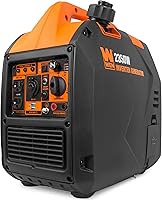
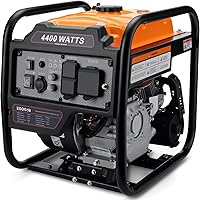
9 Best WEN Generators with Electric Start (November 2026)
The best WEN generators with electric start include the WEN for home backup with 120V and 240V, the WEN Quiet and Lightweight 4800-Watt Dual Fuel for RV and quiet campsite use, and the WEN Super Quiet 3800-Watt RV-Ready Portable Inverter for sensitive electronics.
On this page (9 sections)
- WEN generators with electric start, compared model by model
- Best WEN generator with electric start: side-by-side comparison
- How we compared these WEN electric start generators
- How much power do you need for home backup?
- Inverter or standard generator: which fits your loads?
- Gasoline, propane or natural gas: which fuel should you pick?
- Electric start, recoil backup and starting in real conditions
- What outlets and safety features should you check?
- Our verdict: which WEN generator with electric start should you buy?
The best WEN generator with electric start for most buyers is the DF475T, because it pairs dual fuel flexibility with 120V and 240V output for home backup.
If you mainly need quiet RV power, the 4800-watt dual fuel inverter is a better fit. If you need whole-home power, the 11000-watt and 14500-watt models carry larger loads.
Electric start matters during an outage. You can start from a standing position, avoid repeated pulls, and restart quickly after a refuel.
Our guide to Which Is Better Electric Start or Recoil Start Generator? explains the trade-offs.
We compared nine models by running watts, fuel choice, outlet layout, noise, weight and warranty. Our score weighs specs, features and buyer feedback against what you are shopping for.
Start with the best wen brand generator overview for the wider WEN lineup, then use this guide to narrow to electric start models.
Our picks at a glance
-
1

-
2
 Best for RV and quiet campsite use
WEN Quiet and Lightweight 4800-Watt Dual Fuel
9.6/10 our score
See it on Amazon -
3
 Best for sensitive electronics
WEN Super Quiet 3800-Watt RV-Ready Portable Inverter
9.3/10 our score
See it on Amazon
- 4
 Check it
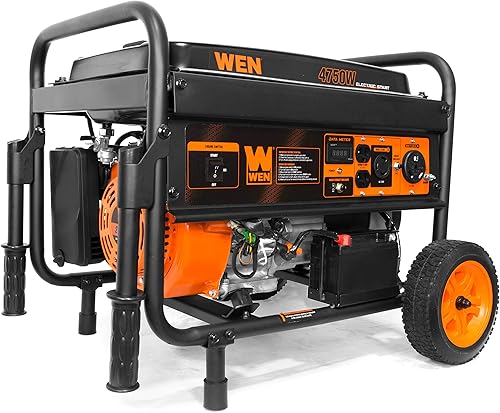
WEN 56475 4750-Watt Portable Generator with Electric
Best for simple gasoline backup - 5
 Check it
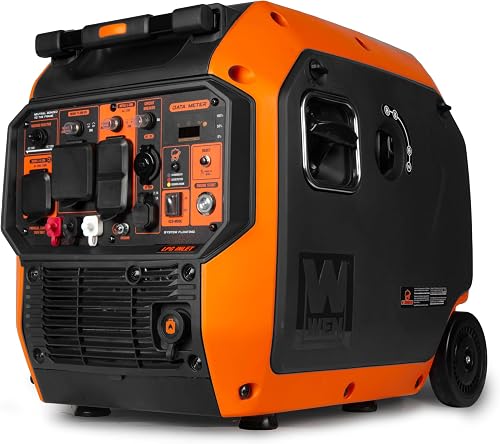
WEN 6800-Watt Dual Fuel RV-Ready Electric Start
Best for EV backup and RV power - 6
 Check it
Pulsar PG1202SA 1200W Portable Generator
Best for light portable backup - 7
 Check it
WEN DF1100X 11000-Watt Electric Start Portable Generator
Best for large home backup loads - 8
 Best for tri-fuel home backupCheck it
- 9
 Check it
WEN 8000-Watt 120V/240V Dual Fuel Portable Generator
Best for transfer switch and RV combo
WEN generators with electric start, compared model by model
The DF475T leads for balanced home backup, while inverter models lead for quiet and clean power. Larger standard generators lead for raw watts and transfer-switch use.
The Pulsar is the outlier, with recoil start and light duty power.
WEN: Best for home backup with 120V and 240V
- Dual fuel gasoline and propane
- 4750 surge watts on gasoline, 3800 running watts
- 4350 surge watts on propane, 3500 running watts
- Electric start with turn of a key
- 4-gallon tank, up to 11 hours at half load
- 120V to 240V voltage selector
A mid-size dual fuel model with 120V and 240V output for transfer switches and emergency backup, started by key.
Pros
- Dual fuel choice
- 120V and 240V output
- Includes wheel kit and LPG hose
Cons
- Standard generator, not inverter clean power
- 105.8 lb weight
This model suits homeowners who want one generator for essentials and a transfer switch, rather than a unit built only for camping.
Its 4750 surge watts and 3800 running watts on gasoline cover lights, TV, refrigerator, sump pump and power tools in daily use.
On propane, output drops to 4350 surge and 3500 running watts, which still covers a smaller essential load.
The 224cc 4-stroke OHV engine starts with the turn of a key, and the 60 hertz output suits standard household equipment.
A voltage selector switches output between 120V and 240V, which helps with transfer switches and emergency backup circuits that need 240V.
A 4-gallon tank gives up to 11 hours at half load, so an overnight outage does not require a midnight refuel at that load level.
The panel includes two 120V GFCI outlets, a NEMA 30A twist lock, and a 12V DC plug for vehicle style devices.
A wheel kit makes moving the 105.8 lb unit practical, and a handle kit, oil bottle and 47-inch LPG hose are included, plus a 2-year warranty from WEN.
Trade-off: it is a standard generator, not an inverter, so choose an inverter model if sensitive electronics are your main load.
Against the larger models here, this one gives up total watts and runtime in exchange for a smaller footprint and easier storage.
WEN Quiet and Lightweight 4800-Watt Dual Fuel: Best for RV and quiet campsite use
- Dual fuel inverter generator
- 4800 surge watts, 4000 rated watts on gasoline
- 4320 surge watts on propane
- Keyless electric start with recoil backup
- CO Watchdog shutdown sensor
- Fuel shut-off
A quiet, lightweight dual fuel inverter with clean power, RV outlet and CO shutdown for camping and home backup.
Pros
- Clean inverter power
- Quiet operation at 62 dB at quarter load
- CO Watchdog and fuel shut-off
Cons
- 120V only output panel
- Lower propane rated watts than gasoline
This inverter suits RV owners and campers who need quiet power near a tent or home.
Its 4800 surge watts and 4000 rated watts on gasoline run RV loads and household essentials without standard generator noise.
On propane, surge output drops to 4320 watts, so gasoline is stronger when you need peak capacity.
WEN says operation compares to normal conversation at 62 dB at quarter load.
Clean inverter power protects phones, tablets and laptops from voltage spikes and drops.
Keyless electric start includes a recoil backup, so a low start battery will not strand you.
The CO Watchdog sensor shuts the unit down if dangerous carbon monoxide is detected.
Fuel shut-off lets the carburetor run dry before shutdown to help limit maintenance.
At 78.5 lb, onboard wheels and a telescoping handle make transport easier.
The panel has four 120V receptacles, a TT-30R RV receptacle, 12V DC, two USB ports and a tool-free LPG quick-connector.
Trade-off: panel output is 120V only, so it cannot feed a 240V transfer switch.
WEN backs it with a three-year warranty.
WEN Super Quiet 3800-Watt RV-Ready Portable Inverter: Best for sensitive electronics
- 3800 surge watts, 3400 rated watts
- 212cc 4-stroke OHV engine
- Electric start
- Clean inverter power
- Fuel shut-off
- Up to 8.5 hours at half load
A super quiet gasoline inverter generator for phones, tablets and laptops, with RV outlet and digital display.
Pros
- Clean power for sensitive electronics
- 57 dB at quarter load
- Digital load and fuel display
Cons
- Gasoline only, not dual fuel
- Lower watts than dual fuel inverters here
This gasoline inverter suits buyers who prioritize quiet, clean power over fuel choice and total watts.
Its 3800 surge watts and 3400 rated watts handle RV loads, phones, tablets and laptops without the harsher output of a standard unit.
The 212cc 4-stroke OHV engine runs at 57 dB at quarter load, about as quiet as a window air conditioner, which is the lowest noise figure among the inverters here.
WEN says total harmonic distortion stays under 0.3 percent at no load and under 1.2 percent at full load, a useful detail if you charge several devices at once.
Electric start, fuel shut-off and a digital load and fuel display make daily use simpler, because you can see load and fuel without guessing.
The 2.2-gallon tank provides up to 8.5 hours at half load, which suits an evening at camp or a short outage rather than a full day of heavy loads.
The panel includes two 120V receptacles, a TT-30R RV receptacle, 12V DC and a 5V USB port, so one unit can serve both RV and personal devices.
WEN backs it with a two-year warranty, and automatic voltage regulation is listed among its features.
Trade-off: it runs on gasoline only, so you lose the storage and fuel-choice benefits of dual fuel.
Choose the 4800-watt dual fuel inverter if propane matters to you, and accept its slightly higher noise level in return for more watts and fuel flexibility.
WEN 56475 4750-Watt Portable Generator with Electric: Best for simple gasoline backup
- 4750 surge watts, 3750 rated watts
- 223cc engine
- Electric start
- Digital readout
- Low-oil shutdown, AVR and overload protection
- Wheel kit and foldable handles
A straightforward gasoline generator with electric start, RV outlet and a digital readout for maintenance.
Pros
- Simple gasoline design
- Includes wheel kit and handles
- CARB and EPA III compliant
Cons
- Not dual fuel
- Standard generator power, not inverter
This model suits buyers who want simple gasoline power with electric start and no dual fuel plumbing.
Its 4750 surge watts and 3750 rated watts from a 223cc engine run lights, TV, refrigerator and sump pump.
That gasoline load closely matches the DF475T, so the choice comes down to fuel and outlets.
Keyless electric start uses a button press, which is easier than a recoil pull.
A digital readout helps track oil changes and maintenance schedule.
Low-oil shutdown, automatic voltage regulation and overload protection protect the unit during long runs.
The panel includes two 120V receptacles, a 30-amp L5-30 receptacle and a TT-30R RV receptacle.
A wheel kit and foldable handles help transport the 112.5 lb unit.
WEN says it meets CARB and EPA III rules for all 50 states, and includes oil, funnel and battery.
Trade-off: it is gasoline only and not an inverter, so electronics protection and fuel flexibility are weaker.
The 4-gallon tank gives up to 10 hours at half load for straightforward backup or job site use.
WEN 6800-Watt Dual Fuel RV-Ready Electric Start: Best for EV backup and RV power
- 6800 surge watts, 5100 rated watts on gasoline
- 6000 surge watts, 4500 rated watts on propane
- 224cc dual-fuel engine
- Keyless electric start with recoil backup
- 120V and 240V bonded-neutral output
- CO Watchdog and fuel shut-off
A dual fuel inverter with 240V output for low-power Level 2 EV charging plus RV and home loads.
Pros
- 240V inverter output
- Clean power for electronics
- Three-year warranty
Cons
- 64 dB at quarter load
- Propane watts lower than gasoline
This inverter suits RV and EV owners who need 240V charging power in a portable package.
Its 6800 surge watts and 5100 rated watts on gasoline top the inverter models here for headroom with multiple loads.
On propane, output is 6000 surge and 4500 rated watts, so plan loads around that lower figure.
Bonded-neutral 240V output provides low-power Level 2 charging for battery and hybrid vehicles.
Keyless electric start includes a recoil starter as backup for vehicle charging away from home.
The CO Watchdog sensor and fuel shut-off add safety and maintenance benefits.
Noise is 64 dB at quarter load, slightly higher than the two smaller inverters.
The panel has an L14-30R 120V/240V receptacle, two 120V receptacles, a TT-30R RV receptacle, 12V DC, two USB ports and a voltage selector.
Wheels, a telescoping handle, a tool-free LPG quick-connector and a six-foot LPG hose are included, plus a three-year warranty.
Trade-off: 240V inverter power comes with higher noise and 99.2 lb weight than the 4800-watt inverter.
Pulsar PG1202SA 1200W Portable Generator: Best for light portable backup
- 1200 watts, 900 running watts
- 71cc 2-cycle engine in title, 69cc in specs
- 40:1 fuel mix
- 120V and 12V outlets
- Recoil start
- 35 lb weight
A small, light gasoline generator for smaller appliances, camping and tailgating, with recoil start.
Pros
- Lightest and smallest here
- Portable for camping
- 120V and 12V outlets
Cons
- Recoil start, not electric start
- Low 900 running watts
- Not for AC units
This Pulsar suits light backup, camping and tailgating where loads stay small.
At 35 lb, it is by far the lightest model here, and the smallest at 16 by 15.4 by 17.1 inches.
That size fits a car trunk or closet easily for portable use.
Output is 1200 watts with 900 running watts, a 300 watt gap between surge and running.
That covers smaller appliances and devices, but not a refrigerator plus other loads at once.
Pulsar says it is not supposed to run AC units.
It uses recoil start, not electric start, so it misses the electric start goal of this guide.
The 2-cycle engine uses a 40:1 fuel mix, unlike the 4-stroke WEN engines here.
The panel provides 120V and 12V outlets, and charging cables are included.
Trade-off: you gain portability and lose power, electric start and dual fuel choice.
Choose it only for light loads such as lights, phone charging or a small television.
For home backup, choose a WEN electric start model, because the watt gap is too large for essential circuits.
WEN DF1100X 11000-Watt Electric Start Portable Generator: Best for large home backup loads
- 11000 surge watts, 8300 running watts on gasoline
- 9500 surge watts, 7500 running watts on propane
- 457cc 4-stroke OHV engine
- Electric start by key
- 120V to 240V selector
- 6.6-gallon tank, up to 8.5 hours at half load
A large dual fuel generator for transfer switches and heavy home loads, with CO shutdown and 50A outlet.
Pros
- High running watts
- 120V and 240V output
- CO Watchdog shutdown
Cons
- 213.8 lb weight
- Standard generator, not inverter
This large dual fuel model suits whole-home backup with a transfer switch, where running watts matter more than quiet operation.
Its 11000 surge watts and 8300 running watts on gasoline run more circuits than mid-size models, including larger motor loads at startup.
On propane, output is 9500 surge and 7500 running watts, so propane still supports a substantial essential load.
A 457cc 4-stroke OHV engine starts with the turn of a key, and a selector switches between 120V and 240V for different household circuits.
A 6.6-gallon tank provides up to 8.5 hours at half load, which is shorter than the DF475T at the same relative load because the engine works harder.
The panel includes four 120V GFCI outlets, an L5-30R twist lock, an L14-50R 120V and 240V receptacle and a 12V DC plug.
That 50A receptacle is a step up from the 30A outlets on smaller models and fits larger transfer-switch setups.
A CO Watchdog sensor, wheel kit, oil bottle and 47-inch LPG hose are included, plus a 2-year warranty.
Trade-off: at 213.8 lb, it is heavy and needs a truck bed or ramp for transport, and its dimensions are the largest here.
It is also a standard generator, not an inverter, so use it for home loads rather than sensitive electronics.
WEN: Best for tri-fuel home backup
- 14500 surge watts, 11500 running watts on gasoline
- 12500 surge watts, 10300 running watts on propane
- 10500 surge watts, 8750 running watts on natural gas
- 500cc 4-stroke OHV engine
- Electric start by key with recoil backup
- 8.2-gallon tank, up to 12 hours at half load
The largest model here, with gas, propane and natural gas choice plus transfer-switch-ready outlets.
Pros
- Tri-fuel flexibility
- Highest running watts here
- Transfer-switch-ready outlets
Cons
- Large footprint
- Standard generator, not inverter
This tri-fuel model suits homeowners who want the most fuel flexibility and the highest watts in one machine.
Its 14500 surge watts and 11500 running watts on gasoline top every model here by a wide margin.
Propane gives 12500 surge and 10300 running watts, and natural gas gives 10500 surge and 8750 running watts, so you can size loads by the fuel you will actually use.
You switch fuels with a simple turn of the selection dial, which avoids changing connections during an outage.
A 500cc 4-stroke OHV engine starts with the turn of a key, with a recoil starter as backup if the battery is low.
An 8.2-gallon tank provides up to 12 hours at half load, the longest runtime claim in this group.
The CO Watchdog sensor shuts the unit down if dangerous levels of carbon monoxide are detected, a key safety feature for home backup use.
The panel includes four 120V outlets, transfer-switch-ready L14-30R and 14-50R outlets and a 12V DC outlet, plus an onboard data meter for voltage, frequency and runtime.
A six-foot LPG hose, NG quick-connect adapter and oil bottle are included, plus a three-year limited warranty.
Trade-off: size and weight, plus standard generator power rather than inverter power, so it is not the choice for quiet campsite use.
WEN 8000-Watt 120V/240V Dual Fuel Portable Generator: Best for transfer switch and RV combo
- 8000 surge watts, 6500 rated watts on gasoline
- 7200 surge watts, 5850 rated watts on propane
- 340cc engine
- Electric start with recoil backup
- 120V and 240V output
- 6.7-gallon tank, up to 10.5 hours at half load
A dual fuel 120V and 240V generator with RV outlet, transfer-switch-ready receptacle and CO shutdown.
Pros
- 120V and 240V output
- RV-ready TT-30R outlet
- Three-year warranty
Cons
- Standard generator, not inverter
- Large size
This dual fuel model suits buyers who want transfer-switch backup plus RV power in one unit, without moving to the largest models.
Its 8000 surge watts and 6500 rated watts on gasoline cover lights, TV, refrigerator, sump pump, heating, air conditioning and microwaves, according to WEN.
On propane, output is 7200 surge and 5850 rated watts, which keeps it well ahead of the 4750-watt models on either fuel.
A 340cc engine starts with the press of a switch, with a recoil starter as backup, and the onboard data meter shows voltage, frequency and runtime.
The CO Watchdog sensor adds shutdown protection for use near a home or RV.
A 6.7-gallon tank provides up to 10.5 hours of half-load run time, longer than the 11000-watt model despite lower output.
The panel includes four 120V outlets, a TT-30R RV outlet, an L14-30R transfer-switch-ready receptacle and a 12V DC receptacle.
A wheel kit is included, and WEN backs it with a three-year warranty and a nationwide service network.
Trade-off: it is a standard generator, not an inverter, and it is large at 28.54 x 24.61 x 24.96 inches, so storage space matters.
Choose an inverter model if clean power for electronics is your priority, and choose this one if 240V home circuits and RV power matter more.
Best WEN generator with electric start: side-by-side comparison
These models split into three groups. Inverter models give clean, quiet power for RV use and electronics.
Mid-size standard models give 120V and 240V home backup at around 3750 to 3800 running watts. Large standard models give the most running watts for transfer switches, from 6500 to 11500 running watts on gasoline.
How the groups differ in practice
Noise and power quality separate inverter models from standard models in daily use. The 3800-watt inverter is quietest at 57 dB, while the 6800-watt inverter trades a little noise for 240V output.
Weight separates the large group, because the 11000-watt model alone weighs 213.8 lb. Runtime also varies, with the tri-fuel model at 12 hours and the 11000-watt model at 8.5 hours at half load.
| Product | Best for | Surge watts (gasoline) | Running watts (gasoline) | Engine | Our score |
|---|---|---|---|---|---|
| WEN | home backup with 120V and 240V | 4750 | 3800 | 224cc 4-stroke OHV | 9.7 |
| WEN Quiet and Lightweight 4800-Watt Dual Fuel | RV and quiet campsite use | 4800 | 224cc dual-fuel | 9.6 | |
| WEN Super Quiet 3800-Watt RV-Ready Portable Inverter | sensitive electronics | 212cc 4-stroke OHV | 9.3 | ||
| WEN 56475 4750-Watt Portable Generator with Electric | simple gasoline backup | 223cc | 9.0 | ||
| WEN 6800-Watt Dual Fuel RV-Ready Electric Start | EV backup and RV power | 6800 | 224cc dual-fuel | 8.7 | |
| Pulsar PG1202SA 1200W Portable Generator | light portable backup | 2-cycle | 8.7 | ||
| WEN DF1100X 11000-Watt Electric Start Portable Generator | large home backup loads | 11000 | 8300 | 457cc 4-stroke OHV | 8.4 |
| WEN | tri-fuel home backup | 14500 | 11500 | 500cc 4-stroke OHV | 8.1 |
| WEN 8000-Watt 120V/240V Dual Fuel Portable Generator | transfer switch and RV combo | 8000 | 340cc | 7.9 |
For a deeper look at inverter models, see our Best WEN Inverter Generators guide. For dual fuel models across the WEN line, see Best WEN Dual Fuel Generators.
How we compared these WEN electric start generators
We checked specs for surge watts, running watts, fuel type, engine size, tank size, runtime, outlets, weight and warranty. We compared those specs against home backup, RV and campsite use cases, rather than ranking by one number alone.
We looked at start type, including key start, keyless start and recoil backup. We also checked safety features such as CO Watchdog sensors, low-oil shutdown and overload protection.
We treated inverter status as a separate category, because clean power changes which loads a generator can serve safely. We did not test these generators.
Scores reflect how well the specs fit a buyer shopping for a WEN generator with electric start, plus buyer feedback patterns such as reliability concerns. For reliability context, read Are WEN Generators Reliable?.
How much power do you need for home backup?
Start with running watts, not surge watts. Surge watts help with motor starting loads, such as a refrigerator compressor starting at the same time as other loads.
Running watts tell you what you can run at the same time once motors are already turning. Add up lights, refrigerator, sump pump, TV, phone chargers and other essentials you want to run together, then add headroom for a motor load.
Basic essentials
The DF475T, with 3800 running watts on gasoline, fits basic essentials. The 56475 model, with 3750 running watts, fits a similar load, so choose between them by fuel choice and outlet layout.
Transfer-switch backup
The 8000-watt, 11000-watt and 14500-watt models fit transfer-switch backup for more circuits. Their 120V and 240V outlets connect to home circuits, subject to proper setup and code requirements.
RV and campsite loads
Inverter models fit RV loads through TT-30R outlets, and the 4800-watt inverter adds four household receptacles and USB ports. The 6800-watt inverter also adds 240V output for low-power EV charging.
If you run a refrigerator during an outage, our Best Electric Start Dual Fuel Generator For Freezers guide covers freezer-specific choices.
Inverter or standard generator: which fits your loads?
Inverter generators produce clean power for sensitive electronics, with low harmonic distortion listed for the WEN inverter models here. Standard generators use an automatic voltage regulator on some models for steadier power, but inverter power is cleaner.
Choose inverter for electronics and quiet use
Choose inverter models for laptops, phones, tablets, monitors and RV use at a campsite. The 4800-watt and 3800-watt inverters here both limit harmonic distortion to under 1.2 percent at full load.
Choose standard for raw watts and 240V loads
Choose standard models for transfer switches, power tools and large motor loads that need high surge watts. The DF475T, DF1100X and TF-1450X provide 120V and 240V output, while the 6800-watt inverter is the only inverter here with 240V output.
Gasoline, propane or natural gas: which fuel should you pick?
Gasoline gives the highest watts on every dual fuel model here, by 300 to 1000 running watts depending on the model. Propane gives lower watts but stores well and offers a fuel choice during shortages.
Gasoline
Gasoline is widely available and gives peak output, so size your load using gasoline watts if you plan to run on gasoline. The DF475T reaches 3800 running watts on gasoline, compared with 3500 on propane.
Propane
Propane connects with an included hose or quick-connector on most dual fuel models, with hose lengths from 47 inches to six feet. It suits buyers who store fuel for emergencies and want a second option during a gasoline shortage.
Natural gas
Only the TF-1450X runs on natural gas, in addition to gasoline and propane, with 8750 running watts on natural gas. That tri-fuel choice suits homes with natural gas lines and transfer-switch backup, because you can run without storing liquid fuel.
Electric start, recoil backup and starting in real conditions
Electric start uses a battery to turn the engine, so starting does not depend on pull strength or technique. Most models here include a recoil starter as backup if the battery is low, which matters for a unit stored for months.
Key start versus keyless start
Key start models use a turn of a key, which some buyers prefer because it feels familiar and secure. Keyless models use a button press, which is simple to do while standing beside the unit.
Both let you start from a standing position, and both appear across the electric start models in this guide.
Keep the start battery charged
A generator that sits unused can lose start battery charge over time, especially in cold storage. Start it periodically and follow WEN guidance for storage, fuel and oil, so electric start is ready during an outage.
What outlets and safety features should you check?
Outlets decide what you can plug in without adapters, and a missing outlet can limit an otherwise suitable generator. A TT-30R outlet fits RVs, while an L14-30R or L14-50R outlet fits transfer switches and 240V loads.
Outlets to look for
Look for GFCI household outlets, RV outlets, twist-lock outlets and 12V DC for vehicle style devices. The DF1100X includes a 50A L14-50R outlet for larger loads, and the TF-1450X includes both 30A and 50A transfer-switch-ready outlets.
Safety features to look for
Look for a CO Watchdog sensor, low-oil shutdown and overload protection, and check which model includes each feature. Use generators outdoors only, away from windows and vents, and follow all safety guidance from WEN.
Our verdict: which WEN generator with electric start should you buy?
Pick the DF475T if you want balanced home backup with dual fuel and 120V and 240V output.
Pick the 4800-watt dual fuel inverter if you want quiet RV power with clean electricity and a CO sensor. Pick the 3800-watt inverter for sensitive electronics on gasoline, where its 57 dB noise level is the lowest here.
Pick the 6800-watt inverter for EV backup and RV power with 240V output and the highest inverter watts. Pick the 11000-watt or 14500-watt models for large home loads with a transfer switch, accepting the added weight and size.
Start with your running watts, fuel choice and outlet needs, then choose the model that matches all three.
Our top 3 picks at a glance
-
1
-
2
Best for RV and quiet campsite use
WEN Quiet and Lightweight 4800-Watt Dual Fuel
9.6/10 our score
See it on Amazon -
3
Best for sensitive electronics
WEN Super Quiet 3800-Watt RV-Ready Portable Inverter
9.3/10 our score
See it on Amazon
Frequently asked questions
Is electric start worth it on a WEN generator?
Electric start is worth it if you start a generator often, have limited strength, or need power quickly during an outage. A key or button start is easier than pulling a recoil cord, especially in cold weather or when the unit sits in a fixed spot.
Most models here keep a recoil starter as backup, so a flat start battery does not leave you without a way to start.
What size WEN generator do I need for home backup?
Size by running watts, not surge watts. Add the running watts for lights, refrigerator, sump pump and other essentials you want to run at once, then leave headroom for motor starting loads.
The 4750-watt DF475T fits essentials, while 8000-watt and larger models fit transfer-switch backup for more circuits.
Is dual fuel better than gasoline only?
Dual fuel gives you a choice between gasoline and propane. Propane often stores well and can be handy during a fuel shortage, while gasoline gives higher watts on most models here.
Compare running watts on each fuel, because propane output is lower on every dual fuel model in this guide.
Can I run electronics on a WEN inverter generator?
Yes, inverter models produce clean power for phones, tablets, laptops and monitors. WEN says its inverter models mirror a pure sine wave with low harmonic distortion.
Standard generators use an automatic voltage regulator on some models, but inverter power is the safer choice for sensitive electronics.
How long will these generators run?
Runtime depends on tank size and load. The DF475T gives up to 11 hours at half load on a 4-gallon tank, and the 14500-watt tri-fuel model gives up to 12 hours at half load on 8.2 gallons.
Higher loads shorten runtime, so plan fuel for the load you will actually run.