9 Best WEN Brand Generator (November 2026)
The best WEN brand generators include the WEN for flexible home backup, the WEN Super Quiet 2350-Watt Portable Inverter Generator for lightweight quiet power, and the WEN Quiet and Lightweight 4800-Watt RV-Ready Portable for quiet RV-ready output.
On this page (7 sections)
- How we ranked the best WEN brand generator models
- Best WEN generators for each type of buyer
- How much generator power do you need?
- Is dual fuel or tri-fuel better for a WEN generator?
- Are WEN inverter generators worth choosing?
- How should you set up and care for a WEN generator?
- Which WEN generator should you choose?
The best WEN brand generator for most home backup plans is the DF475T, because it combines gasoline and propane operation, electric start, 120V/240V output and a wheel kit. The 2350-watt inverter is easier to carry, while the tri-fuel TF-1450X offers the most output and fuel flexibility.
We compared WEN generator models by running watts, fuel flexibility, portability, outlet types and features that affect setup. The right choice depends on whether you need a small electronics-friendly unit, an RV generator or a larger backup source for household circuits.
If you're still deciding about the brand, read our guide on are WEN generators reliable. For a narrower dual-fuel comparison, see the best WEN dual fuel generator picks.
Our picks at a glance
-
1

-
2
 Best for lightweight quiet power
WEN Super Quiet 2350-Watt Portable Inverter Generator
9.7/10 our score
See it on Amazon -
3
 Best for quiet RV-ready output
WEN Quiet and Lightweight 4800-Watt RV-Ready Portable
9.3/10 our score
See it on Amazon
- 4
 Check it
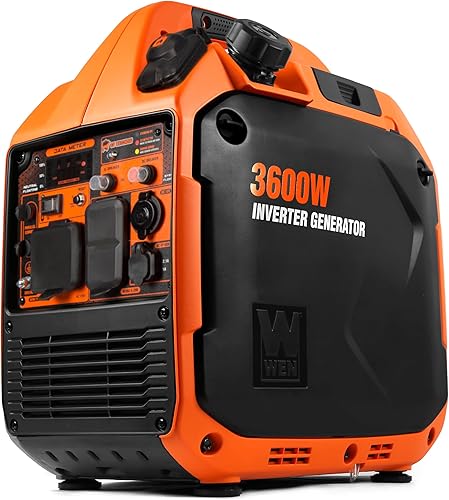
WEN Quiet and Lightweight 3600-Watt Dual Fuel
Best for portable dual-fuel RV power - 5
 Check it
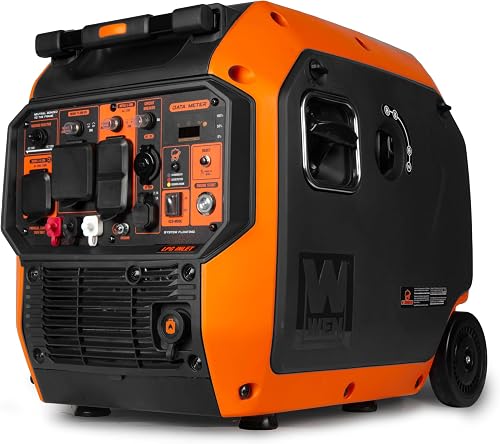
WEN 6800-Watt Dual Fuel RV-Ready Electric Start
Best for higher-output RV backup - 6
 Check it
WEN DF1100X 11000-Watt Electric Start Portable Generator
Best for large transfer-switch loads - 7
 Check it
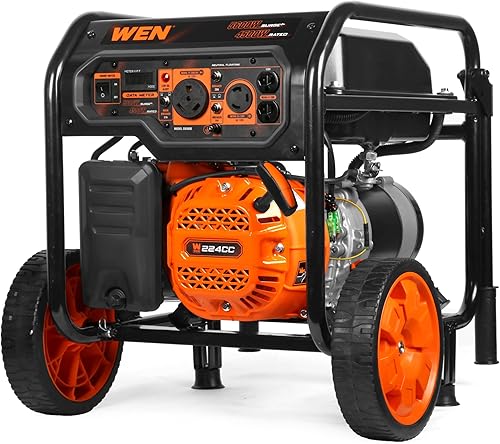
WEN 5600-Watt Portable Generator
Best for simple gasoline backup - 8
 Best for three-fuel planningCheck it
- 9
 Check it
WEN 8000-Watt 120V/240V Dual Fuel Portable Generator
Best for mid-size 240V backup
How we ranked the best WEN brand generator models
The top picks balance useful output with features that fit their intended jobs. We gave extra weight to dual-fuel operation, 120V/240V capability, electric start, RV-ready outlets, inverter power and manageable transport.
Those features pull in different directions, so the order is not simply largest to smallest. A compact inverter can suit a campsite, while a larger conventional unit can suit planned home backup.
Our score weighs specs, features and buyer feedback. It does not mean every model suits every load, and a higher score does not replace a wattage calculation.
Running watts matter more for daily planning than the surge figure. Surge helps with starting needs, but devices draw rated output for most of the time.
Fuel flexibility shaped the ranking in a practical way. Dual fuel suits buyers who want gasoline and propane choices, while gasoline only suits a simpler fuel plan.
Portability was judged by weight, size and movement from storage to the operating spot. Wheels and a handle help, yet they do not make a heavy unit easy to carry up steps.
Inverter power earned a separate look because clean output and quieter use suit sensitive electronics and close quarters. That advantage comes with lower output in most compact models.
Products appear from highest score to lowest. The two 9.7 picks serve different needs: the DF475T is the flexible home backup choice, and the 2350-watt inverter is the lightest option here.
Match the winner to your own situation before committing. Consider which devices will run together, where the generator will sit, how it will be stored and whether the outlets match your equipment.
A careful load check and clear storage plan will tell you more than the score alone. If your plan changes, the ranking can change with it.
| Product | Best for | Gasoline output | Propane output | Weight | Our score |
|---|---|---|---|---|---|
| WEN | flexible home backup | 4,750 surge watts, 3,800 running watts | 4,350 surge watts, 3,500 running watts | 105.8 lb | 9.7 |
| WEN Super Quiet 2350-Watt Portable Inverter Generator | lightweight quiet power | 39 lb | 9.7 | ||
| WEN Quiet and Lightweight 4800-Watt RV-Ready Portable | quiet RV-ready output | 72.7 lb | 9.3 | ||
| WEN Quiet and Lightweight 3600-Watt Dual Fuel | portable dual-fuel RV power | 3,600 surge watts, 2,900 rated watts | 3,500 surge watts, 2,600 rated watts | 49 lb | 8.9 |
| WEN 6800-Watt Dual Fuel RV-Ready Electric Start | higher-output RV backup | 6,800 surge watts, 5,100 rated watts | 6,000 surge watts, 4,500 rated watts | 99.2 lb | 8.7 |
| WEN DF1100X 11000-Watt Electric Start Portable Generator | large transfer-switch loads | 11,000 surge watts, 8,300 running watts | 9,500 surge watts, 7,500 running watts | 213.8 lb | 8.4 |
| WEN 5600-Watt Portable Generator | simple gasoline backup | 8.3 | |||
| WEN | three-fuel planning | 14,500 surge watts, 11,500 running watts | 12,500 surge watts, 10,300 running watts | 8.1 | |
| WEN 8000-Watt 120V/240V Dual Fuel Portable Generator | mid-size 240V backup | 8,000 surge watts, 6,500 rated watts | 7,200 surge watts, 5,850 rated watts | 7.9 |
Best WEN generators for each type of buyer
The best WEN model depends first on your expected running load, then on fuel choice, portability and outlet needs. A compact inverter can be a better fit than a larger conventional generator when you mainly need electronics, lights or modest RV loads.
WEN: Best for flexible home backup
- 4,750 surge watts on gasoline
- 3,800 running watts on gasoline
- Gasoline and propane operation
- 120V/240V selector
- Electric start
- Wheel and handle kit
The DF475T balances useful backup output with dual-fuel flexibility, electric start and a wheel kit. Its 120V/240V selector also suits transfer-switch planning.
Pros
- Runs on gasoline or propane
- 120V/240V output
- Electric start
- Wheel and handle kit
Cons
- Heavier than the inverter models
- Less output than the largest WEN generators
The WEN DF475T is the strongest all-around choice for a homeowner who wants backup flexibility without moving into the largest generator class. Gasoline produces 4,750 surge watts and 3,800 running watts, while propane produces 4,350 surge watts and 3,500 running watts.
That difference matters when you estimate the load from refrigerators, sump pumps, lights and other essentials. Use the lower propane figures when planning around an LPG supply.
The 120V/240V selector and NEMA L14-30R twist-lock outlet make the DF475T suitable for transfer-switch planning. Have a qualified professional handle any home wiring or transfer-switch installation.
Electric start powers the 224cc engine with a key. The 4-gallon tank provides up to 11 hours at half load, and the wheel and handle kit helps with movement even though the unit weighs 105.8 lb.
Choose it if you want one generator that can cover home backup, campground charging and jobsite-style needs. Its trade-off is weight: the 39 lb 2350-watt inverter is far easier to move.
WEN Super Quiet 2350-Watt Portable Inverter Generator: Best for lightweight quiet power
- 2,350 surge watts
- 1,900 rated watts
- 39 lb body
- Gasoline operation
- Fuel shutoff
- Two USB ports
This 39 lb inverter generator is the easiest WEN pick to carry and store. It fits camping, tailgating and small electronics loads where quiet clean power matters more than high output.
Pros
- Lightest model here
- Quiet inverter design
- Fuel shutoff
- USB charging ports
Cons
- Gasoline only
- Lowest running output in the roundup
The WEN Super Quiet 2350-Watt Portable Inverter Generator is the best portability pick. For more compact options, see our best small quiet generators guide.
At 39 lb, it is much easier to carry and store than every other model in this roundup.
It produces 2,350 surge watts and 1,900 rated watts of clean inverter power. For power-quality comparisons, see low THD generators.
That output suits phones, tablets, televisions, computers and other sensitive electronics, but you should add the running watts of your planned devices before connecting them.
The gasoline-only design keeps fuel planning simple but removes the backup option offered by the dual-fuel models. Its fuel shutoff uses remaining carburetor fuel before shutdown, which can help limit stagnant fuel inside the carburetor.
The panel includes two 120V receptacles, one 12V DC receptacle and two 5V USB ports. This setup is useful for camping, tailgating and small emergency loads.
Choose this model when low weight and quieter operation matter more than running a refrigerator, pump and several larger appliances together. For more output with an inverter design, move up to the 4800-watt model.
WEN Quiet and Lightweight 4800-Watt RV-Ready Portable: Best for quiet RV-ready output
- 4,800 surge watts
- 4,000 rated watts
- RV-ready TT-30R outlet
- 72.7 lb body
- Fuel shutoff
- CO Shutdown Sensor
The 56477i adds more inverter output than the compact 2350-watt model while keeping wheels, a pull handle and an RV receptacle. It suits camping and residential backup with gasoline.
Pros
- 4,000 rated watts
- RV-ready outlet
- Wheels and telescoping handle
- CO Shutdown Sensor
Cons
- Gasoline only
- Recoil start
The WEN Quiet and Lightweight 4800-Watt Portable Inverter Generator is the better choice when you need more power than the compact 2350-watt unit but still want inverter output. It produces 4,800 surge watts and 4,000 rated watts from a 224cc engine.
Its TT-30R outlet makes it RV-ready, while four 120V receptacles, a 12V DC receptacle and two USB ports give you several connection options. Built-in wheels and a telescoping pull handle make its 72.7 lb body easier to move across a campsite or driveway.
The 56477i runs on gasoline and uses recoil start. Fuel shutoff helps use remaining carburetor fuel before shutdown, and the CO Shutdown Sensor automatically turns the generator off if dangerous carbon monoxide levels are detected.
The inverter design produces clean power for sensitive electronics. WEN describes operation at 62 dB at quarter load, so it is aimed at quieter portable use rather than the highest possible household output.
Choose it for RV power, camping and moderate residential backup where 4,000 rated watts is enough. If propane matters, the 3600-watt DF360iX gives up output but adds dual-fuel choice.
WEN Quiet and Lightweight 3600-Watt Dual Fuel: Best for portable dual-fuel RV power
- 3,600 surge watts on gasoline
- 2,900 rated watts on gasoline
- Gasoline and propane operation
- 49 lb body
- RV-ready TT-30R outlet
- CO Watchdog
The DF360iX combines dual-fuel choice with a 49 lb inverter design. It is a strong middle ground for RV use when portability matters but a 2,600-watt unit is too small.
Pros
- Gasoline and propane operation
- 49 lb weight
- RV-ready outlet
- Clean inverter power
Cons
- Lower output than the 4800-watt model
- Recoil-style ignition system
The WEN Quiet and Lightweight 3600-Watt Dual Fuel model is the best middle ground for portable RV power. Gasoline gives you 3,600 surge watts and 2,900 rated watts, while propane gives 3,500 surge watts and 2,600 rated watts.
At 49 lb, it is only 10 lb heavier than the 2350-watt inverter. That makes it much easier to handle than the larger RV-ready models while still giving you more rated output than the compact pick.
The DF360iX includes a TT-30R RV receptacle, two 120V receptacles, a 12V DC receptacle and two USB ports. Its tool-free LPG quick-connector makes switching to propane more direct, though you still need a suitable propane supply and safe outdoor setup.
The CO Watchdog sensor automatically shuts the generator down if dangerous carbon monoxide levels are detected. Fuel shutoff also uses remaining carburetor fuel before shutdown to help limit maintenance from stagnant fuel.
Choose it if your RV or camping setup benefits from propane and clean inverter power. It gives up some output compared with the 4800-watt model, but its 49 lb weight is easier to live with.
WEN 6800-Watt Dual Fuel RV-Ready Electric Start: Best for higher-output RV backup
- 6,800 surge watts on gasoline
- 5,100 rated watts on gasoline
- Gasoline and propane operation
- Electric start
- 240V configuration
- RV-ready outlet
The DF680iX gives you more running power than the smaller inverter models, plus dual-fuel operation, electric start and a 240V configuration. Its 99.2 lb weight makes transport a two-person planning question.
Pros
- 5,100 gasoline running watts
- Electric start
- Dual-fuel operation
- 240V configuration
Cons
- Heavier than the smaller inverter models
- More generator than small loads need
The WEN 6800-Watt Dual Fuel RV-Ready Electric Start model is for buyers who need higher portable output without moving to the largest conventional units. It produces 6,800 surge watts and 5,100 rated watts on gasoline, or 6,000 surge watts and 4,500 rated watts on propane.
Its bonded-neutral 240V configuration provides low-power Level 2 charging for battery and hybrid electric vehicles. It also includes an L14-30R 120V/240V receptacle, two 120V receptacles and a TT-30R RV receptacle.
Electric start makes ignition easier, and the tool-free LPG quick-connector supports propane operation. The six-foot LPG regulator hose is included, along with a voltage selector, 12V DC receptacle and two USB ports.
The built-in wheels and telescoping pull handle help, but the generator weighs 99.2 lb. Plan where it will be stored and how it will reach the operating position before choosing it.
Choose the DF680iX for higher RV or backup loads, electric start and 240V capability. For a much lighter setup, the 49 lb DF360iX is easier to carry but produces less running power.
WEN DF1100X 11000-Watt Electric Start Portable Generator: Best for large transfer-switch loads
- 11,000 surge watts on gasoline
- 8,300 running watts on gasoline
- Gasoline and propane operation
- 120V/240V output
- Electric start
- CO Shutdown Sensor
The DF1100X is built for larger emergency loads and transfer-switch use. It offers substantial output and electric start, but its 213.8 lb weight calls for a fixed storage and movement plan.
Pros
- High running output
- Gasoline and propane operation
- 120V/240V output
- CO Watchdog sensor
Cons
- Heaviest model here
- Large footprint
The WEN DF1100X is the better choice for large transfer-switch loads when 8,300 running watts on gasoline is more useful than compact transport. It produces 11,000 surge watts and 8,300 running watts on gasoline, or 9,500 surge watts and 7,500 running watts on propane.
Its 120V/240V operation includes a 120V transfer-switch-ready L5-30R receptacle and a 120V/240V 50A L14-50R receptacle. Those connections make it suited to a planned backup setup, but home wiring should be handled by a qualified professional.
Electric start powers the 457cc engine, and the 6.6-gallon tank provides up to 8.5 hours at half load. A CO Watchdog sensor automatically shuts the generator down if dangerous carbon monoxide levels are detected.
The wheel and handle kit helps with movement, but this unit weighs 213.8 lb. It is not a casual carry-in-and-out generator, so storage, clearance and a stable outdoor operating location matter.
Choose it when your load calculation calls for more than the 4750-watt or 8000-watt models. If you need three fuel choices instead of two, the TF-1450X is the larger step up.
WEN 5600-Watt Portable Generator: Best for simple gasoline backup
- 5,600 starting watts
- 4,500 running watts
- Gasoline operation
- RV-ready TT-30R outlet
- Transfer-switch-ready outlet
- Wheel and handle kit
The GN5600 keeps the setup simple with gasoline power, 4,500 running watts and both RV-ready and transfer-switch-ready outlets. It suits buyers who do not need propane or inverter output.
Pros
- 4,500 running watts
- RV-ready outlet
- Transfer-switch-ready outlet
- Up to 12.5-hour half-load runtime
Cons
- Gasoline only
- 112.4 lb weight
The WEN 5600-Watt Portable Generator is the simplest choice for gasoline-only backup. It provides 5,600 starting watts and 4,500 running watts, giving it more sustained output than the DF475T while removing the option to use propane.
That single fuel choice is the main simplification here. You do not need to choose between gasoline and propane, connect an LPG hose or plan output around a propane supply.
Its outlet panel includes two standard 120V 20A outlets, an RV-ready 120V 30A TT-30R outlet and a transfer-switch-ready 120V 30A L5-30R twist-lock receptacle. That mix serves both campground and planned home backup use.
The standard outlets suit direct use for lights, tools and household appliances. The RV and transfer switch connections suit buyers who want one conventional generator to cover two different kinds of setups.
The 4.3-gallon tank provides up to 12.5 hours at half load. That run time is useful for overnight planning, though real run time will depend on the load you connect.
A wheel and handle kit helps move the 112.4 lb unit between storage and its operating location. It still needs a firm, level surface and a clear path before you start it.
Choose the GN5600 when gasoline is your preferred fuel and you want RV and transfer-switch connections in one conventional generator. Pick the DF475T instead if propane flexibility and 120V/240V output are more important.
WEN: Best for three-fuel planning
- 14,500 surge watts on gasoline
- 11,500 running watts on gasoline
- Gasoline, propane and natural gas
- 120V/240V output
- Electric start
- CO Watchdog
The TF-1450X offers the broadest fuel choice and the highest output in this roundup. It is for serious home or commercial backup planning where size and installation needs are acceptable.
Pros
- Gasoline, propane and natural gas
- Highest output here
- 120V/240V operation
- Electric start
Cons
- Largest footprint
- Natural gas output is lower than gasoline output
The WEN TF-1450X is the most capable model in this roundup for fuel flexibility and output. On gasoline it produces 14,500 surge watts and 11,500 running watts, while propane produces 12,500 surge watts and 10,300 running watts.
Natural gas adds a third fuel option, with 10,500 surge watts and 8,750 running watts. That can simplify long-duration home planning where a suitable natural gas connection is available, but the lower natural gas output still needs to fit your load calculation.
The 120V/240V design includes L14-30R and NEMA 14-50R transfer-switch-ready outlets. Electric start powers the 500cc engine, and the 8.2-gallon tank provides up to 12 hours at half load.
A CO Watchdog sensor adds automatic shutdown if dangerous carbon monoxide levels are detected. The generator also includes a wheel kit, but its 28.8 x 28.3 x 25.8 in dimensions require more storage space than the portable inverter models.
Choose it for large residential or commercial backup planning where three fuel sources justify the larger footprint. For normal essential loads, the smaller DF475T is easier to store and move.
WEN 8000-Watt 120V/240V Dual Fuel Portable Generator: Best for mid-size 240V backup
- 8,000 surge watts on gasoline
- 6,500 rated watts on gasoline
- Gasoline and propane operation
- 120V/240V output
- Electric start
- CO Watchdog
The DF8000X fills the gap between the DF475T and DF1100X conventional models. It adds dual-fuel flexibility, 120V/240V output and electric start for larger backup loads.
Pros
- 6,500 gasoline running watts
- Dual-fuel operation
- 120V/240V output
- Up to 10.5-hour half-load runtime
Cons
- Larger than inverter options
- Less output than the 11000-watt model
The WEN DF8000X is a mid-size dual-fuel option for buyers who need more output than the DF475T but less than the DF1100X. Gasoline produces 8,000 surge watts and 6,500 rated watts, while propane produces 7,200 surge watts and 5,850 rated watts.
That fuel difference should be part of your load planning from the start. Use the propane figures if propane is your main supply, because the gap is large enough to matter for larger appliances.
Its 120V/240V operation includes four standard 120V outlets, an RV-ready TT-30R outlet and a transfer-switch-ready NEMA L14-30R twist-lock receptacle. That panel gives you direct household outlets, an RV connection and a planned backup connection in one place.
Electric start provides quick ignition, with a recoil starter available as backup. That backup matters for buyers who want a second way to start the generator if the primary start method is not ready.
The 6.7-gallon tank provides up to 10.5 hours at half load. A longer run time can simplify overnight use, but you should still plan fuel storage and refueling around the load you expect.
A wheel kit helps with movement, and the CO Watchdog sensor automatically turns the generator off if dangerous carbon monoxide levels are detected. The sensor is a safety feature, not a reason to run the unit in an enclosed space.
Choose the DF8000X when your expected load needs more sustained power than the DF475T can provide. It is a conventional portable generator, so it takes more space and handling effort than the inverter models.
How much generator power do you need?
The right WEN generator starts with running watts, not the largest surge number. Add the running watts of the devices you want to use at the same time, then account for appliances and motors that need extra starting power.
The 2350-watt inverter is aimed at smaller electronics and light portable loads. The DF360iX and 4800-watt 56477i give more room for RV or moderate backup use, while the DF475T adds 120V/240V flexibility.
For larger loads, compare the rated output of the DF680iX, GN5600, DF8000X and DF1100X. The TF-1450X has the most capacity here, but buying more output than you need increases the space and movement demands.
Never connect a generator directly to a home wall outlet. Use the correct connection method and have transfer-switch work completed by a qualified professional.
Is dual fuel or tri-fuel better for a WEN generator?
Dual fuel is usually the more practical choice when you want gasoline and propane without moving into the largest generator class. The DF475T, DF360iX, DF680iX, DF1100X and DF8000X all offer gasoline and propane operation.
That choice lets you plan around the fuel you can store, buy and use safely. Some buyers prefer gasoline for availability, while others prefer propane for storage and handling.
Output changes when the fuel changes, so decide fuel and load together. A generator that meets your needs on gasoline may fall short on propane if you plan around the higher figures.
Propane output is often lower than gasoline output on dual fuel models here. That does not remove the value of propane, but use the lower rated watts for a propane based plan.
Tri-fuel adds natural gas. The TF-1450X gives you gasoline, propane and natural gas, but output changes with fuel: gasoline is highest, followed by propane and then natural gas.
Natural gas can support long duration home planning where a suitable connection is already in place. It still needs proper connection and local requirements handled correctly, and its lower output must fit your load.
Fuel flexibility does not remove the need for safe storage and operation. Keep fuel choices, hose connections and local installation requirements in your emergency plan.
It also does not solve the need for a realistic load list. Write down the devices you will run, add their running watts and leave room for motors that need more power to start.
For many buyers, dual fuel is the sweet spot because it adds choice without forcing a move to the largest footprint. Tri-fuel makes more sense when the third fuel solves a specific planning problem.
Compare rated watts for each fuel before you choose, not just the headline surge number. The right plan matches your supply, storage space and the devices you actually need to keep running.
Are WEN inverter generators worth choosing?
WEN inverter generators are worth considering when clean power, lower weight or quieter portable use matters. The 2350i, 56477i, DF360iX and DF680iX are the inverter options in this roundup.
Inverter output is meant to suit sensitive electronics more closely than conventional generator power. That can matter for phones, tablets, televisions, laptops and other devices where power quality is part of the plan.
The 2350i is the lightest at 39 lb. The DF360iX weighs 49 lb and adds dual-fuel operation, while the 56477i reaches 4,000 rated watts.
Weight, fuel choice and running watts rise at different rates across these models. The best fit depends on which limit matters most in your setup.
The 2350i suits camping, tailgating and small emergency loads where carrying the generator is part of the job. Keep the connected load small and add up running watts before you plug devices in.
The DF360iX adds gasoline and propane choice while staying relatively light at 49 lb. That makes it appealing for RV use where propane is part of the plan and portability still matters.
The 56477i moves toward higher gasoline inverter output for RV and moderate backup use. It gives more rated power, but it remains gasoline only with recoil start.
The DF680iX offers the most inverter output here, but it weighs 99.2 lb. Electric start and dual fuel help with use, yet transport and storage need real planning.
Quieter portable use is another reason to choose an inverter over a larger conventional unit. Actual sound changes with load and distance, so treat any quiet claim as a guide.
Fuel shutoff on several models can help with care by using remaining carburetor fuel before shutdown. That supports maintenance planning, but it does not replace the care schedule for your exact model.
For more model-specific comparisons, read our guide to the best WEN inverter generator. If electric start is your main requirement, compare the best WEN generator with electric start guide.
Choose an inverter when clean power and portable use are central. Choose a conventional model when higher sustained output, 120V/240V backup planning or a larger outlet panel matters more.
How should you set up and care for a WEN generator?
Run a fuel-powered generator outdoors and keep it away from doors, windows and other openings. Carbon monoxide can build up quickly in enclosed or partly enclosed spaces, even when a door or garage opening appears large.
Place the generator on a stable, dry surface and keep the controls and outlets accessible. Follow the model instructions for oil, fuel, grounding and connection procedures.
Fuel shutoff is useful on several WEN inverter models because it lets remaining carburetor fuel burn off before shutdown. For every model, use the care schedule and fuel guidance that apply to that engine.
Before an outage, confirm which devices you will run, where the generator will operate and how it will be moved. A simple written load list can prevent overloading when the power is already out.
Which WEN generator should you choose?
Pick the DF475T if you want the best balance of dual-fuel operation, electric start, 120V/240V output and manageable backup capacity. Pick the 2350-watt inverter if carrying weight and quiet portable power come first.
Choose the DF360iX for a lighter dual-fuel RV setup, the 56477i for more gasoline inverter output, or the DF680iX for higher RV-ready power with electric start. Move to the DF1100X or TF-1450X only when your load calculation and storage plan support a much larger generator.
For a broad look at WEN model strengths, start with the best WEN dual fuel generator guide and compare the exact output and connection needs for your setup.
Our top 3 picks at a glance
-
1
-
2
Best for lightweight quiet power
WEN Super Quiet 2350-Watt Portable Inverter Generator
9.7/10 our score
See it on Amazon -
3
Best for quiet RV-ready output
WEN Quiet and Lightweight 4800-Watt RV-Ready Portable
9.3/10 our score
See it on Amazon
Frequently asked questions
Is WEN a good generator brand?
WEN is a useful generator brand when its model features match your load. The range includes a 39 lb, 2350-watt inverter generator, dual-fuel 120V/240V models, RV-ready units and a tri-fuel generator rated for 14,500 surge watts.
Compare output, fuel type, outlets and movement needs before choosing.
What is the best WEN brand generator for home backup?
The WEN DF475T is the best fit for many home backup plans because it offers gasoline and propane operation, electric start, a 120V/240V selector and 3,800 gasoline running watts. Larger homes or higher loads may need the DF1100X, DF8000X or TF-1450X instead.
Is the DF475T WEN generator dual fuel?
Yes. The WEN DF475T runs on gasoline or propane.
It produces 4,750 surge watts and 3,800 running watts on gasoline, or 4,350 surge watts and 3,500 running watts on propane.
Its 120V/240V selector and NEMA L14-30R outlet support transfer-switch planning.
What is the best WEN generator for an RV?
The best WEN RV generator depends on the RV load and how much carrying you can manage. The 3600-watt DF360iX weighs 49 lb and has a TT-30R outlet, while the 4800-watt 56477i offers 4,000 rated watts.
The 6800-watt DF680iX is better for higher loads but weighs 99.2 lb.
Are WEN inverter generators quieter than conventional generators?
WEN inverter generators are designed for quieter operation than the brand's larger open-frame portable models. The 2350-watt 56235i is described as operating at 51 dB at quarter load, while the 4800-watt 56477i is described at 62 dB at quarter load.
Actual sound changes with load and distance.