6 Best Low THD Generators (November 2026)
The best low THD generators include the Westinghouse 14500 Peak Watt Tri-Fuel Home Backup for large home backup, the DuroMax XP13000EH for dual-fuel whole-home power, and the Westinghouse 8200 Peak Watt Tri-Fuel Portable Inverter for the cleanest stated power.
On this page (7 sections)
The best low THD generator for most buyers is the Westinghouse iGen8200TFc, because it combines less than 3% THD with 6,600 running watts on gasoline and three fuel choices. Pick a larger open-frame model for whole-home loads, or a small inverter when portability matters more than capacity.
Low distortion matters when you want to run computers, phones, TVs and other electronics during an outage or outdoor trip. The right generator still depends on running watts, starting watts, fuel access, noise, outlet types and safe placement.
If you need the basic operating difference first, read What Is a Dual Fuel Inverter Generator and How Does It Work?. For a smaller comparison, see our guide to the best portable generator inverter.
Our picks at a glance
-
1
 Best for large home backup
Westinghouse 14500 Peak Watt Tri-Fuel Home Backup
9.7/10 our score
See it on Amazon -
2

-
3
 Best for the cleanest stated power
Westinghouse 8200 Peak Watt Tri-Fuel Portable Inverter
9.3/10 our score
See it on Amazon
- 4
 Best for three-fuel flexibilityCheck it
- 5
 Check it
Champion 2500-Watt Ultralight Portable Inverter Generator
Best for lightweight electronics power - 6
 Check it
Westinghouse 1500 Peak Watt Super Quiet
Best for quiet small loads
Which low THD generator is best for each use?
The Westinghouse iGen8200TFc is the strongest match when you want the lowest stated THD in this group and enough output for major home loads.
It suits households that want to run a refrigerator, lights and electronics at the same time without dropping to a small camping inverter.
The smaller Champion and Westinghouse inverters make more sense for camping, electronics and a few essentials.
Those models are easier to carry and store, and their lower output keeps the focus on phones, TVs and other small devices.
We compared stated THD, output, fuel choices, starting method, portability and intended use.
Our score weighs specs, features and buyer feedback against what you are shopping for.
That balance matters because a high wattage number alone does not tell you whether the power is clean enough for sensitive gear.
It also does not tell you whether the generator will fit in your garage, truck bed or RV storage bay.
Use the stated THD first when electronics are the priority, then check running watts for the rest of your load list.
If home backup is the priority, a larger open-frame model may carry more load even when its stated THD is higher.
Set-up also differs by size, since large units often need a transfer switch or interlock kit for home circuits.
Small inverters usually plug straight into devices, which makes them simpler for trips and short outages.
| Product | Best for | Power | Fuel | THD | Our score |
|---|---|---|---|---|---|
| Westinghouse 14500 Peak Watt Tri-Fuel Home Backup | large home backup | 11,500 running / 14,500 peak watts on gasoline | Gasoline, propane or natural gas | Less than 5% | 9.7 |
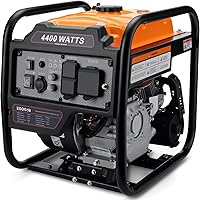
| DuroMax XP13000EH | dual-fuel whole-home power | 10,500 running / 13,000 peak watts | Gasoline or propane | 9.7 | |
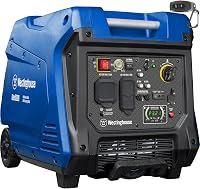
| Westinghouse 8200 Peak Watt Tri-Fuel Portable Inverter | the cleanest stated power | 6,600 running / 8,200 peak watts on gasoline | Gasoline, propane or natural gas | Less than 3% | 9.3 |
| DuroMax XP13000HXT | three-fuel flexibility | 13,000 peak watts | Gasoline, propane or natural gas | 9.2 | |
| Champion 2500-Watt Ultralight Portable Inverter Generator | lightweight electronics power | 1,850 running / 2,500 starting watts | Gasoline | Less than 3% | 9.2 |
| Westinghouse 1500 Peak Watt Super Quiet | quiet small loads | 1,000 rated / 1,500 peak watts | Gasoline | Less than 3% | 8.0 |
Best low THD generators compared
These generators split into 3 groups: large home-backup units, mid-size inverter power and lightweight electronics power. The product data does not give a THD figure for both DuroMax models, so they rank on output and fuel flexibility rather than a confirmed low-distortion number.
Westinghouse 14500 Peak Watt Tri-Fuel Home Backup: Best for large home backup
- Less than 5% THD
- 14,500 peak watts and 11,500 running watts on gasoline
- Gasoline, propane and natural gas
- Remote electric start
This tri-fuel open-frame generator combines high output with a less-than-5% THD claim for phones, computers and TVs. Its 50A and 30A outlets suit transfer-switch or interlock-kit home backup.
Pros
- Highest output in this roundup
- Tri-fuel flexibility
- Remote electric start
Cons
- Heavy 230 lb frame
- Open-frame design
The Westinghouse 14500 Peak Watt Tri-Fuel Home Backup is the best fit for a large home that needs substantial output and flexible fuel access. It produces 11,500 running watts and 14,500 peak watts on gasoline, with propane and natural gas as alternatives.
Its less-than-5% THD claim supports phones, computers and TVs. That is not the lowest stated figure here, but it gives this open-frame generator a clear place in a home-backup comparison.
The 550cc 4-stroke engine uses a pressure lubrication system and a reusable oil screen. Westinghouse states up to 19 hours at 25% load on a 9.5-gallon gas tank, so light-load planning can reduce refueling during a long outage.
Remote electric start adds convenience, while 50A and 30A outlets work with an interlock kit, manual transfer switch or the Westinghouse WATS200 automatic transfer switch. The transfer switch and interlock hardware are sold separately.
At 230 lb and 27.2 x 26.1 x 26.5 in, this is a serious home-backup machine rather than a grab-and-go camping inverter. Choose it when capacity and tri-fuel access matter more than compact size.
DuroMax XP13000EH: Best for dual-fuel whole-home power
- 13,000 peak watts and 10,500 running watts
- Gasoline and propane
- Electric start
- 50A transfer-switch-ready outlet
The XP13000EH is a high-output dual-fuel option for residential backup, RV use and jobsite power. Its data does not state a THD figure, so choose it when output and fuel choice matter more than a published distortion rating.
Pros
- High running wattage
- Dual-fuel operation
- Steel frame and 50A outlet
Cons
- No published THD figure in the product data
- 234 lb weight
The DuroMax XP13000EH is a strong dual-fuel choice for residential backup, RV use and jobsite power. It provides 10,500 running watts and up to 13,000 watts of surge power, with gasoline or propane as the fuel options.
The heavy-duty steel frame and power panel suit buyers who want a work-oriented portable generator. DuroMax also includes no-flat tires, a foldable handle, electric start, a low-oil shutdown and a CO sensor.
Its front-facing interface lets you change fuel type, and the 50A outlet is transfer-switch ready. The control panel also includes 2 120V GFCI-protected household outlets and individual breakers.
The data for this model does not state a THD figure. That makes the XP13000EH a less certain fit for a buyer who needs a confirmed low-distortion rating for sensitive electronics, even though its output is useful for large household loads.
At 234 lb and 30 x 29 x 26 in, plan the storage location before you buy. Choose this model when dual-fuel operation and high wattage are the main goals.
Westinghouse 8200 Peak Watt Tri-Fuel Portable Inverter: Best for the cleanest stated power
- Less than 3% THD
- 6,600 running and 8,200 peak watts on gasoline
- Gasoline, propane and natural gas
- About 60 dBA at 25% load
The iGen8200TFc gives sensitive electronics a clearly stated less-than-3% THD output while retaining home-backup wattage. Inverter operation also adjusts engine speed to demand.
Pros
- Lowest stated THD
- Tri-fuel operation
- 50A home-backup outlet
Cons
- Less output than the large open-frame picks
- Higher purchase weight than small inverters
The Westinghouse 8200 Peak Watt Tri-Fuel Portable Inverter is the best low THD generator here for buyers who want a stated less-than-3% THD figure without dropping to small-generator output. For another tri-fuel option, see low THD tri-fuel generators.
It delivers 6,600 running watts and 8,200 peak watts on gasoline.
Power changes with fuel: 5,940 running watts and 7,380 peak watts on propane, or 5,280 running watts and 6,560 peak watts on natural gas. That gives you flexibility, but the fuel choice affects the load you can support.
Inverter technology adjusts engine speed to demand. Westinghouse states about 60 dBA at 25% load and up to 17 hours of runtime at 25% load on a 3.9-gallon gasoline tank.
The 50A 120/240V outlet is ready for a transfer switch or interlock kit. It also has a 30A TT-30R RV outlet and a GFCI 120V 20A duplex outlet.
The 134.5 lb body is much easier to manage than the larger open-frame picks, although it still needs a safe outdoor operating area. Choose it for home backup, camping or electronics when less than 3% THD is a priority.
DuroMax XP13000HXT: Best for three-fuel flexibility
- 13,000 peak watts
- Gasoline, propane and natural gas
- Remote and push-button start
- 50A transfer-switch-ready outlet
The XP13000HXT gives home-backup buyers three fuel choices and 13,000 peak watts. Its data does not state a THD figure, so it is better for buyers prioritizing fuel access and large loads.
Pros
- Three fuel choices
- Remote start
- Natural gas hose and propane regulator included
Cons
- No published THD figure in the product data
- 240 lb weight
The DuroMax XP13000HXT suits buyers who want high output and 3 fuel choices. It produces up to 13,000 peak watts from a 500cc 4-stroke engine and supports gasoline, propane and natural gas.
Push-button and remote start make it easier to start from a short distance. The 50A outlet is transfer-switch ready, and the product is positioned for whole-home backup, RV use and emergency power.
The box includes a 15 ft x 3/4 in natural gas hose, propane regulator, remote control, wheel and handle kit, oil funnel, spark plug wrench, tool set and owner’s manual. These included fuel parts make the tri-fuel setup more practical, but you still need to follow the installation instructions for your fuel source.
The data for this model does not state a THD figure. For that reason, it is a better match for buyers focused on fuel availability and high output than for shoppers who require a confirmed low THD rating.
At 240 lb and 30 x 30 x 26 in, this is the heaviest model in the roundup. Choose it when natural gas access or 13,000 peak watts matters more than portability.
Champion 2500-Watt Ultralight Portable Inverter Generator: Best for lightweight electronics power
- Less than 3% THD
- 2,500 starting and 1,850 running watts
- 39.7 lb weight
- 53 dBA at 23 ft
This ultralight inverter suits camping, tailgating and a few essential loads. Its less-than-3% THD output is paired with a 39.7 lb body, but its 1,850 running watts limit the load size.
Pros
- Lightest high-scoring pick
- Less than 3% THD
- Parallel-ready
Cons
- Gasoline only
- Not recommended for emergency home backup
The Champion 2500-Watt Ultralight Portable Inverter Generator is the best low THD generator for camping, tailgating and small electronics loads. It provides 2,500 starting watts, 1,850 running watts and less than 3% THD.
At 39.7 lb, it is much easier to carry than the home-backup models. Champion states 53 dBA from 23 ft and up to 11.5 hours of runtime at 25% load.
The gasoline-powered 79cc 4-stroke engine uses recoil start. The control panel includes a 120V 15.4A household duplex outlet, a 12V automotive-style outlet and parallel outlets.
You can connect it to another Champion 2500-watt inverter with an optional parallel kit to increase output. The kit is not included, so account for that extra setup if you expect to need more power later.
This model is not recommended for emergency home backup. Pick it for a few essentials, electronics and outdoor use where low weight and less than 3% THD matter more than whole-home capacity.
Westinghouse 1500 Peak Watt Super Quiet: Best for quiet small loads
- Less than 3% THD
- 1,000 rated watts and 1,500 peak watts
- As low as 52 dBA
- 30.1 lb weight
The iGen1500c is a compact choice for sensitive electronics, small home essentials and recreation. It produces less than 3% THD and weighs 30.1 lb, but its 1,000 rated watts rule out larger loads.
Pros
- Lightest generator here
- Less than 3% THD
- As low as 52 dBA
Cons
- Lowest rated output
- Gasoline only
The Westinghouse 1500 Peak Watt Super Quiet is the best low THD generator for small loads where low weight and quiet operation come first. It produces 1,500 peak watts, 1,000 rated watts and less than 3% THD.
The 30.1 lb body and built-in carrying handle make it the easiest model here to move. Westinghouse states noise as low as 52 dBA and up to 12 hours of runtime on a 0.79-gallon gas tank.
This gasoline inverter has 2 120V 20A outlets and 2 USB outlets. Economy Mode adjusts engine speed to the power demand, which supports its fuel-efficiency focus.
The iGen1500c is parallel capable with another parallel-port-equipped Westinghouse inverter. You need a Westinghouse parallel cord for that setup.
Its 1,000 rated watts limit it to small home essentials, electronics and recreation. Choose it when a compact low THD generator is more useful than the higher capacity of the other picks.
How do you choose a generator with low THD?
Start with the stated THD figure, then match the generator running watts to the loads you want to power.
A generator with less than 3% THD may suit sensitive electronics, but it still needs enough starting capacity for appliances with motors.
The Westinghouse iGen8200TFc, Champion 2500-Watt and Westinghouse iGen1500c each state less than 3% THD.
The Westinghouse WGen11500TFc states less than 5% THD, which pairs with much higher home-backup output.
That trade-off is the core choice in this guide, since cleaner stated power often comes with lower total output.
Do not use peak watts as your everyday capacity number.
Running watts describe the sustained load, while peak watts provide temporary starting support.
A refrigerator or pump may need that extra surge for a short moment, but the generator must still carry the load after it starts.
Make a list of the devices you want to run at the same time.
Add their running watts, then allow room for startup demand from equipment such as refrigerators, pumps and air conditioners.
It also helps to separate essentials from nice-to-have devices before you shop.
Lights, food storage and phone charging usually matter more during an outage than entertainment loads.
Next, check outlet types against the gear you actually own.
A 50A home-backup outlet is useful for a transfer switch, while a standard duplex outlet is better for small electronics.
Fuel choice can also change the output you can plan on, so compare running watts for each fuel you may use.
Finally, think about placement and care in daily use.
Low oil shutdown, a CO sensor and proper outdoor ventilation are safety features, not replacements for correct set-up.
Keep the manual close for oil checks, breaker resets and maintenance intervals listed by the maker.
Should you choose an inverter or open-frame generator?
Choose an inverter generator when clean power, lower noise, fuel efficiency and smaller size matter most. Choose an open-frame generator when high output, large outlets and whole-home backup matter more.
The Westinghouse iGen8200TFc gives inverter benefits with 6,600 running watts on gasoline. The Champion and Westinghouse iGen1500c are easier to carry, but their 1,850 and 1,000 rated watts limit the loads they can support.
For a wider look at this design, compare the best open frame inverter generator with portable inverter models. If low sound is also a major concern, see Best Dual Fuel Generator For Low Noise and Best Dual Fuel Inverter Generator For Low Noise.
What fuel should a low THD generator use?
Choose gasoline for the highest stated output on the larger models, propane for stored-fuel flexibility and natural gas when a compatible home connection is available.
Fuel choice can change the running and peak wattage on some generators.
That change matters in practice because a load that fits on gasoline may be too much on another fuel.
The Westinghouse WGen11500TFc, Westinghouse iGen8200TFc and DuroMax XP13000HXT offer 3 fuel choices.
The DuroMax XP13000EH offers gasoline and propane, while the Champion and Westinghouse iGen1500c use gasoline.
Gasoline is the simplest option for many buyers since it is widely available and gives the larger models their highest stated output.
The trade-off is storage, since gasoline needs careful handling and may not suit long-term storage plans.
Propane offers a different set of trade-offs for households that store fuel at home.
It can simplify storage for some users, but you still need the right tank, regulator and connections for the generator.
Natural gas can be practical when a compatible home connection already exists.
It removes the need to refill a tank during a long outage, but the connection must match the generator and local rules.
For RV and jobsite use, fuel access often depends on where you travel or work.
A dual-fuel or tri-fuel model gives you options when one fuel is hard to find.
That flexibility is useful, but it also adds set-up steps before you can start the generator.
Check which parts are included in the box, such as a hose or regulator, before you plan the first run.
Store and handle fuel according to local rules and the generator instructions.
Never run a fuel-powered generator indoors, in a garage or near openings where exhaust can enter the home.
Keep fuel containers away from heat and sparks, and let the generator cool before refueling.
Good care also means checking oil level, connections and breakers before each use.
A clear fuel plan will make the generator easier to use when an outage happens.
How should you set up a low THD generator?
Set up the generator outdoors in a well-ventilated location, away from doors, windows and vents. Keep the exhaust directed away from the home and follow the model's safety instructions before connecting any load.
Use a transfer switch or approved interlock setup for home circuits. The 50A outlets on several models are transfer-switch ready, but the switch, interlock kit and installation requirements vary.
Check the fuel connections, oil level, breakers and cable ratings before operation. Let the generator cool before refueling, and use the low-oil shutdown and CO sensor features as added safety controls rather than as a replacement for correct placement.
Before an outage, write down the essential loads and the order in which you will connect them. This helps prevent overloading and makes it easier to choose between a small inverter and a large home-backup unit.
Which low THD generator should you buy?
Pick the Westinghouse iGen8200TFc if you want the lowest stated THD in this roundup with enough output for serious home backup.
It is the best fit when clean power for electronics and major household loads both matter to you.
Choose the Westinghouse WGen11500TFc when you need higher capacity and accept a less-than-5% THD rating.
That model is aimed at larger home loads, with 50A and 30A outlets for transfer-switch or interlock-kit set-up.
Choose the Champion 2500-Watt for lightweight camping power, or the Westinghouse iGen1500c for the quietest small-load option.
Both are built around portability, so they suit trips, tailgating and a few essential devices more than whole-home backup.
Pick the DuroMax models when dual-fuel or tri-fuel flexibility and high output matter more than a published THD figure.
The XP13000EH gives gasoline and propane choice, while the XP13000HXT adds natural gas and remote start.
Those DuroMax picks are heavy, so plan storage and handling before you buy.
Think about where the generator will live between uses and how you will move it to the yard.
Also consider the connection method you want for home circuits.
A transfer switch or interlock kit adds cost and installation work, but it makes home backup safer and simpler to manage.
For portable devices, a standard outlet may be all you need, which keeps set-up much simpler.
Match the final choice to your main use case first, then check THD, running watts and fuel.
If electronics are the main concern, give the stated THD figure extra weight.
If a large air conditioner or several appliances must run, give running watts and outlet size more weight.
For the next step, read What Is a Dual Fuel Inverter Generator Used For? before choosing a fuel system and connection method.
Our top 3 picks at a glance
-
1
Best for large home backup
Westinghouse 14500 Peak Watt Tri-Fuel Home Backup
9.7/10 our score
See it on Amazon -
2
-
3
Best for the cleanest stated power
Westinghouse 8200 Peak Watt Tri-Fuel Portable Inverter
9.3/10 our score
See it on Amazon
Frequently asked questions
What is THD on a generator?
THD means total harmonic distortion, a measure of how much the generator's AC waveform differs from a clean sine wave. Lower figures are generally preferred for sensitive electronics.
The generators here with a stated less-than-3% THD claim include the Westinghouse iGen8200TFc, Champion 2500-Watt and Westinghouse iGen1500c.
What is a good THD level for a generator?
A generator with less than 5% THD is commonly treated as a cleaner-power option, while less than 3% gives a tighter stated limit. Match the THD figure with the generator's wattage, outlet type and fuel system.
A low THD figure does not make an undersized generator suitable for a large load.
Are inverter generators better for sensitive electronics?
Inverter generators can produce cleaner power, but check the stated THD figure instead of relying only on the word inverter. The Westinghouse iGen8200TFc, Champion 2500-Watt and Westinghouse iGen1500c each state less than 3% THD.
You still need correct grounding, ventilation and load sizing.
Can a low THD generator power a refrigerator?
Yes, if its running and starting wattage match the refrigerator and any other connected loads. The Westinghouse iGen8200TFc has 6,600 running watts on gasoline, while the Champion 2500-Watt has 1,850 running watts.
Check the appliance label and allow for startup demand.
Do tri-fuel generators have low THD?
Some do, but tri-fuel operation alone does not prove a low THD output. The Westinghouse iGen8200TFc states less than 3% THD and runs on gasoline, propane or natural gas.
The Westinghouse WGen11500TFc states less than 5% THD with the same three fuel choices.