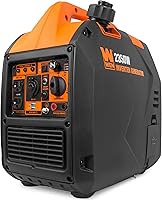
5 Best Low THD Tri Fuel Generators (November 2026)
The best low THD tri fuel generators include the Westinghouse 14500 Peak Watt Tri-Fuel Home Backup for whole home backup with clean power, the Westinghouse 8200 Peak Watt Tri-Fuel Portable Inverter for quiet inverter power and electronics, and the DuroMax XP13000HXT for high peak power on three fuels.
On this page (9 sections)
- The best low THD tri fuel generators for clean power at home
- How the best low THD tri fuel generator picks compare
- What THD figure should you aim for in a low THD tri fuel generator?
- Which low THD tri fuel generator is best for home backup?
- How much running power do you need for essential loads?
- Which fuel should you choose for a tri fuel generator?
- What safety features matter in a low THD tri fuel generator?
- How should you set up and care for a tri fuel generator?
- Verdict: best low THD tri fuel generator picks
The best low THD tri fuel generator for most buyers is the Westinghouse 14500 Peak Watt Tri-Fuel Home Backup, because it combines less than 5% THD with 11,500 running watts on gasoline. The Westinghouse 8200 Peak Watt Tri-Fuel Portable Inverter is the cleaner and quieter choice at less than 3% THD, but it gives up peak power.
Clean power matters most when an outage hits and your phones, computers, TVs and home network stay in use. A tri fuel generator also gives you a choice of gasoline, propane or natural gas, so you can use the fuel you can store or access during a storm.
Our score weighs specs, features and buyer feedback against what you're shopping for. We compared the stated THD, running watts, peak watts, fuel options, outlets, start methods and safety features for each model.
Start with the best tri fuel portable generator guide if you want more portable options beyond this low THD shortlist. If low noise is your main concern, our Best Dual Fuel Generator For Low Noise roundup covers quieter dual fuel choices, and our Best Dual Fuel Inverter Generator For Low Noise guide covers inverter models for noise sensitive use.
Our picks at a glance
-
1
 Best for whole home backup with clean power
Westinghouse 14500 Peak Watt Tri-Fuel Home Backup
9.7/10 our score
See it on Amazon -
2
 Best for quiet inverter power and electronics
Westinghouse 8200 Peak Watt Tri-Fuel Portable Inverter
9.3/10 our score
See it on Amazon -
3

The best low THD tri fuel generators for clean power at home
The Westinghouse 14500 is the top pick when you want low THD plus whole home power. The Westinghouse 8200 is the top pick when you want even cleaner power in a portable inverter package.
Westinghouse 14500 Peak Watt Tri-Fuel Home Backup: Best for whole home backup with clean power
- Less than 5% THD
- 11,500 running watts and 14,500 peak watts on gasoline
- Gas, propane and natural gas fuel
- Remote electric start and transfer switch ready
A large tri-fuel home backup model with low distortion, remote start and transfer switch readiness for sensitive electronics and major appliances.
Pros
- Less than 5% THD for electronics
- 550cc engine with pressure lubrication
- 30A and 50A outlets for home backup
Cons
- 230 lb weight needs wheels and a ramp or lift plan
- Transfer switch and interlock kit sold separately
This Westinghouse suits buyers who want one generator for home backup and for sensitive electronics during an outage. It delivers less than 5% THD, so it is aimed at phones, computers and TVs as well as larger home loads.
On gasoline it delivers 11,500 running watts and 14,500 peak watts, which is the highest running figure in this group. The 550cc engine uses pressure lubrication, and Westinghouse says copper windings help it run cooler and last longer.
Daily use centers on the 50A and 30A outlets, remote electric start and transfer switch readiness. It can pair with an interlock kit, a manual transfer switch or the Westinghouse WATS200 automatic transfer switch, each sold separately.
The trade-off is size and weight at 230 lb and 27.2 x 26.1 x 26.5 inches. It is portable with wheels and a handle, but you should plan how you will move and store it before it arrives.
Westinghouse 8200 Peak Watt Tri-Fuel Portable Inverter: Best for quiet inverter power and electronics
- Less than 3% THD
- 6,600 running watts and 8,200 peak watts on gasoline
- Inverter design, parallel capable
- Remote electric start and CO sensor
A portable inverter with the lowest stated THD in this group, suited to electronics, camping and lighter home backup loads.
Pros
- Less than 3% THD
- Inverter adjusts engine speed to load
- 50A outlet for home backup use
Cons
- Less running power than the larger picks
- Output drops on propane and natural gas
This Westinghouse inverter suits buyers who put clean power first and want a generator they can move for camping, job sites or home backup. It delivers less than 3% THD, the lowest stated distortion figure in this group.
On gasoline it delivers 6,600 running watts and 8,200 peak watts. On propane those figures drop to 5,940 running and 7,380 peak watts, and on natural gas they drop to 5,280 running and 6,560 peak watts.
Inverter technology adjusts engine speed to meet demand, which helps cut fuel use and noise at lighter loads. Westinghouse says it runs around 60 dBA at 25% load, and it offers up to 17 hours at 25% load on a 3.9 gallon gas tank.
The trade-off is clear: less power than the open frame picks here. Choose it for electronics, RV use and essential home loads rather than the largest whole home loads.
DuroMax XP13000HXT: Best for high peak power on three fuels
- 13,000 peak watts
- 500cc OHV engine
- Gas, propane and natural gas fuel
- Push button and remote start
A high-output tri-fuel portable generator built for whole home backup, with CO Alert and a transfer switch ready 50 amp outlet.
Pros
- 13,000 peak watts
- Three fuel choices
- Transfer switch ready 50 amp outlet
Cons
- 240 lb, so transport needs planning
- Low THD figure not stated in the data used here
This DuroMax suits buyers who want high peak power and three fuel choices for whole home backup. It delivers 13,000 peak watts from a 500cc OHV engine and runs on gasoline, propane or natural gas.
It includes push button start, remote start, CO Alert and a transfer switch ready 50 amp outlet. The front facing interface lets you change fuel type, and the included parts list includes a 15 foot natural gas hose and a propane regulator.
The trade-off in this low THD roundup is that the data used here does not state a THD figure. That does not mean the power is dirty, but it does mean this pick is ranked for power and fuel flexibility rather than proven low distortion.
At 240 lb and 30 x 30 x 26 inches, it is also one of the largest units here. Plan for a ramp, lift or a fixed outdoor spot, and keep the CO Alert guidance in mind by running it outdoors with airflow.
DuroStar DS13000MXT: Best for whole home loads on a budget focus

- 13,000 peak watts and 10,500 running watts
- 500cc OHV engine
- Gas, propane and natural gas fuel
- Remote electric start and CO Alert
A tri-fuel whole home backup model with remote start, CO Alert and a transfer switch ready 50 amp outlet.
Pros
- 10,500 running watts
- Three fuel choices
- Wide outlet selection for home backup
Cons
- No low THD figure stated here
- Large size and weight for portable use
This DuroStar suits buyers who want whole home power on gas, propane or natural gas without paying for the brand premium of some larger names. It delivers 13,000 peak watts and 10,500 running watts from a 500cc OHV engine.
The power panel includes a transfer switch ready 50 amp outlet, a fuel selection knob and push button start. It also includes remote start through the remote control, plus CO Alert that shuts the unit down when harmful fumes are detected.
Daily use is aimed at lights, appliances and central air conditioning during a blackout or emergency. The included parts list includes a natural gas hose, propane regulator, wheel and handle kit and remote control.
The trade-off is the same as with the DuroMax: no low THD figure is stated in the data used here. If clean power for electronics is your top need, the two Westinghouse picks above are the safer shortlist.
Generac: Best for surge capacity and fuel flexibility

- 12,500 starting watts and 9,500 running watts on gas
- 500cc Generac OHV engine
- Gas, propane and natural gas fuel
- Automatic voltage regulation and COsense
A tri-fuel portable generator with strong surge capacity, AVR for stable voltage and transfer switch compatibility for home backup.
Pros
- 12,500 starting watts for motor loads
- AVR helps stabilize voltage
- Natural gas option for long runtime
Cons
- No low THD figure stated here
- Up to 9.5 hours at 50% load limits long outages on gas
This Generac suits buyers who need strong surge capacity for motor driven loads such as air conditioners, sump pumps and power tools. It delivers 12,500 starting watts and 9,500 running watts on gas from a 500cc Generac OHV engine.
Automatic voltage regulation helps stabilize output voltage, which matters when motor loads start and stop. The control panel includes two 120V 20A GFCI duplex outlets, a 120/240V 30A twist lock outlet and a 120/240V 50A outlet.
Fuel choice includes gasoline, liquid propane and natural gas. On gasoline it runs up to 9.5 hours at 50% load and 14 hours at 25% load from a 7.5 gallon tank, and a natural gas line can extend runtime for long outages.
The trade-off is that no low THD figure is stated in the data used here. Choose it for surge capacity, AVR and fuel flexibility, and choose a stated low THD model if electronics are the main load.
How the best low THD tri fuel generator picks compare
The Westinghouse 14500 leads on stated low THD plus running power. The Westinghouse 8200 leads on the lowest stated THD and inverter efficiency.
| Product | Best for | Peak watts | Running watts | THD | Our score |
|---|---|---|---|---|---|
| Westinghouse 14500 Peak Watt Tri-Fuel Home Backup | whole home backup with clean power | 14,500 on gasoline | 11,500 on gasoline | Less than 5% | 9.7 |
| Westinghouse 8200 Peak Watt Tri-Fuel Portable Inverter | quiet inverter power and electronics | 8,200 on gasoline | 6,600 on gasoline | Less than 3% | 9.3 |
| DuroMax XP13000HXT | high peak power on three fuels | 13,000 | 9.2 | ||
| DuroStar DS13000MXT | whole home loads on a budget focus | 13,000 | 10,500 | 9.1 | |
| Generac | surge capacity and fuel flexibility | 9,500 on gas | 8.6 |
We compared stated THD first, because that is the reason for this roundup. Only two picks state a THD figure, so we ranked those highest for electronics use.
We then compared running watts, because running watts are what keep loads on during an outage. Peak or starting watts matter for motor starts, but they do not replace running watts for sustained use.
We also compared fuel flexibility, outlet types, start methods and safety features. Remote start, CO sensors or CO Alert, low oil shutdown and transfer switch readiness all affect daily use and home backup safety.
Weight and size matter for a portable generator. A 230 lb or 240 lb unit is portable in the sense that it has wheels, but it is not a unit you will carry up stairs or load into a car alone.
What THD figure should you aim for in a low THD tri fuel generator?
Aim for a stated THD under 5% if you plan to power electronics, and under 3% if you want the cleanest stated figure here. The Westinghouse 8200 states less than 3% THD, and the Westinghouse 14500 states less than 5% THD.
THD is total harmonic distortion. In plain terms, it describes how clean the electrical waveform is.
Lower distortion is generally a better match for phones, computers, TVs and other sensitive electronics.
Less than 3% THD
Less than 3% THD is the strongest stated figure in this group. It comes from the Westinghouse 8200 inverter, which is also the most portable and efficient pick here.
Less than 5% THD
Less than 5% THD is still a low distortion figure for a portable generator. It comes from the larger Westinghouse 14500, which adds much more running power for home backup.
No stated THD figure
Three picks here do not state a THD figure in the data used for this guide. That gap matters if clean power is your main buying reason, even if the other specs look strong.
Which low THD tri fuel generator is best for home backup?
The Westinghouse 14500 is the best home backup pick here because it pairs less than 5% THD with 11,500 running watts on gasoline. It also offers 50A and 30A outlets and transfer switch readiness.
For automatic home backup, Westinghouse says it can pair with the WATS200 automatic transfer switch. The switch is sold separately, and you should confirm compatibility and installation needs before you buy.
The DuroMax XP13000HXT, DuroStar DS13000MXT and Generac also list transfer switch readiness or compatibility. Those picks suit whole home loads, but they do not state a low THD figure here.
If you want remote start as part of home backup, our best tri fuel generator with remote start guide covers that feature in more depth. Our best tri fuel inverter generators guide covers inverter models for cleaner and quieter output.
How much running power do you need for essential loads?
Add up the running watts for the loads you must keep on, then leave headroom for motor starts. A refrigerator, sump pump, lights, phones and a TV use far less power than a whole home with central air conditioning.
The Westinghouse 8200 offers 6,600 running watts on gasoline, which suits essential loads and electronics. The Westinghouse 14500 offers 11,500 running watts on gasoline, which suits larger home backup.
The DuroStar DS13000MXT offers 10,500 running watts, and the Generac offers 9,500 running watts on gas. Those figures help you compare sustained power, not just peak watts.
Essential loads only
Essential loads usually mean refrigeration, sump pump, lights, phones, internet equipment and a few small appliances. An inverter model such as the Westinghouse 8200 can suit this use well.
Whole home loads
Whole home loads can include central air conditioning, electric furnace blowers, water pumps and several large appliances at once. The larger open frame picks and the Generac are a closer fit for this use.
Starting watts and motor loads
Starting watts help with motor driven loads that draw extra power at startup. The Generac states 12,500 starting watts, which is 32% more than its running output on gas.
Which fuel should you choose for a tri fuel generator?
Choose the fuel you can store safely and access during an outage. Gasoline is widely available, propane stores well, and natural gas can support long runtime when a line is available.
Several picks here lose output when they move away from gasoline. The Westinghouse 8200 drops from 6,600 running watts on gasoline to 5,280 running watts on natural gas, so compare the fuel you will actually use.
Gasoline
Gasoline gives the highest stated output on the Westinghouse models and the Generac. It also needs safe storage and refueling care during an outage.
Propane
Propane gives fuel choice and easier storage for many buyers. It can also suit RV and outdoor use when you already carry propane tanks.
Natural gas
Natural gas can give long runtime when connected to a home line. It suits buyers who want backup power without repeated refueling, as long as the connection is installed and used correctly.
What safety features matter in a low THD tri fuel generator?
Look for a CO sensor or CO Alert, low oil shutdown, GFCI outlets and overload protection. Each pick here lists at least one carbon monoxide safety feature, and several list low oil shutdown as well.
Carbon monoxide safety is not optional. Run any portable generator outdoors, away from windows and doors, and follow the manual for placement and ventilation.
The Westinghouse 14500 lists a CO sensor and automatic low oil shutdown. The Westinghouse 8200 lists a CO sensor and automatic low oil shutdown.
The DuroMax and DuroStar list CO Alert, and the Generac lists COsense.
How should you set up and care for a tri fuel generator?
Set it up outdoors on level ground, connect the fuel you plan to use, add oil as directed, and start it before you plug in loads. Let it run for a moment at no load before you connect electronics or appliances.
Shut the generator down before you refuel it, and let it cool as directed in the manual. Store fuel in approved containers away from living space, and keep the manual and any transfer switch instructions nearby.
Check oil, air filter and spark plug parts on the schedule in your manual, and track hours with the hour meter or data center where one is included. The Westinghouse models list a data center or hour meter, and the Generac lists a digital hour meter.
Verdict: best low THD tri fuel generator picks
Pick the Westinghouse 14500 if you want the best mix of less than 5% THD and whole home power. Pick the Westinghouse 8200 if you want less than 3% THD, inverter efficiency and a more portable package.
Pick the DuroMax XP13000HXT or DuroStar DS13000MXT if peak power and three fuel choices matter more than a stated THD figure. Pick the Generac if surge capacity and AVR matter most for motor driven loads.
For your next step, compare inverter models in our best tri fuel inverter generators guide, or compare remote start models in our best tri fuel generator with remote start guide.
Our top 3 picks at a glance
-
1
Best for whole home backup with clean power
Westinghouse 14500 Peak Watt Tri-Fuel Home Backup
9.7/10 our score
See it on Amazon -
2
Best for quiet inverter power and electronics
Westinghouse 8200 Peak Watt Tri-Fuel Portable Inverter
9.3/10 our score
See it on Amazon -
3
Frequently asked questions
What does THD mean for a tri fuel generator?
THD means total harmonic distortion. A lower THD figure means cleaner power for electronics such as phones, computers and TVs.
Two picks here state less than 5% and less than 3% THD.
Other picks focus on wattage and fuel choice, so check the stated THD before using them for sensitive electronics.
Is a low THD tri fuel generator safe for electronics?
A low THD model is a better match for electronics than a high distortion model. The Westinghouse 8200 states less than 3% THD, and the Westinghouse 14500 states less than 5% THD.
Still plug in key electronics through the correct outlets and follow the manual for load limits.
Can a tri fuel generator run a whole home?
Some models here can support whole home backup through a transfer switch or interlock kit. The Westinghouse 14500, DuroMax XP13000HXT, DuroStar DS13000MXT and Generac all list transfer switch readiness or compatibility.
You still need to size running watts to your essential loads and use safe home wiring.
Which fuel is best for a tri fuel generator?
Gasoline gives the highest stated output on several picks, while propane and natural gas give fuel choice and storage options. Natural gas can suit long outages when a line is available.
Propane can suit buyers who store fuel at home.
Compare running watts on each fuel before you choose.
Do I need a transfer switch for home backup?
A transfer switch or interlock kit helps you connect a portable generator to home circuits safely. Several picks here are transfer switch ready or compatible, but the switch or kit is often sold separately.
Never backfeed a house without the correct equipment and proper installation.