6 Best Tri Fuel Generators with Remote Start (November 2026)
The best tri fuel generator with remote start include the Westinghouse 13500 Peak Watt Tri-Fuel Home Backup for automatic home backup, the Champion for included fuel hoses, and the Westinghouse 8200 Peak Watt Tri-Fuel Portable Inverter for quieter portable power.
On this page (9 sections)
- Best tri fuel generators with remote start: the full comparison
- Comparison: tri fuel generators with remote start side by side
- How we compared these tri fuel generators with remote start
- Which fuel is best for a tri fuel generator with remote start?
- Inverter or open frame: which tri fuel remote start design fits your use?
- How much wattage do you need for home backup with remote start?
- Is remote start worth it on a tri fuel generator?
- How should you set up and care for a tri fuel generator with remote start?
- Verdict: which tri fuel generator with remote start should you buy?
The best tri fuel generator with remote start for most homes is the Westinghouse 13500 Peak Watt Tri-Fuel Home Backup, because it pairs 10,500 running watts on gasoline with remote electric start and a 50A outlet for home backup. It also runs up to 19 hours at 25% load on a 9.5 gallon gasoline tank, which helps during a long outage.
If you value cleaner power and included hoses more than maximum wattage, the Champion is the next best fit.
Remote start matters more than it sounds during a storm. You can start the generator, check the fuel gauge and shut it down without standing next to a running engine in the rain.
Tri fuel matters too, because gasoline, propane and natural gas have different storage and runtime trade offs at home.
We compared six models by running watts, fuel options, remote start, outlet layout, weight, runtime and safety features. Every fact below comes from the product data for each model.
Our score weighs specs, features and buyer feedback against what you are shopping for.
Our picks at a glance
-
1
 Best for automatic home backup
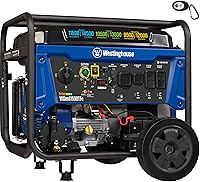
Westinghouse 13500 Peak Watt Tri-Fuel Home Backup
9.7/10 our score
See it on Amazon -
2

-
3
 Best for quieter portable power
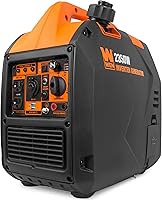
Westinghouse 8200 Peak Watt Tri-Fuel Portable Inverter
9.3/10 our score
See it on Amazon
Best tri fuel generators with remote start: the full comparison
The Westinghouse home backup model leads on power, runtime and transfer switch readiness. The Champion and the smaller Westinghouse inverter lead on clean power and portability.
Westinghouse 13500 Peak Watt Tri-Fuel Home Backup: Best for automatic home backup
- 13,500 peak watts and 10,500 running watts on gasoline
- Gasoline, propane and natural gas fuel
- Remote electric start with key fob
- 500cc engine with pressure lubrication
- Transfer switch ready with 50A and 30A outlets
A large home backup model with remote start, long gasoline runtime and WATS200 automatic transfer switch compatibility.
Pros
- High running wattage for home loads
- Remote start and push-button electric start
- Three fuel options
Cons
- Heavy at 230 pounds
- Transfer switch sold separately
This Westinghouse suits homeowners who want portable backup close to standby generator convenience. It delivers 10,500 running watts and 13,500 peak watts on gasoline, with propane and natural gas as other fuel choices.
Remote electric start comes through a push button or the included remote key fob. That helps when you need to restart the unit during a storm or check on it from inside the house.
The 500cc engine uses pressure lubrication and a reusable oil screen, which Westinghouse links to longer engine life and cleaner oil. Automatic low oil shutdown and a CO sensor add protection during long runs.
Runtime is a clear advantage at up to 19 hours at 25% load on a 9.5 gallon gasoline tank. That means fewer refueling trips during an overnight outage.
The trade off is size and weight at 230 pounds and 27.2 by 26.1 by 26.5 inches. You will want the included never flat wheels, handle and lift bracket, plus a clear path from storage.
It is transfer switch and interlock kit ready, with 50A and 30A outlets. The Westinghouse WATS200 automatic transfer switch is sold separately, so budget for that system if automatic changeover is your goal.
Champion: Best for included fuel hoses
- 11,000 starting watts and 9,000 running watts on gasoline
- Wireless remote start up to 80 feet
- Natural gas and propane hoses included
- Clean power under 3% THD
- 459cc engine
An inverter tri fuel model with remote start, included LPG and natural gas hoses, and clean power for sensitive electronics.
Pros
- Hoses included for all three fuels
- Remote start from up to 80 feet
- Clean power for electronics
Cons
- Lower wattage on natural gas
- 212.3 pounds is still heavy to move
Champion suits buyers who want an inverter tri fuel generator ready to run on any fuel right out of the box. Natural gas and propane hoses are included, along with engine oil and a battery.
Its wireless remote start works from up to 80 feet away, with a CO Shield carbon monoxide auto shutoff system. That distance is useful when the generator sits outside and you are inside.
On gasoline it makes 11,000 starting watts and 9,000 running watts. On propane it makes 11,000 starting watts and 8,100 running watts, and on natural gas it makes 11,000 starting watts and 7,290 running watts.
Clean power is a key reason to pick it, with less than 3% THD for sensitive electronics. Outlets include two 120V 20A GFCI duplex outlets, a 120/240V 30A locking outlet, a 120/240V 37.5A outlet and a 12V automotive style outlet.
Runtime on gasoline is up to 15 hours at 25% load on a 6.08 gallon tank. On a 20 pound propane tank it runs up to 8 hours at 25% load.
The trade off is weight at 212.3 pounds and lower output on natural gas. That drop matters if you plan to rely on a natural gas line for your largest loads.
Westinghouse 8200 Peak Watt Tri-Fuel Portable Inverter: Best for quieter portable power
- 8,200 peak watts and 6,600 running watts on gasoline
- Less than 3% THD
- Remote electric start
- 298cc engine and 134.5 pounds
- Parallel capable with CO sensor
A lighter inverter tri fuel generator with remote start, low THD output and a 50A outlet for home backup.
Pros
- Lightest model in this group
- Low THD for sensitive electronics
- RV ready outlet and 50A home backup outlet
Cons
- Less power than the large home backup models
- Smaller 3.9 gallon gasoline tank
This Westinghouse inverter suits camping, RV and home backup use where noise and clean power matter. It weighs 134.5 pounds, which is far easier to load and move than the large open frame models.
It delivers 6,600 running watts and 8,200 peak watts on gasoline, with 5,940 running watts on propane and 5,280 running watts on natural gas. Plan your loads around the fuel you will actually use.
Remote electric start comes with a key fob, plus push button electric start on the panel. An LED data center shows voltage, frequency and lifetime hours.
Inverter technology adjusts engine speed to meet demand, which cuts fuel use compared with a traditional generator. Westinghouse says noise is around 60 dBA at 25% load.
With less than 3% THD, it is suited to phones, computers and TVs. Copper windings help it make cleaner power and run cooler, according to Westinghouse.
A 50A 14-50R outlet supports home backup through a transfer switch or interlock kit. It also has a TT-30R 30A RV outlet and a GFCI 120V duplex outlet.
The trade off is power and tank size. The 3.9 gallon tank runs up to 17 hours at 25% load, but total wattage is well below the 13,000 watt models.
DuroMax XP13000HXT: Best for whole home peak power

- 13,000 peak watts
- 500cc OHV engine
- Push button and remote start
- Gasoline, propane and natural gas
- Transfer switch ready 50 amp outlet
A 13,000 watt tri fuel portable generator with remote start and a 50 amp transfer switch ready outlet for whole home backup.
Pros
- Highest peak wattage in this group
- Remote start and push button start
- Includes natural gas hose and propane regulator
Cons
- Heaviest model here at 240 pounds
- Large 30 by 30 inch footprint
DuroMax suits whole home backup buyers who want maximum peak power in a portable frame. It delivers 13,000 peak watts from a 500cc OHV engine and runs on gasoline, propane or natural gas.
Push button start and remote start let you start it from a distance. A front facing interface lets you change fuel type in seconds.
A transfer switch ready 50 amp outlet supports home backup during a storm or outage. CO Alert helps protect your family from harmful fumes by shutting the unit down when carbon monoxide is detected.
Included items include a 15 foot natural gas hose, a propane regulator, a remote control, a wheel and handle kit and tools. That helps you connect to the fuel you have available without a separate shopping trip.
The trade off is scale. At 240 pounds and 30 by 30 by 26 inches, it is the largest and heaviest model in this group.
You need space to store it and a ramp or lift to move it.
Choose it when peak power and whole home coverage matter more than portability. Skip it if you need to carry a generator in an SUV or up stairs.
DuroStar DS13000MXT: Best for whole home backup value

- 13,000 peak watts and 10,500 running watts
- 500cc OHV engine
- Remote electric start
- Gasoline, propane and natural gas
- Transfer switch ready 50 amp outlet
A whole home tri fuel generator with 13,000 peak watts, remote start and CO Alert shutdown.
Pros
- Strong peak and running wattage
- Remote control included
- Includes natural gas hose and propane regulator
Cons
- Large frame for portable use
- Weight not stated in the data provided
DuroStar suits whole home backup buyers who want 13,000 peak watts with tri fuel flexibility and remote start. It runs on gasoline, propane or natural gas from a 500cc OHV engine.
It delivers 13,000 peak watts and 10,500 running watts, which puts it in the same power class as the leading Westinghouse model. That running wattage helps with central air, refrigerators and other motor loads.
Remote electric start comes with a remote control, and the panel has a push button start and fuel selection knob. A transfer switch ready 50 amp outlet supports home backup.
CO Alert shuts the generator down automatically when harmful carbon monoxide levels are detected. That safety feature matters when the unit runs near a garage or living space.
Included items include a 15 foot natural gas hose, a propane regulator, a wheel and handle kit, a spark plug wrench and a tool set. You can connect it to the fuel source you already have at home.
The trade off is portability. At 30.5 by 27.3 by 26 inches, it needs a large storage footprint and a clear path to a safe outdoor spot.
Its weight is not stated in the data, so check the exact figure before planning transport.
Generac: Best for stable voltage with AVR

- 12,500 starting watts and 9,500 running watts on gasoline
- 500cc OHV engine
- Automatic voltage regulation
- 7.5 gallon fuel tank
- Push button electric start
A tri fuel portable generator with AVR, COsense shutdown and versatile outlets for home and job site use.
Pros
- Automatic voltage regulation
- Strong surge capacity for motor loads
- Good outlet mix for home backup
Cons
- No remote start listed in its data
- 219 pounds needs wheels and a clear path
Generac suits homeowners and contractors who want stable voltage and strong surge capacity. It delivers 9,500 running watts and 12,500 starting watts on gasoline, with a 500cc OHV engine.
Automatic voltage regulation stabilizes output voltage, which helps protect connected equipment and supports motor driven tools, pumps and appliances. That is a practical advantage during fluctuating loads.
On gasoline, the 7.5 gallon tank runs up to 9.5 hours at 50% load or 14 hours at 25% load. A natural gas line can extend runtime far beyond a tank, according to Generac.
COsense technology detects rising carbon monoxide levels and shuts the generator down before reaching dangerous thresholds. Low oil shutdown and covered GFCI outlets add protection.
The panel includes two 120V 20A GFCI duplex outlets, a 120/240V 30A twist lock and a 120/240V 50A outlet. It is compatible with Generac HomeLink manual transfer switches for home backup.
The trade off is start method and weight. Its data lists push button electric start with a 12V battery, but no remote start.
At 219 pounds, it also needs wheels and a folding handle for moves.
Comparison: tri fuel generators with remote start side by side
The Westinghouse home backup model and the DuroStar offer the strongest running watts for whole home loads. The Champion offers the best included hose package, while the Westinghouse inverter is the lightest and quietest option here.
| Product | Best for | Peak watts | Running watts | Engine | Our score |
|---|---|---|---|---|---|
| Westinghouse 13500 Peak Watt Tri-Fuel Home Backup | automatic home backup | 13,500 | 10,500 | 500cc | 9.7 |
| Champion | included fuel hoses | 9,000 | 459cc | 9.5 | |
| Westinghouse 8200 Peak Watt Tri-Fuel Portable Inverter | quieter portable power | 8,200 | 6,600 | 298cc | 9.3 |
| DuroMax XP13000HXT | whole home peak power | 13,000 | 500cc | 9.2 | |
| DuroStar DS13000MXT | whole home backup value | 13,000 | 10,500 | 500cc | 9.1 |
| Generac | stable voltage with AVR | 9,500 | 500cc | 8.6 |
How we compared these tri fuel generators with remote start
We checked running watts first, because that number decides what you can actually power. Peak watts only describe short surge capacity for motor starts.
We then compared fuel flexibility, remote start distance where stated, runtime at 25% load, outlet layout and weight. We also checked safety features such as CO sensors, CO Shield, CO Alert and COsense.
We looked at what is included in the box, such as hoses, regulators, batteries, oil and wheel kits. A model that includes the hoses you need saves a separate purchase and setup step.
Our score weighs specs, features and buyer feedback against what you are shopping for. Higher scores go to models that combine power, remote start, fuel choice and home backup readiness in one package.
Which fuel is best for a tri fuel generator with remote start?
Gasoline gives the highest wattage on every model here, so it is the default choice for your largest loads. It also stores easily in a tank, but you need to manage storage safety and shelf life.
Propane stores well and produces fewer running watts on most models in this group. It suits buyers who keep 20 pound tanks on hand for camping, RV use or backup.
Natural gas gives you a utility line connection for long outages, but output drops further on most models. Champion, for example, drops to 7,290 running watts on natural gas from 9,000 on gasoline.
How do you size your loads by fuel?
Add up the running watts for every appliance you want to run at the same time. Then add starting surge for air conditioners, refrigerators and pumps.
Compare that total with the running watts on the fuel you plan to use most. If natural gas is your main fuel, size the generator by its natural gas output, not its gasoline peak.
If you want a broader look at portable options, start with our best tri fuel portable generator guide. It helps you decide how much portability matters before you choose a large home backup frame.
Inverter or open frame: which tri fuel remote start design fits your use?
An inverter design gives cleaner power with less than 3% THD on the Champion and the Westinghouse iGen8200TFc. That helps with laptops, phones, TVs and other sensitive electronics.
Inverter models also tend to run quieter at partial load because the engine speed follows demand. The Westinghouse inverter is listed around 60 dBA at 25% load.
Open frame models in this group give more running watts for whole home backup. The Westinghouse home backup model and the DuroStar both reach 10,500 running watts on gasoline.
When should you choose an inverter model?
Choose an inverter if you camp, use an RV, or run electronics away from home. The lighter weight also helps if you load the generator into a truck or SUV.
Choose an open frame model if your main job is powering a house through an outage. A 50A outlet and transfer switch readiness matter more than quiet operation in that case.
For cleaner power comparisons, see our best low thd tri fuel generator roundup. For inverter specific picks, see our best tri fuel inverter generators guide.
How much wattage do you need for home backup with remote start?
Most homes need enough running watts for a refrigerator, sump pump, lights and phone chargers first. Add central air conditioning or an electric furnace blower if you want full comfort during an outage.
The models here range from 6,600 running watts on gasoline for the Westinghouse inverter to 10,500 running watts for the Westinghouse home backup model and the DuroStar. That gap decides whether you can run large motor loads at the same time.
A transfer switch or interlock kit makes home backup safer and simpler. It lets you power selected circuits through your panel instead of running extension cords to individual appliances.
What does transfer switch ready mean in practice?
It means the generator has an outlet that can connect to a transfer switch or interlock kit sold separately. You still need the switch, the correct cord and a qualified installer for panel work.
The Westinghouse home backup model can pair with the WATS200 automatic transfer switch for automatic backup power. That system changes over automatically when utility power fails, which is a step beyond manual remote start.
If your main loads are cold storage, check our Best Remote Start Dual Fuel Generator For Refrigerators picks. Also compare our Best Remote Start Dual Fuel Generator For Freezers options for freezer backup during outages.
Is remote start worth it on a tri fuel generator?
Remote start is worth it if you run the generator during storms, at night or in winter. You avoid a cold walk to a pull cord or a wet panel in bad weather.
Champion states its remote works from up to 80 feet away, which covers many home layouts. Other models include a key fob or remote control, but the stated distance varies by model.
Remote start also helps with fuel checks and shutdowns. You can stop the engine from a safer distance after the outage ends.
What should you check on the remote and battery?
Check that the model includes a remote key fob or remote control in the box. Champion and Westinghouse include a fob, and DuroMax and DuroStar include a remote control.
Check that a battery is included for electric start. Champion includes a battery, Westinghouse models include a battery charger, and Generac includes a 12V battery.
Keep a spare set of fob batteries at home. A dead fob battery during an outage can force you back to push button or recoil start.
How should you set up and care for a tri fuel generator with remote start?
Place the generator outdoors on level ground, away from windows and doors. Carbon monoxide safety features help, but they do not replace safe placement and ventilation.
Connect the fuel you plan to use, then add oil and check the level before the first start. Several models include engine oil and a funnel in the box.
Start the generator before you connect loads, then add appliances one at a time. That order helps with motor starting surges and lets you watch voltage and frequency on models with a data center.
What maintenance should you plan for?
Change oil on the schedule in the manual, and keep the oil screen and air filter clean. Westinghouse models include a reusable oil screen and an hour meter or data center to track lifetime hours.
Run the generator under load on a regular schedule, even when there is no outage. That keeps the battery charged and helps you spot starting problems early.
Store fuel safely and rotate gasoline stock. Propane and natural gas connections need leak checks before each season of use.
Verdict: which tri fuel generator with remote start should you buy?
Buy the Westinghouse 13500 Peak Watt Tri-Fuel Home Backup if you want the best overall home backup package. It combines 10,500 running watts, remote start, 19 hours of runtime at 25% load and WATS200 automatic transfer switch compatibility.
Buy the Champion if clean power and included natural gas and propane hoses matter most. Buy the Westinghouse 8200 Peak Watt inverter if you need a lighter, quieter unit for camping or RV use.
Buy the DuroMax XP13000HXT or the DuroStar DS13000MXT if whole home peak power is your top priority and you have space for a large frame. Buy the Generac if automatic voltage regulation and surge capacity matter more than remote start.
The best tri fuel generator with remote start is the one whose running watts match your real loads on the fuel you will use most. Size by running watts, confirm the included hoses and remote, and plan your transfer switch before the next outage.
Our top 3 picks at a glance
-
1
Best for automatic home backup
Westinghouse 13500 Peak Watt Tri-Fuel Home Backup
9.7/10 our score
See it on Amazon -
2
-
3
Best for quieter portable power
Westinghouse 8200 Peak Watt Tri-Fuel Portable Inverter
9.3/10 our score
See it on Amazon
Frequently asked questions
What is a tri fuel generator with remote start?
A tri fuel generator can run on gasoline, propane or natural gas, and a remote start model lets you start and stop it from a distance with a key fob. That combination gives you fuel choice plus convenience during an outage, without walking outside in bad weather to pull a cord.
How far does remote start work on these generators?
Champion states its wireless remote works from up to 80 feet away. Other models in this group include a remote key fob or remote control, but the distance depends on the model, obstructions and battery charge in the fob.
Can a tri fuel generator run a refrigerator or freezer?
Yes, if the running wattage covers the appliance plus its starting surge. Check the appliance label, add the loads you want to run at the same time, and leave headroom for motor starts.
Our picks for remote start units for cold storage are linked in the guide below.
Do wattages change when you switch fuels?
Yes. Most tri fuel generators make less power on propane and natural gas than on gasoline.
Compare the running watts for the fuel you plan to use most, not only the gasoline peak figure.
Is a tri fuel inverter better than an open frame model?
An inverter model usually gives cleaner power and quieter operation at partial load, which helps with electronics and camping use. An open frame model often gives more watts for the size and suits whole home backup with motor driven appliances.