8 Best Solar Generators for Refrigerators (November 2026)
The best solar generators for refrigerator backup include the Jackery Solar Generator 1000 v2 and 200W for everyday refrigerator backup, the BLUETTI Elite 30 V2 Portable Power Station for compact indoor backup, and the Jackery Solar Generator 300 and 40W Solar for small refrigerators.
On this page (6 sections)
The best solar generator for most refrigerators is the Jackery Solar Generator 1000 v2 and 200W, with 1,070Wh of capacity, 1,500W AC output and a 200W solar panel. For a longer outage, consider a station with more stored energy; for indoor use, confirm that the unit's output and placement suit your refrigerator.
For a broader home backup comparison, see solar panels versus generators for home backup.
A refrigerator's compressor changes the calculation. Its running draw may be modest, but startup can briefly demand more power, and a fridge cycles throughout the day rather than pulling a steady load.
For a compact overview of best solar generators portable, compare battery size and output before choosing a kit. This roundup focuses on refrigerator fit, indoor operation and the solar charging options described for each station.
Our picks at a glance
-
1
 Best for everyday refrigerator backup
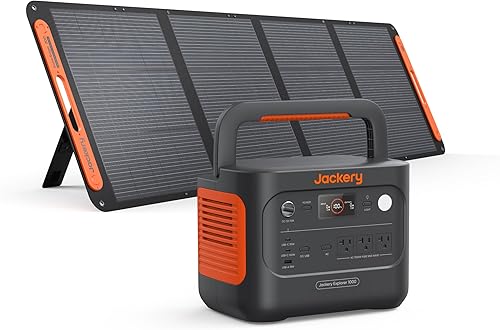
Jackery Solar Generator 1000 v2 and 200W
9.6/10 our score
See it on Amazon -
2
 Best for compact indoor backup
BLUETTI Elite 30 V2 Portable Power Station
9.4/10 our score
See it on Amazon -
3
 Best for small refrigerators
Jackery Solar Generator 300 and 40W Solar
9.3/10 our score
See it on Amazon
- 4
 Check it
BLUETTI Solar Generator Elite 100 V2
Best for solar recharging - 5
 Check it
OUPES Mega 1 Solar Generator with 100W
Best for expandable capacity - 6
 Check it
BLUETTI Elite 200 V2 Solar Generator
Best for extended outages - 7
 Check it
DYNESS Portable Power Station 300W
Best for low-draw mini fridges - 8
 Best for a built-in solar panelCheck it
How we chose solar generators for refrigerators
We compared listed battery capacity, AC output, surge or starting power, included solar panels and features that can help during an outage. Our score weighs specs, features and buyer feedback against what you're shopping for.
A higher watt-hour figure means more stored energy, but it does not predict exact runtime by itself. Refrigerator use varies with size, temperature settings, room conditions, door openings and compressor cycles, so use measured appliance data when you can.
If you also need freezer backup, compare solar generators for refrigerators and freezers.
The most useful check is the refrigerator's running and startup wattage. If the manual gives only amps and volts, multiply them to estimate watts, then confirm the power station can handle the startup surge.
| Product | Best for | Capacity | AC output | Solar panel | Our score |
|---|---|---|---|---|---|
| Jackery Solar Generator 1000 v2 and 200W | everyday refrigerator backup | 1,070Wh | 1,500W; 3,000W surge peak | 200W included | 9.6 |
| BLUETTI Elite 30 V2 Portable Power Station | compact indoor backup | 288Wh | 600W; 1,500W surge or lifting mode | 9.4 | |
| Jackery Solar Generator 300 and 40W Solar | small refrigerators | 292Wh | 300W; 600W peak surge | 40W included | 9.3 |
| BLUETTI Solar Generator Elite 100 V2 | solar recharging | 1,024Wh | 1,800W | 200W included | 9.2 |
| OUPES Mega 1 Solar Generator with 100W | expandable capacity | 1,024Wh; expandable to 5,120Wh | 2,000W; 4,500W surge | 100W included | 9.1 |
| BLUETTI Elite 200 V2 Solar Generator | extended outages | 2,073.6Wh | 2,600W; 3,900W power lifting | 9.0 | |
| DYNESS Portable Power Station 300W | low-draw mini fridges | 256Wh | 300W; 600W starting wattage | Optional; compatible 18V 60W–100W panel | 8.6 |
| BLAVOR 1600W Solar Generator | a built-in solar panel | 1,024Wh | 1,600W; 3,200W peak | Built-in 40W panel | 8.4 |
The best solar generators for a refrigerator
The Jackery 1000 v2 leads this group for its balance of capacity, output and an included solar panel. The remaining picks fit different needs, from compact indoor backup to higher capacity for longer outages.
Jackery Solar Generator 1000 v2 and 200W: Best for everyday refrigerator backup
- 1,070Wh capacity
- 1,500W AC output
- 3,000W surge peak
- Includes a 200W solar panel
A 1,070Wh battery and 1,500W AC output give this kit room for many refrigerator loads. Its included 200W panel provides a solar recharging option.
Pros
- High capacity for this group
- 1,500W AC output
- 200W panel included
Cons
- The station and panel may ship separately
- Solar charging time depends on conditions
The Jackery Solar Generator 1000 v2 and 200W pairs a 1,070Wh battery with 1,500W AC output and a 3,000W surge peak. That combination gives it headroom for many refrigerator loads, though your appliance's startup demand still needs to fit.
The kit includes a 200W solar panel. Jackery says the station can reach 80% charge in 6 hours with that panel, with real charging time depending on sunlight and setup.
Three pure sine wave AC ports let you connect AC appliances, while USB and DC ports support other devices. The 23.8 lb weight is relevant if you plan to move the station between storage and the refrigerator.
Choose it for a mid-size refrigerator and a practical balance of capacity and portability. Check your fridge's startup wattage before relying on the 3,000W peak figure as a match.
BLUETTI Elite 30 V2 Portable Power Station: Best for compact indoor backup
- 288Wh capacity
- 600W continuous output
- 1,500W Power Lifting mode
- 10ms UPS switchover
This small station is easier to place indoors than larger units, and its 10ms UPS function can keep compatible connected devices powered through a brief outage. Its 288Wh capacity means limited refrigerator runtime.
Pros
- Compact 9.5 lb design
- 10ms UPS switchover
- Multiple charging methods
Cons
- 288Wh capacity limits runtime
- Solar cable needs checking for some panels
The BLUETTI Elite 30 V2 is the smallest indoor-focused option here, with 288Wh capacity and 600W continuous output. Its 10ms UPS switchover can support connected devices through a brief interruption, but the battery is better suited to short backup periods than an extended outage.
The 9.5 lb station has AC, USB and DC outputs. BLUETTI also describes solar, car, lead-acid and combined AC plus solar charging, though some solar panels need a separate charging cable.
Power Lifting mode is stated at 1,500W, but that does not increase the battery's energy capacity. Confirm how the mode works for your refrigerator and whether the appliance can start within the station's limits.
Choose it for a small refrigerator or brief backup where compact indoor placement matters. Its 288Wh capacity makes it a poor fit for keeping a full-size fridge cold for a long outage.
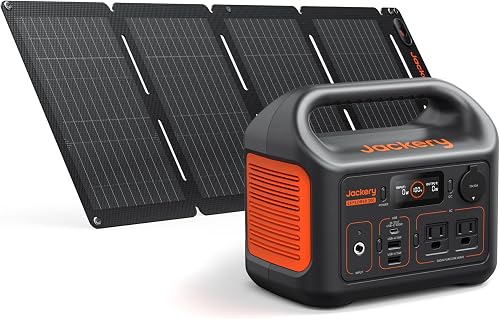
Jackery Solar Generator 300 and 40W Solar: Best for small refrigerators
- 292Wh capacity
- 300W rated output
- 600W peak surge
- Includes a 40W solar panel
This lighter-capacity option may suit a low-draw compact refrigerator if both its running and startup demands fit the station's limits. The included 40W panel can help recharge in suitable sun.
Pros
- Small 7.5 lb station
- Pure sine wave AC outlet
- 40W panel included
Cons
- 300W output rules out many larger loads
- Low battery capacity for long outages
The Jackery Solar Generator 300 and 40W Solar is a compact choice with 292Wh capacity, 300W rated output and 600W peak surge. That makes it a possibility for a small, low-draw refrigerator, provided its startup draw stays within the station's limits.
The kit includes a 40W panel, and the station has two AC outlets plus USB and car outputs. At 7.5 lb, it is easier to carry than the 1kWh-class options in this roundup.
Battery capacity is the main tradeoff. A refrigerator cycles on and off, and its average draw can vary, so estimate runtime using the actual wattage rather than assuming the 292Wh rating equals usable AC energy.
Choose it for a compact fridge with a measured low load and short backup needs. For a household refrigerator, consider a higher-output station with more stored energy.
BLUETTI Solar Generator Elite 100 V2: Best for solar recharging
- 1,024Wh capacity
- 1,800W rated AC output
- 200W panel included
- 10ms UPS backup
The 1,024Wh battery and 1,800W output suit many household refrigerator loads. BLUETTI says the included 200W panel can recharge the station to 80% in 4 hours under its stated conditions.
Pros
- 1,800W rated output
- 200W panel included
- UPS switchover for connected devices
Cons
- Panel may ship separately
- Actual solar input varies with conditions
The BLUETTI Solar Generator Elite 100 V2 combines 1,024Wh capacity and 1,800W rated AC output with a 200W solar panel. It also includes a 10ms UPS function for connected equipment during an outage.
BLUETTI says the included panel can recharge the station to 80% in 4 hours and to full in 7 hours under its stated conditions. Solar input changes with sun, shade, panel angle and temperature, so plan around less than ideal conditions.
The 25 lb station has 11 ports according to BLUETTI. Its 1,800W output can suit many refrigerator loads, but appliance startup demand remains the deciding check.
Choose it if you want a 1kWh-class station with more AC output than the Jackery 1000 v2. The panel may ship separately, so allow for separate delivery.
OUPES Mega 1 Solar Generator with 100W: Best for expandable capacity
- 1,024Wh capacity
- 2,000W AC output
- Expandable to 5,120Wh
- 100W panel included
A 2,000W output and expandable battery capacity make this a flexible option for longer backup plans. OUPES says the station can expand to 5,120Wh with two extra batteries.
Pros
- High stated output
- Expandable capacity
- 100W panel included
Cons
- Expansion requires separate batteries
- Included panel is small for a 1,024Wh station
The OUPES Mega 1 pairs 1,024Wh capacity with 2,000W AC output and a 4,500W surge figure. OUPES says the battery can expand to 5,120Wh with two extra batteries, a useful path if your outage plan grows.
A 100W solar panel comes with the kit, and the station supports up to 800W solar input. The included panel is modest relative to the battery, so faster recharging would require suitable additional panels.
The 27.8 lb station also offers 13 ports and a UPS function with a stated switchover under 20ms. Check refrigerator startup power and your preferred backup wiring before treating it as a home solution.
Choose it for expansion options and a higher AC output rating. The extra batteries and any added panels increase the size of the setup.
BLUETTI Elite 200 V2 Solar Generator: Best for extended outages
- 2,073.6Wh capacity
- 2,600W continuous AC output
- 3,900W power lifting
- Two 200W panels included
The largest listed battery capacity here gives more stored energy for refrigerator backup. The station is also the heaviest pick at 53.4 lb, so plan where it will sit.
Pros
- Largest stated capacity here
- 2,600W continuous output
- Two 200W panels included
Cons
- Heaviest pick at 53.4 lb
- Panels may ship separately
The BLUETTI Elite 200 V2 has the largest listed capacity in this roundup at 2,073.6Wh, with 2,600W continuous AC output and a 3,900W power lifting figure. It is aimed at longer backup and larger appliance loads.
The kit includes two 200W solar panels, and BLUETTI says they can fully recharge the station in 5.5 hours. Its 53.4 lb weight is a major placement consideration, especially if you need to carry it between floors.
The station supports up to 9 devices at once according to BLUETTI. That can help you combine refrigerator backup with a few smaller essentials, as long as the total load remains within its output limits.
Choose it for more stored energy and multiple household essentials. Plan a stationary spot near the refrigerator because this is the heaviest unit here.
DYNESS Portable Power Station 300W: Best for low-draw mini fridges
- 256Wh capacity
- 300W continuous output
- 600W starting wattage
- Solar panel optional
This compact station is aimed at smaller devices, including mini fridges. Check the refrigerator's startup demand carefully because the station is limited to 300W continuous and 600W starting output.
Pros
- Small 256Wh capacity for compact setups
- Six output ports
- Several recharge methods
Cons
- Solar panel is optional
- Limited output and stored energy
The DYNESS Portable Power Station 300W offers 256Wh capacity, 300W continuous output and 600W starting wattage. Its maker describes it as suitable for mini fridges, but those limits rule out many standard refrigerators.
The station has one AC outlet, a USB-C port, a USB-A port, two DC outputs and a car outlet. It can recharge from AC, a compatible solar panel, a car charger or dual input.
DYNESS says a compatible 18V 60W to 100W panel can recharge the station. The solar panel is optional, and runtime will depend on the fridge's actual consumption and how often its compressor runs.
Choose it for a small mini fridge when measured startup power stays within 600W. For larger appliances or longer outages, look at the 1kWh options above.
BLAVOR 1600W Solar Generator: Best for a built-in solar panel
- 1,024Wh capacity
- 1,600W rated output
- 3,200W peak power
- Built-in 40W solar panel
The built-in 40W panel folds out for emergency top-ups, while the 1,024Wh battery and 1,600W output cover a wider range of refrigerator loads. An external panel can provide faster solar charging.
Pros
- Built-in panel travels with the station
- 1,024Wh capacity
- External solar input up to 200W
Cons
- 40W built-in panel is mainly for top-ups
- External panel sold separately
The BLAVOR 1600W Solar Generator provides 1,024Wh capacity, 1,600W rated output and 3,200W peak power. Its built-in 40W panel folds out for emergency top-ups, while an external compatible panel can supply up to 200W solar input.
The station has eight output ports and a 100W USB-C port. BLAVOR says the 40W panel is mainly for top-ups, so it should not be your only plan for restoring a large battery after heavy refrigerator use.
At 26 lb, the unit sits between the compact choices and the heavier high-capacity station. Confirm the refrigerator's startup demand and the solar connector requirements before adding another panel.
Choose it if you value having a panel attached to the station. For faster solar charging, plan for a compatible external panel sold separately.
What should you check before powering a refrigerator?
Match both the refrigerator's running watts and startup surge to the station's output. A station with enough battery capacity can still shut down if the compressor's startup demand exceeds its AC or surge limit.
Check the refrigerator manual or its power label, then estimate daily energy use if the maker provides it. A plug-in energy meter can help measure a fridge over a full day, including compressor cycles.
Next, compare that energy use with battery capacity and allow for conversion losses. If you need backup overnight, size the battery for the hours without useful solar input, not just the total panel wattage.
Are indoor generators for refrigerators safe to use?
Battery power stations can supply a refrigerator indoors because they do not burn fuel while delivering stored electricity. Keep the station dry, stable and accessible, and follow its instructions for airflow, clearance and charging.
A fuel-burning generator must stay outdoors, far from windows, doors and vents, because its exhaust contains carbon monoxide. For more indoor options, see our guide to the best portable generator for indoor use, which focuses on battery power stations.
Avoid overloading the station with other appliances while the refrigerator compressor starts. If you need a refrigerator, freezer and household devices together, compare the combined demand with a best solar generator for home backup setup.
How much solar charging do you need?
Panel wattage is only part of the charging plan because sun strength, shade, panel angle, temperature and weather change actual input. A 200W panel will not deliver its full rating for every hour of daylight.
Compare the included panel with the battery size and the amount of energy your refrigerator uses. Larger stations may need more panel area or AC charging to recover quickly after an outage.
For a dual-fuel alternative that can run on fuel when solar conditions are poor, see Best Dual Fuel Generator For Refrigerators. For a related inverter option, compare Best Dual Fuel Inverter Generator For Refrigerators.
Which solar generator should you choose for a refrigerator?
Choose the Jackery Solar Generator 1000 v2 and 200W for a balanced 1,070Wh battery, 1,500W output and included panel. Pick the BLUETTI Elite 200 V2 when more stored energy matters, and use the Elite 30 V2 or Jackery 300 only for a compatible small fridge and shorter backup needs.
Before you buy, confirm startup watts, estimate runtime from real refrigerator use and plan where the station will sit. A solar generator for a refrigerator works best when its output, capacity and recharge plan all match the appliance.
Our top 3 picks at a glance
-
1
Best for everyday refrigerator backup
Jackery Solar Generator 1000 v2 and 200W
9.6/10 our score
See it on Amazon -
2
Best for compact indoor backup
BLUETTI Elite 30 V2 Portable Power Station
9.4/10 our score
See it on Amazon -
3
Best for small refrigerators
Jackery Solar Generator 300 and 40W Solar
9.3/10 our score
See it on Amazon
Frequently asked questions
How many watt-hours do I need to run a refrigerator?
The right battery capacity depends on the refrigerator's average power draw and how long you need backup. Divide usable battery energy by the fridge's average watts for a rough estimate, then allow for inverter losses and compressor cycling.
A station's advertised capacity is not all available as AC power, so use its runtime guidance when provided.
Can a solar generator start a refrigerator?
It can if its AC output and surge capacity meet the refrigerator's startup demand. Compressor motors may briefly draw more power when they start than they use while running.
Check both figures in your refrigerator manual, and leave headroom instead of matching only the running watts.
Can I use an indoor generator for a refrigerator?
A battery power station can provide indoor backup because it stores electricity and does not burn fuel while supplying power. Keep it on a stable, ventilated surface and follow the station maker's placement and charging instructions.
Never run a fuel-burning generator indoors or in an enclosed space.
Will a solar panel keep my fridge running all day?
A panel may recharge a power station during daylight, but the actual input changes with shade, weather, panel angle, temperature and cable loss. The refrigerator can keep drawing energy overnight, so panel output and battery size both matter.
Treat solar as a recharge source, not a guarantee of continuous power.
Should I choose a solar generator for a refrigerator and freezer?
Choose capacity and output for both appliances' combined running and startup demands. A refrigerator and freezer can cycle on at the same time, which raises the load.
Our guide to the best solar generator for refrigerator and freezer focuses on that combined use.