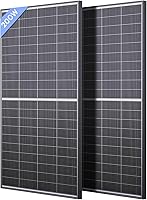
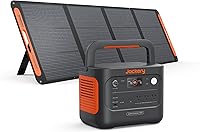
7 Best Solar Generators for Home Backup (November 2026)
The best solar generators for home backup include the Jackery Solar Generator 1000 v2 and 200W for balanced home backup, the BLUETTI Elite 30 V2 Portable Power Station for compact emergency power, and the EF ECOFLOW Solar Generator Delta 3 Classic for larger household loads.
On this page (6 sections)
The best solar generator for home backup is the Jackery Solar Generator 1000 v2 and 200W because it balances a 1,070Wh battery, 1,500W AC output and included solar charging. The EcoFlow Delta 3 Classic and BLAVOR S1600 are stronger choices for larger loads, while BLUETTI and LIBRIDS suit smaller essential-device backup.
We compared battery capacity, rated output, surge power, solar input and backup features. A solar generator can keep selected devices running during an outage, but it is not automatically a whole-house replacement for a fuel generator or electrical service.
For a broader power-source comparison, read solar panels versus a generator for home backup. If you need to estimate circuits and appliances, our guide to whether a solar generator can power a house explains the limits.
Our picks at a glance
-
1
 Best for balanced home backup
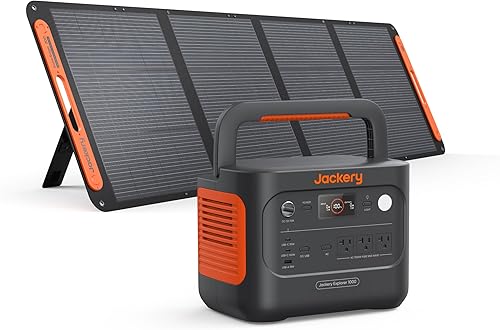
Jackery Solar Generator 1000 v2 and 200W
9.6/10 our score
See it on Amazon -
2
 Best for compact emergency power
BLUETTI Elite 30 V2 Portable Power Station
9.4/10 our score
See it on Amazon -
3
 Best for larger household loads
EF ECOFLOW Solar Generator Delta 3 Classic
9.4/10 our score
See it on Amazon
- 4
 Check it
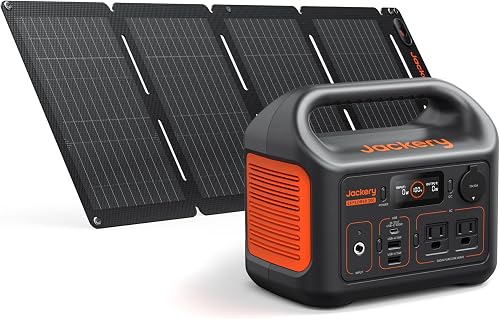
Jackery Solar Generator 300 and 40W Solar
Best for light backup and travel - 5
 Check it
ZeroKor Portable Solar Generator 300W Portable Power
Best for basic camping backup - 6
 Check it
LIBRIDS Portable Power Station 640Wh
Best for UPS-focused backup - 7
 Best for built-in solar chargingCheck it
The best solar generators for home backup
The best solar generators for home backup separate into 3 groups: higher-output units for appliances, mid-size units for several essential devices and compact models for electronics and lights.
Jackery Solar Generator 1000 v2 and 200W: Best for balanced home backup
- 1,070Wh capacity
- 1,500W AC output
- 200W solar panel included
- Three pure sine wave AC ports
The Jackery combines a mid-size battery with 1,500W AC output and a 200W panel. It fits households that need backup for several everyday devices without moving to the largest units.
Pros
- 1,070Wh battery
- 1,500W AC output
- 200W panel included
Cons
- Panel and generator ship separately
- 23.8 lb unit weight
The Jackery Solar Generator 1000 v2 and 200W is the strongest all-around pick because its 1,070Wh capacity gives you more stored energy than the smaller 288Wh, 280Wh and 292Wh options. Its 1,500W AC output also leaves more room for household devices than the 300W models.
The set includes an Explorer 1000 v2 and a 200W solar panel. The panel can charge the power station to 80% in 6 hours under the stated conditions.
The generator and panel ship separately, so plan for separate deliveries.
Three pure sine wave AC ports, two USB-C ports, one USB-A port and one DC car port let you divide power among several devices. LED lights add a simple backup-lighting option.
The unit weighs 23.8 lb and has a foldable handle. Jackery also specifies a LiFePO4 battery, 4,000 charge cycles while retaining more than 70% capacity, and a stated lifespan exceeding 10 years.
Choose it when you want one system for emergency devices, camping and road trips. For a smaller unit that is easier to move, step down to the Jackery 300 or BLUETTI Elite 30 V2.
BLUETTI Elite 30 V2 Portable Power Station: Best for compact emergency power
- 288Wh capacity
- 600W continuous output
- 1,500W Power Lifting output
- 10ms UPS
The BLUETTI is a small backup unit for essential electronics, routers, lights and similar loads. Its 10ms UPS and 9.5 lb weight make it easy to keep near critical devices.
Pros
- 9.5 lb weight
- 10ms UPS
- 600W continuous output
Cons
- Smallest battery in the roundup
- Solar charging cable may be needed for some panels
The BLUETTI Elite 30 V2 is the best compact emergency option, with a 288Wh battery and 600W continuous output in a 9.5 lb unit. That combination suits routers, laptops, CPAP machines, lights, speakers and car fridges more than large kitchen appliances.
Power Lifting Mode raises output to 1,500W for compatible loads. This does not change the battery capacity, so high-wattage devices will still use the stored energy quickly.
Its 10ms UPS function is useful for devices that need a quick switch during an outage. The power station also has 9 total outlets and supports AC, car, lead-acid battery and solar charging methods.
AC charging reaches 80% in 45 minutes and 100% in 70 minutes at the stated settings. Solar charging works with compatible BLUETTI panels, while some other panel connections need a separate solar charging cable.
Choose this model when portability and UPS backup matter more than long runtime. Its 288Wh capacity is the main trade-off for home use.
EF ECOFLOW Solar Generator Delta 3 Classic: Best for larger household loads
- 1,024Wh capacity
- 1,800W output
- 220W bifacial solar panel
- 10ms UPS
The Delta 3 Classic has the highest continuous output here, with enough stated power for refrigerators, microwaves, laptops and more. Its 220W panel supports solar recharging for home or outdoor use.
Pros
- 1,800W output
- 1,024Wh capacity
- 220W panel included
Cons
- 15.7 in long cabinet
- Generator and panel arrive separately
The EF ECOFLOW Solar Generator Delta 3 Classic is the better fit for larger household loads because it provides 1,800W output and 3,600W surge power. Its 1,024Wh capacity is close to the Jackery 1000 v2, but the higher output gives more room for appliances with demanding startup loads.
The package includes the Delta 3 Classic and a 220W bifacial solar panel. EcoFlow states that the panel can recharge the unit in 5.8 hours under its charging conditions, while X-Stream AC charging reaches 80% in 45 minutes.
A 10ms UPS helps protect PCs, servers and medical devices from short interruptions. The power station uses LiFePO4 battery cells and includes a battery management system.
The cabinet measures 7.9 x 11.1 x 15.7 in. The panel and power station arrive separately, so check both shipment parts before planning your backup setup.
Choose EcoFlow when output headroom matters most. If you want a built-in panel instead of a separate included panel, consider BLAVOR.
Jackery Solar Generator 300 and 40W Solar: Best for light backup and travel
- 292Wh capacity
- 300W output
- 40W solar panel included
- 600W peak surge
The Jackery 300 is suited to smaller backup jobs such as phones, cameras, laptops and lights. Its 300W output and 7.5 lb product description keep it closer to a portable device charger than a whole-home battery.
Pros
- 300W rated output
- 40W panel included
- Two AC outlets
Cons
- 292Wh capacity
- Not suited to high-draw appliances
The Jackery Solar Generator 300 and 40W Solar is best for light backup, not full household support. Its 292Wh capacity and 300W rated output cover devices such as laptops, cameras, drones, phones and lights.
The package includes the Explorer 300, a 40W Air Solar Panel, an AC adapter, a car charger cable and a user guide. The unit has two AC outlets, one 100W USB-C PD port, two USB-A ports and a 120W car port.
Jackery states that the 40W panel can charge the unit to 80% in about 7.5 hours. A 100W panel can reach 80% in about 2.8 hours, but that larger panel is not part of this package.
Its 600W peak surge rating gives short startup headroom, but the 300W total output remains the key limit. Weighing 12.9 lb in the specifications, it is still easier to move than the larger home-backup units.
Choose it for a guest room, mobile office, small electronics kit or short outage. For refrigerator backup, compare it with our guide to the best solar generators for a refrigerator and freezer.
ZeroKor Portable Solar Generator 300W Portable Power: Best for basic camping backup
- 300W output
- 60W solar panel included
- 280Wh battery
- SOS flashlight
ZeroKor provides a small battery, 300W output and a 60W panel for phones, tablets, laptops and small camping equipment. It is a better match for light loads than refrigerators, pumps or heated appliances.
Pros
- 60W panel included
- 300W output
- Multiple USB ports
Cons
- Devices over 300W may damage the unit
- Solar panel junction box must stay dry
The ZeroKor Portable Solar Generator 300W Portable Power is a basic option for small devices and camping gear. Its 280Wh battery, 300W output and included 60W solar panel fit phones, tablets, laptops, headphones and other light loads.
The unit has two 300W maximum AC outlets, a DC port, three USB ports, a quick-charge USB port and a flashlight with reading and SOS modes. ZeroKor warns that devices above 300W may damage the power station.
The 60W monocrystalline panel has a stated conversion efficiency of 20.5%. Its junction box is not waterproof, so keep that part dry during outdoor charging.
Charging options include a home AC outlet, a 12V car port and a DC5521 solar input from 13V to 23V. The package includes an AC adapter, car charging cable, cigarette lighter adapter, 60W solar panel kit and 2 user manuals.
Choose ZeroKor when the load list is made up of electronics and lights. It is not the right match for coffee makers, hair dryers, water pumps or other devices over its 300W limit.
LIBRIDS Portable Power Station 640Wh: Best for UPS-focused backup
- 640Wh capacity
- 600W output
- 1,200W surge
- 10ms UPS
LIBRIDS adds a larger 640Wh battery to a 600W power station with 10ms UPS support. It suits routers, CPAP machines and other essential electronics when you need more runtime than a compact 288Wh unit.
Pros
- 640Wh capacity
- 10ms UPS
- Four AC outlets
Cons
- Indoor use only label
- No solar panel included
The LIBRIDS Portable Power Station 640Wh is the best choice here when you want more battery capacity with UPS backup but do not need 1,500W or 1,800W output. Its 640Wh battery is more than twice the capacity of the BLUETTI Elite 30 V2.
LIBRIDS provides 600W output and 1,200W surge power. Four AC outlets and 8 total output ports let you run several essential devices at once, including routers, CPAP machines and laptops.
The 10ms UPS switches to battery during an outage. Its pure sine wave inverter is intended for clean, stable power for sensitive electronics.
The unit has a metal enclosure, measures 8.3 x 6.9 x 8.2 in and includes the battery. It can recharge fully from AC power in 1.5 hours.
Pay close attention to placement. LIBRIDS carries an indoor-use-only label and should stay away from rain, moisture and wet outdoor conditions.
Choose it for dry, ventilated backup locations where runtime matters more than solar recharging.
BLAVOR 1600W Solar Generator: Best for built-in solar charging
- 1,024Wh capacity
- 1,600W output
- Built-in 40W solar panel
- Up to 200W external solar input
BLAVOR combines a 1,024Wh battery with 1,600W output and a built-in 40W panel. It is useful when you want solar collection built into the unit, while faster charging requires a compatible external panel.
Pros
- Built-in 40W panel
- 1,600W output
- Up to 200W external solar input
Cons
- 26 lb weight
- Built-in panel is mainly for emergency top-ups
The BLAVOR 1600W Solar Generator is the best fit for buyers who want solar collection built into the power station. It combines a 1,024Wh battery with 1,600W rated output and a built-in 40W solar panel.
The panel folds into the unit, so you do not need to carry a separate panel for basic emergency top-ups. BLAVOR also supports up to 200W of external solar input, but the faster external panel is sold separately.
Eight output ports support several devices, and the bidirectional 100W USB-C port can charge laptops, tablets and phones. An LCD shows input, output and remaining battery information.
The LiFePO4 battery is rated for more than 4,000 charge cycles. The smart battery management system guards against overheating, overload and short circuit.
At 26 lb, BLAVOR is heavier than the compact models. Choose it when the 1,600W output and built-in panel matter more than low weight.
For faster solar charging, check that an external panel's voltage, current and connector match the S1600 requirements.
How we compared solar generators for home backup
Our score weighs specs, features and buyer feedback against what you're shopping for. For home backup, we gave the most weight to battery capacity, continuous AC output, surge power, solar charging and safe support for essential electronics.
Battery capacity is measured in watt-hours. A 1,024Wh or 1,070Wh unit stores more energy than a 280Wh or 288Wh unit, but the usable runtime depends on the device's power draw and the station's conversion losses.
Output wattage is a separate question. A large battery can still be a poor match for an appliance if the appliance needs more power than the station can supply.
Motors and compressors can also need extra startup power.
UPS support matters for routers, computers and medical equipment that should not lose power during a short interruption. BLUETTI, EcoFlow and LIBRIDS list 10ms UPS support.
Solar charging depends on panel wattage and conditions. The Jackery 1000 includes a 200W panel, EcoFlow includes 220W, Jackery 300 includes 40W, ZeroKor includes 60W and BLAVOR has a built-in 40W panel.
How much solar generator capacity do you need?
Choose capacity from the devices you must keep running, not from the word home in the product name. A small unit can cover communication and lighting, while a 1,024Wh or 1,070Wh unit gives more flexibility for several essential loads.
It helps to sort your needs into must run and nice to run. That split keeps a compact station from being oversold as a whole house solution, and it keeps a larger station from being bought for loads you will never connect.
Make a short outage list:
- Router and modem
- Phone and laptop chargers
- LED lights
- CPAP machine
- Refrigerator
- Small medical or communication devices
Write down each device's running wattage and add extra room for startup loads. Refrigerators, pumps and other motor-driven appliances may draw more power when they start.
Also note how long each item needs to run in an outage. A router may need power for many hours, while a phone may need only a short top up, so the same battery will feel very different depending on the mix you choose.
Check the form of the load as well as the size. An AC appliance, a USB device and a DC load each use different outlets, and the total running watts still need to stay under the station limit.
For a refrigerator or freezer, compare the appliance requirements with the generator's continuous and surge ratings. A high-capacity battery does not remove the need to check those numbers.
Think about cycling too. A fridge compressor does not draw power at the same rate all the time, so planning only from a single watt figure can give a misleading sense of runtime.
Balance capacity against portability and recharge options. A 640Wh station may suit a router and medical device for longer, while a 288Wh station may be easier to keep charged and move to the room where it is needed.
Plan a practical margin for losses and everyday use. Inverter losses, cable use and basic station needs mean the energy available to an appliance will be less than the nameplate capacity.
If your list grows beyond small electronics, step up in output as well as capacity. More watt-hours alone will not help a motor load that needs more power at startup than a 300W or 600W station can supply.
How to use a solar generator during an outage
Charge the power station before storm season, keep the panels clean and store the equipment in a dry, ventilated place. Test your intended device list with the station while the grid is available so you know which outlets and cables you need.
A calm test run shows which devices start cleanly and which ones trip a limit. It also helps you label cables and chargers in advance, so you are not sorting connections in the dark during an outage.
Keep the heaviest loads separate from small electronics when planning runtime. A refrigerator may cycle on and off, while a light or router can draw power steadily.
That separation makes it easier to decide what to unplug first. Small devices can often stay on a compact station, while a large appliance may need its own turn or a higher output model.
Do not connect an appliance that exceeds the station's rated output. Follow the model's instructions for solar-panel voltage, current and connector limits, especially when adding an external panel.
Check those limits before you buy an extra panel, not after it arrives. A panel that does not match the voltage, current or connector can add cost and confusion without faster charging.
The BLAVOR S1600 should be kept within its 1,600W running limit and 3,200W peak limit. ZeroKor should not power devices above 300W.
LIBRIDS should stay dry because its safety warning rules out rain, moisture and wet conditions.
For setup, place the station where air can move around it and where cords will not be a tripping hazard. Keep the solar panel fully unfolded, facing the sun and free of shade when you are using it to recharge.
Store the unit at a sensible charge level and check it before storm season. A station that is ready to go is more useful than a larger one that has been left unused for months.
Solar generator versus fuel generator for home backup
A solar generator is quieter during use and does not need gasoline storage. It also offers battery power for indoor electronics, while a fuel generator can provide longer operation when refueling is available.
That quiet operation matters in a home setting, especially at night and in close quarters. Battery power also avoids fans, fumes and fuel handling, which can make indoor backup for phones, routers and medical devices simpler.
The trade-off is stored energy and recharge time. Solar input depends on sunlight, shade, panel position, weather and cable losses.
A fuel model can keep running as long as fuel is supplied, but that benefit comes with storage, noise and placement limits. A battery model is limited by its watt-hour capacity until it is recharged from solar, a car or the wall.
AC charging can be faster, but it depends on having grid power before or during the outage.
That point is easy to miss in storm planning. If the outage is already underway, a wall outlet may not help, so solar and stored charge become the practical options.
For a comparison of use cases, read the top dual-fuel generator options for home backup and the alternate 7 watt dual-fuel home-backup guide. A fuel generator may suit long outages, while a solar generator fits short outages and essential indoor loads.
Think about what you need to power first. Routers, lights, laptops and CPAP machines often fit battery backup well, while a whole house with heating, cooling and large appliances is a different scale of demand.
Consider where each option can sit. A battery station can be kept near the devices it serves, while a fuel generator needs a safe outdoor spot and fuel kept ready for use.
Also weigh care over time. Battery stations need charge checks and dry storage, while fuel models need fuel rotation, oil and filter care and periodic test runs under load.
Neither option replaces planning. Match the power source to the length of outage you expect, the devices you must run and the recharge method you can realistically use.
Final choice for the best solar generator for home backup
The Jackery Solar Generator 1000 v2 and 200W is the best solar generator for home backup when you want balanced capacity, output and included solar charging. Pick the EcoFlow Delta 3 Classic for higher continuous output, BLAVOR for a built-in panel, or LIBRIDS for 640Wh with UPS support.
That balance is why the Jackery suits many households. Its 1,070Wh battery and 1,500W output cover several everyday devices, and the included 200W panel gives you a solar recharge path without a separate panel purchase.
Choose the EcoFlow Delta 3 Classic when startup loads are the main concern. Its 1,800W output and 3,600W surge rating give more headroom for appliances with demanding starts.
Choose BLAVOR when you want the panel built in. The 40W built-in panel is mainly for emergency top ups, so faster solar charging still calls for a compatible external panel.
Choose LIBRIDS when UPS backup and mid size capacity matter most. The 640Wh battery and 10ms UPS suit routers and medical devices, provided the unit stays dry.
Choose BLUETTI, Jackery 300 or ZeroKor when your backup plan is limited to electronics, lights and small devices. Their smaller batteries are easier to move and store, but they are not a fit for high draw appliances.
Before buying, match the station's wattage and surge limits to the appliances you actually need during an outage.
Make your final list from running watts, startup needs and expected runtime. That check will point you to the right size more reliably than the word home alone.
Our top 3 picks at a glance
-
1
Best for balanced home backup
Jackery Solar Generator 1000 v2 and 200W
9.6/10 our score
See it on Amazon -
2
Best for compact emergency power
BLUETTI Elite 30 V2 Portable Power Station
9.4/10 our score
See it on Amazon -
3
Best for larger household loads
EF ECOFLOW Solar Generator Delta 3 Classic
9.4/10 our score
See it on Amazon
Frequently asked questions
What is the best solar generator for home backup?
The Jackery Solar Generator 1000 v2 and 200W is the best solar generator for home backup for many households because it combines a 1,070Wh battery, 1,500W AC output and a 200W solar panel. Choose a higher-output model when your appliances have larger startup loads.
How much battery capacity do I need for home backup?
A 288Wh battery can cover smaller electronics, while 640Wh to 1,070Wh gives more room for routers, lights, laptops and other essential devices. Larger capacity does not guarantee whole-home power, so add the wattage of the devices you plan to run and account for startup loads.
Can a solar generator run a refrigerator?
It depends on both the refrigerator's running wattage and its startup surge. The Jackery 1000 v2, EcoFlow Delta 3 Classic and BLAVOR S1600 have higher rated outputs than the 300W models here, but check your refrigerator's power requirements before connecting it.
Are solar generators safe to use indoors?
Battery power stations do not produce exhaust while operating, but each model still needs proper ventilation and dry placement. LIBRIDS carries an indoor-use-only warning and should not be exposed to rain, moisture or wet conditions.
How long will a solar generator run my devices?
A rough estimate starts with watt-hours divided by device watts, then allows for inverter and system losses. A 1,024Wh unit will not deliver 1,024Wh to an AC appliance in practice, and a refrigerator's compressor cycles make its average use different from its startup demand.