Can a Solar Generator Power a House?
A solar generator can power parts of a house, but most small units cannot power a whole house. It works best for lights, phones, a refrigerator, and a few small devices. Whole-house use needs a much larger battery, more solar input, and careful load control.
On this page (10 sections)
- Can a solar generator power a house for essential loads only?
- How much power does a house actually use?
- What does 292Wh mean in real use?
- Which products fit which backup job?
- Can solar panels recharge a solar generator during an outage?
- When does a fuel generator make more sense?
- How do you size a solar generator for a refrigerator and freezer?
- What about expandable batteries and extra panels?
- How should you set up and care for home backup power?
- Can a solar generator power a house in the end?
A solar generator can power parts of a house, but most small units cannot power a whole house. It works best for lights, phones, a refrigerator, and a few small devices.
Whole-house use needs a much larger battery, more solar input, and careful load control.
That short answer is the core of can a solar generator power a house. The real question is which loads you plan to run, for how long, and whether the battery can recharge while those loads are on.
A unit that handles a fan and a phone charger may stall on a fridge compressor or stop fast on a space heater.
Can a solar generator power a house for essential loads only?
Yes, if you define essential loads narrowly and keep total watts low. Lights, phone charging, a laptop, a fan, and a refrigerator can fit, but only when the combined running watts stay under the inverter rating and the battery has enough watt hours for the hours you need.
Start with a load list. Write down each device, its running watts, and whether it has a motor that needs extra starting watts.
Add them up, then add a margin for startup surge and inverter losses. If the total is close to the limit, remove a device rather than hope the unit will stretch.
Our guide to the best solar generator for home backup can help you compare larger home-focused units. Even a home backup model still needs a realistic load plan.
A plan that fits on paper can fail if a fridge, pump, and fan all try to start at once.
How much power does a house actually use?
A house uses far more power than a small portable station holds. A fridge may draw 100 to 200 watts while running, lights add tens of watts, and a TV or computer adds more.
Put them together and you can pass 300 watts fast, which is already the rated output of a small 300W-class station.
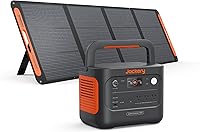
The Jackery Explorer 300 Portable Power Station has 292Wh capacity and a 300W rated output with 600W peak surge. That size can handle laptops, drones, cameras, and small devices under 300W total.
It is not sized for a whole house, and bigger kitchen or heating loads will overload it.
Think in two limits at once. Watts tell you what can run at the same time.
Watt hours tell you how long it can run. A device must fit both limits, or the station will shut off or run out too soon.
What does 292Wh mean in real use?
292Wh means about 292 watt-hours of stored energy before losses. If you use the common 0.85 efficiency estimate, usable energy is closer to 248Wh.
A 60W device would then run for about 4.1 hours in theory, though real use varies with the load and outlet.
That math matters for a refrigerator. A fridge does not run at full draw all day, because its compressor cycles on and off.
But during each run, it draws the stated watts, and the battery drains at that rate. A small station may keep a fridge cool for a few hours, not through a long outage.
Jackery says the Explorer 300 has LiFePO4 chemistry with over 4,000 charge cycles before reaching 70% capacity. That chemistry is a plus for long service life.
It does not change the basic limit: 292Wh is small for home backup.
Which products fit which backup job?
Match the product to the job, not to the hope that more capacity will appear later. A small power station suits portable and light home use.
A small solar panel suits battery maintenance and slow charging.
A large dual fuel generator suits whole-house loads that need thousands of watts.
The Westinghouse 12500 Watt Dual Fuel Home Backup Portable Generator produces 9,500 running watts and 12,500 peak watts on gasoline. On propane, it produces 8,500 running watts and 11,200 peak watts.
That output is in a different class from a 300W solar station, and it has a transfer switch ready outlet for home connections.
The SOLPERK Solar Panel Kit 20W 12V Solar is a 20W panel kit for charging and maintaining 12V rechargeable batteries. It includes a 20W monocrystalline panel, a smart MPPT charge controller, an adjustable mounting bracket, and clips.
It is a maintenance and trickle charging tool, not a house power source by itself.
Can solar panels recharge a solar generator during an outage?
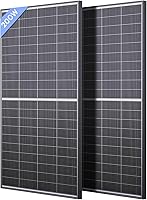
Yes, compatible panels can recharge a station during an outage, but panel size decides the speed. A 100W panel can charge the Explorer 300 far faster than a 40W panel.
Jackery says the Explorer 300 can reach 80% capacity in about 2.8 hours with a 100W solar panel, or about 7.5 hours with a 40W panel.
Sunlight also matters. Clouds, shade, panel angle, season, and cable length all cut charging speed.
A panel that works well at noon in open sun may do little on a cloudy morning. Plan placement before an outage, because you cannot angle a panel well in the dark or rain.
Our comparison of solar panels vs generator for home helps you weigh quiet solar charging against fuel backup. Solar charging is clean and quiet, but it is weather dependent.
A fuel generator can run at night and in bad weather, but it needs fuel, ventilation, and safe outdoor placement.
When does a fuel generator make more sense?
A fuel generator makes more sense when you need thousands of watts or long runtime through the night. Central air, a well pump, a sump pump, a refrigerator, and lights at once can exceed what a portable solar station can supply.
The Westinghouse unit has a 457cc 4-stroke OHV engine, a 6.6 gallon fuel tank, and up to 12 hours of run time on gasoline. It has two GFCI 120V household receptacles, a transfer switch ready 120V L14-30R 30A outlet, and an RV ready 120/240V 14-50R 50A outlet.
Our Best Dual Fuel Generator For Whole House Backup guide fits readers who need that larger output. For shorter outages with fewer loads, our Best Dual Fuel Generator For Power Outages guide may help you compare fuel options.
A transfer switch should be installed by a qualified electrician, and the generator should run outdoors away from windows.
How do you size a solar generator for a refrigerator and freezer?
Size it by running watts first, then by watt hours for the hours you need. A refrigerator and freezer together may need 200 to 400 watts while both compressors run.
That can exceed a 300W station, especially if a compressor starts while another device is on.
For fridge and freezer backup, our best solar generator for refrigerator and freezer guide is a closer starting point than a small portable station. Look for enough continuous output, enough battery capacity for overnight runtime, and a way to recharge during the day.
Keep the fridge closed during an outage, because every opening lets cold air escape and makes the compressor work harder. Set the fridge to a safe cold setting, move milk and meat to the colder freezer, and stop using nonessential appliances.
What about expandable batteries and extra panels?
Expansion helps only if the station allows more battery capacity and more solar input. Some home backup systems accept extra batteries or larger solar arrays.
That can turn a few hours of fridge backup into overnight backup, but it also adds cost, weight, and setup time.
Check three limits before you expand. The inverter must handle the load watts.
The battery bank must hold enough watt hours. The solar input must accept the panel wattage you plan to add.
If one limit stays small, the system will still be small where it counts.
Expansion also changes daily use. More batteries mean more weight and more floor space.
More panels mean more roof, yard, or tripod space, plus cables to manage. For a home backup plan, that trade-off can be worth it.
For a simple outage kit, it may be more than you need.
How should you set up and care for home backup power?
Set up backup power before an outage, store it charged, and test it under a real load. A station kept at a low charge for months may not be ready when the power goes out.
For a solar station, keep it clean, dry, and within the temperature range in its manual. Charge it to the storage level the maker recommends, and top it off on a schedule.
Check cables and panel connectors for damage, and store panels so the glass is not struck or bent.
For a fuel generator, follow the manual for oil, fuel, and run time. Run it outdoors, keep it dry, use the correct fuel, and let it cool before refueling.
The Westinghouse unit includes a remote start key fob, a 12V battery charger, oil, an oil funnel, a tool kit, and a user manual.
Can a solar generator power a house in the end?
It can power essential parts of a house, but a small unit cannot power a whole house by itself. Choose a small station for lights, phones, and a fridge for a short outage.
Choose an expandable home system for overnight fridge and freezer backup.
Choose a large fuel generator for whole-house loads and long outages.
Use the load list as your decision rule. If your total running watts are under 300W and your runtime need is short, a small station can work.
If your loads reach thousands of watts, or you need power through the night in any weather, compare solar with a larger generator before you buy. The right answer depends on the loads you refuse to go without.
Frequently asked questions
Can a solar generator power a house?
A solar generator can power selected household devices such as lights, a refrigerator, and phones, but most portable units do not have enough watt hours or output watts for whole-house loads. Check running watts, starting watts, and battery capacity first.
Larger expandable systems or a fuel generator may fit better for whole-house backup.
How long will a solar generator run a refrigerator?
Runtime depends on battery capacity, refrigerator draw, and how often the compressor cycles. A small 292Wh unit may run a fridge for only a few hours, while a larger home backup battery can run it much longer.
Use the device wattage and an efficiency estimate, then leave a safety margin.
What house loads should you skip on a solar generator?
Skip electric ranges, dryers, water heaters, central air, and other high-draw appliances unless the system is sized and wired for them. Their starting and running watts can overload a portable power station quickly.
A transfer-switch-ready fuel generator is usually a better fit for those loads.
Can solar panels recharge a solar generator during an outage?
Yes, compatible solar panels can recharge many portable power stations while you use them, if sunlight and panel wattage allow it. Input limits, cable length, panel placement, and weather affect charging speed.
A small panel may only maintain a battery slowly on a cloudy day.