Why Is My Generator Making a Knocking Noise?
On this page (5 sections)
A knocking noise from your generator is usually a sign of serious internal engine trouble. For more on generator knocking noise, see our guide. It often indicates a problem with the connecting rod or piston. Ignoring this sound can lead to catastrophic engine failure and expensive repairs. It’s best to stop the generator immediately.
This concerning sound isn’t something to brush off. For more on generator knocking noise, see our guide. It points to metal-on-metal contact where it shouldn’t be. Many generator issues can be minor, but a knocking noise is rarely a simple fix. We’ve researched common causes to help you understand what might be happening.
- Knocking means internal engine damage is likely.
- It’s often caused by a loose connecting rod or piston.
- Continuing to run the generator can cause irreversible harm.
- Stop the unit and get it diagnosed by a professional.
Let’s walk through the most common reasons your generator might be making that alarming knocking sound, so you can get it sorted out quickly.
Investigating That Generator Knocking Sound
Hearing a knocking noise from your generator is like a smoke alarm for your engine. It’s a loud, clear signal that something is seriously wrong inside. This isn’t a minor hiccup; it’s often the sound of metal parts grinding against each other when they shouldn’t be.
Think of your engine’s moving parts like a finely tuned orchestra. When one instrument is out of sync, the whole performance suffers. A knock means a key player is way off-key, potentially damaging the entire ensemble.
The most common culprit for this alarming sound is usually related to the connecting rod or piston. These are critical components that move with great force and speed. When they loosen or wear out, they can strike other parts of the engine.
Understanding Engine Knock: The Basics
Engine knock, often called detonation or pinging, happens when fuel ignites too early or unevenly inside the combustion chamber. In a healthy engine, the spark plug ignites the fuel-air mixture at precisely the right moment. This creates a smooth, powerful explosion that pushes the piston down.
When knock occurs, the fuel ignites in uncontrolled pockets or multiple flame fronts. This causes sudden spikes in pressure. It’s like tiny explosions happening out of sequence. These pressure waves then collide, creating that distinctive metallic knocking sound.
While some modern cars have knock sensors to adjust timing and prevent damage, portable generators are often simpler. They might not have these advanced systems. This means the knocking sound can be a direct indicator of internal stress. You’re hearing the physical impact.
Common Causes of Generator Knocking
Let’s break down the most frequent reasons your generator might be making this concerning noise. For more on generator knocking noise, see our guide. Understanding these can help you identify the problem and know when to call in the pros.
1. Rod Knock: The Most Serious Culprit
This is often the first thing mechanics check when they hear a knock. Rod knock happens when the connecting rod bearing, which connects the piston to the crankshaft, wears out. This bearing is crucial for smooth rotation.
When the bearing wears down, it creates extra space between the rod and the crankshaft. The connecting rod then has room to move around and bang against the crankshaft. This is a violent metal-on-metal impact.
Symptoms of rod knock include a deep, heavy knocking sound that often gets louder with engine speed. It’s a very serious condition.
We found that if you can hear rod knock clearly, the damage is likely already substantial. Continuing to run the engine can quickly lead to catastrophic failure.
2. Piston Slap: A Looser Fit
Another common cause is piston slap. This occurs when the piston isn’t fitting snugly inside the cylinder bore. Pistons expand as they heat up. However, if there’s too much clearance even when cold, or if the piston skirt is damaged, it can rock back and forth.
As the piston changes direction at the top and bottom of its stroke, it can actually strike the cylinder walls. This makes a slapping or knocking sound. It’s often described as a lighter, higher-pitched knock than rod knock.
Piston slap can be caused by wear in the cylinder walls or damage to the piston itself. It can also happen if the wrong type of piston or rings were installed during a repair.
Many sources suggest that while piston slap is serious, it might be less immediately destructive than rod knock. However, it still indicates wear and tear that needs attention to prevent further damage.
Causes of Excessive Piston Clearance
Several factors can lead to a piston having too much room in its cylinder:
- Wear and tear: Over many hours of operation, both the piston and the cylinder wall naturally wear down, increasing the gap.
- Overheating: Extreme heat can cause parts to warp or expand unevenly, leading to improper fit.
- Lack of lubrication: Insufficient oil can cause parts to seize or wear down faster, including pistons and cylinders.
- Improper assembly: If the engine was rebuilt, incorrect parts or assembly could result in too much clearance.
3. Detonation or Pre-Ignition: Fuel Issues
While not always a mechanical failure, detonation and pre-ignition can sound very much like a knock. These involve the fuel-air mixture igniting incorrectly within the cylinder.
Detonation happens when the fuel ignites spontaneously due to excessive heat and pressure, after the spark plug has fired. It’s a rapid, uncontrolled explosion. This creates shockwaves that cause that pinging or knocking sound.
Pre-ignition is even worse. Here, the fuel ignites before the spark plug fires. This can be caused by glowing carbon deposits inside the cylinder or a spark plug that’s too hot for the application. Pre-ignition is a direct head-on collision of forces.
We’ve researched that incorrect fuel octane can also contribute. Using a fuel with too low an octane rating for your generator can lead to detonation. The fuel ignites too easily under compression.
Factors Contributing to Detonation/Pre-Ignition
Several conditions can set the stage for these hazardous ignitions:
- Carbon buildup: Deposits inside the combustion chamber can become red-hot and act like unintended spark plugs.
- Overly lean fuel mixture: Not enough fuel means higher combustion temperatures, increasing the risk.
- Incorrect spark plug: A spark plug that is too hot can overheat and cause pre-ignition.
- Overheating engine: When the engine runs too hot, it increases the likelihood of abnormal combustion.
- Incorrect ignition timing: If the spark happens too early, it can lead to excessive cylinder pressure.
4. Worn Crankshaft or Bearings
The crankshaft is the backbone of your engine’s rotation. It converts the up-and-down motion of the pistons into rotational motion. The main bearings support the crankshaft.
If the crankshaft itself becomes worn or damaged, or if its main bearings are worn out, it can create excessive play. This looseness allows the crankshaft to move slightly, potentially banging against its supports.
This type of knock often sounds deeper and more resonant than a rod knock. It’s a sign of severe wear throughout the engine’s rotating assembly.
Many mechanics will tell you that worn crankshaft bearings are as serious as worn connecting rod bearings. They require a full engine teardown to repair.
5. Loose Engine Components
Sometimes, a knocking sound might not be from deep within the engine’s core. It could be something simpler, though still potentially problematic. Loose engine mounts or even something like a loose exhaust pipe can vibrate and create a knocking or rattling noise.
While these are generally less severe than internal engine damage, they still need to be addressed. A loose exhaust can affect engine performance and fuel efficiency. Loose engine mounts can transfer excessive vibration to the generator’s frame.
We’ve found that it’s always worth checking for these external causes first, as they are usually the easiest to fix. However, if the knocking is internal, it will be a more persistent and engine-speed-dependent sound.
What To Do When You Hear a Knock
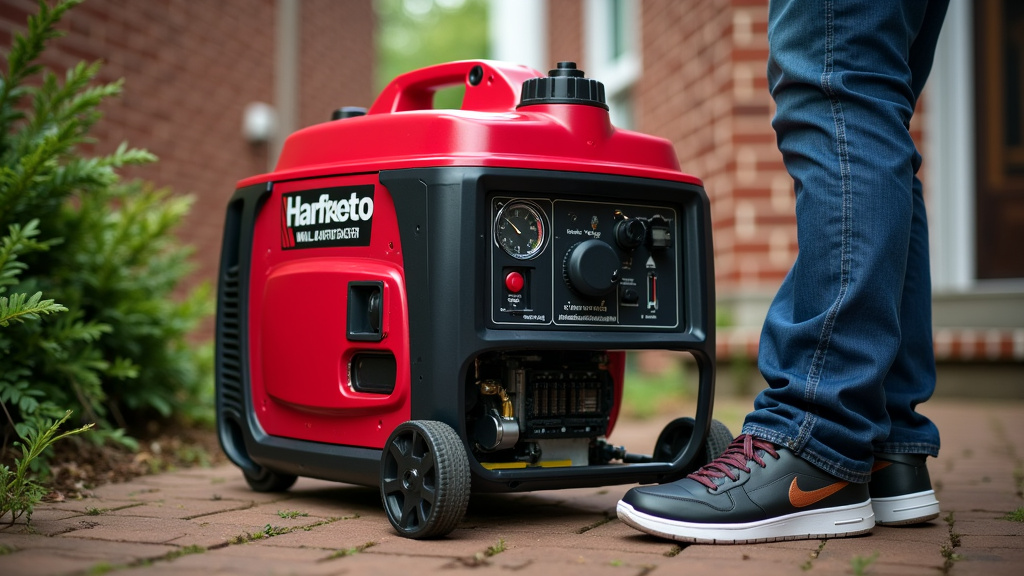
That knocking sound is your generator’s way of screaming for help. The most critical first step is to stop the generator immediately. Continuing to run it risks turning a repairable problem into a complete engine write-off.
Immediate Actions to Take
Here’s a quick checklist for when that knock starts:
- Stop the generator immediately: Don’t let it run for even another minute.
- Let it cool down: Hot engines can be dangerous and parts might be seized.
- Check the oil level: Low oil can exacerbate many internal engine problems.
- Visually inspect: Look for any obvious loose parts or leaks around the engine.
- Avoid restarting: Unless you are absolutely certain it was an external, easily fixed issue, do not try to restart it.
- Seek professional diagnosis: Get a qualified mechanic to look at it.
When to Call a Professional
For any knocking sound that seems to come from deep within the engine, it’s almost always time to call in the experts. Trying to diagnose or fix internal engine issues without the right knowledge and tools can lead to more damage.
A qualified generator technician has specialized equipment. They can perform diagnostic tests to pinpoint the source of the knock. They can also identify if the issue is with the connecting rod, piston, crankshaft, or something else entirely.
We found that the cost of a professional diagnosis is often far less than the cost of replacing a completely failed engine. It’s a wise investment to ensure your generator is repaired correctly.
Conclusion
Hearing a knocking sound from your generator is a serious warning. It typically signals internal engine damage, often involving the connecting rod or piston. This isn’t a minor issue; it’s the sound of metal parts grinding against each other. Continuing to run your generator with this sound can lead to catastrophic failure and costly repairs.
Your immediate action should be to stop the generator. For more on generator knocking noise, see our guide. Avoid restarting it unless you’ve identified and fixed a simple external issue. For any internal knock, the best and safest next step is to contact a qualified generator technician for a professional diagnosis. They have the expertise to find the exact problem and repair it correctly, saving you from further damage and expense.
Frequently Asked Questions
Can I temporarily run my generator if it’s knocking?
No, you should not run a generator that is making a knocking sound. This noise indicates internal engine damage, and continued operation can cause much more severe and expensive problems. It’s best to stop the generator immediately.
How much does it cost to fix a knocking generator?
The cost to fix a knocking generator varies widely depending on the cause. Simple issues might be relatively inexpensive, but internal engine repairs like connecting rod or crankshaft issues can be very costly, sometimes approaching the price of a new generator. Professional diagnosis is key to getting an accurate estimate.
Is a knocking sound the same as pinging?
While both are related to combustion issues, a knocking sound from a generator is usually a more severe mechanical issue, like rod knock or piston slap. Pinging or detonation is typically a fuel or ignition timing problem that can be less destructive but still harmful. Your generator’s knock is likely mechanical.
What is the difference between rod knock and piston slap?
Rod knock occurs when the connecting rod bearing wears out, allowing the connecting rod to hit the crankshaft. Piston slap happens when a piston has too much clearance in the cylinder and hits the cylinder wall as it moves. Rod knock is generally a deeper, more serious sound.
Can a lack of oil cause a generator to knock?
Yes, a severe lack of lubrication can absolutely cause a generator to knock. Insufficient oil can lead to increased friction and heat, causing parts like bearings and pistons to wear down rapidly or seize. Always ensure your generator has the correct oil level. A severe lack of lubrication can absolutely cause a generator to knock.