5 Best Westinghouse Tri Fuel Generators (November 2026)
The best Westinghouse tri fuel generators include the Westinghouse 14500 Peak Watt Tri-Fuel Home Backup for whole-home backup, the Westinghouse 8200 Peak Watt Tri-Fuel Portable Inverter for quiet electronics-safe backup, and the DuroMax XP13000HXT (best non-westinghouse high-output alternative).
On this page (5 sections)
The best Westinghouse tri fuel generator is the 14500 Peak Watt Tri-Fuel Home Backup for buyers who need the most capacity for a home outage. It produces 14,500 peak watts and 11,500 running watts on gasoline, with propane and natural gas as additional fuel choices.
That output matters when you want to run more than a few essentials at once. A refrigerator, sump pump, lighting circuits and charging devices can add up quickly during a long outage.
The larger frame and open design also make outlets, the fuel cap and controls easier to reach for routine checks.
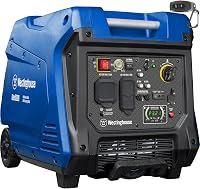
The Westinghouse 8200 Peak Watt Tri-Fuel Portable Inverter is the better pick for quieter operation, less than 3% THD and a lighter 134.5 lb design. It still suits home backup, but its enclosed inverter layout is aimed at cleaner power and lower sound levels in daily use.
This model fits households that plan to power phones, computers, TVs and selected appliances rather than the widest possible load list. Its 50A outlet and RV-ready outlet give it two clear roles.
You can plan it for a transfer switch connection at home or move it to a travel trailer when needed.
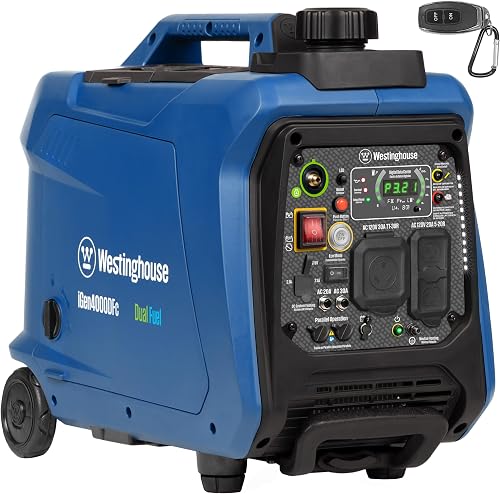
The smaller Westinghouse 4000 Peak Watt model is worth considering for an RV or a short list of essential loads, but it is dual fuel rather than tri fuel. It uses gasoline or propane, so it cannot connect to a natural gas line for a long outage.
Its lighter weight and compact shape make storage and transport simpler for travel use.
We compared power figures, fuel choices, outlet types, inverter designs and portability details for these models. The key trade off is capacity against placement, because the largest units need more space and a planned moving path.
Fuel choice also changes what each model can do in practice. Gasoline, propane and natural gas output are not always the same, so your load plan should match the fuel you expect to use most.
Runtime at a partial load matters too, since a generator rarely runs at full output for a whole outage.
For a wider look at the brand's smaller and larger options, see our guide to the best Westinghouse portable generators.
Use the rest of this guide to match each model to a specific job. Whole home backup, RV power and quiet electronics use are different tasks, even when the fuel options look similar on paper.
Our picks at a glance
-
1
 Best for whole-home backup
Westinghouse 14500 Peak Watt Tri-Fuel Home Backup
9.7/10 our score
See it on Amazon -
2
 Best for quiet electronics-safe backup
Westinghouse 8200 Peak Watt Tri-Fuel Portable Inverter
9.3/10 our score
See it on Amazon -
3

- 4
 Best for clear load and runtime planningCheck it
- 5
 Check it
Westinghouse 4000 Peak Watt Super Quiet Dual
Best for RV trips and light backup
Which Westinghouse tri fuel generator is best for each use?
The 14500 Peak Watt model is best for large home loads, while the 8200 Peak Watt inverter is the more balanced option for cleaner, quieter backup power. For another three-fuel lineup, compare Champion tri-fuel generators.
The smaller dual-fuel model is better suited to RV trips and essential electronics.
Our score weighs specs, features and buyer feedback against what you're shopping for. The picks are ordered from the highest score to the lowest score, and the score is not a promise of real-world performance.
| Product | Best for | Peak output | Running output | Fuel | Our score |
|---|---|---|---|---|---|
| Westinghouse 14500 Peak Watt Tri-Fuel Home Backup | whole-home backup | 14,500 watts | 11,500 watts on gasoline | Gasoline, propane and natural gas | 9.7 |
| Westinghouse 8200 Peak Watt Tri-Fuel Portable Inverter | quiet electronics-safe backup | 8,200 watts | 6,600 watts on gasoline | Gasoline, propane and natural gas | 9.3 |
| DuroMax XP13000HXT | non-Westinghouse high-output alternative | Gasoline, propane and natural gas | 9.2 | ||
| Generac | clear load and runtime planning | 9,500 watts on gasoline | 8.6 | ||
| Westinghouse 4000 Peak Watt Super Quiet Dual | RV trips and light backup | 4,000 watts | Gasoline and propane | 8.9 |
Westinghouse 14500 Peak Watt Tri-Fuel Home Backup: Best for whole-home backup
- 14,500 peak watts
- 11,500 running watts on gasoline
- Gasoline, propane and natural gas
- Less than 5% THD
This is the highest-output Westinghouse tri-fuel option here, with transfer-switch-ready 50A and 30A outlets. Remote electric start, a 550cc engine and up to 19 hours at 25% load suit extended home outages.
Pros
- Highest output in this roundup
- Natural gas, propane and gasoline flexibility
- Remote electric start
Cons
- Heaviest model here at 230 lb
- Transfer switch sold separately
The Westinghouse 14500 Peak Watt Tri-Fuel Home Backup is the top choice when your outage plan includes several major loads. It produces up to 14,500 peak watts and 11,500 running watts on gasoline, with propane and natural gas available when those fuels fit your plan.
Its transfer-switch-ready 50A and 30A outlets can connect with an interlock kit, manual transfer switch or the Westinghouse WATS200 Automatic Transfer Switch. Those connection parts are separate, so plan the electrical installation before an outage.
The 550cc 4-stroke engine runs for up to 19 hours at 25% load on a 9.5-gallon gasoline tank. Remote electric start and push-button start reduce the effort needed to begin operation, while the fuel gauge and hour meter help with routine checks.
Compare Westinghouse remote start generators for more models with convenient starting options.
Less than 5% THD is designed for sensitive electronics such as phones, computers and TVs. The CO sensor and automatic low-oil shutdown add safety features, but the generator still needs outdoor operation with safe distance from doors, windows and vents.
At 230 lb, this is the heaviest Westinghouse model in the roundup. Choose it when capacity matters more than easy lifting, and compare it with our best Westinghouse dual fuel generator guide if you don't need natural gas.
Westinghouse 8200 Peak Watt Tri-Fuel Portable Inverter: Best for quiet electronics-safe backup
- 8,200 peak watts
- 6,600 running watts on gasoline
- Less than 3% THD
- About 60 dBA at 25% load
The iGen8200TFc combines tri-fuel flexibility with inverter output and a 50A home-backup outlet. Its enclosed design, low THD and 134.5 lb weight make it easier to place than a large open-frame unit.
Pros
- Less than 3% THD
- Inverter design with lower noise
- 50A and RV-ready outlets
Cons
- Less output than the largest open-frame models
- Natural gas output is lower than gasoline output
The Westinghouse 8200 Peak Watt Tri-Fuel Portable Inverter is the best match for buyers who want tri-fuel flexibility without giving up inverter power. It produces 8,200 peak watts and 6,600 running watts on gasoline, with lower output on propane and natural gas.
Inverter technology adjusts engine speed to demand, which can reduce fuel use and noise compared with a traditional generator. Westinghouse gives an operating figure of about 60 dBA at 25% load, and the enclosed design is easier to place near an RV or home storage area than a large open frame.
Less than 3% THD suits phones, computers and TVs. The control panel includes a 50A 120/240V outlet for home backup, a 30A TT-30R RV outlet and a 20A GFCI duplex outlet.
The 298cc 4-stroke engine runs for up to 17 hours at 25% load on a 3.9-gallon gasoline tank. A digital fuel gauge, LED data center, remote electric start, automatic low-oil shutdown and CO sensor support regular use and outage preparation.
Choose this model if your loads fit below the larger generator class and you care about sound and electronics. Our best Westinghouse inverter generator guide covers how this design compares with other inverter options.
DuroMax XP13000HXT: Best non-Westinghouse high-output alternative
- 13,000 watts of power
- 500cc engine
- Gasoline, propane and natural gas
- Remote and push-button start
The XP13000HXT is a strong alternative when you want tri-fuel operation and high output but don't need a Westinghouse badge. Its front-facing fuel interface and transfer-switch-ready 50A outlet suit home backup planning.
Pros
- High 13,000-watt output
- Includes natural gas hose and propane regulator
- Remote and push-button start
Cons
- Heaviest model here at 240 lb
- Less detailed power information by fuel than some picks
The DuroMax XP13000HXT is the strongest non-Westinghouse alternative in this comparison. Its 13,000-watt output, 500cc engine and three fuel choices put it close to the largest Westinghouse and Generac models for home backup planning.
The generator runs on gasoline, propane or natural gas, and its front-facing interface lets you change the fuel type. A transfer-switch-ready 50A outlet supports a home connection plan when paired with the right transfer equipment.
Push-button and remote start make startup easier from a short distance. The included components include an oil funnel, spark plug wrench, tool set, wheel and handle kit, 15-foot by 3/4-inch natural gas hose, propane regulator, remote control and owner's manual.
At 240 lb and 30 in long by 30 in wide by 26 in high, it needs a firm storage location and a clear path for movement. The product data gives a 13,000-watt output but does not separate running and peak figures, so use your load plan carefully.
Choose it when you want high tri-fuel capacity and the included natural gas hose matters. If propane is your main backup fuel, compare the trade-offs in our best Westinghouse propane generator guide.
Generac: Best for clear load and runtime planning
- 12,500 starting watts
- 9,500 running watts on gasoline
- AVR voltage stabilization
- Gasoline, propane and natural gas
Generac gives you clear starting and running figures, AVR, COsense detection and a 7.5-gallon fuel tank. It fits home backup buyers who want a straightforward control panel and published runtime figures.
Pros
- AVR for voltage stabilization
- Up to 14 hours at 25% load on gasoline
- 50A and 30A outlets
Cons
- Lower score than the Westinghouse 14500
- 219 lb frame still needs a planned storage spot
The Generac 12,500 Starting Watt Tri-Fuel Portable Generator suits buyers who want clear load figures and voltage stabilization. It produces 12,500 starting watts and 9,500 running watts on gasoline, with gasoline, liquid propane and natural gas fuel options.
Automatic voltage regulation helps stabilize output for connected equipment. The outlet panel includes two 120V 20A GFCI duplex outlets, a 120/240V 30A twist-lock outlet and a covered 120/240V 50A outlet.
The 7.5-gallon fuel tank runs for up to 9.5 hours at 50% load or up to 14 hours at 25% load on gasoline. Generac also describes natural gas connection as offering virtually unlimited runtime, but that requires a suitable natural gas line and correct installation.
COsense monitors carbon monoxide and shuts the generator down when levels rise toward a dangerous threshold. Low-oil shutdown, electric start and the included rechargeable battery support planned emergency use.
At 219 lb, the Generac is still a substantial portable generator. Pick it when AVR, published runtime figures and a familiar home-backup layout matter more than the highest output in this group.
Westinghouse 4000 Peak Watt Super Quiet Dual: Best for RV trips and light backup
- 4,000 peak watts
- 3,300 rated watts
- Less than 3% THD
- Gasoline or propane
This compact inverter is not a tri-fuel model, but it belongs here as the practical small-load comparison. At 62.8 lb, with an RV-ready outlet and up to 7 hours of runtime, it suits travel and essential electronics.
Pros
- Lightest model here
- Less than 3% THD
- RV-ready TT-30R outlet
Cons
- Only gasoline and propane
- Much lower output than the home-backup picks
The Westinghouse 4000 Peak Watt Super Quiet Dual Fuel is the practical small-load choice, even though it is not a tri fuel generator. It uses gasoline or propane, produces 4,000 peak watts and 3,300 rated watts, and weighs 62.8 lb.
Its inverter design produces less than 3% THD for electronics such as laptops, tablets and mobile devices. The TT-30R 30A outlet is RV ready, while the 120V duplex outlet and 2 USB outlets cover smaller household and travel needs.
This model runs for up to 7 hours on a 1.69-gallon gasoline tank. Economy mode adjusts fuel use, and the product data gives noise as low as 52 dBA.
Remote, electric and recoil start options provide more than one way to get it running.
Automatic low-oil and CO shutdown support safer operation. A rotating LED data center shows fuel level, power output, remaining runtime, voltage output and lifetime hours.
Choose this generator for an RV, campsite or short emergency list. It cannot match the home-backup capacity or natural gas flexibility of the tri-fuel models, but its compact size makes storage and movement much easier.
How much power do you need from a Westinghouse tri fuel generator?
The right output depends on the starting surge of your largest motor load and the running watts of everything you want to operate together. Refrigerators, sump pumps, air conditioners and power tools can need extra starting capacity.
The 14500 Peak Watt model gives the widest margin here, with 14,500 peak watts and 11,500 running watts on gasoline. The 8200 Peak Watt model may be enough for selected circuits, an RV and essential electronics when your load plan is smaller.
Write down the running watts for each appliance, then identify which loads may start at the same time. Add the running watts together and leave room for motor startup rather than planning to run the generator at its limit.
Natural gas and propane output can be lower than gasoline output. The Westinghouse 8200 Peak Watt model lists 6,600 running watts on gasoline, 5,940 on propane and 5,280 on natural gas, so fuel choice should be part of your calculation.
Is tri-fuel worth choosing over dual fuel?
Tri-fuel is most useful when you want gasoline, propane and natural gas as separate backup paths. Natural gas can support a longer home outage without storing as much liquid fuel, while gasoline and propane give you portable options.
Dual fuel may be enough if you already store propane and gasoline or if you mainly need an RV generator. The Westinghouse 4000 Peak Watt model is lighter and quieter than the larger home-backup picks, but it cannot connect to natural gas.
Read Which Is Better Dual Fuel or Tri Fuel Generator? for a direct comparison of fuel flexibility, storage and setup. Our Is It Worth Buying Dual Fuel or Tri Fuel Generator? guide can help if you are still weighing the extra fuel option.
What should you check before using a portable generator?
Use a portable generator outdoors in a dry, open area away from doors, windows and vents. Carbon monoxide sensors help with detection, but they do not replace safe placement and ventilation.
Place the generator where exhaust can disperse without building up near an occupied space. A dry surface helps with stability and reduces water contact around the frame and outlets.
Keep cords routed so they are not a trip hazard or a damage risk during setup.
Plan the electrical connection before the outage. A transfer switch or approved interlock can connect selected household circuits, while a suitable cord and outlet can support other equipment.
That planning should happen before storm season or travel, not after the power goes out. Decide which circuits matter most and which loads will stay off during backup.
A written load list makes it easier to connect the right circuits and avoid overloading the generator.
Never connect a portable generator directly to a wall outlet. Backfeeding the house can endanger utility workers and damage equipment.
A transfer switch or approved interlock setup is the safe route for household circuits.
Check the fuel path, oil level, battery or start system and visible cables before operation. Look for loose connections, damaged cords and leaks around the tank or fuel fittings.
Confirm the fuel type matches the valve or selector setting on the unit you are starting.
Keep the manual with the generator, track hours with the built-in meter when available, and follow the brand's service schedule. Oil checks and hour tracking help you spot maintenance needs before a long outage.
Store gasoline and propane according to local rules and the fuel container instructions. Use approved containers, keep fuel away from living spaces and heat sources, and label containers clearly.
Rotate stored fuel so it stays usable for emergency or travel use.
Natural gas connections should use the correct equipment and qualified installation when required. The hose, regulator and connection points need to match your setup and local code.
Do not improvise a fuel connection to save time during an outage.
Test the generator under load before you rely on it for backup. A short run with your transfer switch path or RV cord can reveal outlet, cord or circuit problems.
That test also confirms remote start, electric start and outage lighting controls work as expected.
Keep a basic care kit close to the generator. A funnel, spark plug wrench, screw driver and replacement parts list can help with small issues at home or on the road.
Store that kit with the manual so you do not search for tools in the dark.
Shut down and cool the generator before refueling or moving it. Let the engine rest, check oil again when required by the manual, and reset the load list for the next run.
Which Westinghouse tri fuel generator should you choose?
Choose the Westinghouse 14500 Peak Watt Tri-Fuel Home Backup if your main goal is the most capacity for a home outage. It gives you the widest margin for major loads and selected household circuits.
This is the pick when capacity matters more than easy lifting. At 230 lb, you need a clear storage spot, a firm surface and a planned path for moving it outside.
Remote electric start helps with startup, but it does not change the space the unit needs.
Choose the 8200 Peak Watt Portable Inverter if you want tri-fuel flexibility, less than 3% THD and a quieter enclosed design. It is the more balanced option when electronics and sound levels matter during an outage.
Its lighter 134.5 lb weight and enclosed layout make placement easier than with a large open frame. The 50A outlet supports a home backup plan, while the RV-ready outlet covers travel trailer use.
Output is lower than the largest models, so check your load list before you commit.
Pick the DuroMax XP13000HXT if you want a high-output alternative with a natural gas hose and propane regulator included. Its 13,000-watt output and 500cc engine put it in the same home backup class.
The included natural gas hose and propane regulator reduce extra parts to buy for fuel setup. It also has push-button and remote start for easier startup from a short distance.
At 240 lb, it is the heaviest model here, so storage and movement need real planning.
Pick the Generac if AVR, clear runtime figures and 12,500 starting watts fit your load plan. Automatic voltage regulation helps stabilize output for connected equipment during use.
The published runtime figures make load planning more straightforward for home backup. It also has 50A and 30A outlets for transfer switch or cord connections.
At 219 lb, it still needs a planned storage spot and a clear path outdoors.
For RV trips or a short list of essentials, the Westinghouse 4000 Peak Watt Super Quiet Dual Fuel is easier to move and store. It is not a tri-fuel generator, but its inverter design, RV-ready outlet and 62.8 lb weight make it the most practical small option here.
This compact model suits camping, travel trailer use and basic emergency electronics. It cannot match the home-backup capacity or natural gas flexibility of the tri-fuel models.
Choose it when portability and low noise matter more than whole home load capacity.
Our top 3 picks at a glance
-
1
Best for whole-home backup
Westinghouse 14500 Peak Watt Tri-Fuel Home Backup
9.7/10 our score
See it on Amazon -
2
Best for quiet electronics-safe backup
Westinghouse 8200 Peak Watt Tri-Fuel Portable Inverter
9.3/10 our score
See it on Amazon -
3
Frequently asked questions
What is the best Westinghouse tri fuel generator?
The Westinghouse 14500 Peak Watt Tri-Fuel Home Backup is the strongest choice for large home loads because it produces 14,500 peak watts and 11,500 running watts on gasoline. The 8200 Peak Watt Portable Inverter is a better fit when quieter operation and less than 3% THD matter more than maximum output.
What does a tri fuel generator run on?
A tri fuel generator runs on gasoline, propane and natural gas. Fuel choice affects available output, runtime and setup.
Gasoline is commonly stored for portable use, propane can be kept in approved cylinders, and natural gas requires a suitable connection and installation.
Is an inverter generator better for home backup?
An inverter generator can be better when you want lower noise and cleaner power for electronics. The Westinghouse 8200 Peak Watt model has less than 3% THD and runs at about 60 dBA at 25% load.
A traditional open-frame model may provide more output for large loads.
Can a Westinghouse tri fuel generator power an RV?
Yes, the Westinghouse 8200 Peak Watt Portable Inverter includes a 120V TT-30R 30A RV outlet. The smaller Westinghouse 4000 Peak Watt model also has an RV-ready TT-30R outlet, but it uses gasoline or propane only and produces less power.
Do I need a transfer switch for home backup?
Use a properly installed transfer switch or an approved interlock setup when connecting a portable generator to household circuits. The Westinghouse 14500 Peak Watt and 8200 Peak Watt models have transfer-switch-ready outlets, but the transfer equipment is separate.