9 Best RV Solar Panels (November 2026)
The best best rv solar panels include the ECO-WORTHY 200 Watts 12 Volt/24 Volt Solar for a complete 200 watt starter kit, the Callsun N-Type 16BB 400W Bifacial Solar Panel for high output on Class B vans, and the SOLPERK Solar Panel Kit 20W 12V Solar for battery trickle maintenance.
On this page (10 sections)
- How we picked the best RV solar panels
- The best RV solar panels for different roofs and charging needs
- Best RV solar panels: which wattage should you choose?
- Are monocrystalline solar panels for RV use the right type?
- How do you compare these RV solar panels?
- How do you size a system with best rv solar panels?
- What roof space and mounting options matter?
- How do series and parallel wiring affect charging?
- What about kits, awnings and winter covers?
- Verdict: which of the best RV solar panels should you buy?
The best RV solar panels for most buyers are a 200 watt roof setup, because that size balances roof space, charging speed and cost. The ECO-WORTHY kit gives you panels, controller and brackets in one box.
The Callsun bifacial pair gives more headroom if your roof can fit two large panels.
We compared 9 options by wattage, size, weight and what is included. Our score weighs specs, features and buyer feedback against what you are shopping for.
That matters because a great panel with no controller is not a complete system.
Our picks at a glance
-
1
 Best for a complete 200 watt starter kit
ECO-WORTHY 200 Watts 12 Volt/24 Volt Solar
9.7/10 our score
See it on Amazon -
2
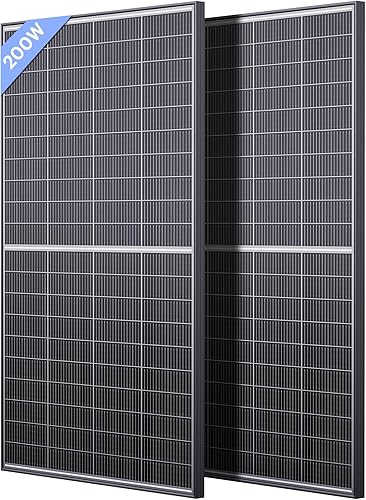 Best for high output on Class B vans
Callsun N-Type 16BB 400W Bifacial Solar Panel
9.7/10 our score
See it on Amazon -
3
 Best for battery trickle maintenance
SOLPERK Solar Panel Kit 20W 12V Solar
9.5/10 our score
See it on Amazon
- 4
 Check it
BougeRV Arch Pro 200W Anti-Shading N-Type Fiberglass
Best for curved or weight sensitive roofs - 5
 Check it
Renogy Solar Panels 200 Watt N-Type
Best compact single 200 watt panel - 6
 Check it
Renogy 100 Watt Solar Panel N-Type
Best for small roofs and expanding later - 7
 Check it
Callsun N-Type 16BB 200 Watt Solar Panel
Best two panel set for tight spaces - 8
 Check it
Rvpozwer 200 Watt Solar Panel 18BB
Best for hot climate roof installs - 9
 Check it
TWELSEAVAN 400W Portable Solar Panel for Power
Best portable 400 watt ground panel
How we picked the best RV solar panels
We checked each panel's rated watts, dimensions and weight against real RV roofs. We also noted whether a controller, brackets or cables are included, since missing parts add cost and time.
We gave more weight to efficiency and shading features. A roof often has vents, antennas and tree shade, so a panel that holds output in partial shade can beat a plain higher rated panel in daily use.
We kept different jobs separate. A 20W trickle kit and a 400W portable panel do not compete for the same job, so we scored each for the buyer it fits best.
The best RV solar panels for different roofs and charging needs
The ECO-WORTHY kit is the easiest complete start. The Callsun pair is the high output roof choice.
The rest solve small roofs, curved roofs, battery upkeep or ground based charging.
ECO-WORTHY 200 Watts 12 Volt/24 Volt Solar: Best for a complete 200 watt starter kit
- Two 100W monocrystalline panels
- 30A PWM charge controller
- Daily output 800wh/day under 4 hours full sunshine
- Panel size 35.2 x 23.1 in
- Series or parallel wiring
A two panel kit with controller, brackets and cables for RVs that want one box to start charging.
Pros
- Controller and brackets included
- Can wire in series for 24V or parallel for 12V
- Pre-drilled panels and plug-and-play cables
Cons
- Two separate panels take more roof planning than one panel
- PWM controller is less efficient than MPPT in some conditions
Buy the ECO-WORTHY kit if you want to start with one box and get charging right away. It holds two 100W monocrystalline panels, a 30A PWM controller, two sets of Z brackets and cables.
Each panel is 35.2 x 23.1 inches, so two panels need a roof with two clear patches. You can wire them in parallel for a 12V system or in series for 24V, which gives you room to grow later.
ECO-WORTHY states daily output of 800wh under 4 hours of full sunshine. That is a useful planning figure.
Real output will fall with clouds, heat, shade and a dirty panel surface.
The aluminum frame, IP65 junction box and 2400Pa wind rating suit roof use. Pre-drilled backs and plug-and-play cables cut install time, but you still need sealant and roof safe mounting points.
Trade-off: PWM controllers lose some power compared with MPPT, and two panels use more roof area than one 200W panel. If you want a controller included and simple wiring, this kit is the clean pick.
Callsun N-Type 16BB 400W Bifacial Solar Panel: Best for high output on Class B vans
- Two 200W N-Type 16BB panels
- 25.6% conversion efficiency
- Bifacial rear side generation
- Each panel 51.3 x 30.3 in, 23.8 lb
- TwinCell anti-shading design
Two bifacial 200W panels that can give extra rear side output and keep working when part of a panel is shaded.
Pros
- High efficiency for tight roof space
- Bifacial design can add rear side power
- Dual module design limits shading losses
Cons
- Two large panels need a long clear roof area
- Panel only, so you must add a controller
Buy the Callsun pair if your roof has space for two 51.3 x 30.3 inch panels and you want maximum output. Each 200W panel uses N-Type 16BB cells at 25.6% efficiency.
The panels are bifacial, with a transparent backsheet that can capture reflected light from below. In real roof use that gain depends on roof color and mounting height, so treat it as a bonus rather than a promise.
Its TwinCell design splits each panel into two sections. If a branch shades one half, the other half can keep producing, which helps at wooded campsites.
Each panel weighs 23.8 lb and has pre-drilled holes. A low temperature coefficient of -0.30%/K helps limit heat losses in summer.
Two panels in series give about 54.6V, which suits many 60V portable power station inputs. If you use a BLUETTI station, see our solar panels for BLUETTI power stations guide.
Trade-off: this is panels only, with no controller, brackets or cables in the box. You must add those parts and check voltage limits before you wire it.
SOLPERK Solar Panel Kit 20W 12V Solar: Best for battery trickle maintenance
- 20W monocrystalline panel
- 10A smart MPPT controller
- 360 degree adjustable bracket
- Cell efficiency 21% to 30%
- Alligator clip included
A small kit built to keep 12V batteries charged in storage, not to run a full RV load.
Pros
- MPPT controller included
- Adjustable bracket for sun angle
- Plug-and-play connections
Cons
- 20W is too small for daily RV use
- Best for maintenance rather than off-grid power
Buy SOLPERK if your main job is keeping a stored 12V battery charged. This 20W kit is for maintenance, not for running lights, fans and a fridge all day.
It includes a 10A smart MPPT controller with three stage charging and protection against overcharging and short circuits. That controller now costs you nothing at night, according to SOLPERK, which helps in storage.
The panel is monocrystalline with cell efficiency of 21% to 30%. A 360 degree adjustable bracket lets you aim it at the sun, and alligator clips allow quick hookups for a battery on a trailer, boat or mower.
SOLPERK states a lifespan of up to 25 years, with a tempered glass surface and aluminum frame rated for 2400Pa wind and 5400Pa snow.
Trade-off: 20W is small. If you boondock and draw power daily, you need a much larger roof setup.
Read our guide on which solar panel size do I need before you expect this kit to cover RV loads.
BougeRV Arch Pro 200W Anti-Shading N-Type Fiberglass: Best for curved or weight sensitive roofs
- 200W flexible fiberglass panel
- Only 7.94 lb and 2.5mm thin
- N-Type 16BB cells, 25% conversion
- ETFE coating
- Bends up to 270 degrees
A light flexible panel that can follow a curved roof and saves weight compared with glass panels.
Pros
- Very light for a 200W panel
- Flexible shape fits curved roofs
- ETFE surface resists scratches
Cons
- Panel only, no controller included
- Open circuit voltage range needs checking against your power station
Buy BougeRV Arch Pro if your roof is curved, low profile or weight sensitive. At 7.94 lb and 2.5mm thick, it is far lighter than a glass 200W panel.
The fiberglass panel bends up to 270 degrees, so it can follow a curved front cap or an uneven roof section. ETFE coating gives an anti-scratch and self-cleaning surface that suits outdoor travel.
N-Type 16BB cells give a 25% conversion rate, with bypass diodes to help output in low light or partial shade. BougeRV says the panel can charge 12V or 24V systems, and panels in series can serve 48V.
Hole spacing on the 200W model is 25.98 inches. You can install it with hanging holes, glass glue or adhesive tape sold separately.
Cables are 33.5 inches and 14AWG.
Trade-off: there is no controller in the box, and the open circuit voltage range of 36V plus or minus 5% may not suit some power stations. Check your station specs first.
Renogy Solar Panels 200 Watt N-Type: Best compact single 200 watt panel
- 200W N-Type 16BB panel
- 25% cell efficiency
- 49.7 x 30.1 in, 23.4 lb
- 24V panel for 12V and 24V systems
- Low temperature coefficient
A single rigid 200W panel made smaller and lighter for Class B vans and other tight roofs.
Pros
- Strong output from one panel
- Smaller than earlier Renogy 200W models
- Works with 12V and 24V battery systems
Cons
- Controller and mounting hardware are not included
- Needs a controller with at least 40V max PV input for single use
Buy Renogy 200W if you want one rigid panel with strong output and a compact footprint. It is 49.7 x 30.1 inches and 23.4 lb, smaller and lighter than Renogy's earlier 200W design.
N-Type 16BB cells give 25% efficiency, so you get more watts from each square foot of roof. That helps on Class B vans where vents and fans eat space.
Renogy says the 24V panel works with 12V and 24V battery systems, including lithium, AGM and deep cycle batteries. A low temperature coefficient helps output in hot weather, and noise from the panel itself is not a factor.
For the controller, Renogy says max PV input voltage must be at least 40V for a single panel. That check matters more than it sounds, because a low voltage controller can clip your output.
Trade-off: this is a panel only. Budget for a controller, mounts and cables.
If you want that wiring done for you, see our best rv solar panel kits guide.
Renogy 100 Watt Solar Panel N-Type: Best for small roofs and expanding later
- 100W N-Type 16BB panel
- 25% conversion efficiency
- 34.1 x 22.8 in, 13 lb
- 12V panel
- IP67 protection
A compact 100W panel that fits small RV roofs and can be added to in steps.
Pros
- Compact size for small roofs
- Light at 13 lb
- High efficiency for its size
Cons
- 100W may be slow for heavy daily loads
- Controller and mounts sold separately
Buy Renogy 100W if your roof is small or you want to add power in stages. At 34.1 x 22.8 inches and 13 lb, it fits where a 200W panel will not.
Grade A+ N-Type cells give 25% conversion efficiency. Renogy says that gives 20W more output than a conventional PERC panel of the same design, which is a real gain on a tight roof.
The panel is a 12V panel for 12V systems, with a max voltage of 22.79V and 5.31A. That wording matters: 12V describes the system it suits, not the exact voltage the panel makes.
IP67 protection, low-iron tempered glass and a corrosion-resistant aluminum frame suit rain, snow and heat. Renogy rates it for 2400Pa wind loads and 5400Pa snow loads.
Trade-off: 100W charges slowly compared with 200W. Start with one if space is tight, but plan to add a second panel if your daily use is high.
Our best 100 watt solar panel for rv page covers that sizing path.
Callsun N-Type 16BB 200 Watt Solar Panel: Best two panel set for tight spaces
- Two 100W N-Type 16BB panels
- 25% conversion efficiency
- Each panel 31.1 x 22.7 in, 11.4 lb
- 12V and 24V system compatible
- Four pre-drilled mounting holes
Two small 100W panels that let you split power across two roof spots.
Pros
- Two smaller panels fit awkward roof layouts
- Light per panel
- High efficiency cells
Cons
- Mounting hardware is not included
- Needs a compatible charge controller
Buy Callsun 200W set if two smaller panels fit your roof better than one large one. You get two 100W N-Type panels, each 31.1 x 22.7 inches and 11.4 lb.
That split lets you place one panel ahead of a vent and another behind it. On roofs with tanks, fans and AC units, that flexibility can matter more than a single neat rectangle.
Cells give 25% efficiency with 16 busbars, which helps light absorption and reduces hot spots. A low temperature coefficient of -0.3% per degree C helps in desert heat.
The panels use 3.2mm low-iron tempered glass, an aluminum alloy frame and IP68 protection. Callsun rates them for 2400Pa wind and 5400Pa snow loads.
Trade-off: mounting hardware is not included, and the panels need a compatible charge controller. They cannot charge a battery on their own.
Check best 200 watt solar panels for rv if you want to compare this set with single panel options.
Rvpozwer 200 Watt Solar Panel 18BB: Best for hot climate roof installs
- 200W N-Type panel, 25% efficiency
- 18BB cell technology
- 19.2 lb
- Pre-drilled holes for brackets
- IP68 waterproof rating
A rigid 200W panel with 18BB cells and a lighter frame for RV and rooftop use.
Pros
- 25% efficiency from one panel
- Lighter than many rigid 200W panels
- Pre-drilled for easy bracket mounting
Cons
- Panel only, controller not included
- Limit of 3 panels in parallel or series is stated
Buy Rvpozwer if you want one 200W panel with a lighter frame for an RV, boat or rooftop. It weighs 19.2 lb, which is light for a rigid panel of this size.
N-Type cells with 18BB technology give 25% conversion efficiency. Rvpozwer estimates about 1000 watt hours per day with 5 to 6 hours of light, a useful planning estimate for sunny regions.
The panel has pre-drilled holes on the back for brackets and works with a wide range of mounting hardware. An electroplated aluminum frame, IP68 rating and 2400Pa wind rating suit outdoor roof use.
Rvpozwer states a lab life of more than 30 years and a 10-year warranty service. The panel is rated at 9.75A and 20.52V in the specs given.
Trade-off: it is a panel only, and Rvpozwer limits you to 3 panels in parallel or 3 in series. Inspect it every two weeks for leaves and droppings, and clean it before output drops.
Our best rv solar panel cleaner guide helps with that care step.
TWELSEAVAN 400W Portable Solar Panel for Power: Best portable 400 watt ground panel
- 400W foldable ETFE panel
- 24% conversion efficiency
- 22.7 lb, folded 26 x 35.5 in
- MC4 output with adapters
- Four adjustable kickstands
A foldable 400W panel you set on the ground and aim at the sun, for power stations and RV use.
Pros
- High portable wattage
- Folds for storage and carrying
- Kickstands help aim the panel
Cons
- Open circuit voltage of 46.9V is not for small power stations
- Not a roof mounted panel
Buy TWELSEAVAN if you want 400W of portable power on the ground. This foldable panel is not roof mounted, and that is its strength at shaded campsites.
Folded, it is 26 x 35.5 inches and it weighs 22.7 lb, so you can carry it to open sun while your RV sits in shade. Four adjustable kickstands help you set the angle in seconds.
Monocrystalline cells give 24% efficiency with an ETFE laminated case. The kit includes a 5-in-1 MC4 cable, three DC adapters and a user manual, with compatibility listed for Jackery, EcoFlow, Bluetti and other power stations.
The open circuit voltage is 46.9V, so check that your power station accepts more than that before you buy. TWELSEAVAN warns it is not suitable for small portable power stations.
Trade-off: you must carry it, aim it and pack it away. If you want built in portability in a smaller size, compare our best suitcase solar panels picks.
Best RV solar panels: which wattage should you choose?
Choose 200W as the starting point for most RVs. It gives useful daily charging without taking the whole roof.
A 100W panel suits small roofs, and 400W suits larger roofs or heavy loads.
For wattage sizing, start with your daily load in watt hours. Divide that by your realistic sun hours, then add a margin for clouds, heat and dirty panels.
Our which solar panel size do I need guide walks through that math.
100 watt panels
One 100W panel is a good test setup. It can maintain a battery and offset small loads like lights and fans.
It will struggle if you run a fridge, TV and pumps all day.
200 watt panels
A single 200W panel or a 2 x 100W pair is the sweet spot here. You get faster battery recovery after a night of use, and most 30A controllers can handle it.
400 watt panels
400W makes sense on large Class A roofs, or with a portable ground panel. Check roof area, controller amps and battery size before you go this high.
Portable panels
Portable panels shine when your campsite is shaded. You can move them to full sun and aim them by hand.
Roof panels win for set-and-forget charging while you drive or park.
Are monocrystalline solar panels for RV use the right type?
Yes, monocrystalline panels are a strong default for RV roofs. They pack more watts into less space than older panel types.
That matters when vents, AC units and antennas already cover your roof.
Most picks here use monocrystalline or N-Type cells. N-Type designs often give higher efficiency and better heat tolerance, with 16BB or 18BB busbars to reduce microcracks and hot spots.
Cell type is not the only factor. A flexible panel that fits a curved roof can beat a rigid panel that will not fit at all.
A bifacial panel can also win if your roof reflects light to its back.
Shading can matter more than cell type. A panel with bypass diodes or a split module design will hold output better under tree shade.
That is why anti-shading features appear on several picks.
How do you compare these RV solar panels?
We compared wattage first, then size and weight per watt. A 200W panel that is 52 inches long needs a different roof than a 200W panel that is 34 inches long.
We checked what is in the box next. Kits with a controller, brackets and cables cost less to finish than a panel alone once you add those parts.
Panel-only picks can still win if you already own a controller.
We looked at voltage and controller fit. Panel voltage, power station input limits and controller max PV voltage decide whether parts work together.
A mismatch can waste power or damage gear.
We also weighed form factor. Rigid glass panels are proven and easy to mount.
Flexible fiberglass panels save weight and follow curves. Portable panels trade roof space for placement freedom.
How do you size a system with best rv solar panels?
Size from your battery and daily use, not from roof space alone. A large panel can overcharge a small battery if the controller and battery bank are not matched.
Learn how to use rv solar panels before you wire anything. That guide covers controller settings, battery types and safe hookup order.
Start with battery capacity
Add up your battery bank in amp hours. A 200W panel will charge a small bank fast and a large bank slowly.
Your controller amps should match the bank and panel watts.
Match the controller
PWM controllers are simple and cheaper. MPPT controllers track the panel better in cold, cloudy or shaded conditions.
Match max PV voltage to your panel wiring, series or parallel.
Plan expansion
Leave roof space and controller headroom for a second panel. Wiring panels in series raises voltage.
Wiring in parallel raises current. Your controller must accept the result.
If you want batteries and an inverter in one box, see best rv solar panel kit with battery and inverter.
What roof space and mounting options matter?
Measure your roof before you choose a panel shape. Vents, fans, AC units and antennas create odd gaps that decide which panel fits.
Rigid panels need flat roof space and Z brackets or similar mounts. Flexible panels can use adhesive, glue or hanging holes, and they follow curved sections.
Portable panels need no roof mounts at all.
Leave walking room around panels for cleaning and inspection. You will need to reach the panel to wash it, check wiring and clear leaves.
Our best portable rv solar panel guide covers ground setups.
Flat roofs
Flat roofs give you the most choice. You can use rigid panels, flexible panels or a mix.
Plan for roof sealant around every mount hole.
Curved roofs
Curved roofs favor flexible panels like the BougeRV Arch Pro. Check bend limits and hole spacing before you drill or glue.
Small roofs
Small roofs favor 100W panels or two split 100W panels. A single large panel may not fit between vents.
Start small and expand if your controller allows it.
How do series and parallel wiring affect charging?
Series wiring adds voltage, and parallel wiring adds current. Your controller and battery must accept the result in either case.
Series wiring helps on long cable runs and with high voltage power stations. Parallel wiring keeps voltage lower and can help when one panel is shaded.
Learn the full steps in how to wire solar panels on rv. That guide covers polarity, fusing and controller order.
Series wiring
Two panels in series can reach about 54.6V, as with the Callsun pair. That suits 60V power station inputs and cold weather charging.
Parallel wiring
Parallel wiring keeps voltage near one panel's level while current adds up. Check that cable and connector current limits can handle the total.
Mixed wiring
Mixed wiring can suit odd roof layouts. Keep matched panels in each string where you can.
Mismatched panels in one string can waste output.
What about kits, awnings and winter covers?
Kits save guesswork when you are new, and covers and awnings solve niche problems. A kit gives you matched parts, while add-ons protect or shade the panel.
The ECO-WORTHY kit is the only full kit in this list. If you want more kit options, see best rv solar panels kit for 12 volt system and best 200 watt solar panel kit for rv.
For larger systems, best 400 watt solar panels for rv and best 400 watt solar panel kit for rv cover high output roofs.
Solar panel awnings
An rv solar panel awning can give shade and power at once. Check wind limits and how the awning affects panel angle before you choose it.
Winter covers
An rv solar panel winter cover can protect panels in storage. It also blocks charging, so use it only when the RV is parked for the season.
Generator backup
Solar is slow on cloudy days. Some RVers pair solar with a Top 7 Watt Dual Fuel Generator For RV Use or the Top 7 Watt Dual Fuel Generator For RV Use list for fast battery recovery.
Verdict: which of the best RV solar panels should you buy?
Pick the ECO-WORTHY 200W kit for the simplest complete start. It includes the controller, brackets and cables, and it can grow from 12V to 24V wiring.
Pick the Callsun bifacial pair if you have roof space for two large panels. You get the highest efficiency here, plus anti-shading and rear side power.
Pick BougeRV Arch Pro for curved or light roofs, Renogy 100W for small roofs, and TWELSEAVAN 400W for portable ground power. Pick SOLPERK only for battery maintenance.
Before you order, measure your roof, check controller voltage limits and confirm how you will how to use rv solar panels day to day. That order of checks will save you more money than chasing the last watt of efficiency.
Our top 3 picks at a glance
-
1
Best for a complete 200 watt starter kit
ECO-WORTHY 200 Watts 12 Volt/24 Volt Solar
9.7/10 our score
See it on Amazon -
2
Best for high output on Class B vans
Callsun N-Type 16BB 400W Bifacial Solar Panel
9.7/10 our score
See it on Amazon -
3
Best for battery trickle maintenance
SOLPERK Solar Panel Kit 20W 12V Solar
9.5/10 our score
See it on Amazon
Frequently asked questions
How many watts of RV solar panels do I need?
Start with your daily watt hour use, then divide by your realistic sun hours. A 200W panel may give about 800wh on a good 4 hour sun day, while a small 20W kit is mainly for battery upkeep.
Do I need a charge controller with RV solar panels?
Yes, unless your power station has a built in solar controller that matches the panel voltage and current. A controller protects batteries from overcharging and matches panel output to battery voltage.
Are monocrystalline solar panels for RV use better than other types?
Monocrystalline panels often give strong output per square foot, which helps on small roofs. The picks here use monocrystalline or N-Type cells, though roof shape, weight and shading can matter more than cell type alone.
Can I mix portable and roof mounted solar panels?
Yes, many RVers do. A roof panel gives steady charging while parked, and a portable panel lets you chase sun or add power at a shaded campsite.
Match each one to its controller or power station input.


