Should You Cover RV Solar Panels in Winter?
Most RV owners should not cover roof-mounted solar panels all winter. A cover stops charging and can trap moisture, while leaving panels open lets them clear snow and keep batteries topped up on clear days.
On this page (10 sections)
- Should you use an rv solar panel winter cover at all?
- What winter weather actually does to solar panels?
- When a solar panel cover for rv helps
- When an rv solar panel protective cover hurts
- How snow load and tilt change the decision
- What materials work for rv solar panel protective covers?
- How winter storage changes cover advice
- How panels, controllers, and batteries work in cold
- A winter routine that beats a full-season cover
- Final choice: cover, clear, or store indoors?
Most RV owners should not cover roof-mounted solar panels all winter. A rv solar panel winter cover blocks the sun, so your batteries get no charge while it is on.
Leave panels open when you use the RV in winter. Clean days still give useful power, and you can brush off snow in minutes.
Cover panels only for a short reason. Long storage, a severe storm, or service work can justify a temporary cover.
Should you use an rv solar panel winter cover at all?
A cover makes sense only when you do not need power for a set period. It can shield glass from ice, tree sap, and blowing debris during storage.
It does not make a panel work better in cold weather. Cold sun is often strong sun, and panels can charge well below freezing.
A cover also adds new risks. Wind can lift a loose sheet, straps can loosen, and moisture can collect under fabric.
Many owners see more benefit from a protective cover for a portable panel. A foldable panel can go indoors or under cover when not in use.
That DOKIO kit suits winter campers who want power at a site, then pack the panel away at night or during storms.
Weight matters when you move gear in cold weather. A panel at 9.7 pounds with a 9.84 ft cable can be carried to shelter more easily than a fixed roof array.
The separate controller also helps with storage decisions. You can keep the panel indoors while the controller and battery stay in a dry, shaded place.
Rule: cover for storage or storms, not for the whole season.
What winter weather actually does to solar panels?
Winter weather slows charging mainly by reducing light, not by making glass fragile in normal use. Short days, low sun angles, and snow cover cut output.
Cold alone is not the main problem. Panels often run well in bright, cold air when the surface is clear.
Snow and ice matter more. A snow layer blocks light, and refrozen melt can bond to the frame and mounts.
Wind-driven grit can dull glass over time. A temporary cover during a grit storm can reduce that wear.
Salt spray matters near coastal roads. Rinse salt off with fresh water when you can, and use a cleaner made for panels.
Panel construction affects how you clear weather from the surface. ECO-WORTHY lists an aluminum alloy frame, an IP65 rated junction box, and a 2400Pa wind rating for its 100W panels.
SOLPERK lists low-iron tempered glass, a corrosion-resistant aluminum frame, and ratings of 2400Pa for wind and 5400Pa for snow load for its 20W panel. Those ratings support regular outdoor use, but they do not replace clearing snow to restore light.
For cleaning steps, our guide on how to use rv solar panels covers safe washing and checks.
Rule: treat light loss as the main winter issue, and clear snow instead of covering for months.
When a solar panel cover for rv helps
A cover helps when the RV will sit unused and you can disconnect charging safely. It can keep snow, branches, and road grit off the glass.
It also helps during hail or ice storms. A cover may take impact that would otherwise strike the panel face.
It can help when a portable panel stays outside. A foldable panel can fold flat and move to a sheltered spot.
It can help during roof work. Covering a panel blocks power while you move mounts, sealant, or wiring.
It does not help if your batteries need winter charging. A covered panel gives zero watts, no matter how bright the day is.
For size planning before winter, read which solar panel size do i need so you know what your open panels should replace.
Checking panel size before you buy a cover
Measure each panel before you choose a cover. ECO-WORTHY lists each 100W panel at 35.2 by 23.1 by 1.3 inches, with the full kit at 31.6 pounds.
DOKIO lists its folded size as 20 by 27 by 1.1 inches, so a cover for that kit needs to fit the folded form, not the open form.
A cover that is too small will pull at corners and leave edges exposed. A cover that is too large will flap, collect snow, and stress straps in wind.
Check cable entries and junction boxes when you measure. A cover should clear those parts without pressing on connectors or cable bends.
Rule: use a cover for a short, planned gap in charging, not as default winter care.
When an rv solar panel protective cover hurts
A cover hurts when you rely on solar to keep batteries above a safe charge. Batteries left in cold storage lose charge over time.
It can also trap damp air. Moisture under a tight cover can sit on frames, seals, and junction boxes.
Loose covers create wind load. Flapping fabric can loosen straps, abrade glass, and stress roof mounts.
Dark covers can warm the surface on a clear day. That heat is wasted when the panel cannot supply power.
A cover can hide damage. You may miss cracked glass, loose mounts, or water entry until you remove it.
ECO-WORTHY describes its junction box as IP65 rated, which adds protection against outdoor exposure. That protection works best when air can still move and meltwater is not held against seals for weeks.
For roof panels you drive with, a cover must come off before travel. Our best rv solar panels guide lists fixed kits suited to year-round roof use.
Rule: skip a cover if winter charging, dry storage, or daily driving matters more than short-term shielding.
How snow load and tilt change the decision
Tilt and snow load matter more than cover choice for most roof setups. A tilted panel sheds snow faster and catches low winter sun better.
Flat roof panels hold snow longer. You may need to brush them after each storm to restore charging.
Panel glass and frames are built for weather. ECO-WORTHY says its 100W monocrystalline panels use a corrosion-resistant aluminum frame and can withstand a 5400Pa snow load.
That rating does not mean you should leave snow on for weeks. Weight, ice, and blocked light still reduce output.
A tilt mount is not right for every roof. Check clearance, wind load while driving, and mount strength before changing angles.
ECO-WORTHY lists efficiency of up to 21.5% for its monocrystalline cells under sufficient light. That efficiency helps only when snow is cleared and the surface can receive light.
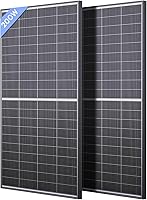
For mounted kits, {{product B09RZZHHHM | A 200W kit with two 100W monocrystalline panels, a 30A PWM controller, Z brackets, and cables for RV roof use.}}
The kit includes two sets of Z mounting brackets, a 30A controller, 16.4 ft 10 AWG solar cables, 2-in-1 connectors, and tray cable. Those parts support a fixed roof setup, but they do not change the need to clear snow from flat panels.
Rule: brush flat panels after snow, and consider tilt only if mounts and roof space allow it.
How to clear snow without scratching panels
Use a soft broom, foam brush, or plastic snow brush made for smooth surfaces. Start at the low edge and push snow off in short strokes.
Do not use a metal shovel, ice scraper, or pressure washer on the glass. Those tools can scratch the surface or force water under edges.
Work from the ground or a stable step where possible. Do not lean across the roof to reach a panel.
Clear panels soon after a storm if you need power. Even a thin snow layer can keep output near zero.
Wash off grit after melt. For product options, see our best rv solar panel cleaner guide.
Rule: clear snow gently and often, and never scrape ice off panel glass.
What materials work for rv solar panel protective covers?
The best material sheds water, resists cold, and stays loose enough to avoid pressure on glass. Breathable fabric with a water-resistant coating is a common choice.
Plastic sheeting is cheap but risky. It can trap moisture, flap in wind, and hold meltwater against frames.
Padded covers add impact protection. They suit storage, but they block power and need secure straps.
Mesh covers are a poor choice. They still reduce light and can collect snow and leaves.
Fit matters as much as fabric. A cover should drape without pressing hard on junction boxes or cable entries.
For gear that must live outside, our Best Generator Cover For Outdoor Use guide shows how fit and vents work for other outdoor power gear.
A breathable cover also reduces the chance that damp air stays trapped under the fabric. That matters around aluminum frames, MC4 connectors, and pre-drilled mounting points on fixed kits.
Avoid a cover that presses on cable bends or rests directly on a junction box. ECO-WORTHY lists MC4 connectors for its kit, and DOKIO lists SAE to XT60, alligator clip, and DC options for its portable kit.
Rule: pick a loose, breathable, well-strapped cover for temporary use, and avoid tight plastic sheeting.
How to secure a cover in wind and snow
Secure a temporary cover with straps that do not touch the glass directly. Route straps under the panel frame or around solid mounts.
Use padding where straps cross the frame. That padding prevents rubbing during vibration and wind.
Add extra anchors for storms. A cover that lifts once can tear, strike the roof, or wrap around mounts.
Check straps after the first cold night. Fabric shrinks in cold, and straps can loosen as packing settles.
Remove the cover if wind lifts edges repeatedly. A loose cover can do more harm than open panels.
Rule: if a cover cannot stay put in wind, take it off and rely on snow clearing instead.
How winter storage changes cover advice
Storage advice depends on battery type, charge state, and how long the RV will sit. Solar cannot help if the panel is covered and disconnected.
Charge batteries before storage. Check the maker guidance for your battery type and local cold limits.
Disconnect solar input if you cover panels for service or long storage. A dark panel makes no power, but safe disconnect steps prevent wiring errors.
Store portable panels indoors. A foldable panel can fold flat, dry out, and avoid repeated freeze and thaw cycles.
Roof panels left on an unused RV still need checks. Look for snow weight, loose mounts, and water pooling around entry points.
DOKIO lists a 1 year manufacturer warranty description for its portable kit. SOLPERK lists 1 year professional after-sales service and lifetime technical support for its 20W kit.
ECO-WORTHY lists 1 year support with 24/7 tech support for its 200W kit.
Those support terms do not change cover advice, but they do tell you where to ask about storage and charging questions for each type of kit.
If winter storms knock out shore power, backup plans matter. Our Best Dual Fuel Generator For Winter Storms guide covers backup power for home and RV use.
Rule: for long storage, disconnect safely, cover only if needed, and store portable panels indoors.
How panels, controllers, and batteries work in cold
Cold weather changes charging and battery care, not the need for a cover. Controllers regulate charge, while batteries store it for later use.
A charge controller protects batteries from overcharge. ECO-WORTHY includes a 30A PWM controller with its 200W kit for 12V or 24V setups.
SOLPERK includes a 10A MPPT controller with its 20W kit. MPPT controllers can make better use of current in bright, cold conditions.
Portable kits use a separate PWM controller. DOKIO includes a standalone PWM controller for 12V systems, with protection against reverse polarity, overcharge, overload, and short circuit.
Cold batteries accept charge more slowly. That is a reason to keep panels clear and batteries checked, not a reason to cover panels.
Controller ratings show why panel size and battery needs must match. ECO-WORTHY lists 11 A amperage capacity for its kit, DOKIO lists 6.1 A, and SOLPERK lists 10 A for its controller.
DOKIO also warns that some power stations cap input at 100 to 150W. In that case, the panel cannot exceed that cap even in full sun, so a cover is not the limiting factor.
For portable winter camping, our best suitcase solar panels guide lists foldable options you can angle toward the sun.
Rule: keep panels clear in cold weather so the controller and batteries can do their job.
Small panels for battery maintenance in winter
A small panel suits battery maintenance, not heavy loads. SOLPERK's 20W kit is built to charge and maintain 12V batteries such as lithium, AGM, SLA, GEL, and EFB types.
That size can help offset self-discharge on a stored RV. It will not run heaters, lights, and appliances all day.
A 20W panel still needs sun. Covering it during storage defeats the maintenance purpose.
Mount it where snow clears fast, or move it to a clear spot after storms. Check battery voltage with a meter made for your battery type.
SOLPERK lists cell efficiency of 21% to 30% for its monocrystalline A+ cells. It also lists a 360 degree adjustable bracket, which can help you angle the panel toward low winter sun after snow clears.
The kit includes the panel, MPPT controller, adjustable bracket, alligator clip, O-ring, and mounting accessories. That setup suits a small maintenance panel that you can move or angle without a full roof install.
Rule: use a small panel to maintain stored batteries, and keep it uncovered when maintenance is the goal.
A winter routine that beats a full-season cover
A simple routine keeps panels working without covering them all winter. Brush snow off, wash grit, and check mounts after storms.
Start each clear day with clean panels. That step alone restores more power than most other winter tasks.
After a storm, check for ice at panel edges. Meltwater can refreeze around frames and mounts.
Monthly, check straps, brackets, and cable entries. Cold makes some materials stiff, so look for cracks or loose fasteners.
Before a long trip, confirm panels are uncovered and wiring is secure. A forgotten cover is a common cause of dead batteries at a campsite.
ECO-WORTHY lists daily output of 800Wh per day under 4 hours of full sunshine for its 200W kit. That figure shows why even a few clear winter days can matter when panels stay open and clean.
DOKIO lists a maximum power of 220 watts and a maximum voltage of 18 volts for its portable kit. SOLPERK lists 20 watts and 12 volts for its maintenance kit, so match the routine to the size of the system.
Rule: clean, clear, and check panels through winter, and reserve covers for storage, storms, and service.
Final choice: cover, clear, or store indoors?
Choose cover for short storage or storms, clear for active winter use, and store indoors for portable panels. That split gives you protection without giving up charging.
If you camp in winter, leave roof panels open and brush off snow. If the RV will sit for months, charge batteries, disconnect as needed, and cover only when protection outweighs charging.
If you use a foldable panel, fold it and bring it inside. A 9.7 lb panel that folds to 20 x 27 in is far easier to protect than a roof array.
Revisit the choice after each storm. A cover that made sense last week may now block power you need for cold nights.
Rule: match the cover decision to power needs, and remove it as soon as charging matters again.
Frequently asked questions
Should you cover RV solar panels in winter?
Most owners should leave roof panels uncovered in winter so they keep charging on clear days. Cover them only for long storage, heavy storms, or when you need to block power for service.
Always remove a cover before reconnecting batteries or driving with the system live.
Can snow damage RV solar panels?
Snow load can stress panels and mounts, but a flat snow layer usually bends sunlight rather than cracking glass on its own. ECO-WORTHY says its 100W panels can withstand a 5400Pa snow load.
Brush snow off gently with a soft broom and do not use a metal shovel on the glass.
What is the best rv solar panel winter cover material?
A loose, breathable cover with straps works better than a tight plastic sheet for temporary protection. It should shed snow, resist cold, and not flap against the glass.
For roof panels you use all winter, a tilt mount and regular snow clearing usually beat a full cover.
Do solar panel covers for rv hurt charging?
Yes, any opaque cover on an rv solar panel cover will stop charging until it is removed. Even a thin layer of frost or leaves can cut output sharply.
If winter charging matters, keep the surface clear instead of covering it for weeks.