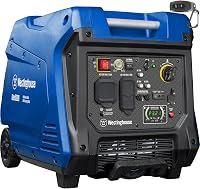
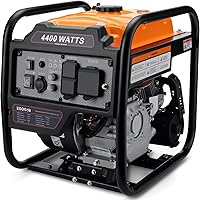
6 Best Dual Fuel Inverter Generators with Remote Start (November 2026)
The best dual fuel inverter generators with remote start include the Westinghouse 12000 Peak Watt Dual Fuel Portable for whole home backup, the Pulsar PG5000BiSRCO Dual Fuel 30A RV Ready for RV ready power, and the LIFAN 4800W Dual Fuel Inverter Generator for light remote start RV use.
On this page (11 sections)
- Best dual fuel inverter generators with remote start for home, RV and camping
- How the best dual fuel inverter generator with remote start models compare
- How we compared these dual fuel inverter generators with remote start
- What is a dual fuel inverter generator with remote start?
- How much running watts do you need for home backup or RV use?
- Which remote start range and start backups should you look for?
- Gasoline vs propane: which fuel should you choose?
- How quiet and portable do you need this generator to be?
- What outlets and parallel options should you check?
- Which dual fuel remote start generator is best for refrigerators?
- Final verdict: which dual fuel inverter generator with remote start should you buy?
The best inverter generator dual fuel remote start for most buyers is the Westinghouse 12000 Peak Watt Dual Fuel Portable, because it pairs 9,000 running watts on gasoline with remote start, clean inverter output and a transfer switch ready 50A outlet. If you need a lighter RV unit, the Pulsar and LIFAN are easier to move.
If you want three fuel choices, the Champion stands out.
Remote start changes daily use more than most small features. You can start power from inside an RV, a tent or a house without walking out in rain or cold.
Dual fuel adds choice too. Gasoline gives more watts on most models here.
Propane often stores longer and can suit seasonal backup.
Our score weighs specs, features and buyer feedback against what you are shopping for. Running watts, fuel choice, noise, weight and outlet layout matter more than peak watts alone.
Our picks at a glance
-
1
 Best for whole home backup
Westinghouse 12000 Peak Watt Dual Fuel Portable
9.4/10 our score
See it on Amazon -
2
 Best for RV ready power
Pulsar PG5000BiSRCO Dual Fuel 30A RV Ready
9.2/10 our score
See it on Amazon -
3
 Best for light remote start RV use
LIFAN 4800W Dual Fuel Inverter Generator
9.1/10 our score
See it on Amazon
- 4
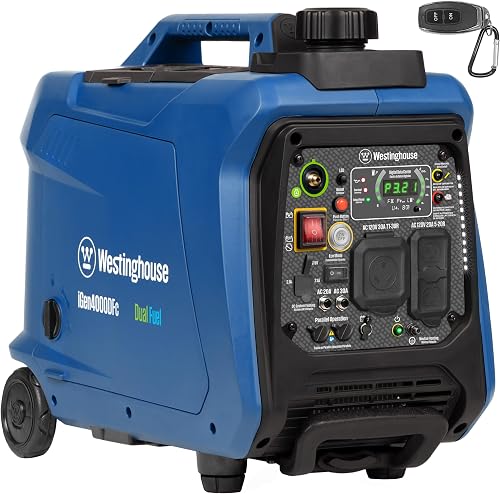 Check it
Westinghouse 4000 Peak Watt Super Quiet Dual
Best for quiet camping - 5
 Check it
Champion 8500-Watt Remote Start Tri Fuel Portable
Best for tri fuel flexibility - 6
 Best for ultra light portabilityCheck it
Best dual fuel inverter generators with remote start for home, RV and camping
The Westinghouse 12000 is the clear home backup pick. The Pulsar, LIFAN, Westinghouse 4000 and GENMAX cluster around RV and camping use, with different weights and noise levels.
The Champion sits between home and RV use, with tri fuel operation and a longer remote range.
Westinghouse 12000 Peak Watt Dual Fuel Portable: Best for whole home backup
- 12,000 peak watts and 9,000 running watts on gasoline
- Low THD under 3% for sensitive electronics
- Remote electric start with key fob
- Transfer switch ready 50A outlet
- Up to 19 hours at 25% load on 7.9 gallon tank
The largest and most powerful pick here, built for whole home backup with remote start and a 50A outlet.
Pros
- Highest running watts in this group
- Transfer switch ready outlets
- LED data center with fuel and runtime
Cons
- 187.4 pounds, so it needs wheels and space
- Large footprint for small campsites
This Westinghouse suits whole home backup more than campsite use. It delivers 12,000 peak watts and 9,000 running watts on gasoline, with 11,000 peak and 8,100 running on propane.
That gap matters if you plan to run a refrigerator, sump pump, lights and entertainment loads at once.
Remote start comes through a key fob, plus push button electric start on the unit. An LED data center shows fuel level, power output, remaining run time, voltage and lifetime hours.
That display helps you plan refills instead of guessing.
Its 50A outlet is transfer switch or interlock kit ready, which makes it a serious home backup option. It also has a 30A twist lock outlet and a GFCI duplex outlet.
Parallel capability can double output if you add a second compatible unit.
The trade off is size. At 187.4 pounds and 30.2 x 25.2 x 26.6 inches, this is a wheeled home backup machine, not a light camping pick.
Westinghouse says noise can be as low as 64 dBA, with Eco Mode helping on light loads.
Pulsar PG5000BiSRCO Dual Fuel 30A RV Ready: Best for RV ready power
- 5,000 peak watts and 4,000 rated watts on gas
- 30A RV outlet
- Remote start with control fob
- 65 dB quiet operation
- Up to 9 hours at half load on 3 gallon tank
A mid size RV ready inverter with remote start and a 30A outlet for travel trailers and home essentials.
Pros
- True 30A RV outlet
- Compact at 78 pounds
- Economy mode for fuel savings
Cons
- Less home backup power than the Westinghouse 12000
- Propane output is lower than gas output
The Pulsar suits RV owners who want a true 30A outlet without moving up to a whole home machine. It gives 5,000 peak watts and 4,000 rated watts on gas, with 4,500 peak and 3,600 rated on propane.
Pulsar says it can handle a 13,500 BTU air conditioner unit.
Remote start, electric start and recoil start give you three ways to start. A remote control fob and propane hose are included.
Economy mode lowers fuel use when you do not need full power.
Outlets include a 120V 30A RV TT-30R outlet, two 120V 20A household outlets and two USB outlets. That mix suits travel trailers, laptops, phones and household essentials during an outage.
At 78 pounds with a telescoping handle and wheel kit, it is far easier to move than the larger home backup picks. Pulsar says noise is rated at 65 dB.
A 3 gallon tank provides up to 9 hours at half load, so plan refills for overnight use.
LIFAN 4800W Dual Fuel Inverter Generator: Best for light remote start RV use
- 4,800 peak watts and 3,800 running watts on gas
- Remote key fob, electric and recoil start
- 30A RV ready
- 68 pounds with wheels and handle
- 10 hour runtime on 2.64 gallon tank
A light dual fuel inverter with three start options and RV ready outlets for camping and backup essentials.
Pros
- Lightest RV ready option here
- Three start methods
- CO-MINDER auto shutoff
Cons
- Lower running watts than larger picks
- Starter battery needs setup before first remote start
LIFAN suits RV and camping buyers who want remote start with low weight. It delivers 4,800 peak watts and 3,800 running watts on gas, with 4,300 peak and 3,400 running on propane.
That is enough for many RV essentials, but less than the Pulsar on paper.
You get three start options: remote key fob, electric start and recoil backup. LIFAN says the fob works from 50 ft.
Before first remote or electric start, you need to add oil and connect or charge the starter battery as shown in the manual.
At 68.3 pounds with wheels and a fold out handle, it is one of the easiest RV ready picks to transport. The 2.64 gallon tank gives a stated 10 hour runtime, with Eco Mode stretching fuel further on light loads.
CO-MINDER auto shutoff adds safety for family use. The trade off is output and setup.
If you need stronger home backup, the larger Westinghouse or Champion fits better. If you want light RV power with simple backup starts, this LIFAN is a strong fit.
Westinghouse 4000 Peak Watt Super Quiet Dual: Best for quiet camping
- 4,000 peak watts and 3,300 rated watts
- As low as 52 dBA noise output
- Remote start with key fob
- RV ready TT-30R outlet
- Up to 7 hours on 1.69 gallon gas tank
A quiet, compact dual fuel inverter for camping, tailgating and light home backup with remote start.
Pros
- Quietest option in this group
- Compact and portable at 62.8 pounds
- LED data center
Cons
- Smallest fuel tank here
- Not suited to whole home loads
This Westinghouse suits quiet camping and light home backup. It provides 4,000 peak watts and 3,300 rated watts with THD under 3%.
That clean output suits TVs, laptops, tablets and phones.
Remote start comes with an included key fob, plus electric and recoil start. An LED data center rotates through fuel level, power output, remaining run time, voltage and lifetime hours.
You can check status without guessing.
Noise is a key reason to choose it. Westinghouse says output can be as low as 52 dBA, the quietest claim in this group.
Economy Mode also helps with fuel use. Runtime reaches up to 7 hours on a 1.69 gallon gas tank.
Outlets include an RV ready TT-30R 30 amp outlet, a 5-20R duplex household outlet and two USB outlets. At 62.8 pounds with never flat wheels and a suitcase style handle, it is easy to carry to a campsite.
The trade off is capacity. This is not a whole home generator.
Choose it for quiet campsite power and essentials, not for central air conditioning or large home loads.
Champion 8500-Watt Remote Start Tri Fuel Portable: Best for tri fuel flexibility
- 8,500 starting watts and 6,500 running watts on gas
- Gasoline, propane and natural gas operation
- Remote start from up to 80 ft
- 13 hour runtime at 25% load
- 64 dB(A) operating noise
A tri fuel inverter with remote start and StartLINK connection for home backup and RV use.
Pros
- Three fuel choices
- Longest remote range here
- StartLINK for transfer switch use
Cons
- 151 pounds, heavier than mid size picks
- Running watts drop on propane and natural gas
Champion suits buyers who want fuel choice above all. It runs on gasoline, propane or natural gas, with hoses included for natural gas at 25 ft and propane at 6.6 ft.
That flexibility helps if you already have a natural gas line or propane tanks at home.
On gasoline, it delivers 8,500 starting watts and 6,500 running watts for up to 13 hours at 25% load. On propane, running watts drop to 5,850.
On natural gas, they drop to 5,265. Plan your loads by fuel, not just by the headline number.
Remote start works from up to 80 ft away with the wireless key fob. Push button electric start is available at the unit.
Champion also offers StartLINK for connection to an energy storage system or automatic transfer switch, with auto start and stop and 120V AC battery charging.
At 151 pounds and 64 dB(A), it is heavier than the RV picks but lighter than the Westinghouse 12000. Outlets include household GFCI duplex outlets, an RV TT-30R outlet, a 14-50R outlet and a regulated 12V DC outlet.
That range suits home backup, RV use and events.
GENMAX Dual Fuel Generator: Best for ultra light portability
- 4,700 starting watts and 3,800 running watts
- Less than 3% THD clean power
- Electric and remote start
- 58.4 pounds with telescopic handle
- CO Alert and LED light
An ultra light dual fuel inverter with remote start for camping and home backup essentials.
Pros
- Lightest option here
- 30A RV ready outlet
- Digital display with load and fuel
Cons
- Lower output than home backup picks
- Parallel and series box sold separately
GENMAX suits buyers who put portability first. It delivers 4,700 starting watts and 3,800 running watts with clean power under 3% THD.
That suits laptops, phones, TVs and sensitive tools during camping or a home outage.
Electric start and remote start are powered by push button start with a remote key. A digital control center shows hours run, voltage output, load and fuel level.
A CO Alert system shuts the unit off when unsafe carbon monoxide is detected, and an LED floodlight helps at night.
At 58.4 pounds with a telescopic handle and wheels, it is the lightest pick here. The fully enclosed design also helps keep noise down.
A 30A RV ready outlet makes it suitable for RV campers.
The trade off is expansion and output. GENMAX says two 120V generators can combine into 240V with a dedicated series parallel box, sold separately.
A 12V outlet with USB C and A adapter can connect to an electric fuel pump, also sold separately.
Choose GENMAX for light camping and essential home backup. Choose a larger Westinghouse or Champion if you need whole home power or a transfer switch setup.
How the best dual fuel inverter generator with remote start models compare
Running watts decide what you can actually power, so compare running watts on your chosen fuel before you compare peak watts. Gasoline ratings are higher on most models here.
Propane ratings are lower, sometimes by several hundred watts.
Weight decides where you can take the generator. The GENMAX at 58.4 pounds and the Westinghouse 4000 at 62.8 pounds are easy campsite picks.
The Pulsar at 78 pounds is still manageable. The Champion at 151 pounds and Westinghouse 12000 at 187.4 pounds need wheels, space and a plan.
Noise matters at campgrounds and in neighborhoods. The Westinghouse 4000 claims as low as 52 dBA.
The Westinghouse 12000 claims as low as 64 dBA. The Champion operates at 64 dB(A).
The Pulsar claims 65 dB. Lower noise helps most when you run light loads in Eco or Economy Mode.
| Product | Best for | Peak Power | Running Power | Noise | Our score |
|---|---|---|---|---|---|
| Westinghouse 12000 Peak Watt Dual Fuel Portable | whole home backup | 12,000 watts gasoline | 9,000 watts gasoline | As low as 64 dBA | 9.4 |
| Pulsar PG5000BiSRCO Dual Fuel 30A RV Ready | RV ready power | 5,000 watts | 4,000 watts | 9.2 | |
| LIFAN 4800W Dual Fuel Inverter Generator | light remote start RV use | 4,800 watts | 3,800 watts gas | 9.1 | |
| Westinghouse 4000 Peak Watt Super Quiet Dual | quiet camping | 4,000 watts | 3,300 watts | As low as 52 dBA | 8.9 |
| Champion 8500-Watt Remote Start Tri Fuel Portable | tri fuel flexibility | 6,500 watts gasoline | 8.8 | ||
| GENMAX Dual Fuel Generator | ultra light portability | 3,800 watts | 8.5 |
How we compared these dual fuel inverter generators with remote start
We compared running watts, peak watts, fuel options, tank size, runtime, noise, weight, outlets and start methods. We also checked CO sensor or CO shutdown features, because safe outdoor use matters for homes, RVs and tents.
We looked at included items too. Some picks include a propane hose, remote fob, oil, funnel, battery charger or parallel cable.
Others sell key accessories separately. That changes first use setup and total cost, even when the headline price looks close.
We did not test these generators hands on. We researched specs and buyer patterns, then scored each model for the searcher who wants dual fuel power, inverter output and remote start in one unit.
What is a dual fuel inverter generator with remote start?
A dual fuel inverter generator runs on gasoline or propane and produces clean sine wave power for electronics. Remote start lets you start or stop the engine with a key fob instead of walking to the unit.
If you want a plain language explainer first, read What Is a Dual Fuel Inverter Generator and How Does It Work?.
Inverter generators adjust engine speed to match power demand. That helps with fuel use and noise on light loads.
It also helps protect sensitive electronics with stable output. Models here list THD under 3% where that spec is stated.
Dual fuel does not mean both fuels at once. You choose one fuel at a time.
Gasoline usually gives more watts. Propane may store longer.
Your outlet plan should match the lower propane rating if propane is your main backup fuel.
How much running watts do you need for home backup or RV use?
For home backup, start with your essential loads. A refrigerator, sump pump, lights, phones and a TV need far less than central air conditioning.
The Westinghouse 12000 gives 9,000 running watts on gasoline, which leaves room for larger appliance loads.
For RV use, a 30A outlet matters more than headline watts. The Pulsar, LIFAN, Westinghouse 4000 and GENMAX all offer RV ready outlets in this group.
That direct connection simplifies travel trailer power.
If you only need electric start without remote start, compare our best electric start portable generator guide. If you want dual fuel with electric start but no remote fob, our best inverter generator dual fuel electric start guide covers that narrower search.
Which remote start range and start backups should you look for?
Remote range matters when you park the generator away from your RV or house. The Champion offers remote start from up to 80 ft.
LIFAN states a 50 ft range for its key fob. Other models list remote start without a stated range in the data we checked.
Start backups matter too. The LIFAN, Pulsar and Westinghouse models keep electric start and recoil start options.
That gives you a path to power if a fob battery is weak or the starter battery needs charging.
Before first use, check oil, fuel selector position and starter battery setup. LIFAN warns that the starter battery must be connected or charged before remote or electric start.
Treat first setup as part of the buying decision, not an afterthought.
Gasoline vs propane: which fuel should you choose?
Choose gasoline if you need maximum watts and fast refills. The Westinghouse 12000 gives 9,000 running watts on gasoline and 8,100 on propane.
The Pulsar gives 4,000 rated watts on gas and 3,600 on propane. The LIFAN gives 3,800 running watts on gas and 3,400 on propane.
Choose propane if storage life matters more than peak output. Propane tanks do not face the same ethanol fuel issues as gasoline in long storage.
That can suit seasonal home backup and RV travel where the generator sits unused for months.
The Champion adds natural gas as a third option. That can help homeowners with a natural gas line, but running watts drop to 5,265 on natural gas.
If you plan natural gas as your main fuel, size your loads to that lower rating.
How quiet and portable do you need this generator to be?
For campgrounds, noise and weight matter as much as watts. The Westinghouse 4000 claims as low as 52 dBA and weighs 62.8 pounds.
The GENMAX weighs 58.4 pounds with a telescopic handle. The LIFAN weighs 68.3 pounds with wheels and a fold out handle.
For home backup, weight matters less if the unit stays in a garage or shed. The Westinghouse 12000 weighs 187.4 pounds and sits at 30.2 x 25.2 x 26.6 inches.
The Champion weighs 151 pounds. Both need a clear path and a level outdoor spot.
Always run generators outdoors, away from doors and windows. CO sensors and CO shutdown features help, but they do not replace outdoor placement and ventilation.
Keep exhaust pointed away from people and pets.
What outlets and parallel options should you check?
Outlets decide how easily you connect your loads. RV buyers should look for a TT-30R 30A outlet.
Home backup buyers should look for a 14-50R 50A outlet or transfer switch ready outlets. USB outlets help with phones and tablets, but they do not replace AC outlets for larger loads.
The Westinghouse 12000 has a 50A outlet and a 30A twist lock outlet, both transfer switch or interlock kit ready. The Champion has household GFCI outlets, an RV outlet, a 14-50R outlet and a 12V DC outlet.
The Pulsar has a 30A RV outlet, two household outlets and two USB outlets.
Parallel capability can raise output if you add a second compatible generator. The Westinghouse 12000, Pulsar, LIFAN and Westinghouse 4000 list parallel capability in this group.
GENMAX lists parallel and series connection with a box sold separately. Check compatibility before you buy a second unit.
If your main need is inverter power with electric start in general, our best inverter generator with electric start guide helps you compare that wider field. If you only use gasoline, our best gas generator with electric start guide covers gas only models.
Which dual fuel remote start generator is best for refrigerators?
For refrigerator backup during an outage, choose running watts and runtime first. A refrigerator cycles on and off, so you need enough watts for startup loads and enough fuel for long outages.
The Westinghouse 12000 and Champion have the strongest home backup ratings here.
If you want a focused shortlist for fridge loads, read our Best Remote Start Dual Fuel Generator For Refrigerators guide. That guide helps you match generator size to fridge, freezer and sump pump loads.
For any fridge backup plan, keep food safety in mind. Open the fridge as little as possible during an outage.
Use a thermometer if you need to know whether food is still at a safe temperature.
Final verdict: which dual fuel inverter generator with remote start should you buy?
Pick the Westinghouse 12000 Peak Watt Dual Fuel Portable if you want whole home backup with remote start and transfer switch ready outlets. Pick the Pulsar PG5000BiSRCO if you want 30A RV power at a manageable weight.
Pick the LIFAN 4800W if you want light RV ready power with three start options.
Pick the Westinghouse 4000 Peak Watt Super Quiet Dual for the quietest camping option here. Pick the Champion 8500-Watt if tri fuel operation and 80 ft remote start matter most.
Pick the GENMAX Dual Fuel Generator if you want the lightest unit for camping and essential home backup.
For the best inverter generator dual fuel remote start choice, match running watts on your chosen fuel to your must have loads. Then check weight, noise and outlets.
That order will help you avoid a generator that looks strong on paper but does not fit your home, RV or campsite.
Our top 3 picks at a glance
-
1
Best for whole home backup
Westinghouse 12000 Peak Watt Dual Fuel Portable
9.4/10 our score
See it on Amazon -
2
Best for RV ready power
Pulsar PG5000BiSRCO Dual Fuel 30A RV Ready
9.2/10 our score
See it on Amazon -
3
Best for light remote start RV use
LIFAN 4800W Dual Fuel Inverter Generator
9.1/10 our score
See it on Amazon
Frequently asked questions
What is the best inverter generator dual fuel remote start?
For whole home backup, the Westinghouse 12000 Peak Watt Dual Fuel Portable leads this group with 9,000 running watts on gasoline, remote start and transfer switch ready outlets. For RV use, the Pulsar PG5000BiSRCO and LIFAN 4800W offer lighter 30A RV ready power with remote start.
Is remote start worth it on a dual fuel inverter generator?
Remote start is worth it if you camp in an RV, back up a home at night, or need to start power in bad weather. It lets you start or stop from inside a tent or RV.
Most models here also keep electric start and recoil start as backups, so a weak fob battery does not leave you without power.
Can a dual fuel inverter generator run sensitive electronics?
Yes, inverter models here produce clean sine wave power with THD under 3% on several picks. That suits laptops, phones, TVs and other electronics that need stable power.
Check each model's outlets and running watts before you connect larger appliances or an RV air conditioner.
Gasoline or propane for a dual fuel inverter generator?
Gasoline usually gives higher peak and running watts. Propane stores longer and can be cleaner for storage, but output often drops.
Compare both fuel ratings for the model you choose, then pick the fuel you can store safely and refill easily where you use the generator most.