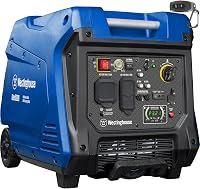
7 Best Dual Fuel Inverter Generators with Electric Start (November 2026)
The best dual fuel inverter generators with electric start include the Westinghouse 12500 Watt Dual Fuel Home Backup for high-output home backup, the WEN Quiet and Lightweight 4800-Watt Dual Fuel for quiet RV power, and the Westinghouse 12000 Peak Watt Dual Fuel Portable for quiet whole-home power.
On this page (7 sections)
- The best dual fuel inverter generators with electric start
- How we compared dual fuel inverter generator electric start models
- How much power do you need?
- Gasoline or propane: which fuel is better?
- Inverter output and safety features
- Electric start, remote start and everyday care
- Which dual fuel inverter generator with electric start should you choose?
The best inverter generator dual fuel electric start pick for most homes is the Westinghouse iGen12000DFc, because it combines 12,000 peak watts, inverter output, remote electric start and transfer-switch-ready outlets. Choose WEN for quieter RV power, or Champion for a smaller camping-focused option.
We compared the power ratings, fuel choices, starting systems, outlet layouts, safety features and portability of these 7 generators. A dual fuel inverter generator with electric start can give you cleaner power and an easier start, but the right size depends on your loads.
If you need a wider look at this starting system, compare these best portable generators with electric start and best gas generators with electric start. For inverter-specific choices, see the best inverter generators with electric start.
Our picks at a glance
-
1
 Best for high-output home backup
Westinghouse 12500 Watt Dual Fuel Home Backup
9.7/10 our score
See it on Amazon -
2
 Best for quiet RV power
WEN Quiet and Lightweight 4800-Watt Dual Fuel
9.6/10 our score
See it on Amazon -
3
 Best for quiet whole-home power
Westinghouse 12000 Peak Watt Dual Fuel Portable
9.4/10 our score
See it on Amazon
- 4
 Check it
Champion 4500-Watt Electric Start Dual Fuel Portable
Best for quiet camping - 5
 Check it
A-iPower 7600W Gas Propane Inverter Generator
Best for flexible mid-range output - 6
 Check it
WEN 6800-Watt Dual Fuel RV-Ready Electric Start
Best for EV backup flexibility - 7
 Best for lightweight remote startingCheck it
The best dual fuel inverter generators with electric start
The best dual fuel inverter generator electric start pick depends on whether you need home-backup output, RV power, quiet camping operation or a lighter unit. The scores weigh specs, features and buyer feedback against the needs behind this search.
Westinghouse 12500 Watt Dual Fuel Home Backup: Best for high-output home backup
- 12,500 peak watts on gasoline
- Remote, electric and recoil start
- Transfer-switch-ready 30A outlet
- 50A RV-ready outlet
High output, remote start and home-backup-ready outlets make this a strong choice for major household loads.
Pros
- Highest peak output here
- Remote start key fob included
- 12V battery charger and oil included
Cons
- Open-frame design
- Heavier home-backup focus than camping focus
Westinghouse puts the highest gasoline output in this group into a home-backup-focused open-frame generator. It produces 9,500 running watts and 12,500 peak watts on gasoline, or 8,500 running watts and 11,200 peak watts on propane.
The remote start key fob, electric start and recoil start give you 3 ways to start it. The 6.6-gallon fuel tank can run for up to 12 hours, and the fuel gauge helps you track the remaining supply.
For household connections, it has 2 GFCI 120V household receptacles, a transfer-switch-ready 120V L14-30R 30A outlet and an RV-ready 120/240V 14-50R 50A outlet. Rubber covers sit over the outlets.
The 457cc 4-stroke OHV engine has a cast iron sleeve, automatic low-oil shutdown and a digital hour meter. Its VFT display shows voltage output, frequency and lifetime hours.
This is the strongest fit when high output and home connections matter more than low weight. It also includes a battery charger, engine oil, oil funnel, tool kit, key fob and user manual.
WEN Quiet and Lightweight 4800-Watt Dual Fuel: Best for quiet RV power
- 4,800 surge watts on gasoline
- Inverter output under 1.2% THD at full load
- Electric and recoil start
- CO Watchdog shutdown sensor
A compact inverter generator with electric start, RV connections, clean power and a fuel shutoff for maintenance.
Pros
- Quiet 62 dBA operation at quarter load
- RV-ready TT-30R outlet
- Built-in wheels and telescoping handle
Cons
- Less output than the larger home-backup picks
- Propane rated output is lower than gasoline
The WEN DF480iX is the best match for buyers who want a quieter dual fuel inverter generator for an RV, campsite or smaller backup load. It produces 4,800 surge watts and 4,000 rated watts on gasoline, or 4,320 surge watts and 3,600 rated watts on propane.
Its 62 dBA operation at quarter load is suited to places where generator noise matters. The inverter design produces less than 0.3% THD at no load and less than 1.2% THD at full load, according to WEN's product description.
The keyless electric start has a recoil starter as backup. A fuel shutoff lets the engine use remaining fuel from the carburetor before shutting down, which can help limit stale-fuel buildup.
The outlet panel includes 4 three-prong 120V receptacles, a TT-30R RV receptacle, a 12V DC receptacle and 2 USB ports. Built-in wheels and a telescoping pull handle support movement, while the CO Watchdog sensor can shut the generator down when dangerous carbon monoxide levels are detected.
Choose this WEN when quiet, clean power and RV connections matter more than whole-home output.
Westinghouse 12000 Peak Watt Dual Fuel Portable: Best for quiet whole-home power
- 12,000 peak watts on gasoline
- Remote electric start
- Less than 3% THD
- Parallel-ready inverter design
This enclosed inverter model pairs high output with low THD, Eco Mode and transfer-switch-ready outlets.
Pros
- Up to 19 hours at 25% load
- 50A and 30A transfer-switch-ready outlets
- Digital fuel, voltage and runtime display
Cons
- 187.4 lb weight
- Larger footprint than the smaller inverter models
The Westinghouse iGen12000DFc is the strongest quiet high-output option in this roundup. It delivers 12,000 peak watts and 9,000 running watts on gasoline, or 11,000 peak watts and 8,100 running watts on propane.
Its inverter output is rated at less than 3% THD, making it suited to sensitive electronics as well as larger household loads. Eco Mode, insulation and mufflers help reduce noise, with operation as low as 64 dBA.
The 7.9-gallon gas tank can run for up to 19 hours at 25% load. The LED data center shows fuel level, power output, remaining runtime, voltage output and lifetime hours.
For backup connections, it has a 50A 120/240V outlet and a 30A L14-30R outlet ready for a transfer switch or interlock kit. It also has a GFCI household outlet and parallel capability.
The electric start and remote key fob make starting easier. At 187.4 lb, this is a substantial machine, so plan its storage and movement before choosing it.
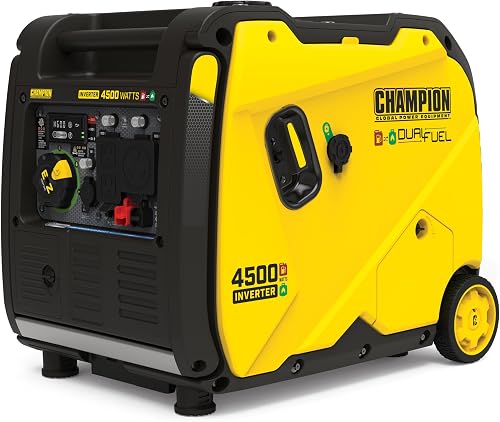
Champion 4500-Watt Electric Start Dual Fuel Portable: Best for quiet camping
- 4,500 starting watts
- Electric start with EZ Start Dial
- 61 dBA operation
- CO Shield automatic shutoff
The quiet, RV-ready Champion gives campers electric starting, clean inverter power and a long propane runtime.
Pros
- 61 dBA operation
- Up to 21 hours on propane at 25% load
- Parallel-ready design
Cons
- Optional parallel kit sold separately
- Less running power than the larger models
The Champion 4500-Watt model is the best fit for quiet camping, tailgating and RV use where you need electric starting without a large home-backup generator. It produces 4,500 starting watts and 3,500 running watts on gasoline, plus 3,150 running watts on propane.
Champion gives it a 61 dBA sound rating, an EZ Start Dial and CO Shield automatic carbon monoxide shutoff. The Intelligauge shows voltage, frequency and operating hours.
At 25% load, the 2.3-gallon gasoline tank can run for up to 14 hours. A 20-pound propane tank can provide up to 21 hours at 25% load.
The covered outlets include a 120V 30A RV TT-30R outlet, a 120V 20A household duplex outlet and a 12V regulated automotive outlet. Its inverter output is described as clean power with less than 3% THD.
The optional parallel kit can connect another Champion inverter. Pick it when portable, quiet RV power is more useful than the higher running wattage of the home-backup picks.
A-iPower 7600W Gas Propane Inverter Generator: Best for flexible mid-range output
- 7,600 starting watts on gasoline
- Electric start
- Fuel Sense technology
- RV-ready design
A-iPower offers more output than compact RV models while keeping inverter power, electric start and portable handling.
Pros
- 6,100 running watts on gasoline
- Automatic fuel switching
- Telescoping handle and flat-free wheels
Cons
- 130 lb weight
- Smaller gas tank than the Westinghouse home-backup picks
The A-iPower SUA7600iED sits between compact RV models and large home-backup generators. It produces 7,600 starting watts and 6,100 running watts on gasoline, or 6,900 starting watts and 5,500 running watts on propane.
Its 322cc 4-cycle OHV engine uses electric start, and Fuel Sense technology can switch from propane to gasoline for a combined runtime of up to 21.2 hours at 25% load. On gasoline alone, the 3.6-gallon tank provides up to 10 hours at 25% load.
The inverter output is rated at 3% THD and is intended for electronics such as laptops, televisions, phones and sensitive power tools. Sound can be as low as 62 dB.
A telescoping handle and flat-free wheels help with movement, but the 130 lb weight still calls for careful storage planning. The RV-ready design makes it useful beyond home backup.
Choose this model when mid-range power and automatic fuel switching are more important than a lightweight frame.
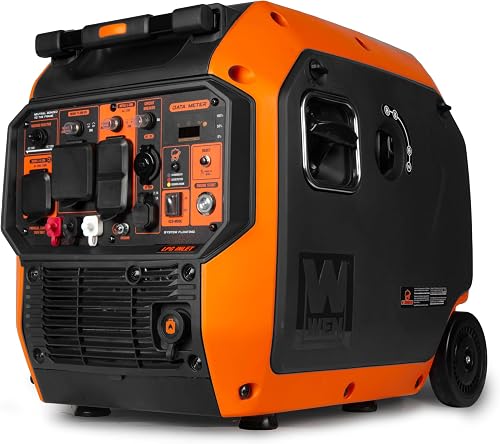
WEN 6800-Watt Dual Fuel RV-Ready Electric Start: Best for EV backup flexibility
- 6,800 surge watts on gasoline
- Bonded-neutral 240V configuration
- Electric and recoil start
- CO Watchdog shutdown sensor
The bonded-neutral 240V setup adds low-power Level 2 charging capability for battery and hybrid electric vehicles.
Pros
- L14-30R 120V/240V receptacle
- Fuel shutoff helps limit maintenance
- RV-ready TT-30R outlet
Cons
- Lower output than the large home-backup generators
- EV charging is described as low-power Level 2 charging
The WEN DF680iX is the most distinctive choice for buyers who want dual-fuel inverter output with a bonded-neutral 240V configuration. WEN describes that setup as providing low-power Level 2 charging for battery and hybrid electric vehicles.
It produces 6,800 surge watts and 5,100 rated watts on gasoline, or 6,000 surge watts and 4,500 rated watts on propane. The 224cc engine uses keyless electric start with recoil backup.
The outlet panel has an L14-30R 120V/240V receptacle, 2 three-prong 120V outlets, an RV-ready TT-30R outlet, a 12V DC outlet and 2 USB ports. It also includes a tool-free LPG quick connector and a 6-foot LPG regulator hose.
The fuel shutoff uses remaining carburetor fuel before shutdown. The CO Watchdog sensor can turn the generator off when dangerous carbon monoxide levels are detected.
At 99.2 lb, it is easier to move than the large Westinghouse models but heavier than the compact WEN. Select it when RV use, 240V flexibility and EV backup are central to your plan.
GENMAX Dual Fuel Generator: Best for lightweight remote starting
- 4,700 starting watts
- Electric and remote start
- LED light and digital display
- 120V and 240V ready
This compact GENMAX model combines remote starting, dual-fuel operation, CO detection and a 58.4 lb weight.
Pros
- Lightest listed weight
- Remote control key included
- LED floodlight
Cons
- Lowest running output here
- Series parallel box sold separately
The GENMAX GM4600iAEDC is the lightest generator in this roundup by listed weight at 58.4 lb. Its 4-stroke engine provides 4,600 starting watts and 3,800 running watts, with electric and remote starting.
The fully enclosed design, telescoping handle and wheels support camping and residential backup use. The digital control center shows hours run, voltage output, load and fuel level.
GENMAX includes a remote control key and battery charger. Its CO detection system can shut the generator off when unsafe carbon monoxide levels are detected, and the LED floodlight provides illumination for 30 seconds when the main switch is on while the generator is not running.
The 30A RV-ready outlet suits campers, while the model is also described as 120V and 240V ready. Two 120V generators can be combined into a 240V generator with a dedicated series parallel box, sold separately.
Choose this GENMAX when low weight and remote starting matter more than maximum running watts.
How we compared dual fuel inverter generator electric start models
The most useful comparison starts with rated running watts, not just the largest peak number. Running watts describe the load the generator can support continuously, while peak or starting watts help cover the brief surge from equipment motors.
Fuel choice changes the output on several models. The Westinghouse 12500 Watt model provides 9,500 running watts on gasoline and 8,500 on propane, while the WEN 4800-Watt model provides 4,000 rated watts on gasoline and 3,600 on propane.
Inverter design matters when you plan to run electronics. The WEN DF480iX describes output under 1.2% THD at full load, the Westinghouse iGen12000DFc describes less than 3% THD, and Champion describes less than 3% THD clean power.
Starting convenience is another key difference. Electric start is standard across these picks, but remote start appears on the Westinghouse models and GENMAX.
Some models also retain recoil start as a backup.
How much power do you need?
Choose the Westinghouse 12500 Watt model or the Westinghouse iGen12000DFc when you need the highest output in this group for major household loads. Both have 50A connections, while the iGen12000DFc also adds inverter output, Eco Mode and a 7.9-gallon tank.
That choice suits a home where several large items need to run together during an outage. It is less suited to frequent car trips where weight and storage space matter more than peak output.
For a middle ground, the A-iPower provides 6,100 running watts on gasoline. The WEN 6800-Watt model provides 5,100 rated watts on gasoline and adds a bonded-neutral 240V configuration.
Those mid-range figures can cover a smaller set of household loads or a larger RV load. They also sit between the compact camping models and the two largest Westinghouse units in daily use.
Compact RV and camping loads fit the Champion, GENMAX or WEN 4800-Watt models more naturally. Their lower output also comes with easier movement and, in several cases, quieter operation.
That trade-off matters at a campsite or tailgate where you may need to carry the unit a short distance and set it up often. It matters less at home if your priority is running major appliances at the same time.
Make a list of the appliances you expect to run together. Include starting surges for equipment with motors, then compare that total with the generator's running and peak ratings.
Work through the list in the order you would turn items on. A motor driven item may need extra power at start even if its running draw is modest once it is going.
Also check the outlets before you decide. A model may have enough watts on paper but still need the right connection for an RV, a transfer switch or a specific appliance.
If the total is close to the limit, consider which loads can wait. That simple step often gives a clearer answer than choosing by the largest peak number alone.
Gasoline or propane: which fuel is better?
Gasoline gives several models their highest output, while propane provides a second fuel option for planned backup. The best choice depends on the output required and the fuel you can store safely.
Propane output is lower than gasoline output on the Westinghouse, WEN and A-iPower models. Champion lists the same 4,500 starting watts on both fuels but gives gasoline 3,500 running watts and propane 3,150 running watts.
Fuel Sense technology on the A-iPower can switch from propane to gasoline for a combined runtime of up to 21.2 hours at 25% load. The WEN models use fuel shutoff to help use remaining carburetor fuel before shutdown.
Always follow the generator manual and local rules for fuel storage. Keep gasoline and propane away from ignition sources, and never operate a fuel-powered generator indoors.
Inverter output and safety features
Inverter generators are a practical choice when you want fuel-powered backup with output designed for sensitive electronics. The models here describe clean or low-THD power for devices such as laptops, phones, televisions, monitors and tablets.
Carbon monoxide protection varies by model name and feature set. WEN uses Watchdog CO Shutdown Sensors, Champion uses CO Shield, and GENMAX includes CO detection that can shut the generator down at unsafe levels.
A CO shutdown system is an added safety feature, not a substitute for outdoor operation. Place the generator outdoors and follow the required clearance and ventilation instructions in the manual.
For more fuel and starting comparisons, see the guide to the best dual fuel inverter generators with remote start. If freezer backup is your main concern, compare electric start dual fuel generators for freezers.
Electric start, remote start and everyday care
Electric start is useful when you want to avoid repeated recoil pulls. Keep the starting system maintained according to the manual, and remember that a remote key fob still depends on the generator's battery and safe operating setup.
That ease is most helpful in daily use when the generator sits ready to run. It does not remove the need to place the unit outdoors with proper clearance before you press start.
Recoil start remains a useful backup on several models. It can help if the battery is low, but it still requires the same safe placement and fuel checks before use.
Fuel shutoff can help reduce stale fuel in the carburetor. The WEN DF480iX and DF680iX specifically describe using remaining carburetor fuel before automatic shutdown.
That step mainly supports care between uses rather than changing power output. It is worth using each time you finish a run if the manual describes it for your model.
Digital displays also make routine checks easier. Depending on the model, you can see voltage, frequency, fuel level, load, runtime or lifetime hours before deciding whether the generator is ready for use.
Those readouts help you spot a low fuel level or a changing load early. They also make it easier to track hours for oil changes and other scheduled care.
Before an outage or trip, confirm the fuel connection, inspect the controls and keep the included manual available. Use transfer-switch or interlock connections only through a safe installation that matches your home's requirements.
A short check before use can save time when you actually need power. Look for a secure hose connection, the correct fuel selected and the controls set as the manual describes.
For storage, follow the manual on fuel, oil and battery care. Keeping the unit clean and dry also helps the starting system and controls stay ready for the next use.
Remote start adds convenience but not a reason to skip those checks. The generator still needs fuel, oil, ventilation and a safe working area every time.
Which dual fuel inverter generator with electric start should you choose?
Choose the Westinghouse 12500 Watt Dual Fuel Home Backup when maximum gasoline output, remote starting and home-backup-ready connections come first. Choose the Westinghouse iGen12000DFc when you want similar high output with inverter design, Eco Mode and a longer stated runtime at 25% load.
The first Westinghouse model fits buyers who place home connections at the top of the list. The iGen12000DFc fits buyers who want that high output with cleaner inverter power for sensitive electronics.
Pick the WEN 4800-Watt or Champion 4500-Watt for quieter RV and camping power. The A-iPower 7600W fits buyers who need a mid-range output, while the WEN 6800-Watt adds 240V flexibility for low-power EV charging.
Those choices reflect different daily uses rather than one clear winner for every site. A compact unit is easier to move and store, while a larger unit gives more headroom for multiple loads at once.
Choose GENMAX when a lighter unit and remote starting matter most. That option suits camping and light residential backup where handling the generator often matters as much as output.
Before buying any best inverter generator dual fuel electric start model, match its rated watts, outlets, fuel output and safe placement requirements to the equipment you plan to run.
On gasoline, several models give their higher rating, while propane gives a lower running output on many picks. Check both figures so the fuel you plan to store still covers your essential loads.
Also compare weight and size with where you will keep the generator. A model that is hard to move or store may be used less often, even if its specs look strong.
Finally, confirm that the outlet layout matches your RV, transfer switch or household needs. The right match for your loads and setup will make the generator far more useful in real use.
Our top 3 picks at a glance
-
1
Best for high-output home backup
Westinghouse 12500 Watt Dual Fuel Home Backup
9.7/10 our score
See it on Amazon -
2
Best for quiet RV power
WEN Quiet and Lightweight 4800-Watt Dual Fuel
9.6/10 our score
See it on Amazon -
3
Best for quiet whole-home power
Westinghouse 12000 Peak Watt Dual Fuel Portable
9.4/10 our score
See it on Amazon
Frequently asked questions
What is the best inverter generator dual fuel electric start model?
The Westinghouse iGen12000DFc is the strongest overall choice for high-output home backup because it offers 12,000 peak watts on gasoline, inverter output under 3% THD, dual-fuel operation, remote electric start and transfer-switch-ready outlets.
For RV use, the WEN 4800-Watt model is smaller and quieter.
Are dual fuel inverter generators better than gas-only models?
Dual-fuel inverter generators give you a choice between gasoline and propane. Gasoline can provide higher output on several models here, while propane gives you another fuel option for planned backup or camping.
The best choice depends on the output you need, fuel storage and how often you expect to change fuels.
What does electric start mean on a dual fuel generator?
Electric start turns the generator on with a button, switch or key rather than requiring every start to use a recoil cord. Some models also include recoil start as a backup.
Remote start adds another control method on selected models, but you still need to place and operate the generator safely outdoors.
Can an inverter generator power sensitive electronics?
Inverter generators are designed to produce cleaner, steadier power than many conventional portable generators. The models here describe low THD or clean power for electronics such as laptops, phones, monitors and televisions.
Use the generator according to its manual and stay within its rated output.
What size dual fuel inverter generator do I need for home backup?
Add the running watts of the appliances you need at the same time, then allow for the extra starting watts required by motor-driven equipment. The Westinghouse 12500 Watt model offers the highest gasoline peak output here.
A transfer switch or interlock setup also needs planning by a qualified professional.