9 Best Gas Powered Inverter Generators (November 2026)
The best gas powered inverter generators include the Oxseryn Power Equipment 4400 Watts Inverter Generator for long gasoline runtime, the Champion 4000-Watt Dual Fuel RV Ready Portable for gasoline and propane choice, and the PowerSmart 4000 Watt Portable Inverter Generator for quiet home backup.
On this page (6 sections)
- The best gas powered inverter generators by use
- How do you choose the right gas powered inverter generator?
- Do you need a dual-fuel inverter generator?
- Are open-frame inverter generators a good choice?
- How should you use and maintain a gas powered inverter generator?
- Which gas powered inverter generator should you buy?
The best gas powered inverter generator for most buyers is the Oxseryn Power Equipment 4400 Watts Inverter Generator, with 3,400 running watts, a 2-gallon tank and up to 14 hours of runtime at 25% load. Choose Champion for dual-fuel flexibility, PowerSmart for lower stated noise, or AIVOLT for a lighter camping generator.
Gasoline inverter generators suit RV trips, outdoor work and emergency backup when you need portable power with stable output. This guide compares the power, runtime, noise, outlets, fuel choices and carrying weight of 9 models.
If you're new to the technology, start with What Is a Dual Fuel Inverter Generator and How Does It Work?. That guide explains the difference between the engine fuel system and the inverter section.
Our picks at a glance
-
1
 Best for long gasoline runtime
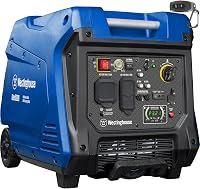
Oxseryn Power Equipment 4400 Watts Inverter Generator
9.5/10 our score
See it on Amazon -
2
 Best for gasoline and propane choice
Champion 4000-Watt Dual Fuel RV Ready Portable
9.4/10 our score
See it on Amazon -
3
 Best for quiet home backup
PowerSmart 4000 Watt Portable Inverter Generator
9.4/10 our score
See it on Amazon
- 4
 Check it
Evernexta 4000W Gas-Powered Inverter Generator
Best for simple camping backup - 5
 Check it
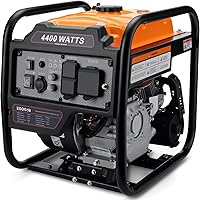
Oxseryn 4400-Watts Inverter Generator
Best for long-use RV power - 6
 Check it
AIVOLT 4200W Inverter Generator Gas Powered
Best for overnight runtime - 7
 Check it
BILT HARD 5500W Dual Fuel Inverter Generator
Best for higher starting wattage - 8
 Check it
AIVOLT 1750W Inverter Generator Portable Gas Generator
Best for quiet lightweight camping - 9
 Check it
Westinghouse 1500 Peak Watt Super Quiet
Best for basic small-load power
The best gas powered inverter generators by use
The best choice depends on the load you need to run, how long you want to go between refuels and whether propane matters. Larger models suit RV and backup work, while compact models are easier to carry for charging and small appliances.
Our score weighs stated specs, features and buyer feedback against the needs of someone shopping for a gas powered inverter generator.
| Product | Best for | Power | Runtime | Weight | Our score |
|---|---|---|---|---|---|
| Oxseryn Power Equipment 4400 Watts Inverter Generator | long gasoline runtime | 4400 peak watts, 3400 running watts | Up to 14 hours at 25% load | 56 lb | 9.5 |
| Champion 4000-Watt Dual Fuel RV Ready Portable | gasoline and propane choice | Up to 10 hours on gasoline or 25 hours on propane at 25% load | 51.8 lb | 9.4 | |
| PowerSmart 4000 Watt Portable Inverter Generator | quiet home backup | 4000 starting watts, 3200 running watts | 50.7 lb | 9.4 | |
| Evernexta 4000W Gas-Powered Inverter Generator | simple camping backup | 4000 starting watts, 3400 running watts | Up to 9 hours | 55 lb | 9.3 |
| Oxseryn 4400-Watts Inverter Generator | long-use RV power | 4400 peak watts, 3400 running watts | 14 hours at 25% load | 57 lb | 9.2 |
| AIVOLT 4200W Inverter Generator Gas Powered | overnight runtime | 4200 peak watts, 3300 running watts | Up to 16 hours at 25% load | 54.3 lb | 8.6 |
| BILT HARD 5500W Dual Fuel Inverter Generator | higher starting wattage | 5500 starting watts, 4000 running watts on gasoline | 61.7 lb | 8.4 | |
| AIVOLT 1750W Inverter Generator Portable Gas Generator | quiet lightweight camping | 1750 peak watts, 1350 running watts | Up to 7 hours at 25% load | 27.6 lb listed item weight | 8.7 |
| Westinghouse 1500 Peak Watt Super Quiet | basic small-load power | 1500 peak watts, 1000 running watts | Up to 12 hours | 30.1 lb listed item weight | 8.0 |
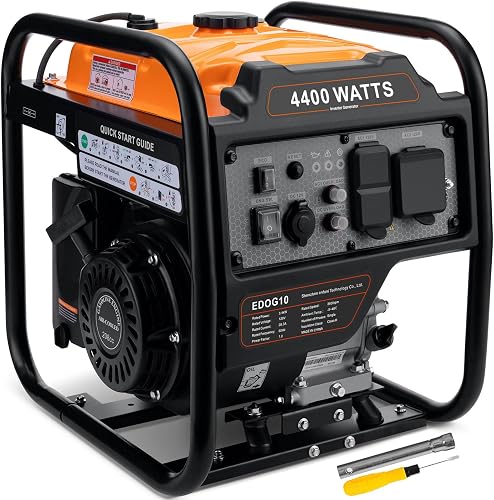
1. Oxseryn Power Equipment 4400 Watts Inverter Generator: Best for long gasoline runtime
Oxseryn Power Equipment 4400 Watts Inverter Generator: Best for long gasoline runtime
- 4400 peak watts
- 3400 running watts
- Up to 14 hours at 25% load
- 2-gallon tank with fuel gauge
- RV port and ECO mode
This open-frame gasoline inverter generator combines 3400 running watts with a 2-gallon tank and up to 14 hours of runtime at 25% load.
Pros
- Long stated runtime
- RV-ready outlet
- Fuel gauge and ECO mode
Cons
- Gasoline only
- Open-frame design
The Oxseryn Power Equipment 4400 Watts Inverter Generator is the strongest all-around pick for buyers who want a large output with a long stated runtime. It produces 4400 peak watts and 3400 running watts, which gives it useful headroom for RV equipment and selected home backup loads.
Its 2-gallon gasoline tank supports up to 14 hours at 25% load when ECO mode is used. A fuel gauge lets you check the tank without guessing, while low-oil shutdown and overload protection add useful operating safeguards.
The panel includes 2 120V AC ports, a 12V DC port and an RV port. At 56 lb, it is one of the lighter high-output options here, but its open-frame design still needs a safe outdoor location with plenty of ventilation.
Choose this model when gasoline is your preferred fuel and runtime matters more than dual-fuel flexibility. The 72 dBA rating from 23 ft also makes noise planning important for campsites and residential use.
2. Champion 4000-Watt Dual Fuel RV Ready Portable: Best for gasoline and propane choice
Champion 4000-Watt Dual Fuel RV Ready Portable: Best for gasoline and propane choice
- 4000 starting watts
- 3000 running watts on gasoline
- 2700 running watts on propane
- CO Shield
- 64 dBA at 23 ft
Champion gives you two fuel options, an RV-ready outlet and clean electricity with less than 3% THD.
Pros
- Dual-fuel operation
- CO auto shutoff system
- RV-ready outlet
Cons
- Parallel kit sold separately
- Lower running watts on propane
Champion is the best fit when you want to switch between gasoline and propane. On gasoline, it produces 4000 starting watts and 3000 running watts.
On propane, it produces 4000 starting watts and 2700 running watts.
The stated runtime reaches up to 10 hours on gasoline and up to 25 hours on propane at 25% load. The unit includes a propane hose, engine oil and oil funnel, so the two-fuel setup is practical from the start.
Its 64 dBA output from 23 ft is quieter than several open-frame choices here. The outlet panel includes a 120V 25A TT-30R, a household duplex outlet, a 12V automotive outlet and parallel outlets.
Champion also includes CO Shield, which automatically shuts the generator off when unsafe carbon monoxide levels are detected. The optional parallel kit is sold separately, so include that in your planning if you need to connect another compatible unit.
3. PowerSmart 4000 Watt Portable Inverter Generator: Best for quiet home backup
PowerSmart 4000 Watt Portable Inverter Generator: Best for quiet home backup
- 4000 starting watts
- 3200 running watts
- 59 dBA at 23 ft
- Less than 3% THD
- ECO mode
PowerSmart is a quiet gasoline option with 3200 running watts, clean power and several useful outlet types.
Pros
- Lowest stated noise among the larger models
- Clean power
- USB outlets
Cons
- Gasoline only
- Parallel kit sold separately
PowerSmart stands out for its 59 dBA rating from 23 ft, making it the quietest of the larger gas powered options in this comparison. It delivers 4000 starting watts and 3200 running watts, with less than 3% THD for sensitive electronics.
The control panel covers common connections: a 120V 20A duplex outlet, a 120V 30A L5-30R twist-lock outlet, a 12V 8A DC outlet and two 5V 2.1A USB ports. ECO mode can reduce engine speed when the load is light.
At 50.7 lb, this model is reasonably portable for its output class. Its gasoline-only design keeps the fuel choice simple, while the optional parallel kit allows two compatible generators to be connected.
Pick PowerSmart when noise and outlet variety are higher priorities than propane access. Check the total wattage of the appliances you plan to run before relying on it for home backup.
4. Evernexta 4000W Gas-Powered Inverter Generator: Best for simple camping backup
Evernexta 4000W Gas-Powered Inverter Generator: Best for simple camping backup
- 4000 starting watts
- 3400 running watts
- 2-gallon tank
- Up to 9 hours of runtime
- 30A outlet
Evernexta offers 3400 running watts, a 30A outlet and a portable open-frame design for camping and residential backup.
Pros
- 3400 running watts
- 30A outlet
- Under 3% THD
Cons
- Gasoline only
- Less stated runtime than the top Oxseryn
Evernexta gives you 4000 starting watts and 3400 running watts, matching the running output of the top Oxseryn pick. Its 2-gallon tank provides up to 9 hours of runtime, and ECO mode can lower engine speed during lighter loads.
The outlet panel includes one 30A outlet, 2 120V AC outlets and a 12V DC port. That combination supports common camping equipment and selected emergency loads, as long as the combined demand stays within the 3400 running-watt limit.
At 55 lb, it is close in weight to the other large open-frame models. The generator uses a recoil pull-start system and includes overload protection, an AC breaker and low-oil shutdown.
If electric starting matters, compare gas generators with electric start.
Choose it if you want a gasoline inverter generator with a 30A outlet and a straightforward camping or residential backup role. Its stated runtime is shorter than the Oxseryn models and AIVOLT 4200W.
5. Oxseryn 4400-Watts Inverter Generator: Best for long-use RV power
Oxseryn 4400-Watts Inverter Generator: Best for long-use RV power
- 4400 peak watts
- 3400 running watts
- 14-hour runtime at 25% load
- 2-gallon tank
- 30A RV outlet
This Oxseryn model matches the top pick's stated output and runtime while including a 30A RV outlet and accessories.
Pros
- Long stated runtime
- 30A RV outlet
- Cold-start and overload protection
Cons
- Gasoline only
- Open-frame design
This Oxseryn model produces 4400 peak watts and 3400 running watts. That output gives it room for RV essentials and selected home backup loads when you plan the total demand carefully.
Its 2-gallon tank supports a stated 14-hour runtime at 25% load. ECO mode helps by lowering engine speed when the load is light, which can stretch the time between refuels overnight.
The panel includes 2 120V AC ports, a 30A RV port and a 12V DC port. That mix suits an RV hookup plus household style plugs for chargers or small appliances.
The generator weighs 57 lb and uses an open-frame layout. It is easy to move for its class, but it still needs a dry outdoor spot with clear airflow.
Cold-start technology, overload protection and low-oil shutdown cover the main operating concerns. Accessories and a user manual are included for first setup.
The gap between this model and the higher-scoring Oxseryn is small. Compare the exact model number, dimensions and included items before ordering, especially if it must fit a tight RV compartment or storage area.
6. AIVOLT 4200W Inverter Generator Gas Powered: Best for overnight runtime
AIVOLT 4200W Inverter Generator Gas Powered: Best for overnight runtime
- 4200 peak watts
- 3300 running watts
- Up to 16 hours at 25% load
- 2.6-gallon tank
- RV adapter included
AIVOLT pairs 3300 running watts with the longest stated runtime in this group and includes a 30 Amp RV adapter.
Pros
- 16-hour stated runtime
- RV adapter included
- Parallel-ready design
Cons
- Gasoline only
- Parallel kit sold separately
The AIVOLT 4200W model has the longest stated runtime in this guide, with up to 16 hours at 25% load from its 2.6-gallon tank. That larger tank is the main reason to choose it for overnight or weekend use.
It produces 4200 peak watts and 3300 running watts. That places it close to the larger 4400-watt models for running common RV and backup loads.
Its panel includes a TT-30R RV outlet, 2 household outlets and 2 USB ports. A 30 Amp RV adapter is included, so RV connection is simpler out of the box.
An optional parallel kit can connect 2 generators for more output. Check compatibility before buying, since the kit is sold separately and must match the system.
At 54.3 lb, it is fairly portable for its output class. The unit is rated at 68 dB and includes ECO mode, low-oil shutdown and overload protection for routine use.
Choose it when overnight runtime matters most. Gas-only operation and the open-frame design are the trade-offs for that larger tank and long stated runtime.
7. BILT HARD 5500W Dual Fuel Inverter Generator: Best for higher starting wattage
BILT HARD 5500W Dual Fuel Inverter Generator: Best for higher starting wattage
- 5500 starting watts on gasoline
- 4000 running watts on gasoline
- Dual-fuel operation
- CO auto shutoff
- Digital display
BILT HARD has the highest gasoline starting and running watt figures here, along with LPG operation and a digital display.
Pros
- 4000 gasoline running watts
- Dual-fuel operation
- Digital display
Cons
- Heaviest model here
- 90-day warranty description
BILT HARD has the highest starting-watt figure here. On gasoline, it produces 5500 starting watts and 4000 running watts.
On LPG, it produces 5000 starting watts and 3600 running watts.
The 1.14-gallon tank is smaller than the tanks on several other large models, so the higher output does not automatically mean the longest runtime. Economy mode lowers engine speed under lighter loads, and a digital display cycles through volts, frequency, amps, watts, runtime hours and fuel level.
The outlet selection includes 120V 20A outlets, a 120V 30A RV TT-30R outlet, a 12V DC 8A output, USB-C and USB-A connections and parallel connectors. CO auto-shutoff, overload indicators, breakers and low-oil protection add monitoring features.
At 61.7 lb, it is the heaviest model in this roundup. Pick it for higher startup demands and dual-fuel operation, but check the load plan and storage space carefully.
8. AIVOLT 1750W Inverter Generator Portable Gas Generator: Best for quiet lightweight camping
AIVOLT 1750W Inverter Generator Portable Gas Generator: Best for quiet lightweight camping
- 1750 peak watts
- 1350 running watts
- 52 dBA
- 26.5 lb stated carry weight
- CO auto shutoff
This compact AIVOLT is suited to smaller loads, with 1350 running watts, 52 dBA operation and a carry-friendly design.
Pros
- Lightweight design
- Quiet operation
- CO detection sensor
Cons
- Lower output
- Engine oil not included
The smaller AIVOLT is the right size for buyers whose loads fit within 1350 running watts and 1750 peak watts. It suits charging, lights, small electronics and light camping loads that stay well inside those limits.
It weighs 27.6 lb as the listed item weight. The compact design makes it easy to carry between a vehicle, garage and campsite, which is a clear benefit for tent and van use.
Its 52 dBA rating is among the quietest in this group. That low noise level helps at a shared campsite or in a quiet residential area.
The generator provides less than 3% THD power for sensitive devices. A CO detection sensor with automatic shutoff, plus low-oil shutdown and overload protection, adds useful peace of mind outdoors.
The 0.66-gallon gasoline tank supports up to 7 hours at 25% load with ECO mode. ECO mode lowers engine speed under light loads, helping to save fuel and reduce noise.
Included items are an oil funnel, screwdriver, spark plug wrench, quick-start guide and manual. Engine oil is not included, so add it before the first start.
This is a better camping and charging choice than a high-demand home backup choice. Check every device's running and starting wattage before connecting it, since motor loads can use much of the peak capacity.
9. Westinghouse 1500 Peak Watt Super Quiet: Best for basic small-load power
Westinghouse 1500 Peak Watt Super Quiet: Best for basic small-load power
- 1500 peak watts
- 1000 running watts
- 52 dBA
- Up to 12 hours of runtime
- Two USB outlets
Westinghouse is the compact choice for basic residential loads, charging and small electronics that fit within 1000 running watts.
Pros
- Quiet operation
- Long stated runtime
- USB outlets
Cons
- Lowest output here
- Parallel cord required for pairing
Westinghouse is the most compact-output choice here, with 1500 peak watts and 1000 running watts. That makes it suitable for charging, lights, small electronics and other loads that stay within its rated capacity.
It runs as low as 52 dBA. That quiet rating makes it a good fit for campsites and neighborhoods where noise is a concern.
It can provide up to 12 hours from a 0.79-gallon gasoline tank. Economy mode helps by using only the power needed, so light loads can run for longer periods.
Two 120V 20A outlets and 2 USB outlets give you simple options for household and personal devices. That layout works well for phones, laptops and small appliances, as long as the total stays under the running limit.
The generator weighs 30.1 lb as the listed item weight. It includes engine oil and a funnel, an owner's manual, a quick-start guide and a screwdriver for setup.
The CO sensor, low-oil shutdown and overload protection address common safety concerns. They add protection, but the unit still needs outdoor use away from enclosed spaces.
Choose Westinghouse when small size and low noise matter more than RV or high-load capacity. Its 1000 running watts leave less room for motor startup than the larger picks, so add up your loads with care.
How do you choose the right gas powered inverter generator?
Choose output by adding the running watts of the devices you plan to use, then leave room for startup surges. A refrigerator, pump, air conditioner or power tool may need more power briefly when its motor starts.
For higher loads, the 3400-running-watt Oxseryn and Evernexta models, the 3300-running-watt AIVOLT 4200W and the 4000-running-watt BILT HARD give more room than the 1000- or 1350-running-watt compact models.
Runtime depends on tank size, load and ECO mode. The stated runtimes in this guide are measured at specific loads, so a generator running closer to its limit will generally use fuel faster than the headline figure suggests.
Noise matters at campsites and near homes. The smallest AIVOLT and Westinghouse models state 52 dBA, PowerSmart states 59 dBA, Champion states 64 dBA, and the larger open-frame choices state higher figures.
Do you need a dual-fuel inverter generator?
You need a dual-fuel generator if having gasoline and propane as fuel options is worth the added flexibility. Champion and BILT HARD are the dual-fuel choices in this roundup.
Dual fuel matters most when fuel access is uncertain. Gasoline may be easy to find in one place and propane easier to store at home, so having both can keep your plans moving.
The trade-off is that output and runtime can change by fuel. Champion, for example, is rated at 3000 running watts on gasoline and 2700 running watts on propane.
BILT HARD shows the same pattern in reverse. It is rated at 4000 running watts on gasoline and 3600 running watts on LPG, with a higher starting figure on gasoline.
That means you should compare running watts on each fuel, not only the maximum starting-watt number. A model that looks strongest on one fuel may be less strong on the other.
Propane can be useful when you want another fuel option for planned backup. It can also help when you prefer to store fuel in a sealed tank for longer periods.
Gasoline may offer different output and runtime figures depending on the model. In this guide, the top dual-fuel running figure on gasoline comes from BILT HARD, while Champion gives a longer stated propane runtime.
Fuel plumbing and connection are part of the decision. Champion includes a propane hose, while BILT HARD is built around gasoline and LPG operation with its own outlet and display setup.
For RV use, check whether the RV outlet matches your rig before you focus on fuel choice. An RV-ready outlet matters more day to day than a fuel option you rarely use.
For home backup, think about which fuel you can store safely and legally. The best choice is the one you can actually use during an outage, not the one with the best headline number.
Setup care also differs by fuel. Follow the manual for switching fuels, checking connections and storing each fuel type away from ignition sources.
Read What Is a Dual Fuel Inverter Generator Used For? for common home, RV and outdoor uses. For outage planning, see Best Dual Fuel Inverter Generator For Power Outages.
If you only use gasoline and you value simple setup, a gasoline-only model may suit you better. Dual fuel adds choice, but it only helps if you will use both fuels in real life.
Are open-frame inverter generators a good choice?
Open-frame inverter generators can be a good choice when output, airflow and outdoor access matter more than the smallest possible enclosure. Several of the higher-output models here use an open-frame design.
The open layout helps with cooling and service access. It also keeps the unit lighter and easier to move than some fully enclosed alternatives in the same power class.
That design suits RV sites, job sites and home backup in a yard or driveway. It is less suited to tight indoor storage or wet weather without cover.
They still need outdoor operation away from doors, windows and other openings. Keep the generator dry, follow the manual's grounding and connection instructions, and use a transfer method approved for your electrical system rather than connecting it directly to a wall outlet.
Airflow matters more than many buyers expect. Place the unit on level ground with space on all sides so exhaust and heat can move away freely.
Care is also straightforward with an open frame. Check that cords, outlets and the frame are free of damage before each use, and keep the area clear of fuel containers and loose items.
Noise planning matters too, since higher-output open-frame models often state higher dBA figures. At a campsite, that can affect where you pitch and how far you place the generator.
Compare these models with our guide to best open frame inverter generator options if you want more open-frame choices. If portability is your main concern, our best portable generator inverter guide focuses on easier-to-carry models.
Choose open frame when you want strong output, simple access and outdoor use. Choose a compact enclosed style when space, rain protection or lower noise matters more.
How should you use and maintain a gas powered inverter generator?
Use a level outdoor location with clear airflow, add the required oil before the first start and connect only loads that fit the generator's running and peak watt limits. Let the unit cool before refueling and keep gasoline in an approved container away from ignition sources.
Start by reading the manual for your exact model. Oil type, fuel type, grounding steps and outlet use can differ, and the manual is the safest guide for first setup.
Place the generator outside, away from doors, windows and vents. Carbon monoxide is a serious risk, so never run it in a garage, tent or enclosed space.
Check the oil level and fuel level before starting. Low-oil shutdown helps protect the engine, but it does not replace a proper pre-start check.
Connect cords before starting when the manual advises it. Make sure the total running watts of your loads stay within the generator's limit, with room left for startup surges.
Use ECO mode when the load is light and check the oil, fuel condition, outlets and cords before an extended run. ECO mode can reduce fuel use and noise, but heavy loads may need full engine speed.
CO sensors and automatic shutoff systems add protection, but they do not make indoor operation safe. Treat them as a backup layer, not as permission to use the unit indoors.
During a long run, listen for changes in sound and watch for warning indicators. Stop the unit if you see smoke, smell strong fuel or notice damage to cords or outlets.
Let the unit cool before refueling. Hot parts and fuel vapor are a risky mix, so refuel outdoors with the engine off and away from flames.
Follow the model's manual for storage, fuel handling, maintenance intervals and parallel connections. A parallel kit must match the generator system, and a separate transfer switch or approved connection method may be needed for home circuits.
Clean the unit and store it in a dry place after use. Keep the manual with the generator so setup and care steps are easy to follow next time.
Which gas powered inverter generator should you buy?
Pick the Oxseryn Power Equipment 4400 Watts if you want the best balance of output, weight and stated gasoline runtime. It gives you 3400 running watts, a 2-gallon tank and up to 14 hours at 25% load.
Choose Champion if propane flexibility matters. That dual-fuel choice can help when one fuel is harder to find or store, though running watts drop on propane.
Choose PowerSmart if lower noise is the priority. Its 59 dBA rating from 23 ft is the lowest among the larger models here, and it offers clean power for sensitive electronics.
Choose the AIVOLT 1750W if your loads are small and portability matters most. At 27.6 lb with 1350 running watts, it fits charging and light camping loads better than high-demand backup.
The AIVOLT 4200W is the runtime specialist, with up to 16 hours at 25% load from a 2.6-gallon tank. It is a strong pick when you want fewer refueling stops overnight.
BILT HARD is the higher-starting-watt dual-fuel option. It offers 5500 starting watts and 4000 running watts on gasoline, but it is also the heaviest model here.
Evernexta and the second Oxseryn sit close to the top pick on output. Either can suit simple camping or RV backup if their outlets and dimensions fit your setup.
Before you choose, match the generator's running watts, outlet type, fuel system and safe operating location to the equipment you actually need to power. That simple check will point you to the right model faster than headline watt numbers alone.
Our top 3 picks at a glance
-
1
Best for long gasoline runtime
Oxseryn Power Equipment 4400 Watts Inverter Generator
9.5/10 our score
See it on Amazon -
2
Best for gasoline and propane choice
Champion 4000-Watt Dual Fuel RV Ready Portable
9.4/10 our score
See it on Amazon -
3
Best for quiet home backup
PowerSmart 4000 Watt Portable Inverter Generator
9.4/10 our score
See it on Amazon
Frequently asked questions
What is the best gas powered inverter generator for most people?
The Oxseryn Power Equipment 4400 Watts Inverter Generator is the strongest general choice here because it combines 3400 running watts, a 2-gallon tank, an RV port and up to 14 hours of runtime at 25% load.
Choose Champion instead if propane access matters more than gasoline-only operation.
Are gas powered inverter generators safe for sensitive electronics?
Inverter generators are designed to produce stable power, but check the stated total harmonic distortion before connecting sensitive devices. Champion, PowerSmart, Evernexta, AIVOLT and Westinghouse models in this guide state less than 3% THD.
Never operate a fuel-powered generator indoors or in an enclosed space.
How many watts do you need for an RV?
An RV generator's wattage depends on the appliances you plan to run at the same time. A 30A RV outlet helps with RV connections, but starting loads from air conditioners and other motors still need room within the generator's peak and running watt limits.
Add the running watts first, then allow extra capacity for startup.
Is a dual-fuel generator better than a gasoline-only inverter generator?
A dual-fuel generator gives you gasoline and propane as fuel choices, which can help when one fuel is harder to find or store. Gasoline-only models may offer a simpler setup and strong runtime figures for their size.
Read our guide to which is better, propane or gasoline for a dual-fuel generator before choosing.