What Size Generator Do You Need for a 30-Amp RV?
A 30-amp RV usually needs a generator with at least 3,600 running watts and about 4,000 to 4,500 peak watts. Choose more capacity if you need to start a large air conditioner while using other appliances.
On this page (7 sections)
- What size generator do you need for a 30 amp RV?
- How many watts does a 30 amp RV air conditioner need?
- Should you choose 3,600, 3,900 or 5,000 watts?
- What should you run at the same time?
- Is a quiet inverter generator better for a 30 amp RV?
- How do you choose the right 30 amp RV generator?
- Final answer: what size generator do you need for a 30 amp RV?
A 30 amp RV usually needs at least 3,600 running watts and about 4,000 to 4,500 peak watts. That range gives most owners a starting point without buying far more capacity than the RV can use.
Choose a larger generator if you want more room for air conditioner startup, a microwave, a refrigerator, battery charging and other appliances at the same time.
The 30 amp rating describes the RV's electrical service, not a promise that every appliance can run together without limits.
Running watts are the output a generator can maintain during normal use. Peak watts are the short burst available when a motor starts.
Air conditioners, refrigerators and other motor-driven equipment can draw extra power for a few seconds during startup. That brief surge is why peak capacity matters even when the steady load looks modest.
In practical terms, the RV will only draw the power its appliances ask for. A larger generator does not force the RV to use more power.
What the extra capacity does is give you more headroom when several loads overlap. That headroom can make daily use feel easier, especially when the air conditioner is already running and you want to add another appliance.
The trade-off is usually size, weight and cost, so more capacity is not always better for every trip.
For a basic setup, a generator near the practical minimum can work if you manage loads one at a time. For a setup where you want to run more at once, stepping up in running watts gives you more breathing room.
Your air conditioner is often the deciding factor. Check its label or manual for running and starting guidance before you decide.
Also think about how you camp. Park stays with hookups nearby call for different planning than dry camping or long travel days.
If you run the converter, refrigerator, lights and electronics together, those background loads add up before you add anything large. Leaving some operating room means the generator is not working at its limit through the afternoon.
That margin can also help as equipment ages, temperatures rise or loads change during a trip. It is worth deciding which appliances you truly expect to use together, rather than sizing for every appliance at once.
If you are still comparing RV service types, our guide to what size generator you need for an RV explains how 30 amp and 50 amp setups differ. Use that comparison if you are unsure whether your RV is 30 amp or 50 amp, or if you are planning a future upgrade.
Confirm your connection type before you buy so the generator outlet and cord match the RV without extra adapters.
What size generator do you need for a 30 amp RV?
For most 30 amp RVs, 3,600 running watts is a practical minimum, while 4,000 to 5,000 peak watts gives you more starting capacity.
The best size depends on your air conditioner, cooking habits and which appliances you plan to use together.
A 30 amp, 120 volt RV service has a theoretical limit of about 3,600 watts. That figure comes from multiplying 30 amps by 120 volts.
In real use, you should leave some operating room instead of keeping the generator at its limit. Running close to the limit leaves little room for a motor to start or for another load to come online.
A generator's running watts describe the power it can maintain. Peak watts describe the short burst available when equipment starts.
Think of running watts as your everyday budget and peak watts as a brief reserve for starting. If the everyday budget is already spent, the reserve may not be enough to start a large appliance cleanly.
Planning the order of loads often matters as much as the headline numbers. Start with the major load first, let it settle, then add smaller loads step by step.
This approach suits owners who are comfortable managing appliances and do not need everything on at once. It can also suit weekend trips where the air conditioner, refrigerator and a few small devices are the main demands.
A larger margin suits owners who want less juggling between the microwave, coffee maker, water heater and air conditioner. It can also help when battery charging adds a steady load while other appliances cycle on and off.
The outlet matters as much as the wattage. A TT-30R outlet is designed for a 30 amp RV connection, while a household outlet may need a separate cord or adapter.
Check the generator's outlets before you travel so you are not looking for missing cords on arrival.
Weight and dimensions also shape the choice. A larger generator may be harder to lift, store and move around camp, and wheels, handles and compact dimensions can make a difference when you load the RV.
Fuel type, run time, noise and power quality matter too. Longer run time can mean fewer refuels but more fuel to carry, while those preferences may point you toward an inverter model rather than a larger open-frame model.
Set up the generator outdoors, away from doors, windows and vents, and follow the manual for placement and fuel handling. Keep track of background loads like the converter and refrigerator when you judge whether a new appliance can run.
A modest margin above your normal total is usually more useful than chasing the largest number available.
| Generator output | Typical fit for a 30 amp RV |
|---|---|
| 3,000 running watts | May work for light loads, but has little room for air conditioner startup |
| 3,600 running watts | Practical minimum for many 30 amp RV setups |
| 3,900 running watts | Adds useful operating room for several everyday loads |
| 4,500 to 5,000 peak watts | Gives more startup capacity for air conditioners and motors |
| 8,500 running watts or more | More than a 30 amp RV normally needs unless you also want home backup power |
The generator's outlet matters as much as its wattage. A TT-30R outlet is designed for a 30 amp RV connection, while a household outlet may require a separate cord or adapter.
How many watts does a 30 amp RV air conditioner need?
A 30 amp RV air conditioner is often the load that determines generator size. The generator must handle the air conditioner's startup surge while keeping the refrigerator, converter and other active loads powered.
The exact requirement varies by air conditioner and RV configuration. For sizing guidance, see generator size for RV AC.
Check the air conditioner's electrical label or manual for running amps and startup guidance.
To reduce overload risk, turn off the microwave, coffee maker, electric water heater and other high-draw appliances before starting the air conditioner. Once the compressor is running, add one appliance at a time and watch the generator's output display if it has one.
A generator that runs the air conditioner by itself may still trip when the microwave or another motor starts. This is why a small capacity margin helps even when the RV's service is limited to 30 amps.
Should you choose 3,600, 3,900 or 5,000 watts?
Choose 3,600 running watts for a basic setup, 3,900 running watts for more breathing room, or about 5,000 peak watts when air conditioner startup and several normal RV loads matter.
3,600 running watts for essential RV loads
A 3,600 running watt generator can suit an RV owner who mainly needs the air conditioner, refrigerator, lights, battery converter and occasional small appliances. You will need to manage the load carefully when motor-driven equipment starts.
The Westinghouse 4650 Peak Watt Portable Generator provides 3,600 running watts and 4,650 peak watts. It has an RV-ready TT-30R 30 amp outlet, a 4 gallon fuel tank, a fuel gauge and up to 14 hours of run time per tank.
This model uses a recoil start and a 212cc 4-stroke OHV engine. Its two household duplex receptacles and L5-30R 30 amp receptacle give you other connection options, while automatic low-oil and carbon monoxide shutdown add protection features.
Choose it when your priority is a straightforward gas-powered generator with enough output for a carefully managed 30 amp RV setup. Its open-frame design and 100.6 lb weight make transport planning important.
3,900 running watts for more operating room
A 3,900 running watt generator gives a 30 amp RV more continuous capacity than the basic minimum. That extra room can make it easier to run the air conditioner while using smaller electronics or charging devices.
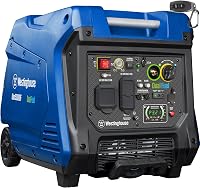
The Westinghouse 5000 Peak Watt Super Quiet Portable provides 3,900 rated watts and 5,000 peak watts. It includes an RV-ready TT-30R 30 amp outlet, two USB outlets, a household duplex outlet and remote, electric and recoil start options.
This inverter generator has a listed noise output as low as 52 dBA and up to 18 hours of run time on a 3.4 gallon gas tank. Its LED data center shows fuel level, power output, remaining run time, voltage output and lifetime hours.
The telescoping handle, wheels and handle kit support movement around a campsite. Choose it when lower listed noise, longer stated run time and cleaner inverter power matter alongside the 30 amp connection.
For more models in this output range, compare our best 30 amp generators for RVs.
5,000 peak watts and above for extra capacity
A generator with more than 5,000 peak watts can power a 30 amp RV, but the extra output is not required simply because the RV has a 30 amp service. It makes more sense when you also want a large reserve for other uses.
The Westinghouse 12500 Watt Dual Fuel Home Backup Portable produces 9,500 running watts and 12,500 peak watts on gasoline. On propane, it produces 8,500 running watts and 11,200 peak watts.
It includes a transfer switch-ready 30 amp L14-30R outlet and an RV-ready 120/240V 14-50R 50 amp outlet. It runs on gasoline or propane and includes remote electric start, a 6.6 gallon fuel tank, a fuel gauge and up to 12 hours of gasoline run time.
This open-frame generator has a 457cc 4-stroke OHV engine, automatic low-oil shutdown, GFCI outlets and a digital display for voltage, frequency and lifetime hours. Its 27.2 x 26.1 x 26.5 in dimensions make it much larger than the RV-focused options here.
Choose it if home backup is part of the plan. For an RV-only setup, its size and output may be more than you need.
If your RV uses a 50 amp service, see our guide to the best generators with 50 amp RV plugs.
What should you run at the same time?
Run the air conditioner and essential RV systems first, then add smaller loads after the compressor starts. Avoid starting several high-draw appliances at once, even when the generator's peak number looks large.
A common load plan is:
- Start the generator with major appliances turned off.
- Connect the RV through the compatible 30 amp outlet.
- Start the air conditioner and wait for it to reach normal operation.
- Add the refrigerator, converter, lights and electronics.
- Turn off the air conditioner before using the microwave or another large appliance if the generator begins to overload.
- Restart appliances one at a time after the high-draw load ends.
The RV converter may charge the batteries while the refrigerator and lights operate. Keep track of those background loads when deciding whether the microwave, coffee maker or electric water heater can run.
Never connect a portable generator directly to a building circuit without the correct transfer equipment. Keep the generator outdoors and follow its operating instructions for placement, fuel and carbon monoxide safety.
Is a quiet inverter generator better for a 30 amp RV?
A quiet inverter generator can be a better match for campsites because noise, fuel use and sensitive electronics may matter as much as raw output.
Choose one when you want a 30 amp outlet with lower listed noise and an efficiency mode.
The Westinghouse 5000 Peak Watt Super Quiet Portable is the strongest fit among these products for that use.
Its inverter design, less than 3% THD, economy mode, USB outlets and listed noise output as low as 52 dBA suit an RV owner who wants a quieter power source.
Cleaner inverter power can be helpful for sensitive electronics such as laptops, tablets and mobile devices.
The USB outlets are handy for phones and small devices without using a separate charger.
Economy mode is designed for maximum fuel efficiency by matching engine speed to the load.
That can help stretch fuel when you are running lighter loads like lights, fans or device charging.
The listed run time is up to 18 hours on a 3.4 gallon gas tank under suitable conditions.
Actual run time will vary with load, so treat that figure as an upper guide rather than a promise for every setup.
Noise output also varies with load and distance, so the listed 52 dBA figure is best used for comparison between models.
Even with those limits, lower listed noise can make a real difference at a crowded or quiet campsite.
The LED data center shows fuel level, power output, remaining run time, voltage output and lifetime hours.
That information helps you plan refuels and keep track of maintenance without guessing.
Remote start with the included key fob, plus electric and recoil start, gives you options for ignition.
Remote start can be convenient when the generator is set up a short distance from the RV door.
The telescoping handle and wheel and handle kit support moving the unit around a campsite.
At 104.7 pounds, it is still a unit to plan for when loading and unloading.
For more quiet options, compare the best quiet generators for 30 amp RVs.
If fuel flexibility matters more than low noise, review these dual fuel generators for RV use and more dual fuel RV generator options.
A dual fuel model may suit owners who want gasoline or propane options for home backup or longer storage.
An inverter model may suit owners who prioritize quieter campsite use and cleaner power for electronics.
How do you choose the right 30 amp RV generator?
Choose by running watts first, peak watts second, outlet type third and fuel or noise preferences fourth. A generator that has the right wattage but no practical RV connection may require extra equipment.
Use this checklist:
- Confirm the RV uses a 30 amp, 120 volt connection.
- Check the air conditioner's running and starting requirements.
- Add the loads you may use together.
- Leave capacity above your normal running total.
- Look for a TT-30R outlet when you want a direct RV connection.
- Compare weight, dimensions, wheels and handles before transport.
- Decide whether gasoline, propane or both fit your travel plans.
- Keep the generator outdoors and away from doors, windows and vents.
A 3,600 running watt model is often enough for essential loads with careful management. A 3,900 running watt inverter generator gives more room and may be quieter.
A much larger dual fuel model makes sense when the generator must also serve as home backup power.
Final answer: what size generator do you need for a 30 amp RV?
For most 30 amp RVs, choose 3,600 running watts with at least 4,000 to 4,500 peak watts. Pick the Westinghouse 4650 Peak Watt Portable for a basic RV-focused setup, the Westinghouse 5000 Peak Watt Super Quiet Portable for more operating room and lower listed noise, or the Westinghouse 12500 Watt Dual Fuel Home Backup Portable if you also need substantial home backup capacity.
The right 30 amp RV generator size is the smallest model that handles your air conditioner startup and normal combined loads without running at its limit.
Frequently asked questions
What size generator do I need for a 30 amp RV?
A 30 amp RV usually needs at least 3,600 running watts and about 4,000 to 4,500 peak watts. That range can cover common RV loads, but your air conditioner startup, refrigerator, microwave and other appliances may require more capacity when they run together.
Can a 3,600 watt generator run a 30 amp RV?
A 3,600 watt generator can run a 30 amp RV when the total load stays within its running output and the air conditioner starts without exceeding its peak capacity. Turn off high-draw appliances before starting the air conditioner, then add loads one at a time.
Is 5,000 watts too much for a 30 amp RV?
A 5,000 peak watt generator is not automatically too large for a 30 amp RV. The RV will draw only the power its appliances need, while the extra capacity gives more room for air conditioner startup and other loads.
Use the RV-ready 30 amp outlet when available.
Do I need a 30 amp or 50 amp generator plug?
A 30 amp RV needs a compatible TT-30 connection unless you use an appropriate adapter and stay within the RV's electrical limits. A generator with a 50 amp outlet may still work for some setups, but the outlet type alone does not increase what a 30 amp RV can safely use.