9 Best Inverter Generators for 50-Amp RVs (November 2026)
The best inverter generators for 50-amp RVs include the Westinghouse 5000 Peak Watt Super Quiet Dual for quieter 30A RV setups, the WEN 56455i Super Quiet 4500-Watt RV-Ready Portable for simple gasoline RV power, and the Champion 4500-Watt Wireless Remote Start Portable Inverter for remote starting.
On this page (7 sections)
- How we chose the best inverter generator for a 50 amp RV
- Which inverter generators have a direct 50A RV connection?
- The best inverter generators for 50 amp RVs
- How many watts should a 50 amp RV generator provide?
- Is dual fuel or tri-fuel better for RV camping?
- How should you set up an inverter generator at an RV?
- Verdict: which inverter generator is best for a 50 amp RV?
The best inverter generator for a 50 amp RV is the Westinghouse iGen8200TFc when you need a direct 50A outlet and enough output for larger electrical loads. Choose the GENMAX for the highest capacity, the Pulsar for strong dual-fuel output, or a smaller 30A model when your actual RV demand is controlled.
A 50A RV connection does not automatically mean you need the biggest generator available. Start with our guide to what size generator do i need for my rv and list the appliances you expect to run at the same time.
The key distinction in this roundup is the outlet. Some models list a direct 120/240V 14-50R or 30A/50A connection, while others list a 120V TT-30R outlet and are better suited to selected loads or a different connection setup.
Our picks at a glance
-
1
 Best for quieter 30A RV setups
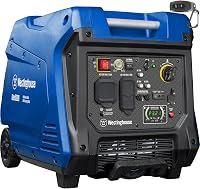
Westinghouse 5000 Peak Watt Super Quiet Dual
9.7/10 our score
See it on Amazon -
2
 Best for simple gasoline RV power
WEN 56455i Super Quiet 4500-Watt RV-Ready Portable
9.6/10 our score
See it on Amazon -
3
 Best for remote starting
Champion 4500-Watt Wireless Remote Start Portable Inverter
9.5/10 our score
See it on Amazon
- 4
 Check it
Westinghouse 8200 Peak Watt Tri-Fuel Portable Inverter
Best for direct 50A and tri-fuel use - 5
 Check it
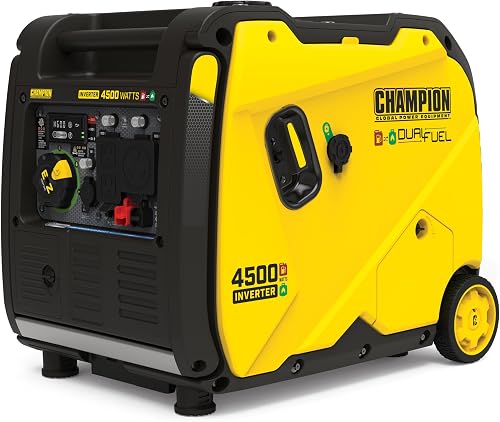
Champion 4500-Watt Electric Start Dual Fuel Portable
Best for propane flexibility - 6
 Check it
AIVOLT 8000W Dual Fuel Inverter Generator 50A
Best for high output with dual fuel - 7
 Check it
Pulsar PGD95BISCO Super Quiet Dual Fuel 9500W
Best for large RV and backup loads - 8
 Check it
GENMAX 13500W Tri-Fuel Inverter Generator(2026 Model )
Best for maximum output - 9
 Check it
BILT HARD 5500W Dual Fuel Inverter Generator
Best for lighter portable backup
How we chose the best inverter generator for a 50 amp RV
The strongest picks combine enough running watts, a suitable RV connection and practical fuel options. We compared the stated output, outlet type, fuel choices, starting method, noise information and portability details.
Running watts matter more than peak watts for daily RV use. Peak figures describe brief starting demand, while running watts show what the generator can sustain once motors and compressors are already turning.
We looked at each fuel separately because output can drop on propane or natural gas. A model that looks strong on gasoline may carry less capacity at camp if you plan to run it on propane most of the time.
Outlet type was a major filter in this roundup. A direct 14-50R 50A outlet is a different practical proposition from a TT-30R 30A outlet, even when the headline wattage looks close.
Our score weighs specs, features and buyer feedback against what you are shopping for. A high score does not mean every model fits every RV.
Your air conditioner startup demand, electric heating, microwave and water heater may change the right choice. Two rigs with the same 50A shore connection can need very different generators depending on what runs together.
We also gave credit to inverter models with clear information about sensitive electronics, CO shutdown features, remote or electric start and parallel capability. Those features matter more when the generator will serve both campsite and emergency power needs.
Portability was judged in real terms, including weight, wheels, handles and overall size. A more powerful unit is only useful if you can place it safely, store it, and move it without turning setup into a struggle.
We treated noise claims carefully and noted where a figure was tied to a specific load or distance. That context helps you compare quiet operation without assuming every claim was measured the same way.
For care and longevity, we noted features such as low oil shutdown, overload protection, fuel shut-off and displays that show runtime. Simple feedback and shutdowns make routine checks easier and reduce the chance of small issues becoming costly ones.
Which inverter generators have a direct 50A RV connection?
The Westinghouse iGen8200TFc, Pulsar PGD95BISCO and GENMAX GM13500iETC have the clearest direct 50A outlet information in this group. The AIVOLT is labeled as a 50A RV generator and provides 120V/240V output, but confirm the exact outlet layout before buying.
| Product | Best for | Power | Fuel | RV outlet | Our score |
|---|---|---|---|---|---|
| Westinghouse 5000 Peak Watt Super Quiet Dual | quieter 30A RV setups | 5,000 peak and 3,900 running watts on gasoline | Gasoline or propane | 120V TT-30R 30A | 9.7 |
| WEN 56455i Super Quiet 4500-Watt RV-Ready Portable | simple gasoline RV power | 4,500 surge and 3,500 rated watts | Gasoline | 120V NEMA TT-30R 30A | 9.6 |
| Champion 4500-Watt Wireless Remote Start Portable Inverter | remote starting | 4,500 starting and 3,500 running watts | Gasoline | 120V TT-30R 30A | 9.5 |
| Westinghouse 8200 Peak Watt Tri-Fuel Portable Inverter | direct 50A and tri-fuel use | 6,600 running and 8,200 peak watts on gasoline | Gasoline, propane or natural gas | 120/240V 14-50R 50A | 9.3 |
| Champion 4500-Watt Electric Start Dual Fuel Portable | propane flexibility | 4,500 starting and 3,500 running watts on gasoline | Gasoline or propane | 120V TT-30R 30A | 9.2 |
| AIVOLT 8000W Dual Fuel Inverter Generator 50A | high output with dual fuel | 8,000 starting and 6,100 running watts on gasoline | Gasoline or propane | 9.2 | |
| Pulsar PGD95BISCO Super Quiet Dual Fuel 9500W | large RV and backup loads | 7,600 rated watts on gasoline | Gasoline or propane | 120V/240V 30A/50A | 9.1 |
| GENMAX 13500W Tri-Fuel Inverter Generator(2026 Model ) | maximum output | 13,500 peak and 11,500 running watts on gasoline | Gasoline, propane or natural gas | 120V/240V 14-50R | 9.1 |
| BILT HARD 5500W Dual Fuel Inverter Generator | lighter portable backup | 4,000 running watts on gasoline | Gasoline or LPG | 120V TT-30R | 8.4 |
For a quieter campsite, compare this list with our guide to the best quiet generator for 50 amp rv. Our guide to the best generator with 50 amp rv plug focuses on the outlet itself, while the quieter list puts more weight on staying unobtrusive near other campers.
That split is useful because the best outlet choice is not always the quietest option at a site. You may need to balance a direct 50A connection against noise, weight, fuel and the loads you actually run together.
If you mainly need power for selected appliances, a smaller inverter with a 30A RV outlet may be the calmer fit. Check your load list first, then use those guides to narrow the shortlist by connection, sound and runtime.
The best inverter generators for 50 amp RVs
1. Westinghouse 5000 Peak Watt Super Quiet Dual: Best for quieter 30A RV setups
Westinghouse 5000 Peak Watt Super Quiet Dual: Best for quieter 30A RV setups
- 5,000 peak watts on gasoline
- 3,900 running watts on gasoline
- Gasoline and propane operation
- 52 dBA low noise claim
- RV-ready TT-30R 30A outlet
This compact dual-fuel inverter suits an RV that uses a 30A connection or a carefully managed load. Its quiet operation, remote electric start and parallel capability make it a flexible option, but the listed RV outlet is 30A rather than a direct 50A connection.
Pros
- Gasoline and propane
- Remote electric start
- CO sensor
Cons
- Listed RV outlet is 30A
- 3,900 gasoline running watts
The Westinghouse iGen5000DFc is a compact dual-fuel inverter with 5,000 peak watts and 3,900 running watts on gasoline. Propane output is 4,500 peak watts and 3,500 running watts, so fuel choice affects the available running capacity.
Its listed RV outlet is a 120V TT-30R 30A connection. That makes it a better fit for a 30A RV or a 50A RV owner who has confirmed that a controlled load setup meets the generator and RV requirements.
The generator also has remote electric start, a CO sensor, two USB ports and a digital display for fuel level, power, voltage, runtime and lifetime hours. Westinghouse gives a noise claim as low as 52 dBA, and the 105.8 lb body has wheels and an extendable handle.
A second iGen5000DFc can be used with the Westinghouse Parallel Kit, sold separately, to double the power output. That gives this smaller model a growth path, but it requires another matching generator and the separate kit.
2. WEN 56455i Super Quiet 4500-Watt RV-Ready Portable: Best for simple gasoline RV power
WEN 56455i Super Quiet 4500-Watt RV-Ready Portable: Best for simple gasoline RV power
- 4,500 surge watts
- 3,500 rated watts
- Electric and recoil start
- Fuel shut-off
- 120V TT-30R RV receptacle
The WEN is a practical gasoline inverter for modest RV loads. It has a direct 30A RV receptacle, electric start, fuel shut-off and a digital load display, but it is not a direct 50A outlet generator.
Pros
- Electric start with recoil backup
- Fuel shut-off
- Onboard wheels and handle
Cons
- Gasoline only
- Listed RV outlet is 30A
The WEN 56455i produces 4,500 surge watts and 3,500 rated watts from a 212 cc 4-stroke engine. It runs on gasoline and has a 2.2 gallon fuel tank with up to 8.5 hours of runtime at half load.
That output suits modest RV loads rather than a full 50A service run without limits. It fits best when you know which appliances will run together, especially the air conditioner at startup.
The direct RV connection is a 120V NEMA TT-30R receptacle. It also has two 120V receptacles, a 12V DC receptacle and two 5V USB ports, so it can handle smaller devices alongside RV equipment.
Electric start is backed by a recoil pull start. That backup matters if the battery is flat after storage or you prefer a simple mechanical start for routine checks.
Fuel shut-off uses the remaining fuel in the carburetor before shutdown, which can help reduce stagnant fuel in that part of the system. It is a small feature, but it can simplify care during seasonal storage.
The digital load and fuel display helps you watch output and tank level without guessing. That feedback is handy when you add appliances gradually and want to stay inside the rated capacity.
At 99.2 lb, it is easier to plan around than the largest 50A units, and onboard wheels and a carrying handle help with movement. Choose it when your load calculation points to a smaller gasoline generator.
3. Champion 4500-Watt Wireless Remote Start Portable Inverter: Best for remote starting
Champion 4500-Watt Wireless Remote Start Portable Inverter: Best for remote starting
- 4,500 starting watts
- 3,500 running watts
- Wireless start from up to 80 ft
- 61 dBA at 23 ft
- 120V TT-30R RV outlet
This Champion fits RV owners who value remote starting and straightforward gasoline operation. Its 30A RV outlet and 3,500 running watts make it better for controlled loads than for a full 50A RV electrical service.
Pros
- Remote key fob
- CO Shield auto shutoff
- Up to 14 hours at 25% load
Cons
- Gasoline only
- Listed RV outlet is 30A
The Champion 4500-Watt Wireless Remote Start model produces 4,500 starting watts and 3,500 running watts. Its wireless key fob can start or stop the generator from up to 80 ft away, which is useful when the generator is placed outside the RV.
The outlet layout includes a 120V 30A RV TT-30R connection and a 120V 20A household duplex outlet. It does not list a direct 50A RV outlet, so compare its capacity with your planned RV loads before choosing it for a 50A coach.
The 2.3 gallon gasoline tank supports up to 14 hours at 25% load. The Intelligauge monitors voltage, frequency and operating hours, while Economy Mode adjusts power use in real time.
CO Shield, low-oil shutdown and a 61 dBA noise claim at 23 ft add useful operating features. Champion also describes the model as parallel ready with an optional kit for connecting to another Champion inverter rated at 2,800 watts or higher.
4. Westinghouse 8200 Peak Watt Tri-Fuel Portable Inverter: Best for direct 50A and tri-fuel use
Westinghouse 8200 Peak Watt Tri-Fuel Portable Inverter: Best for direct 50A and tri-fuel use
- 8,200 peak and 6,600 running watts on gasoline
- Gasoline, propane and natural gas
- 120/240V 14-50R 50A outlet
- RV-ready TT-30R outlet
- Remote electric start
The iGen8200TFc is the clearest match for a 50A RV because it combines a direct 14-50R outlet with 6,600 gasoline running watts. Tri-fuel operation adds flexibility, while the larger 134.5 lb body needs more space and handling.
Pros
- Direct 50A outlet
- Three fuel choices
- Less than 3% THD
Cons
- Heavier than the smaller picks
- Natural gas output is lower than gasoline output
The Westinghouse iGen8200TFc is the strongest direct match for a larger 50A RV in this roundup. It produces 8,200 peak watts and 6,600 running watts on gasoline, with lower output on propane and natural gas.
Plan loads using the figure for the fuel you will actually use. Natural gas output is notably lower, so it suits selected backup loads more than a full set of RV appliances at once.
Its 120/240V 14-50R 50A outlet is ready for a direct 50A connection, and a separate TT-30R 30A RV outlet is also included. That gives you more connection options when planning campsite or backup use.
The tri-fuel design runs on gasoline, propane or natural gas. That flexibility helps at home, where a natural gas connection may be available, and it keeps propane as a camp option even though output falls.
Gasoline runtime reaches up to 17 hours at 25% load on a 3.9 gallon tank, while the digital display shows fuel, voltage, frequency and lifetime hours. Runtime drops as load rises, so treat the headline figure as a light load reference.
This model weighs 134.5 lb and measures 27 x 20.9 x 21.7 in. Remote electric start, a CO sensor, less than 3% THD and parallel capability add flexibility, but the larger body needs more careful storage and transport planning.
5. Champion 4500-Watt Electric Start Dual Fuel Portable: Best for propane flexibility
Champion 4500-Watt Electric Start Dual Fuel Portable: Best for propane flexibility
- 4,500 starting watts
- 3,500 running watts on gasoline
- 3,150 running watts on propane
- Gasoline and propane
- 120V TT-30R RV outlet
This dual-fuel Champion helps RV owners choose between gasoline and propane. Its 30A TT-30R outlet and modest running output mean you should confirm your actual RV load before treating it as a 50A solution.
Pros
- Gasoline and propane
- Up to 21 hours on propane at 25% load
- Electric start
Cons
- Listed RV outlet is 30A
- Lower propane running wattage
This Champion produces 4,500 starting watts and 3,500 running watts on gasoline. On propane, it produces 4,500 starting watts and 3,150 running watts, so use the lower propane figure when planning the load.
The drop on propane is worth keeping in mind if propane is your main camp fuel. It can still suit selected RV loads, but the margin for large motor loads is tighter.
The generator has a 120V 30A RV TT-30R outlet, a 120V 20A household outlet and a 12V regulated automotive outlet. It does not list a direct 50A outlet, which makes it more appropriate for a smaller connection or a carefully managed set of RV loads.
Gasoline runtime reaches up to 14 hours at 25% load. With a 20 lb propane tank, the stated runtime reaches up to 21 hours at 25% load, which can reduce refueling stops on longer stays.
The EZ Start Dial, fuel gauge, CO Shield and low-oil shutdown simplify routine operation. The Intelligauge adds voltage, frequency and operating hours, so you can track use without relying on memory.
The 99.2 lb body has never-flat tires and a fold-down handle, while the optional parallel kit can increase output by connecting compatible Champion inverters. That pairing path needs the separate kit and careful planning of total load.
6. AIVOLT 8000W Dual Fuel Inverter Generator 50A: Best for high output with dual fuel
AIVOLT 8000W Dual Fuel Inverter Generator 50A: Best for high output with dual fuel
- 8,000 starting and 6,100 running watts on gasoline
- 7,200 starting and 5,500 running watts on propane
- Gasoline and propane
- 120V/240V output
- 62 dBA from 23 ft
The AIVOLT offers a strong power range for larger RV loads while keeping dual-fuel flexibility. Its 322 cc engine, 130.7 lb weight and 62 dBA noise level place it closer to a high-output camp or backup unit than a lightweight travel generator.
Pros
- 6,100 gasoline running watts
- Automatic fuel switching
- 120V/240V output
Cons
- 130.7 lb weight
- Propane output is lower than gasoline output
The AIVOLT provides 8,000 starting watts and 6,100 running watts on gasoline. Propane output is 7,200 starting watts and 5,500 running watts, giving a 50A RV owner useful capacity while retaining a second fuel choice.
Its title identifies it as a 50A RV generator, and the specifications include 120V/240V output. Confirm the exact plug arrangement for your RV before ordering, especially if a direct 14-50R connection is required.
Automatic fuel switching changes between gas and propane without manual adjustments. Eco-Mode supports more than 10 hours of runtime at 25% load, and the 5-in-1 LCD display shows fuel use, voltage and runtime.
The unit weighs 130.7 lb and uses a 322 cc 4-stroke OHV engine. A telescopic handle, two 7 in never-flat wheels, electric start, CO Alert and a stated 62 dBA noise level from 23 ft make it a practical high-output option when weight is manageable.
7. Pulsar PGD95BISCO Super Quiet Dual Fuel 9500W: Best for large RV and backup loads
Pulsar PGD95BISCO Super Quiet Dual Fuel 9500W: Best for large RV and backup loads
- 9,500 peak and 7,600 rated watts on gasoline
- 8,550 peak and 7,200 rated watts on LPG
- Gasoline and propane
- 120V/240V 30A/50A outlet
- 62 dBA
The Pulsar is suited to a large RV that needs substantial running power and a 50A connection. Its 281 lb weight makes it a stationary or carefully planned transport choice rather than an easy hand-move unit.
Pros
- Direct 50A outlet
- 7,600 gasoline rated watts
- Remote and electric start
Cons
- Very heavy at 281 lb
- Large 6.9 gallon fuel tank
The Pulsar PGD95BISCO is built for higher demand, with 9,500 peak watts and 7,600 rated watts on gasoline. LPG output is 8,550 peak watts and 7,200 rated watts.
That gives it strong headroom for larger RV loads, including appliances with higher startup demand. Even so, you should add up running watts and allow for startup surges before assuming everything can run at once.
Its outlet information includes a 120V/240V 30A/50A home backup, RV and industrial outlet. That makes it a strong choice for a large RV that needs a direct 50A connection and more running capacity than the smaller inverter models.
The 6.9 gallon tank supports up to 9.5 hours at half load. A larger tank can help overnight or outage use, but it also means more fuel to carry, store and handle.
A digital control panel, Econ Mode, remote control, electric start, CO sentry and low-battery and low-oil shutdown cover the main operating controls. Econ Mode can help at lighter loads by reducing engine speed, which may lower noise and fuel use.
The trade-off is size. This model weighs 281 lb and measures 29.5 x 22.7 x 29.5 in, so plan a firm location and a safe way to move it before buying.
It suits buyers who can treat it as a fixed camp or backup unit rather than a generator to lift in and out often. If portability is your priority, a lighter model will be easier to live with.
8. GENMAX 13500W Tri-Fuel Inverter Generator: Best for maximum output
GENMAX 13500W Tri-Fuel Inverter Generator(2026 Model ): Best for maximum output
- 13,500 peak and 11,500 running watts on gasoline
- Gasoline, propane and natural gas
- 120V/240V 14-50R outlet
- Bluetooth and remote start
- 62 dB at 25% load
GENMAX gives a 50A RV the largest output in this group, plus tri-fuel operation and several start methods. Its 273.7 lb weight and 550 cc engine make it a high-capacity choice for buyers who can plan the placement.
Pros
- Highest output here
- Direct 14-50R outlet
- Five start options
Cons
- 273.7 lb weight
- Large 30.7 x 24 x 29.5 in body
The GENMAX GM13500iETC has the highest output here: 13,500 peak watts and 11,500 running watts on gasoline. Propane output is 12,500 peak and 10,500 running watts, while natural gas output is 10,500 peak and 9,500 running watts.
That spread makes it suitable for demanding RV and backup loads when capacity is the main concern. It still needs a load list, because even the largest portable unit here has limits when several motors start together.
A 120V/240V 14-50R outlet supports a direct 50A connection. The outlet panel also includes an L5-30R, four 5-20R GFCI outlets and 12V DC ports, so several devices can connect without relying on one outlet.
This tri-fuel generator offers push-button electric start, remote key fob start, Bluetooth app control, recoil backup start and ATS 2-wire auto-start. The range of start methods can suit different setups, from manual camp use to unattended backup.
Its 550 cc engine and 6.9 gallon tank support up to 11.2 hours at 25% load, with Eco-Mode adjusting engine speed to demand. At heavier loads, runtime will be shorter and fuel planning matters more.
At 273.7 lb and 30.7 x 24 x 29.5 in, it is a serious placement decision. Choose it when your RV and backup loads justify the extra capacity, not simply because the 50A plug is available.
The built-in LED light and digital monitor help with night use and routine checks. Those details matter when a large generator is placed outside and started in the dark during an outage.
9. BILT HARD 5500W Dual Fuel Inverter Generator: Best for lighter portable backup
BILT HARD 5500W Dual Fuel Inverter Generator: Best for lighter portable backup
- 5,500 starting and 4,000 running watts on gasoline
- 5,000 starting and 3,600 running watts on LPG
- Gasoline and LPG
- 120V TT-30R RV outlet
- Parallel connectors
The BILT HARD is the lightest option here at 61.7 lb and suits buyers who need portable dual-fuel power for selected RV loads. Its listed RV outlet is TT-30R, so it is not a direct 50A connection.
Pros
- 61.7 lb weight
- Gasoline and LPG
- Parallel connectors
Cons
- Listed RV outlet is TT-30R
- Lowest score in this roundup
The BILT HARD delivers 5,500 starting watts and 4,000 running watts on gasoline. LPG output is 5,000 starting watts and 3,600 running watts, giving you two fuel choices with lower capacity on LPG.
That makes it a reasonable fit for selected RV loads and lighter backup needs. It is not aimed at running a full 50A service without careful load control.
Its listed RV connection is a 120V 30A TT-30R outlet, along with 120V 20A outlets, 12V DC output and a USB-C/USB-A adapter. It does not list a direct 50A connection, so it is better for selected loads than for treating the RV's full 50A service as available.
The 1.14 gallon fuel tank and 61.7 lb weight make it the lightest generator in this roundup. The smaller tank means more frequent refueling, so it suits shorter runs and lighter use better than long overnight stretches.
Economy Mode adjusts engine speed under lighter loads, and the display cycles through volts, frequency, amps, watts, runtime hours and fuel level. That feedback helps you match load to output and spot when the tank is getting low.
CO auto-shutoff, overload indicators, low-oil protection and parallel connectors add useful controls. The 160 cc engine uses recoil start, so there is no electric start listed for this model.
Choose it when portability matters more than maximum output. It is the easier unit to move and store, provided your planned loads stay within its LPG or gasoline running figures.
How many watts should a 50 amp RV generator provide?
A 50A RV generator should provide enough running watts for the appliances you use together, plus extra capacity for motor startup. The connection rating alone does not tell you whether a generator can run two air conditioners, a microwave, a refrigerator and other loads at once.
Write down the running watts for each appliance and identify the largest startup demand. Then compare that total with the generator's running watts for the fuel you plan to use.
For larger loads, the Westinghouse iGen8200TFc, Pulsar and GENMAX provide the clearest high-output choices. The AIVOLT also offers a strong range, while the 4,500 and 5,000 watt models need more careful load management.
Our guide to the best 50 amp generator for rv covers the connection question separately from inverter design.
Is dual fuel or tri-fuel better for RV camping?
Dual fuel is useful when you want gasoline and propane as options. Tri-fuel adds natural gas, but the generator usually has different output figures for each fuel, so compare the exact numbers before deciding.
Propane can be convenient for storage and camp use, while gasoline often provides the higher stated running output. Natural gas can be useful for home backup when a suitable connection is available, but that does not automatically make it convenient at a campsite.
For a broader fuel comparison, see Best Dual Fuel Inverter Generator For RV Camping. You can also compare the Top 7 Watt Dual Fuel Generator For RV Use when output and fuel choice are your main filters.
How should you set up an inverter generator at an RV?
Set the generator outdoors in a location with clear airflow and away from doors, windows and other openings. Keep the exhaust path clear, follow the generator and RV instructions, and use only the connection equipment intended for that setup.
Position it on stable, level ground where it will not tip, flood or draw in its own exhaust. Give it breathing room on the intake and exhaust sides, and keep cords routed so they are not a trip hazard or a damage risk.
Turn off or disconnect RV loads before starting the generator when the instructions require it. Start with the largest expected load in mind, then add appliances gradually so you can watch the available capacity.
A gradual start helps you hear and see how the generator responds before the load is high. If the display or indicators show strain, remove a load rather than pushing on and hoping the margin is there.
Use the CO sensor or shutdown feature as an added safety measure, not as a reason to operate the generator in an enclosed area. Carbon monoxide can build up quickly, so outdoor placement and clear airflow remain essential.
Check oil and fuel before use, and follow the manual for grades, intervals and storage steps. Keep the air intake and cooling areas free of debris, and store fuel according to local rules in approved containers.
After use, let the generator cool before refueling or moving it, and follow the shutdown steps in the manual. Good care routines protect the engine, keep output steadier, and make the next setup faster and calmer.
Verdict: which inverter generator is best for a 50 amp RV?
The Westinghouse iGen8200TFc is the best inverter generator for a 50 amp RV when you want a direct 14-50R outlet, tri-fuel flexibility and 6,600 gasoline running watts.
Choose the GENMAX if you need the most output and can manage a 273.7 lb generator. Choose the Pulsar for strong dual-fuel performance with a listed 30A/50A outlet.
For smaller or carefully managed loads, the Westinghouse iGen5000DFc, WEN and Champion models are easier to handle, but their listed RV outlets are 30A. The AIVOLT and BILT HARD also need a close look at outlet layout and fuel-specific output before you treat them as full 50A solutions.
The right choice is the model whose fuel-specific running watts, outlet and placement fit your actual RV load. Check those three details before giving extra weight to remote start, noise or parallel capability.
Our top 3 picks at a glance
-
1
Best for quieter 30A RV setups
Westinghouse 5000 Peak Watt Super Quiet Dual
9.7/10 our score
See it on Amazon -
2
Best for simple gasoline RV power
WEN 56455i Super Quiet 4500-Watt RV-Ready Portable
9.6/10 our score
See it on Amazon -
3
Best for remote starting
Champion 4500-Watt Wireless Remote Start Portable Inverter
9.5/10 our score
See it on Amazon
Frequently asked questions
What is the best inverter generator for a 50 amp RV?
The Westinghouse iGen8200TFc is the best direct match because it has a 120/240V 14-50R 50A outlet and 6,600 running watts on gasoline. GENMAX offers much more output, while the Pulsar provides a 30A/50A outlet with 7,600 gasoline rated watts.
How many watts does a 50 amp RV generator need?
A 50A RV connection can support more than a smaller 30A setup, but the generator size depends on the appliances you run together. Add the running watts for air conditioning, refrigeration, cooking and other loads, then allow for startup demand before choosing a generator.
Can a 30 amp generator power a 50 amp RV?
A generator with a listed TT-30R outlet is not a direct 50A connection. It may still support selected RV loads through the correct connection equipment, but the generator's running watts and the RV's load limit still apply.
Check the RV and generator instructions before connecting them.
Is an inverter generator better for an RV?
An inverter generator can adjust engine speed with power demand and produce clean power for sensitive electronics when its specifications support that use. It may also run more quietly than a traditional open-frame generator.
Choose by outlet, running watts, fuel and the loads you actually use.
Are dual-fuel generators useful for 50 amp RVs?
Yes, dual-fuel operation lets you use gasoline or propane, which gives you more fuel choices at camp. Compare the running watts for each fuel because propane output can be lower.
The Champion 4500-Watt Electric Start model, for example, lists 3,500 gasoline running watts and 3,150 propane running watts.