9 Best Solar Generators for 30-Amp RVs (November 2026)
The best solar generators for 30-amp RVs include the Jackery Solar Generator 1000 v2 and 200W for compact RV power, the PECRON Portable Power Station F3000LFP for high-output RV loads, and the Jackery Solar Generator 300 and 40W Solar for light RV electronics.
On this page (7 sections)
- How we chose the best solar generator for a 30 amp RV
- The best 30-amp RV solar generators compared
- How much power does a 30-amp RV need?
- Is a TT-30 outlet better for an RV?
- Should you choose solar panels or alternator charging?
- How should you use and care for an RV solar generator?
- Which solar generator is best for your RV?
The best solar generator for a 30 amp RV is the BLUETTI Elite 300 with 2 x 200W solar panels. It combines a dedicated TT-30 outlet, a 12V/30A DC port, 3014.4Wh capacity and 2400W continuous output.
That combination answers the two questions most 30-amp owners ask first. The TT-30 outlet lets you connect the way your RV was built to connect, without adapters or workarounds.
The 3014.4Wh battery then provides stored energy for hours away from shore power.
Load decides the rest of this choice. A small Jackery can handle electronics and light gear, while larger BLUETTI, PECRON and AFERIY units offer more capacity for refrigeration, cooking devices and longer off-grid stays.
Think about what you run at camp before headline capacity. A fridge, lights and a router need steady power over time, which is where watt-hours matter.
A kettle, coffee maker or air conditioner needs strong output at a moment, which is where continuous watts and surge rating matter.
Weight also changes daily use. A 23.8 lb station moves easily from truck bed to picnic table, while a 58 lb or 80 lb station will likely stay in one secure place in the RV.
Neither is wrong, but they suit different travel styles.
Solar gear shapes your routine too. Kits with included panels recharge at camp, while an alternator charger kit recharges on the drive between stops.
Your parking pattern should matter as much as specs.
For a broader overview, compare these picks with our guide to the best solar generators for RVs. For panel-focused setups, see the best rv solar panels and generators.
Use this roundup to match outlet type, output and capacity to your load list. Once you know which appliances you want to run together, and for how long, the right size becomes clearer.
Our picks at a glance
-
1
 Best for compact RV power
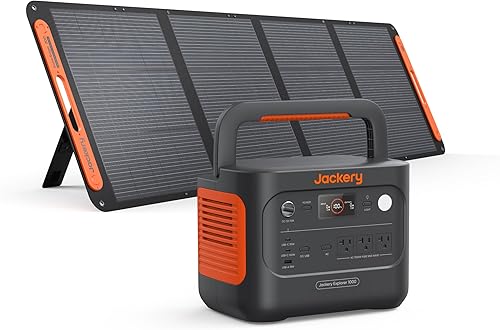
Jackery Solar Generator 1000 v2 and 200W
9.6/10 our score
See it on Amazon -
2
 Best for high-output RV loads
PECRON Portable Power Station F3000LFP
9.5/10 our score
See it on Amazon -
3
 Best for light RV electronics
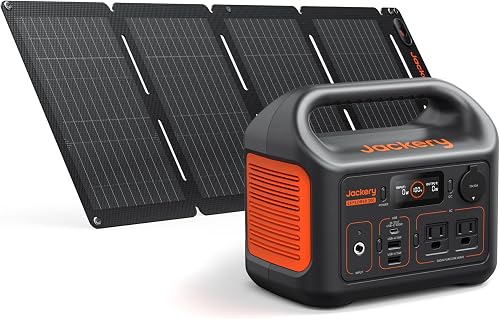
Jackery Solar Generator 300 and 40W Solar
9.3/10 our score
See it on Amazon
- 4
 Check it
BLUETTI Solar Generator Elite 300 & 2x200W
Best for most 30-amp RVs - 5
 Check it
BLUETTI Solar Generator Elite 300 with 350W
Best for a simple solar kit - 6
 Check it
BLUETTI Solar Generator Elite 300 & Charger
Best for charging while driving - 7
 Check it
GROWATT INFINITY 2000 Pro Portable Power Station
Best for expandable RV storage - 8
 Check it
AFERIY 3840Wh Portable Power Station
Best for long off-grid stays - 9
 Check it
AFERIY P280 Portable Power Station 2800W
Best for a TT-30 outlet under 3000W
How we chose the best solar generator for a 30 amp RV
The best solar generator for a 30 amp RV needs more than a large battery. We compared the listed connection types, continuous output, surge output, capacity, solar equipment and vehicle charging options.
A dedicated TT-30 outlet is useful because it matches the common 30-amp RV connection. The BLUETTI Elite 300 models and the AFERIY P280 state TT-30 support.
The GROWATT INFINITY 2000 PRO states support for NEMA TT-30 and Anderson outlets.
Capacity affects how long the battery can support your loads. The 292Wh Jackery is designed for light electronics, while the 3014.4Wh BLUETTI units, 3072Wh PECRON and 3840Wh AFERIY provide more stored energy for longer stops.
Continuous output matters when several devices run together. The PECRON and AFERIY 3840Wh models reach 3600W, while the BLUETTI Elite 300 provides 2400W and the AFERIY P280 provides 2800W.
Our score weighs specs, features and buyer feedback against what you're shopping for. We did not perform testing.
| Product | Best for | Capacity | AC output | RV connection | Our score |
|---|---|---|---|---|---|
| Jackery Solar Generator 1000 v2 and 200W | compact RV power | 1070Wh | 1500W | AC ports, DC car port | 9.6 |
| PECRON Portable Power Station F3000LFP | high-output RV loads | 3072Wh | 9.5 | ||
| Jackery Solar Generator 300 and 40W Solar | light RV electronics | 292Wh | 300W, 600W peak surge | 120W car port and AC outlets | 9.3 |
| BLUETTI Solar Generator Elite 300 & 2x200W | most 30-amp RVs | 3014.4Wh | 2400W, 4800W surge | 9.2 | |
| BLUETTI Solar Generator Elite 300 with 350W | a simple solar kit | 3014.4Wh | TT-30 outlet and 12V/30A DC port | 9.0 | |
| BLUETTI Solar Generator Elite 300 & Charger | charging while driving | 3014.4Wh | 2400W, 4800W surge | 8.7 | |
| GROWATT INFINITY 2000 Pro Portable Power Station | expandable RV storage | 2048Wh | 2400W | 8.4 | |
| AFERIY 3840Wh Portable Power Station | long off-grid stays | 3840Wh | 3600W | 8.1 | |
| AFERIY P280 Portable Power Station 2800W | a TT-30 outlet under 3000W | 2048Wh | 2800W | 7.9 |
The best 30-amp RV solar generators compared
The strongest choices are the BLUETTI Elite 300 kits because their dedicated RV connections match the question directly. The other picks make sense when your priority is lower weight, higher output, vehicle charging or expandable storage.
Jackery Solar Generator 1000 v2 and 200W: Best for compact RV power
- 1070Wh capacity
- 1500W AC output
- 200W solar panel included
- 23.8 lb power station
This compact Jackery pairs a 1070Wh power station with a 200W solar panel. Its 1500W AC output suits smaller RV loads, electronics and selected appliances.
Pros
- Lightweight 23.8 lb power station
- 200W solar panel included
- Three pure sine wave AC ports
Cons
- No dedicated TT-30 outlet stated
- Less capacity than the 3kWh options
The Jackery Solar Generator 1000 v2 and 200W is the most compact high-scoring option in this group. Its 1070Wh battery and 1500W AC output suit laptops, lights, small cooking devices and other moderate RV loads.
The power station weighs 23.8 lb and has a foldable handle. That makes it easier to move between a vehicle, campsite and storage area than the 58 lb or heavier options.
It includes a 200W solar panel, and the panel can charge the unit to 80% in about 6 hours. The power station also has 2 USB-C ports, 1 USB-A port, a DC car port and 3 pure sine wave AC ports.
This model does not state a dedicated TT-30 outlet. Choose it when your RV setup can use its AC ports safely and your planned loads stay within 1500W.
For direct RV connection, compare the BLUETTI Elite 300 picks below.
PECRON Portable Power Station F3000LFP: Best for high-output RV loads
- 3072Wh capacity
- 3600W pure sine wave output
- 13 output ports
- Solar input up to 1600W
The F3000LFP offers the highest continuous output in this roundup and a large 3072Wh battery. It suits RV owners who need substantial power and can manage a 63.3 lb unit.
Pros
- 3600W output
- 3072Wh LiFePO4 battery
- 13 ports
Cons
- 63.3 lb weight
- 120V AC input and output
The PECRON Portable Power Station F3000LFP is the highest-output choice here, with 3600W pure sine wave output and a 3072Wh LiFePO4 battery. It can power up to 13 devices at once through 6 AC outlets, 2 USB-C ports, 2 USB-A ports, a carport and 2 DC 5525 outputs.
That capacity suits RV owners who need more stored energy for several devices or longer stops. PECRON states support for refrigerators, air conditioners and power tools, but total load must stay within the unit limits.
Solar input can reach 1600W with a 25 to 120V input range. The F3000LFP also supports AC and car charging, with a stated 1800W maximum AC input.
That charging flexibility suits different trips. AC input tops up fastest before you leave, solar helps during longer campsite stays, and car charging gives another option on the road.
Check that any solar panel meets the stated voltage requirements before travel.
At 63.3 lb, this is a substantial unit for an RV. Choose it for output and capacity, then plan where it will sit before traveling.
Set it up on a flat, dry surface with room for airflow, and route cables so they are not a trip hazard. You gain room for demanding loads, but give up the easy portability of smaller stations.
Jackery Solar Generator 300 and 40W Solar: Best for light RV electronics
- 292Wh capacity
- 300W AC output
- 40W solar panel included
- 7.5 lb stated power station weight
This Jackery is a small, portable choice for phones, cameras, laptops and other loads under 300W total. Its 292Wh capacity is better for short stops than full RV backup.
Pros
- Small 300W power station
- 40W solar panel included
- Two AC outlets and a 120W car port
Cons
- Not suited to high-draw RV appliances
- 292Wh capacity is the lowest here
The Jackery Solar Generator 300 and 40W Solar is the light-load pick. Its 292Wh battery and 300W rated output suit phones, cameras, laptops and other devices that stay below 300W total.
The power station weighs 7.5 lb in the product bullets, while the specs list 12.9 lb for the item. Either way, it is far easier to carry than the large-capacity models in this roundup.
The kit includes a 40W solar panel, 2 AC outlets, a 100W USB-C PD port, 2 USB-A ports and a 120W car port. It can handle a 600W peak surge, but that does not make it a high-draw RV appliance solution.
That port mix suits personal gear rather than built-in RV systems. You can charge a laptop through USB-C, keep phones topped up through USB-A, and use an AC outlet for a small device, all at once if the total stays within limits.
Choose this model for charging personal electronics during a short stop. It is not the right fit for running a 30-amp RV's larger appliances.
It works best as a grab-and-go backup for day trips, tent camping or a brief roadside stop. For overnight RV use with a fridge or other steady loads, you will want one of the larger batteries in this roundup.
BLUETTI Solar Generator Elite 300 & 2x200W: Best for most 30-amp RVs
- 3014.4Wh LFP battery
- 2400W output
- Dedicated TT-30 outlet
- 12V/30A DC port
The Elite 300 directly addresses 30-amp RV use with a TT-30 outlet and 12V/30A DC port. Its 3014.4Wh battery and included 2 x 200W panels make it the strongest overall fit.
Pros
- Dedicated TT-30 RV outlet
- 12V/30A DC port
- 2 x 200W solar panels included
Cons
- 58 lb power station
- Panels ship separately
The BLUETTI Solar Generator Elite 300 & 2x200W Solar Panel is the best overall match for a 30-amp RV. It has a dedicated TT-30 outlet, a 12V/30A DC port and 3014.4Wh of stored energy.
Its 2400W output and 4800W surge give it room for many common RV loads, but you still need to avoid exceeding the continuous output when several appliances run together. BLUETTI identifies refrigerators, routers, lights, TVs and CPAP machines as example loads.
The kit includes 2 x 200W solar panels. BLUETTI gives a solar recharge time of about 7 to 15 hours for the 3014.4Wh battery, depending on conditions.
Two panels also give you placement options at camp. You can angle them for the best sun, move one if shade falls across part of the site, and keep the cables organized so the setup stays tidy.
The unit weighs 58 lb and measures 14.4 x 12 x 11.7 in. It is a strong fit for RV owners who want a direct connection and a large battery in one package.
Plan its position before you set off, since lifting it in and out of storage is a two-person job for many people. Once it is in place, the TT-30 connection and 12V/30A DC port make it straightforward to power RV equipment without extra adapters.
BLUETTI Solar Generator Elite 300 with 350W: Best for a simple solar kit
- 3014.4Wh capacity
- 2400W continuous output
- 4800W surge
- 350W solar panel included
This Elite 300 version has the same RV-ready connections and 3kWh-class battery as the larger panel kit, with one 350W solar panel included. It fits RVers who want a simpler solar package.
Pros
- Dedicated TT-30 outlet
- 3014.4Wh capacity
- 350W panel included
Cons
- 58 lb power station
- Panel ships separately
The BLUETTI Solar Generator Elite 300 with 350W Solar Panel keeps the same central RV advantages as the other Elite 300 kits. You get a dedicated TT-30 outlet, a 12V/30A DC port, 3014.4Wh capacity and 2400W continuous output.
The main difference is the included solar setup. This package includes one 350W solar panel rather than 2 x 200W panels, so it may suit RVers who want a simpler panel arrangement.
BLUETTI states a solar recharge range of about 8 to 17 hours for the 3014.4Wh station. The power station weighs 58 lb and supports 4800W surge output.
A single panel can be simpler to carry, unfold and store. It may also suit smaller campsites where finding space for two panels is harder, although you will have fewer placement options.
Pick this version when the TT-30 connection and 3kWh-class battery matter more than having two separate 200W panels. The panel ships separately, so plan for separate deliveries.
Keep the charging cables with the panel rather than in a separate bag, so you can set up quickly when you arrive. As with any solar setup, the recharge time will vary with sun, shade, panel angle and how much power you are using while charging.
BLUETTI Solar Generator Elite 300 & Charger: Best for charging while driving
- 3014.4Wh capacity
- 2400W AC output
- 1200W Charger 2 included
- Dedicated TT-30 outlet
This Elite 300 kit replaces the solar-panel focus with a 1200W alternator charger. It suits RV travelers who want to recharge while driving and still need a TT-30 connection at camp.
Pros
- 1200W alternator charger
- Dedicated TT-30 outlet
- 12V/30A DC output
Cons
- No solar panel included
- 58 lb power station
The BLUETTI Solar Generator Elite 300 & Charger is the right Elite 300 package for charging from a moving vehicle. It includes a 1200W Charger 2 that can recharge the station in about 3.2 hours while driving under supported conditions.
The station still has a dedicated TT-30 outlet, a 12V/30A DC output, 3014.4Wh capacity and 2400W continuous AC output. Its 4800W surge rating adds room for startup demand, but the running load must remain within 2400W.
BLUETTI states that the Charger 2 includes battery protection to help prevent over-discharge. No professional installation is required according to the product information.
This kit does not include a solar panel. Choose it when alternator charging fits your travel routine better than setting up panels at camp.
That trade-off suits drivers more than sitters. If you move most days, you can arrive with a fuller battery without relying on campsite sun.
If you stay in one place for a week, solar would refill the battery during the day instead.
Secure the station so it cannot shift while driving, and follow the Charger 2 instructions for connecting it to your vehicle. The battery protection is a useful safeguard, but it does not replace checking that your vehicle setup is suitable before you set off.
GROWATT INFINITY 2000 Pro Portable Power Station: Best for expandable RV storage
- 2048Wh capacity
- 2400W AC output
- NEMA TT-30 and Anderson outlets
- Expandable to 6144Wh
The INFINITY 2000 PRO combines 2048Wh with 2400W output and supports NEMA TT-30 and Anderson outlets for RV use. Its expansion path suits longer stays and larger energy needs.
Pros
- TT-30 support
- 2400W output
- Expandable to 6144Wh
Cons
- Solar panel not included
- Expansion batteries use a dedicated connection
The GROWATT INFINITY 2000 Pro Portable Power Station offers 2048Wh capacity, 2400W AC output and stated support for NEMA TT-30 and Anderson outlets. That gives RV owners a direct connection option without choosing a small electronics-only battery.
Its 26 lb weight is notably lower than the Elite 300 and PECRON units. The station also supports expansion to 6144Wh with 2 expansion batteries, which gives you a way to add stored energy for longer trips.
The product information describes the expansion battery as compatible only with the 2000Pro main unit and says a dedicated cable is needed to charge it through the main unit. Account for that connection requirement before planning an expanded setup.
The INFINITY 2000 PRO is a good middle choice for RVers who want TT-30 support and expansion without starting with a 3kWh station. It does not include a solar panel in the stated components.
AFERIY 3840Wh Portable Power Station: Best for long off-grid stays
- 3840Wh capacity
- 3600W continuous output
- Expandable to 11520Wh
- 15 output ports
The AFERIY 3840Wh station offers the largest battery in this roundup and expands to 11520Wh. It fits long off-grid stays when capacity matters more than easy lifting.
Pros
- Largest stated battery
- 3600W continuous output
- 15 output ports
Cons
- 80.46 lb
- No dedicated TT-30 outlet stated
The AFERIY 3840Wh Portable Power Station has the largest stated battery in this roundup. Its 3840Wh capacity, 3600W continuous output and expansion path to 11520Wh suit long off-grid stays and high energy demand.
The unit has 15 output ports, including AC outlets, USB-A, USB-C, DC5521/DC, XT60 and a 12V car socket. It also supports AC wall charging, solar charging, car charging and AC plus solar charging.
AFERIY states that its UPS transfer time is under 10ms and gives examples such as computers, security cameras, medical freezers, Wi-Fi routers and pet feeders. Actual runtime depends on the connected load and conditions.
That range of ports makes it flexible for a mixed load. You can run AC appliances and charge smaller devices at the same time, provided the combined total stays within the 3600W continuous output.
At 80.46 lb, this is the heaviest choice here. It is better for a fixed RV campsite or a carefully planned storage position than frequent lifting.
Treat it as installed equipment rather than a carry-along accessory. Choose a low, stable spot with good airflow, keep the cables clear of walkways, and plan your lifting before the trip starts.
The payoff is capacity for longer stays, but only if the weight works for your RV layout.
AFERIY P280 Portable Power Station 2800W: Best for a TT-30 outlet under 3000W
- 2048Wh LFP battery
- 2800W AC output
- NEMA TT-30 outlet
- Expandable to 10.24kWh
The P280 is a 44 lb option with a 2800W inverter, 2048Wh battery and NEMA TT-30 outlet. It suits RV owners who want direct 30-amp connection without moving a 3kWh-class unit.
Pros
- NEMA TT-30 outlet
- 44 lb weight
- Expandable to 10.24kWh
Cons
- Solar panel not included
- Less capacity than the Elite 300 kits
The AFERIY P280 Portable Power Station 2800W is the lighter direct-connection alternative to the larger Elite 300. It weighs 44 lb, provides 2800W AC output and includes a NEMA TT-30 industrial outlet for RV use.
Its 2048Wh LFP battery can expand to 10.24kWh with extra batteries. Dual PV inputs support solar charging, and AFERIY states an 1800W AC input and 1200W PV input.
The P280 also uses a pure sine wave AC input and output. Its stated UPS response is under 10ms, which may help keep connected equipment powered during an outage when the total load is suitable.
Choose it when you want a TT-30 outlet, more than 2000W of output and a 44 lb body. Its battery is smaller than the Elite 300's, and no solar panel is included.
Dual PV inputs are a practical advantage for RV owners who already own panels. You can connect more than one input without extra management hardware, which can make a campsite setup faster to arrange.
At 44 lb, it is still a two-hand lift for many people, but it is easier to move than the 58 lb and heavier options. Plan a secure storage spot, keep it dry, and allow airflow around it during use.
How much power does a 30-amp RV need?
A 30-amp RV can have several appliances connected, but the generator must support the combined running load and any startup demand. Check each appliance wattage before plugging in the RV.
Start with a list of what you want to run at the same time. Add running watts for the fridge, lights, router and any cooking device, then leave room for startup demand from motors or compressors.
A 1500W unit such as the Jackery 1000 v2 can suit electronics and selected appliances. A 2400W to 3600W unit gives more room, but still cannot run every high-draw appliance at once.
That matters on a typical evening. You might run a fridge and lights for hours, then add a kettle or coffee maker for a few minutes, and the surge rating helps with that short burst.
The 30-amp connection does not tell you runtime. Capacity in watt-hours matters for how long power lasts, while output in watts matters for what can run at one time.
A 292Wh battery suits short stops for phones and cameras. A 2048Wh battery gives a more useful evening of mixed loads, and a 3014Wh to 3840Wh battery gives more room for overnight or multi-day use.
Runtime also depends on conversion losses and how much charge you use. A smaller load stretches any battery further, so your appliance choices matter as much as headline capacity.
If unsure, start with essential loads and work up from there. It is better to choose a battery that covers fridge, lights and electronics comfortably than one sized for every appliance you own.
Is a TT-30 outlet better for an RV?
A dedicated TT-30 outlet is convenient because it matches the common 30-amp RV plug. The BLUETTI Elite 300 models and AFERIY P280 state this connection directly, while the GROWATT INFINITY 2000 PRO states NEMA TT-30 support.
A matching outlet does not remove the need to check load limits. Keep the generator on a stable surface, follow its instructions and do not exceed its continuous output.
The outlet tells you how you connect, not how much power you have. A station with a TT-30 outlet and 2400W output can power many RV loads, but cannot run a combination exceeding 2400W of running load.
Check connection and output together. The TT-30 outlet simplifies the physical connection, while continuous output sets the limit for what you can run at once.
For some owners, a 12V/30A DC port is as useful as the TT-30 outlet. It can power compatible RV equipment directly, which may reduce the need to convert battery power to AC.
Set the station on a flat, dry surface with space for airflow around vents. Keep cable runs short and clear of doors and walkways, and use only connections the manufacturer states for the unit.
If you are comparing a generator and panel package, our guide to the best portable solar panel generator explains how included panels change the setup.
Choose the TT-30 option when direct RV connection is your priority. Choose a smaller AC-only station when loads are light and portability matters more than the RV plug.
Should you choose solar panels or alternator charging?
Choose solar panels when you stay at camp long enough to place them in good sunlight. Choose alternator charging when your travel schedule gives you more time on the road than at the campsite.
The BLUETTI kit with 2 x 200W panels and the BLUETTI kit with a 350W panel include solar equipment. The Jackery kits also include panels, with 200W on the 1000 v2 and 40W on the 300.
The BLUETTI Charger 2 kit focuses on driving recharge instead. It states a 1200W alternator charger and a full recharge time of about 3.2 hours while driving under supported conditions.
Solar suits longer stays because you can refill the battery during the day while you use power in the evening. Alternator charging suits travel days because the battery fills while you drive to the next stop.
Do not assume a panel's rated wattage equals its real-world charging rate. Sun angle, shade, weather and panel placement affect how much energy reaches the power station.
A 40W panel will recharge a small station slowly, while larger panels will refill a 3kWh battery faster in good sun. Even then, expect the stated recharge times to vary with conditions at your campsite.
Think about your typical trip pattern before you decide. Frequent short stops favor driving recharge, while longer campsite stays favor panels you can leave in the sun for hours.
How should you use and care for an RV solar generator?
Start by checking the generator's output, connection type and charging limits against your RV and appliances. Keep the unit dry, allow airflow around it and follow the charging and storage instructions for the exact model.
Before a trip, charge the station and confirm that the required cables are present. The included items differ: some kits include solar panels, while the BLUETTI Charger 2 package includes an alternator charger instead.
Use the display or app when available to watch input, output and battery level. The Jackery 1000 v2 supports app charging modes, while the BLUETTI Elite 300 supports app control, scheduling and remote monitoring.
Measure your available storage space before choosing a large battery. The AFERIY 3840Wh unit weighs 80.46 lb, while the Jackery 300 is much easier to carry for short electronics-only trips.
Which solar generator is best for your RV?
The BLUETTI Elite 300 with 2 x 200W panels is the best solar generator for a 30 amp RV when direct TT-30 connection, 3kWh-class capacity and solar charging are your main goals.
Pick the AFERIY P280 if you want a 44 lb unit with a NEMA TT-30 outlet and 2800W output. Pick the BLUETTI Charger 2 kit if you plan to recharge while driving.
Choose the Jackery 300 for light electronics, the Jackery 1000 v2 for compact 1500W power, the PECRON for 3600W output, or the AFERIY 3840Wh model for the largest battery. For camping-focused comparisons, see our guide to the best solar generator for camping.
For another fuel-based option, compare these battery systems with Top 7 Watt Dual Fuel Generator For RV Use and another Top 7 Watt Dual Fuel Generator For RV Use guide.
Our top 3 picks at a glance
-
1
Best for compact RV power
Jackery Solar Generator 1000 v2 and 200W
9.6/10 our score
See it on Amazon -
2
Best for high-output RV loads
PECRON Portable Power Station F3000LFP
9.5/10 our score
See it on Amazon -
3
Best for light RV electronics
Jackery Solar Generator 300 and 40W Solar
9.3/10 our score
See it on Amazon
Frequently asked questions
What is the best solar generator for a 30 amp RV?
The BLUETTI Elite 300 with 2 x 200W solar panels is the best overall fit here. It has a dedicated TT-30 outlet, a 12V/30A DC port, 3014.4Wh capacity and 2400W output.
Choose the AFERIY P280 if you want a lighter 44 lb unit with a NEMA TT-30 outlet.
Can a solar generator run a 30 amp RV?
Yes, if the power station has a suitable TT-30 connection or a safe connection method for your RV and enough continuous output for the appliances you plan to use.
A 30-amp RV connection does not mean every appliance can run at once. Add the running watts of your intended loads and account for startup demand.
How many watt-hours does an RV solar generator need?
The right battery size depends on how long you need power and which appliances you use. A 292Wh unit can suit phones, cameras and light electronics, while 2048Wh to 3840Wh models offer more room for refrigeration, electronics and longer stops.
Actual runtime changes with load, conversion losses and charging conditions.
What should I check before connecting an RV to a solar generator?
Check the outlet type, continuous output, surge output, battery capacity and charging method. A dedicated TT-30 outlet or NEMA TT-30 outlet simplifies connection, while a 12V/30A DC port can support compatible RV equipment.
Also confirm the generator's instructions and your RV's total load before use.
Is a 30 amp RV connection the same as 30 amps of battery power?
No. The 30-amp label describes the RV connection and its electrical service, while a solar generator's usable energy depends on its battery capacity and inverter output.
For example, the BLUETTI Elite 300 combines a TT-30 outlet with 3014.4Wh capacity and 2400W output.
Those figures answer different questions.