What Size Generator Do You Need for an RV?
Most RVs need 3,000 to 4,000 running watts, while larger 50-amp RVs may need 7,000 watts or more. Size the generator around air conditioner startup and the appliances you plan to run together.
On this page (8 sections)
- What size generator do I need for my RV?
- How do you calculate the generator size for an RV?
- How many watts does an RV air conditioner need?
- Does a 30-amp or 50-amp RV need a different generator?
- Which generator sizes fit common RV needs?
- What should you check before using a generator with an RV?
- More guides on this topic
- What size generator is right for your RV?
The generator size you need for an RV depends on service type, air conditioner startup demand and the appliances you want to run together. Start around 3,000 to 4,000 running watts for many 30-amp RVs, while a 50-amp RV may need 7,000 running watts or more.
Your shore-power plug is the first clue, not the complete answer.
A 30-amp connection limits total load differently from a 50-amp connection. But the air conditioner, microwave, refrigerator and electric water heater still determine how much generator capacity you need.
Two RVs on the same service can have very different habits.
One owner may run only lights, a television and a battery charger. Another may expect the microwave and a coffee maker to work at the same time as cooling.
Separate what you own from what you plan to use together.
A generator sized for every device in the RV will usually be larger and harder to move than one sized for a realistic daily load.
Think about your normal routine before you look at models.
Morning coffee, midday cooling and evening cooking place different demands on the generator. The largest overlap is the case that should drive your choice.
Running watts are the steady power a generator can supply during normal use.
Peak watts cover the short surge when a motor starts, so both numbers matter when you compare options for an RV.
A practical reserve makes everyday use easier.
It gives the generator room for a refrigerator cycling on, a pump starting, or an air conditioner restarting after a hot afternoon.
Noise, weight and fuel time also shape the right size.
A unit that meets the load but is awkward to carry, awkward to store, or awkward to run at a campsite may not suit the way you travel.
Use the plug type as a starting point, then build your load list from the appliances you actually expect to run at once.
What size generator do I need for my RV?
Choose a generator with enough running watts for all planned loads and enough peak watts for motors starting at the same time. The generator's rated or running output matters during normal use, while peak or starting output covers short surges.
Use these ranges as a starting point:
| RV setup | Starting point | What may change the answer |
|---|---|---|
| Small trailer without air conditioning | 2,000–3,000 running watts | Microwave, heater or coffee maker use |
| 30-amp RV with one air conditioner | 3,000–4,000 running watts | Air conditioner startup and electric heating |
| Larger 30-amp RV | 4,000–5,000 running watts | Multiple appliances used together |
| 50-amp RV with one air conditioner | 4,000–6,000 running watts | Microwave, refrigerator and water heater overlap |
| 50-amp RV with two air conditioners | 7,000 running watts or more | Simultaneous cooling and high-draw appliances |
These are planning ranges, not universal requirements. Check the labels or manuals for your exact air conditioner and appliances before buying.
For a closer look at a 30-amp setup, read our guide to what size generator do I need for a 30 amp RV. If your RV uses 50-amp service, compare the best 50 amp generator for RV use after you calculate the load.
A small trailer without air conditioning can sit at the lower end of the range. In that case, a microwave, electric heater or coffee maker may become the appliance that sets the size.
A 30-amp RV with one air conditioner usually needs more care at startup. The air conditioner may run within a smaller limit, but its compressor surge can push a lightly loaded generator into overload if other devices are already on.
Larger 30-amp RVs often need extra room because more appliances overlap. Electric water heating, a full size refrigerator and a battery charger can all add steady load while cooling is running.
For 50-amp service, the number of air conditioners changes the picture quickly. One unit may fit a mid range plan, while two units running together can move the need into a much larger class.
It helps to note which loads are essential and which are optional. Lights, refrigeration and battery charging often take priority, while a microwave or extra heater can be staggered to reduce the peak combination.
Set up a simple routine for high draw items. Starting the air conditioner first, then adding smaller loads one at a time, can make a given generator feel steadier in daily use.
Also consider how you camp through the seasons. Summer cooling creates one set of demands, while shoulder season electric heating creates another, and the larger of those plans should guide the purchase.
Keep the ranges as a filter, not a final answer. Once your appliance list and startup needs are clear, the right generator size usually becomes much easier to judge.
How do you calculate the generator size for an RV?
Add the running watts of the devices you expect to use together, then add the largest startup surge among motor-driven appliances. Choose a generator whose running output exceeds the total and whose peak output covers the combined startup demand.
A simple worksheet looks like this:
- Write down every appliance you may use at the same time.
- Record each item's running watts.
- Find the startup watts for air conditioners, refrigerators, pumps and other motors.
- Add the running watts.
- Add the largest startup demand, or the simultaneous startup demands if your manuals specify them.
- Leave extra capacity so the generator does not operate at its limit.
Common RV loads include an air conditioner, refrigerator, microwave, coffee maker, television, battery charger, lights and electric water heater. You do not need to count every device if you will not run it while the largest loads are active.
A refrigerator may cycle on while the air conditioner is already running. That is why a small reserve is useful even when your arithmetic appears to fit exactly.
How many watts does an RV air conditioner need?
An RV air conditioner often determines the generator size because its compressor needs extra power when it starts.
The running draw may fit a smaller generator, but the startup surge can overload it if other appliances are already operating.
Read what size generator do you need to run RV AC for a more focused air conditioner calculation.
Check the unit's data plate or manual for both running and startup requirements.
A soft-start device may reduce compressor startup demand on compatible air conditioners, but it does not make every generator suitable.
Confirm compatibility and follow the air conditioner's installation instructions.
When sizing around cooling, decide whether you need one air conditioner or two.
Running both at once can move a 50-amp RV from the mid-range into the 7,000-watt-or-more range.
The key point is timing.
An air conditioner that starts while a microwave is heating food faces a different test from one that starts on a quiet RV with only lights and a charger running.
That is why appliance order matters in practice.
Starting the largest motor load first, then adding other devices after it is running, can reduce the chance of an overload trip.
On very warm afternoons the air conditioner may cycle more often.
That means more startup events and more chances for another appliance to overlap.
A soft-start device can smooth initial demand on compatible systems.
It may help a generator start the compressor more comfortably, though it does not remove the need to stay within the generator's running output.
Think about your cooling habits as well.
Keeping the RV at a steady temperature with one unit is a different plan from rapidly cooling a hot interior with two units at once.
If you travel with pets or need full time cooling, plan for the more demanding routine.
Place the generator outdoors with good airflow and distance from openings.
In short, size around the air conditioner startup first, then layer in the other loads you expect at that moment.
Does a 30-amp or 50-amp RV need a different generator?
A 30-amp RV usually needs less generator capacity than a 50-amp RV, but the plug rating does not replace a load calculation. The number of air conditioners and your appliance habits matter just as much.
A 30-amp RV commonly uses one main air conditioner. A generator around 3,000 to 4,000 running watts may suit that setup if you manage the microwave, coffee maker and electric heating loads.
A 50-amp RV has more available shore-power capacity and may have two air conditioners. If you want to use both cooling systems with other appliances, look at larger generators and confirm the generator connection matches the RV's requirements.
Our guides to the best 30 amp generator for RV use and best generator with a 50 amp RV plug cover connection-focused choices. An adapter can change the plug shape, but it does not create more available wattage.
Which generator sizes fit common RV needs?
The best size depends on whether you value low weight, quiet operation, fuel flexibility or extra capacity. These 3 options show how the trade-offs change as output rises.
Westinghouse 4650 Peak Watt Portable Generator
The Westinghouse 4650 Peak Watt Portable Generator supplies 3,600 running watts and 4,650 peak watts, which places it in the range many 30-amp RV owners consider for one air conditioner and basic appliances.
It has a 4-gallon fuel tank, a fuel gauge and a recoil start. The outlet panel includes an RV-ready TT-30R 30-amp receptacle, an L5-30R 30-amp receptacle and two household duplex receptacles.
The built-in carbon monoxide sensor and automatic low-oil and CO shutdown add useful safety controls for a portable unit. It is a gas-powered open-frame generator, so plan its operating location carefully and keep it outside with exhaust directed away from the RV.
Choose it when your main goal is one 30-amp RV connection and a moderate appliance load. It may not leave enough capacity for several high-draw devices running while the air conditioner starts.
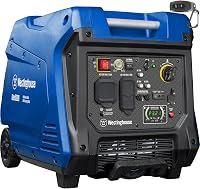
Westinghouse 5000 Peak Watt Super Quiet Portable
The Westinghouse 5000 Peak Watt Super Quiet Portable provides 3,900 rated watts and 5,000 peak watts. Its RV-ready TT-30R outlet makes it a stronger fit for a 30-amp RV when you want more reserve than a 3,600-running-watt model.
This inverter generator has a stated noise output as low as 52 dBA and an economy mode. Its rotating digital display shows fuel level, power output, remaining runtime, voltage output and lifetime hours.
The unit includes a telescoping handle and wheel kit, which can make movement easier despite its 104.7 lb weight. It also has two USB outlets, a household duplex outlet and parallel capability.
Choose it when quiet operation, longer stated runtime and inverter-style output matter for your camping setup. For more comparisons in this range, see the best 4000 watt generator for RV guide.
Westinghouse 12500 Watt Dual Fuel Home Backup
The Westinghouse 12500 Watt Dual Fuel Home Backup is the largest option here, with 9,500 running watts and 12,500 peak watts on gasoline. On propane, it provides 8,500 running watts and 11,200 peak watts.
Its control panel includes a 120/240V 14-50R 50-amp outlet, a transfer-switch-ready L14-30R outlet and two GFCI household receptacles. The 6.6-gallon gasoline tank can run for up to 12 hours, and a fuel gauge shows the remaining level.
This open-frame generator uses a 457cc 4-stroke engine and weighs more than a compact camping unit would. The larger output suits buyers who need substantial reserve power, but the size is harder to move and may be more generator than a small 30-amp trailer requires.
Choose it for a 50-amp RV, two-air-conditioner planning or a mixed RV and home-backup role. Compare more high-capacity options in our best 5000 watt generator for RV guide.
What should you check before using a generator with an RV?
Confirm the outlet, cord, grounding instructions and total load before connecting the RV. The generator must stay outdoors in a well-ventilated location, away from doors, windows and vents.
Use the RV-ready outlet when the generator has one that matches your service. Do not connect a 50-amp RV to a generator simply because an adapter fits.
The generator still needs enough output for the loads you plan to run.
Start with the largest motor load, then add appliances one at a time. If the generator overloads, turn off nonessential devices before restarting the air conditioner or other motor-driven equipment.
Keep the generator level and follow its oil, fuel and maintenance instructions. Avoid running it inside the RV, under an attached awning or in another enclosed area where carbon monoxide can collect.
If quiet camping matters, compare the best quiet generator for 50 amp RV and best quiet generator for RV 30 amp guides. Noise, weight and runtime can matter as much as the wattage number once the generator meets your load.
More guides on this topic
That guide is a useful next step if your RV uses 50-amp service. It can help you compare connection options, output levels and trade-offs for larger loads.
It also helps when quiet operation and steady power matter at a campsite. Use it alongside your own load list, so the shortlist reflects how you actually camp.
What size generator is right for your RV?
Choose about 3,000 to 4,000 running watts for many 30-amp RVs with one air conditioner, then move higher if you run electric heating or several appliances together.
A 50-amp RV with two air conditioners may need 7,000 running watts or more.
Pick the 3,600-running-watt model when your 30-amp load is moderate.
Choose the 3,900-rated-watt inverter when quieter operation and extra reserve are more useful, or choose the 9,500-running-watt dual-fuel model when your 50-amp RV needs substantial capacity.
The smaller open-frame option keeps the focus on a 30-amp connection and moderate loads, with recoil start and a straightforward layout.
The inverter option adds different priorities.
Its rated output is higher, its operation is quieter, and features such as remote start and a digital display can make campsite use more convenient.
The large dual-fuel model moves into a different class entirely.
It suits a 50-amp RV, two air conditioners, or a mixed role where the same unit may also help at home during an outage.
Weight and handling deserve a place in the final decision.
A generator may meet the wattage target on paper, yet be hard to lift into a storage bay or move across a campsite.
Fuel planning also affects daily use.
Longer runtime can reduce refueling trips, while dual-fuel flexibility may suit owners who prefer a choice between gasoline and propane.
Noise matters more at some campgrounds than at others.
If you camp close to neighbors or run power in the evening, a quieter inverter style unit may be worth more than extra peak output.
Keep the generator outdoors, level and well ventilated, and connect it with the correct outlet and cord for your RV service.
Start the largest motor load first, then add appliances step by step.
The right answer is the smallest unit that covers your largest planned combination of loads with a practical reserve.
Once those checks are done, the choice becomes a balance of capacity, noise, weight, runtime and how you plan to camp.
Frequently asked questions
What size generator do I need for my RV?
Most travel trailers with 30-amp service need about 3,000 to 4,000 running watts, depending on the air conditioner and other appliances. A 50-amp RV usually needs more capacity, especially if you want to run two air conditioners or several high-draw appliances at once.
Add startup watts before choosing.
Can a 2,000-watt generator run an RV air conditioner?
A 2,000-watt generator may run some smaller RV air conditioners only if their startup demand is low and other loads are off. Check the air conditioner's required watts and the generator's running and peak output first.
A larger generator gives you more room for startup surges and essential appliances.
What size generator do I need for a 30-amp RV?
A 30-amp RV often works well with a generator that supplies about 3,000 to 4,000 running watts and more peak watts for air conditioner startup. Your exact need depends on the air conditioner, refrigerator, microwave, coffee maker and other devices you use together.
What size generator do I need for a 50-amp RV?
A 50-amp RV may need 7,000 running watts or more if you want to use both air conditioners and other high-draw appliances at the same time. A 50-amp plug alone does not tell you the exact generator size, so total the running and startup loads you expect.
Is a bigger generator better for an RV?
A bigger generator gives you more reserve power, but it can also be heavier, louder and less convenient to move. Choose enough output for your largest planned combination of loads, then leave a practical margin for startup surges instead of sizing far beyond your needs.