Solar Panels vs Solar Generator: Which Setup Do You Need? (November 2026)
Choose solar panels for direct charging or battery maintenance, and choose a solar generator when you need stored power and outlets. A complete setup can combine both.
On this page (8 sections)
- Solar panels vs solar generator: what is the basic difference?
- What do you need for camping and road trips?
- Which setup works for a vehicle, boat or RV battery?
- Do solar generators store more useful power?
- How do you match a panel to a solar generator?
- Which option is easier to set up?
- How should you place and care for the panel?
- Which solar panels vs solar generator setup should you choose?
Choose solar panels for direct charging or battery maintenance, and choose a solar generator when you need stored power and outlets. The choice depends on whether you need to make power now, store it for later, or do both.
A solar panel produces electricity only when light reaches its cells. A solar generator is a battery power station with charging inputs and outputs for devices.
That difference affects camping, RV use, emergency backup and vehicle battery care. It also affects how you pack, how you set up and what you can run after dark.
We compared the products below by their stated power, storage, portability, connections and intended use. Each one suits a different job, even when the names sound similar.
A panel alone can be the lighter choice when you already own storage. It can recharge a power station, feed a battery or charge a device directly when the output and connector match.
A solar generator suits people who want one box that already holds energy. It can run devices from its battery, and a panel can refill that battery when you are away from an outlet.
The trade off is size and weight against convenience. A generator carries a battery, inverter and outlets in one unit, while a panel stays simpler and usually easier to carry on its own.
Think about your devices before you decide. List what you need to run, how long it must run and when you need the power.
If you need power only while the sun is out, a panel may cover the job. If you need lights, a fridge or phone charging at night, stored energy matters more.
Many camping and backup setups use both. The panel makes power during the day, and the generator stores it for later use.
Vehicle battery care is a separate case. A small panel kit can maintain a 12V battery without the bulk of a large power station.
That is why the right answer is not always one or the other. It depends on the task, the timing and the gear you already own.
The sections that follow cover storage, output, matching a panel to a generator, set up and care. Use them to narrow the choice to a setup you can actually use.
A good match should fit your loads, your vehicle or tent space and the way you travel. It should also fit how you plan to recharge, from wall charging to car charging to solar charging.
Start with the job you need done most often. That focus makes the choice between a panel, a generator or a combined setup much clearer.
 Best for portable panel charging
ZOUPW 100W Portable Solar Panel for Power
Solar panels vs solar generator: what is the basic difference?
A solar panel is the charging source, while a solar generator is the storage and delivery system. The panel turns sunlight into electricity, and the generator holds that energy in a battery for later use.
A bare panel does not automatically give you household style AC outlets. It needs a compatible charge controller, battery or power station, and the connection must match the equipment.
A solar generator combines several parts in one enclosure. Depending on the model, it can include a battery, inverter, AC outlets, USB ports, DC ports and charging controls.
This is why the terms can cause confusion. A product called a solar generator may include a solar panel, but a solar panel by itself is not a complete generator.
A panel is a source, not a store. When light fades, its output falls, and it cannot keep feeding a device from energy it made earlier.
A generator is a store, not a source on its own. It can supply power from its battery, but that battery still needs to be charged before it runs low.
Some generators charge from a wall outlet, a car or solar panels, and some support more than one input at a time. That flexibility lets you refill at home before you leave, then top up with a panel at camp.
The outputs also shape daily use. AC outlets suit household style appliances, while USB and DC ports suit phones, tablets and smaller 12V gear.
A panel with USB ports can charge a phone directly in sunlight. That still leaves you without stored power once the sun moves on.
A charge controller sits between a panel and a battery in some setups. It helps regulate charging for the battery type and protects against overcharging and short circuits.
Those details matter more than the product name. Always check the input limit, the connector type and the battery type before you connect anything.
A solar generator package may include a panel, cables and a manual. The panel and generator can also ship separately, so check what is in the box.
Once they are together, the pair works as a system. The panel harvests power, and the generator stores and delivers it when you need it.
A standalone panel kit for a vehicle battery works differently. It is designed to maintain a 12V battery, not to run AC appliances around camp.
Think of the panel as the tap and the generator as the tank. The tap only flows in sunlight, while the tank lets you use power after the tap stops.
You may want one, the other or both. The right pick depends on whether you need power now, power later or a battery kept ready for the road.
What do you need for camping and road trips?
Choose a solar generator for stored energy, then add a panel when you want to recharge away from an outlet. This setup works better for devices that need power after sunset or during changing weather.
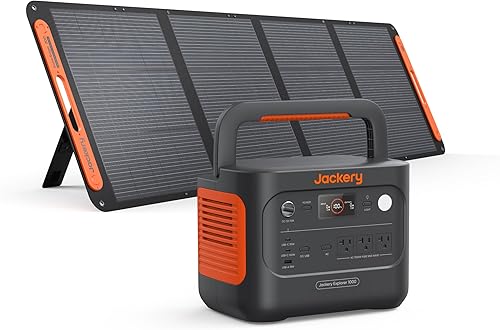
A complete unit can run compatible electronics from its battery. The Jackery Solar Generator 1000 v2 and 200W includes a 1,070Wh battery, 1,500W AC output and a 200W solar panel.
The BLUETTI Elite 30 V2 is smaller, with 288Wh capacity and 600W continuous output. Its 9.5 lb weight suits short trips, smaller loads and situations where carrying space matters.
A portable panel is useful when you already own a compatible power station. The best portable solar panel for power station guide can help you compare panel size, connectors and carrying needs.
Can a panel alone run your camping gear?
A panel alone is best for direct charging when the device accepts its output and the connection matches. It is less useful for loads that need steady power after the sun moves or disappears.
The ZOUPW 100W Portable Solar Panel for Power folds to 24.13 x 21.06 x 1.77 inches and weighs 9.5 lb. It includes a 5-in-1 cable with DC8020, XT60, Anderson, DC7909/8mm and DC5521 connectors.
Its panel body has an IP67 waterproof rating, but the USB hub and connection cables need protection from moisture. Its output also drops in shade and clouds, so direct sunlight remains important for faster charging.
Which setup works for a vehicle, boat or RV battery?
Choose a 12V solar panel kit when your main task is maintaining a rechargeable battery. You do not need a large battery power station for a vehicle, boat, trailer or RV battery that only needs a low-power solar charge.
The SOLPERK Solar Panel Kit 20W 12V Solar Battery Charger Trickle Maintainer is built around a 20W panel, a 10A MPPT controller and a 360° adjustable bracket. It supports 12V rechargeable batteries, including LiFePO4, lithium-ion, AGM, SLA, GEL, EFB and MF batteries.
The kit includes the panel, smart MPPT controller, adjustable mounting bracket, alligator clip, O-ring and mounting accessories. Its low 20W output is aimed at maintenance and charging rather than running large AC appliances.
For a deeper sizing decision, read which solar panel size do i need before choosing a panel for a battery or power station.
Do solar generators store more useful power?
A solar generator stores useful energy in watt-hours, while a solar panel is usually described by its maximum watt output. These numbers answer different questions.
Watt-hours describe how much energy a battery can hold. The Jackery has 1,070Wh, while the BLUETTI has 288Wh, so the Jackery has more stored energy for longer or heavier use.
Watts describe the rate of power. The Jackery supplies 1,500W AC output, while the BLUETTI supplies 600W continuous output and up to 1,500W in Power Lifting Mode.
A panel's watt rating describes its maximum power under suitable conditions. The ZOUPW provides 100W maximum power, and the SOLPERK provides 20W maximum power.
Do not compare a 100W panel directly with a 1,070Wh battery as if they were the same measurement. One describes charging power, and the other describes stored energy.
Capacity helps you plan for time. A larger watt hour number generally means a device can run longer, though the exact runtime depends on the device and its power draw.
Output helps you plan for what can start and run. A device that needs high power at start up may need a higher surge or lifting rating, even if it uses less energy over time.
The Jackery is listed at 23.8 lb with 1,070Wh and 1,500W AC output. That suits a fridge, AC unit or electric pot in the stated examples, along with camping and emergency use.
The BLUETTI is listed at 9.5 lb with 288Wh and 600W continuous output. That suits lights, a speaker, a car fridge, a laptop or a CPAP machine in the stated examples.
The Jackery data states 80% in 6 hours with a 200W solar panel. It also states a full charge in 1 hour with emergency charging through the app, and 1.7 hours by default to protect battery health.
Battery type also shapes long term use. The Jackery uses an LFP battery rated for over 4,000 charge cycles while keeping over 70% of original capacity.
The BLUETTI uses LFP technology with UltraCell tech and smart cooling. It lists standby power of 4.5W, with DC and AC standby figures higher in the stated data.
For a panel, efficiency and conditions shape real output. The ZOUPW lists 23.5% efficiency, and its output drops in shade or clouds.
The SOLPERK lists 20W maximum power for 12V maintenance. That is aimed at keeping a battery charged, not at running large AC loads.
Match the numbers to your load list. Add up device watts, estimate hours of use and check both capacity and output before you choose.
How do you match a panel to a solar generator?
Match the panel's connector and output with the generator's solar input limits before connecting anything. A panel can have enough rated power but still charge slowly if the power station accepts less.
The ZOUPW panel includes connectors for Jackery, EcoFlow, Anker, BLUETTI and generic lithium battery connections. Its cable supports DC8020, XT60, Anderson, DC7909/8mm and DC5521.
The panel's stated maximum power is 100W, but the connected station may draw less. For example, a station with a 60W input limit will not take the panel's full 100W output.
The BLUETTI Elite 30 V2 supports solar charging, but some panel connections may need a separate solar charging cable. Check the exact input requirements before pairing equipment.
For brand-focused options, see best Anker portable solar panel and best solar panel for BLUETTI.
The connector names matter in daily use. The right plug saves adapters, while the wrong plug can stop a set up before it starts.
Check the manual for the station you own. Confirm the input voltage, input watt limit and cable type, then match them to the panel you plan to use.
Sunlight angle still affects the result after the match. Even a well matched pair charges faster with clear, direct sun and a clean, well angled panel.
Which option is easier to set up?
A portable solar generator is usually simpler for short-term power because the battery, controls and outlets are already together. A standalone panel kit can be simpler when the job is only maintaining a 12V battery.
The Jackery package includes the Explorer 1000 v2, 200W panel, user manual and AC charging cable. The generator and panel ship separately, so plan for both pieces to arrive before setting up the complete system.
The BLUETTI includes the power station, AC charging cable, car charging cable and user manual. It supports AC, car and solar charging, plus other stated charging modes.
The ZOUPW panel folds, uses 2 adjustable kickstands and includes a 10 ft solar extension cable. Its setup is portable, but you still need a compatible storage device if you want power after sunlight ends.
Fixed installations need more planning. Read about best solar panel roof mounting brackets if you need a roof-mounted arrangement, or compare best solar panel adjustable mounting brackets for angle changes.
How should you place and care for the panel?
Place the panel where it receives the strongest available sunlight, then keep connectors and control parts dry. Angle, shade and weather can change the power you receive even when the panel's rated wattage stays the same.
The ZOUPW panel has adjustable kickstands for positioning. Its body is IP67 waterproof, but the USB hub and connected cables are not fully waterproof.
The SOLPERK kit includes a 360° adjustable bracket. Its tempered glass surface and aluminum frame are designed for outdoor use, but follow the manual for mounting, cable routing and battery connections.
Clean panels gently and inspect cables before use. Keep portable panels folded for storage, avoid placing weight on them and protect connection points from water.
For vehicle or camper projects, best flexible solar panel for car roof covers a different mounting approach. Larger projects may also need advice on bifacial solar panels by pallet, which is a bulk-buying question rather than a portable power station choice.
Which solar panels vs solar generator setup should you choose?
Pick a solar panel when you need direct charging or 12V battery maintenance. Pick a solar generator when you need stored power, AC outlets and device charging after sunlight ends.
Choose the Jackery if you want the largest battery and highest AC output among these products, with a 200W panel included. Choose the BLUETTI if a 9.5 lb power station with 288Wh and 600W output better matches your load.
Choose the ZOUPW if you already have a compatible power station and want a foldable 100W panel. Choose the SOLPERK if your main job is maintaining a 12V rechargeable battery.
The most flexible answer is often both: a panel to make power and a battery power station to store it. Before buying, list your devices, add their watt needs, decide how long they must run and confirm every connector and input limit.
Frequently asked questions
What is the difference between solar panels and a solar generator?
A solar panel makes electricity from sunlight, while a solar generator stores electricity in a battery and sends it to devices through AC, USB or DC outputs. A panel alone needs a compatible battery or device.
A solar generator can work from stored energy even when the sun is unavailable.
Can a solar panel power a house directly?
A portable solar panel usually should not be treated as a direct house power source. It needs compatible charge control and storage equipment, such as a portable power station or a properly designed solar system.
For home wiring, use equipment and installation methods approved for that purpose.
Is a solar generator worth it for camping?
A solar generator can be useful for camping when you need stored power for electronics, lights, a refrigerator or other compatible loads. Choose capacity and output based on the devices you will run.
A panel helps recharge the battery, but sunlight and the station's input limit affect charging time.
Do solar generators work without sunlight?
Yes. A solar generator can supply power from its stored battery when the panel is shaded, nighttime arrives or weather changes.
It still needs a charging source before the battery runs low.
Depending on the model, charging may also use AC power, a car connection or another supported input.
Which is better, a solar panel or a solar generator?
Neither is better for every job. Choose a solar panel for direct charging, battery maintenance or a lighter modular setup.
Choose a solar generator when you need stored energy, built-in outlets and power after sunset.
Many buyers need both because the panel refills the generator.


