Rechargeable vs Battery Headlamps: Which Is Better? (November 2026)
Pick rechargeable for daily use and battery-powered for backup and long trips without charging. A rechargeable vs battery headlamp choice comes down to how you charge, how long you run it and how fast you can restore full brightness.
On this page (10 sections)
- Rechargeable vs battery headlamp: the quick verdict
- The two types side by side
- Charging convenience vs instant swaps
- Run time and brightness in daily use
- Weight, fit and comfort on your head
- Water resistance and weather use
- Cost over time and waste
- Who should buy which type?
- Set-up, storage and care tips
- Which should you choose?
Rechargeable headlamps win for daily use; battery headlamps win for instant backup. You get lower running costs and less waste with a built-in battery, but fresh AAA cells give you full light in seconds when charging is not an option.
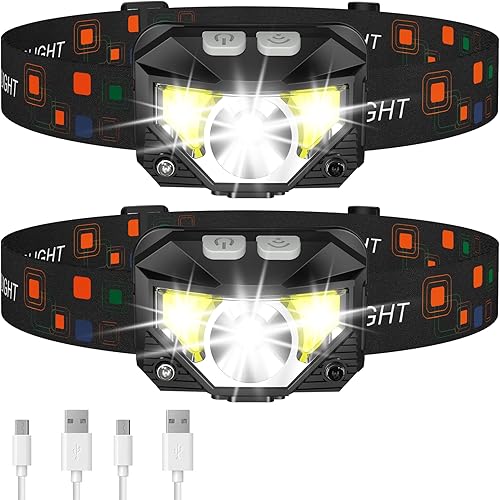
In this comparison we checked 2 rechargeable picks and 2 battery picks. The LHKNL and Blukar use built-in rechargeable batteries with USB-C.
The GearLight and Lepro run on AAA batteries that you supply.

Rechargeable vs battery headlamp: the quick verdict
Buy rechargeable if you use a headlamp each week; buy battery-powered if you store one for rare emergencies. The first group will save you repeated battery purchases.
The second group will sit ready for years and work the moment you add fresh cells.
Our score weighs specs, features and buyer feedback against what you are shopping for. That is why the rechargeable LHKNL leads this list, followed by the Blukar, the GearLight and the Lepro.
Keep reading for how each type handles charging, run time, weight, water and total cost.
The two types side by side
The rechargeable pair focus on USB-C charging; the battery pair focus on AAA swaps. Both groups include a 2-pack, red light and an adjustable headband, so the main split is power.
| Point | LHKNL rechargeable | Blukar rechargeable | GearLight battery | Lepro battery |
|---|---|---|---|---|
| Power | 1500mAh built-in | 1200mAh built-in | AAA, not included | AAA, not included |
| Run time | 4 to 10 hours | 3.5 to 5 hours by mode | Depends on cells and mode | 22 hours on low |
| Weight | 1.87 oz | 169 g | About 3 oz with batteries | 1.94 oz without batteries |
| Water rating | IPX4 | IPX5 | Water resistant | IPX4 |
How to read this table
Run time figures are not measured the same way across brands. The Lepro figure is for a low setting, while the rechargeable figures cover brighter modes.
Weight also needs care. The Lepro weight is without batteries, while the GearLight weight is with batteries.
Add cell weight before you judge which feels lighter.
Charging convenience vs instant swaps
Rechargeable wins on convenience at home; battery wins when you need light now. A USB-C cable tops up the LHKNL and Blukar between uses.
AAA cells restore the GearLight and Lepro in seconds.
The LHKNL uses a 1500mAh built-in battery and a battery indicator. It also says it can charge and run at the same time.
That helps if you find a low battery shortly before you head out.
The Blukar uses a 1200mAh battery and a Type-C port. It says a full charge takes 2 to 3 hours, with a cable included.
You still need to plan ahead, but you avoid buying batteries each time.
The GearLight and Lepro have no USB charging. That is a plus in a car kit or a drawer.
Swap in fresh AAA cells and you are back to full brightness with no wait.
Which fits extended trips?
For a long trip with no outlet, battery models have the edge. You can carry spare AAA cells and swap them at a trailhead or campsite.
If your trip includes a car or a power bank, rechargeable models are simpler. Charge both lamps before you leave and top them up when you can.
Our guide to emergency lanterns helps you match backup light to a longer outage plan.
Run time and brightness in daily use
Pick run time by the mode you actually use, not the headline brightness. High modes drain any headlamp faster.
Low and red modes stretch hours across multiple evenings.
The LHKNL says 4 to 10 hours when fully charged. Its 8 modes include main strong and weak beams, side beams, red beam and SOS red strobe.
The wide range explains the gap between 4 and 10 hours.
The Blukar says 3.5 hours in XPG and COB mode and 5 hours in COB or XPG mode alone. Its stepless dimming lets you drop from 100% to 30% with a long press.
That control can stretch a charge when you only need close-range light.
The Lepro says 22 hours on low. That figure suits campsite use, reading and walking, where low light is enough.
High modes will use cells much faster, so pack spares for bright work.
The GearLight lists 200 lumens maximum and 7 modes. It is built for close and medium-range tasks such as walking, camping, repairs and household use.
Red light and night vision
All 4 picks include red light. That matters for fishing, astronomy, tent use and night walks.
The LHKNL includes red beam and a red SOS strobe. The Blukar includes COB red light and a red SOS mode.
The GearLight includes red light for night vision and safety. The Lepro includes red light that stays on or flashes.
Use red light first, then switch to white only when you need it. That habit saves battery and keeps your eyes ready for the dark.
Weight, fit and comfort on your head
The lightest rechargeable pick is the LHKNL; the lepro is lightest without batteries. A few grams matter less than a headband that stays put while you run or bend over work.
The LHKNL weighs 1.87 oz and has a lamp head that rotates 60 degrees. Its elastic headband adjusts for adults and kids.
That small weight helps on long runs and hikes.
The Blukar weighs 169 g and adjusts 45 degrees. Its breathable elastic headband is detachable and washable.
The extra weight buys a brighter beam and a more complex lighting system.
The GearLight weighs about 3 oz with batteries and tilts 45 degrees. Its washable headband fits adults and kids.
The Lepro weighs 1.94 oz without batteries and tilts 45 degrees. Its headband is removable, washable and elastic.
It can fit hard hats or helmets.
Tilting and motion sensors
A tilting head lets you aim light at a task without moving your whole head. All 4 picks tilt or pivot, from 45 degrees on 3 picks to 60 degrees on the LHKNL.
The LHKNL and Blukar add motion sensor modes. You wave a hand to turn the light on or off.
That helps when your hands are dirty or full.
Sensors can trigger by accident in a pack. Turn sensor mode off before storage.
Water resistance and weather use
The Blukar has the highest water rating here, at IPX5. The LHKNL and Lepro are IPX4.
The GearLight is described as water resistant for rain and light impact.
IPX4 handles splashes and spray from any angle. That covers most rain, snow and campsite use.
It does not mean you should soak the lamp or hold it under water.
IPX5 adds protection against water jets. The Blukar says it has good waterproof and dustproof performance.
That makes it a stronger pick for fishing, cycling and wet-weather work.
For a full emergency kit, pair a headlamp with a lantern. If yours uses liquid fuel, check Coleman lantern fuel options.
Our emergency lighting guide links headlamps to wider home backup choices.
Care in rain and cold
Dry the headlamp after wet use and store it with the battery compartment open if your manual allows it. For battery models, remove cells for long storage.
Cold can reduce battery performance in any type. Keep spare cells or a charged rechargeable lamp inside a warm layer when you camp in winter.
Cost over time and waste
Rechargeable wins on cost per use; battery wins on upfront simplicity. You pay for a built-in battery once with the LHKNL or Blukar, then you use USB-C power you already own.
Battery models shift cost to cells. The GearLight and Lepro do not include AAA batteries, so you must buy them before first use.
Frequent users will buy cells again and again.
Rechargeable models still have limits. Built-in batteries age with charge cycles and storage time.
If a built-in battery fades, the whole lamp may need replacement rather than a simple cell swap.
Battery models create more waste, but you can use rechargeable AAA cells if you choose. That option can lower waste while keeping the swap system.
A simple cost check
Count how many times you will use the lamp in a year. Weekly users usually save with rechargeable models.
Rare users may spend less overall with battery models because they use very few cells.
Add the cost of spare cells and a power bank to your mental total. A rechargeable pick needs a cable you already own.
A battery pick needs a safe place to store spare cells.
Who should buy which type?
Buy the LHKNL for all-round rechargeable use, the Blukar for bright rechargeable light, the GearLight for simple swaps and the Lepro for long low-light runs. Each pick fits a clear pattern of use.
Choose the LHKNL Headlamp Flashlight if you want the highest score in this comparison. It is light at 1.87 oz, runs 4 to 10 hours and includes 2 lamps with 2 USB-C cables.
Its motion sensor and long-press off function help in daily use.
Choose the Blukar LED Headlamp Rechargeable if brightness matters most. It reaches 2000 lumens and combines spotlight and floodlight.
Stepless dimming and IPX5 protection make it strong for camping, cycling and DIY work.
Choose the GearLight LED Headlamp 2-pack Battery Powered if you want no charging step at all. Fresh AAA cells restore light fast, and the 2-pack suits a car or emergency drawer.
Choose the Lepro Headlamp Battery Powered Waterproof LED Headlight if low-light run time matters most. Its 22-hour low setting suits long evenings at camp.
The 2-pack, red light and 45-degree tilt cover most outdoor uses.
By activity
Campers who charge at home will like the rechargeable pair. Runners who want low weight will like the LHKNL.
Our guide to best rechargeable headlamps for camping expands that choice for tent and trail use.
Runners should weigh brightness against weight. The Blukar is brighter but heavier, while the LHKNL is lighter with a sensor mode.
See our best rechargeable headlamp for running guide for run-specific notes.
Adults who want a simple household light may prefer battery models. They sit in a drawer until needed, then work with fresh cells.
Our look at best headlamps for adults rechargeable helps you compare that path with built-in batteries.
Set-up, storage and care tips
Charge rechargeable lamps before first use and store battery lamps with fresh cells nearby. A short routine prevents a dead light when you need it most.
For the LHKNL, charge it before use to ensure bright light. If it flickers or turns off by itself, check whether sensor mode is on.
Turn sensor mode off before you pack it.
For the Blukar, use the included Type-C cable and allow 2 to 3 hours for a full charge. The headband is detachable and washable, so clean it after sweaty or dusty use.
For the GearLight and Lepro, add AAA batteries before first use. Store spare cells in a dry pouch, not loose in the compartment.
Storage habits that help
Store rechargeable lamps at a partial charge if you will not use them for months. Check and top them up every few months so they are ready for outages.
Store battery lamps with cells removed for long-term storage. That reduces leak risk and keeps the lamp ready when you add fresh cells.
Keep all headlamps in a dry case or pouch. Our Black Diamond Spot 400 headlamp review shows how a single-lamp review can help you judge fit and features before you buy.
Which should you choose?
Choose rechargeable for weekly use and battery-powered for backup, travel and emergencies. That rule settles most cases in this choice.
Pick the LHKNL if you want the best all-round rechargeable 2-pack. Pick the Blukar if you want maximum brightness and stepless dimming.
Pick the GearLight if you want the simplest AAA swap system. Pick the Lepro if you want the longest low-light run time.
If you power a generator at home, plan fuel and light together. Our guide on how to choose propane tank size for a generator helps you size backup power for longer outages.
For a deeper propane check, see what do you need to choose propane tank size for a generator. That planning pairs well with a charged rechargeable lamp and a battery backup lamp in the same kit.
Next, match the lamp to your main activity. Campers should read the camping guide, runners should read the running guide and adults should read the adults guide.
Frequently asked questions
Is a rechargeable headlamp better than a battery headlamp?
A rechargeable headlamp is better for regular use because you can top it up with USB-C and avoid buying batteries. A battery headlamp is better when you need instant full brightness and have no outlet, cable or charged spare to use.
Which lasts longer, rechargeable or AAA batteries?
It depends on the mode. The Lepro battery model runs 22 hours on low, while the LHKNL rechargeable runs 4 to 10 hours and the Blukar runs 3.5 to 5 hours in its listed modes.
Fresh AAA cells also return a battery model to full brightness at once.
Can I use a rechargeable headlamp while it charges?
The LHKNL says it can charge and turn on the lights at the same time, so you do not need to wait for a full charge. The Blukar data does not state that same point, so check its manual if using it while plugged in matters to you.
Are battery headlamps better for emergencies?
Battery headlamps are often better for emergencies because fresh AAA cells work without a charged battery or outlet. Keep spare AAA cells in a dry pouch with the lamp, and keep a rechargeable model charged at home for everyday use.