Emergency Lighting: The Complete Buying Guide
The best emergency lanterns cover three jobs at once: light that starts on its own, light you can carry, and light that lasts long enough to cook, clean and find your way. Buy plug-in lights for hallways and stairs, rechargeable lanterns for open rooms, and headlamps or flashlights for hands-free work.
On this page (8 sections)
- What types of emergency lanterns should you buy first?
- How bright should emergency lanterns be for each room?
- Which emergency lanterns work best during a power outage?
- How do you choose a headlamp for emergency and camping use?
- How do rechargeable light bulbs fit into emergency lighting?
- What safety rules should you follow with emergency lighting?
- How do emergency lanterns support home backup power?
- Which emergency lanterns should you buy for your home?
The best emergency lanterns cover three jobs at once: light that starts on its own, light you can carry, and light that lasts long enough to cook, clean and find your way. Buy plug-in lights for hallways and stairs, rechargeable lanterns for open rooms, and headlamps or flashlights for hands-free work.
That three job test is a useful way to shop for emergency lighting on Travel & BBQ. A light that only works when you remember to switch it on may not help if an outage starts while you are asleep.
A portable light that dies after thirty minutes may not help much either. You need light that is ready, reachable and steady for the tasks you will actually do in the dark.
This guide is the complete starting point for the emergency-lighting category on Travel & BBQ. It links every topic cluster in one place, so you can compare lanterns, flashlights, headlamps, night lights and plug-in lights without guesswork.
The goal is to help you build a simple home setup before you need it. Once the power goes out, it is too late to learn where each light is stored or how it charges.
We compared specs, features and buyer patterns across these light types. We did not test products, and we label maker claims as claims.
That honest limit matters when you read lumen numbers and runtime claims. Maker specs help you compare models, but your real results will depend on the brightness setting, battery age and how you store the light.
Our score in other posts weighs specs, features and buyer feedback against what you are shopping for. Here we keep the focus on fit, so you can see which type of light suits each room and task.
Start with your home layout, not with brightness. Count the paths you use at night, the rooms you cook in, and the places you need your hands free.
Walk through your home after dark and note the spots where you would feel unsure. Those spots usually include stairs, hallways, bathroom doors and the route to the kitchen.
Then match each space to the right type of light. Plug-in lights suit paths that must light up on their own, while portable lanterns suit rooms where you will sit, eat or wait.
Headlamps suit work where your hands must stay free, such as cooking, fixing a fuse, or caring for a child. Flashlights suit short checks where you need a directed beam, such as a garage shelf or breaker panel.
Small homes may need fewer lights than large homes, but every home needs a path plan. If you can move safely from bed to bathroom to kitchen, the rest of the setup becomes much easier.
Think about who the setup must serve, from small children to older adults who move slowly. The right light for a teen who plays sports may not suit a grandparent who needs clear steps and handrails.
Think also about how long an outage may last in your area, since short cuts and long storms ask for different runtimes. A modest light that lasts for hours can be more useful than a very bright light that fades quickly.
Set up for the outage you are most likely to face, then add extras for longer events. That order keeps your first purchases useful even if your needs change later.
Use this guide to plan the mix, then use the linked cluster guides to refine each choice. Together they help you buy light for safety first and comfort second, which is the right order for any home.
What types of emergency lanterns should you buy first?
Buy plug-in lights first for paths, then portable lanterns for rooms, then headlamps for tasks. That order covers safety before comfort, and it stops you from buying three bright lanterns that all sit in one kitchen.
Plug-in lights stay in standard outlets and turn on when power fails. They are the safest choice by a bed, in a hallway, or on stairs.
Our guide to best plug in emergency lights with battery backup explains how the auto-on feature works.
Portable lanterns light a table, a campsite or a living room. They spread light in all directions instead of pointing a beam at one spot.
See our best emergency lanterns for power outage picks for room-scale options.
Flashlights point a beam where you aim it. They are best for checking a breaker panel, a crawl space, or a locked door.
Headlamps do the same work while your hands stay free for cooking, repairs or first aid.
A radio lantern adds news and weather updates during a long outage. If that matters to you, read our best lantern with emergency radio guide before you choose a plain lantern.
How do you cover a whole home with emergency lighting?
Cover paths automatically and rooms portably. Put a plug-in light in the hallway, by each stair, and near the front door.
Keep one lantern in the kitchen and one in the main living area.
Add a flashlight or headlamp where you solve problems, such as near the breaker panel or in a garage. That spot is usually dark, close to tools, and hard to reach with a lantern alone.
Bathrooms need light for safe movement after dark. A small night light or a flashlight in a drawer can work, and our best battery powered night light roundup covers low-level options.
Kids should have a light they can reach without a trapdoor or a high shelf. A plug-in light by the bed is easier than a lantern stored in a closet.
How bright should emergency lanterns be for each room?
Choose brightness by room size and task, not by the biggest lumen number. A small bathroom needs far less light than a dining room where you are cooking for a family.
Lanterns spread light widely, so moderate output can fill a room. Flashlights concentrate output into a beam, so the same lumen count feels brighter at a distance.
That is why a flashlight can reach a breaker panel across a basement.
Think about what you will do during an outage. Eating by candle-like light is one thing.
Finding medication, warming food, or cleaning a spill needs clearer light.
The Energizer Auto-On LED Flashlights Rechargeable are a 3-pack with a retractable plug for standard outlets. Energizer says the light is up to 4x brighter than standard LED technology and reaches up to 30 meters, with up to 3 hours of runtime.
That runtime suits paths and short outages, not a full evening of cooking. Pair these plug-in lights with a longer-runtime lantern for open rooms, and our best emergency lights for power outage guide helps you compare that next layer.
What does lumen, runtime and beam shape mean in daily use?
Lumens tell you output, runtime tells you how long it lasts, and beam shape tells you where the light goes. You need all three numbers before you buy.
High lumens on a lantern can wash a room in bright light for a short time. Lower output often lasts much longer and is easier on eyes at night.
Many lanterns offer low, medium and high settings for that reason.
A flashlight beam can be tight for distance or wide for close work. Zoomable models change focus by moving the head.
That helps outdoors, but a fixed wide beam is often simpler indoors.
Check whether runtime is stated at high, medium or low. A headline runtime on low may not match the bright setting you need to read a label or find a tool.
Which emergency lanterns work best during a power outage?
The best lanterns for an outage are charged before the outage, placed where you use them, and simple to turn on in the dark. Complexity is a problem when the lights are off.
Rechargeable models are easier to keep ready than battery-only models. You plug them in, they charge, and they wait.
Replaceable-battery models can still work, but you must store fresh batteries with them and check them often.
Solar lanterns can recharge in daylight, which helps during multi-day outages. They still need sun to recharge, and cloudy weather reduces output.
Compare that trade-off in our best solar camping lantern roundup.
Battery-powered lanterns are useful when you want a simple spare. Our best battery powered lanterns for power outages guide covers models that do not depend on an outlet for charging.
The TrixHub Rechargeable Flashlights 2 Pack Super Bright come with 2 flashlights and 2 USB-C cables. TrixHub says the flashlights have 5 modes, including high, medium, low, strobe and SOS, plus a zoomable head and an LCD display for battery level.
A 2-pack helps you keep one light in the kitchen and one near tools. The aluminum shell and compact 5.9 inch length make them easy to store in a drawer or backpack.
Zoom is useful for checking a distant fuse box, while wide mode suits a close repair. TrixHub recommends a UL standard charger, and the flashlights include circuit protection features such as overcharge and short-circuit protection.
How do you keep emergency lanterns charged and ready?
Keep rechargeable lights plugged in or on a charger, and store spares with fresh batteries. A lantern in a drawer with a dead battery does not help during an outage.
Set a simple routine. Charge after every use, check plug-in lights monthly, and replace backup batteries once a year.
Put a note on the storage box with the date you last checked it.
If you use USB charging, keep one suitable charger and cable with the lights. That avoids hunting through drawers for the right cable in the dark.
For combo lights that serve as both flashlight and lantern, our best battery powered flashlight and lantern roundup shows how to choose between the two forms.
How do you choose a headlamp for emergency and camping use?
Choose a headlamp by weight, runtime, modes and water resistance, in that order. A light you will wear for hours must stay comfortable, and a light you need in rain must handle splashes.
Headlamps free your hands for cooking, tent setup, repairs, or reading instructions. That makes them valuable even if you already own a lantern.
A lantern lights the room, and a headlamp lights the task.
Our best led headlamp rechargeable roundup covers USB models that are easy to recharge at home or in a car. Rechargeable headlamps save money compared with disposable batteries, as long as you keep them charged.
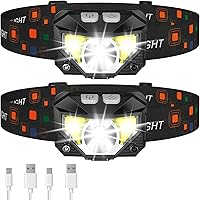
The LHKNL Headlamp Flashlight comes as a 2-pack with 2 USB-C cables and 2 headbands. LHKNL says each headlamp weighs 1.87 ounces, has a 1500mAh built-in rechargeable battery, and runs 4 to 10 hours when fully charged.
The head can rotate 60 degrees, and the elastic headband adjusts for adults and kids. LHKNL rates the headlamps IPX4 for rain and snow use, and lists 8 lighting modes, including white and red light for night vision.
Motion sensor mode lets you wave a hand to turn the light on or off. That helps when your hands are dirty, but LHKNL also notes that sensor mode can cause flicker or automatic shutoff, so the long-press function lets you turn the light off directly.
If you want a named brand for headlamps, our best black diamond headlamp guide compares those options, and our black diamond astro 300 headlamp review covers one specific model in detail.
How do you choose a camping lantern for tent and campsite use?
Choose a camping lantern by runtime, hang or` carry options, and how it handles weather. A lantern for a picnic table has different needs from one for a tent at night.
Our best led camping lantern roundup focuses on LED models that run longer than fuel lanterns. Look for low settings for tent use, because high output can be harsh inside a small space.
For a classic fuel design, our best coleman camping lantern guide covers that separate category. Fuel lanterns need fuel storage and careful handling, which may not suit every household.
Solar models are worth considering for campsites with steady sun. Our best solar camping lantern roundup explains when solar charging helps and when a USB model is more reliable.
How do rechargeable light bulbs fit into emergency lighting?
Rechargeable light bulbs work like plug-in lights you can move from lamp to lamp. They charge in a standard socket and turn on as a bulb when power fails.
That flexibility helps in a bedroom or office where you do not want a wall plug blocked. You place the bulb in the lamp you already use, and it becomes an emergency light without a separate fixture.
Check the size and base before you buy, and confirm the bulb fits your lamp shade. A bulb that sticks out too far may look odd or run hotter than expected.
Our best rechargeable light bulbs roundup compares models by runtime and brightness. Pair a bulb in a central lamp with a portable lantern for other rooms.
When should you choose a flashlight lantern combo?
Choose a combo when you want one light that can flood a room or point a beam. That saves space and money compared with buying a separate lantern and flashlight.
Our best rechargeable flashlight lantern combo roundup covers models that switch between wide and focused light. A combo is strong for camping, where you may need both a tent light and a trail beam.
A combo is less strong when you need two lights at once. A lantern on the table and a flashlight in your hand still beats one combo for many outage tasks.
That trade off matters most in a home outage, when two people may need light in different rooms. One combo in the kitchen cannot also light the hallway where someone else is walking.
It matters less on a short camping trip with one tent and one clear task list. In that case a single versatile light can stay in a pack and switch roles as needed.
For smaller everyday carry, our best small rechargeable flashlight roundup covers pocket-sized options. For a named brand, see our best streamlight rechargeable flashlight guide.
Pocket size helps when a light must live in a drawer, glove box or jacket pocket. It also helps a light stay with you during a walk to check an outdoor unit.
A larger combo may give you more runtime and a wider flood, but it may be harder to store in reach. Match the size to the place you will actually keep it, not to the brightest claim on the box.
What safety rules should you follow with emergency lighting?
Use LED lights safely, keep cords and plugs clear, and never use fuel lanterns indoors. Most outage injuries come from trips, burns, and improvised heating, not from LED lights themselves.
Keep walkways clear of cords and chargers. A cord across a hallway is a trip hazard in the dark.
Plug-in lights avoid that problem because they sit in the outlet.
Do not use gasoline, propane or other fuel lanterns inside a home, tent or enclosed porch. Fuel lanterns produce carbon monoxide and heat, and they need ventilation and careful fuel handling.
Store lithium-ion rechargeable lights in a cool, dry place. Damaged batteries, swollen batteries, or lights that get unusually hot should be handled with care and not used again.
For work areas, our best rechargeable work light roundup covers brighter task lights. For everyday carry, our best led flashlight rechargeable roundup compares handheld models, and our best rechargeable flashlights on sale page tracks deals on rechargeable flashlights.
How do you set up and care for emergency lights?
Set up lights before an outage, test them monthly, and clean contacts and lenses as needed. A light that has sat unused for a year may need a charge before it works well.
Place plug-in lights where they switch on automatically. Place lanterns where you will reach them without climbing.
Put flashlights in at least two locations, such as the kitchen and the bedroom area.
Wipe lenses with a dry cloth when dust builds up. Dust reduces brightness and can make a light look dimmer than it is.
Check rubber seals and headbands for wear on camping lights.
Store camping lanterns dry, with batteries removed if the maker recommends it for long storage. Fuel lanterns need separate fuel storage, and our watt dual fuel generator for camping guide covers power planning for stays where you also run appliances.
The BLACK+DECKER dustbuster Cordless Handheld Vacuum is a lightweight, rechargeable hand vacuum for small messes. BLACK+DECKER says it has a built-in crevice tool, a transparent dirt bowl, and a washable filter.
Its specs include a 0.09 gallon capacity, 1.4 pounds weight, and a wall mountable base charger. Battery life is listed at 10 minutes, which suits quick cleanup of crumbs, dust or pet hair rather than whole-room cleaning.
This vacuum is not a light, but it solves a common outage problem: debris and food spills during low-light cleanup. Keep it charged on its wall mount so it is ready for the kitchen or car.
How do emergency lanterns support home backup power?
Emergency lanterns support backup power by making a generator or battery system safer and easier to use. Light helps you connect cords, check fuel, and move without tripping.
A home backup system often lives in a garage, shed or utility corner that is dark when the power fails. You may need to read a label, find a plug, or check a fuel cap before you can start anything.
A headlamp is often the best partner for that work because it leaves both hands free. A lantern on a shelf can light the whole work area, while a flashlight can point at a small panel or connection point.
A generator still needs safe cords, clear ventilation, and outdoor placement. Light does not replace those rules, but a headlamp can help you read labels and check connections.
Never run a generator indoors, in a garage with closed doors, or near a window where exhaust can drift inside. Keep cords away from water, walkways and doorways where they can be pinched or tripped over.
Our watt dual fuel generator for camping roundup covers generator options for camping and home backup planning. Use lanterns and headlamps to work safely around power equipment, and never run a generator indoors.
Plan the light setup before you plan the power setup. Place a lantern where you will connect cords, and keep a flashlight where you will check fuel or controls.
Test that plan on a normal evening, with the generator off and the room lights dimmed. If you can read every label and find every plug, you have made the next outage safer.
Battery backup systems need the same care, since inverters and power stations often sit in low corners or closets. A small lantern there can help you check charge level, fan vents and cable connections without holding a phone in one hand.
Keep backup lights charged separately from the main system where you can, so one drained battery does not leave you in the dark. That small habit can turn a stressful restart into a calm and orderly routine.
Which emergency lanterns should you buy for your home?
Buy plug-in lights for paths, a lantern for each main room, and a rechargeable flashlight or headlamp for tasks. That mix covers automatic light, room light, and directed light without overlap.
Start with the Energizer plug-in 3-pack for hallways and stairs. Add the TrixHub 2-pack flashlights for drawers, tool areas and outdoor checks.
Add the LHKNL 2-pack headlamps for cooking, repairs and camping.
Use the BLACK+DECKER dustbuster for quick cleanup after you restore light or clean up a spill. It is a support tool, not a light source, so it comes after the lights in your buying order.
Then use the cluster guides above to refine each pick. Compare best emergency lanterns for power outage for room lights, best plug in emergency lights with battery backup for auto-on lights, and best lantern with emergency radio if updates matter during long outages.
Pick plug-in lights if safe paths matter most, pick lanterns if open rooms matter most, and pick headlamps if hands-free tasks matter most. For your next step, start with paths and stairs, then add one portable lantern for the kitchen.
Frequently asked questions
How many emergency lanterns does a house need?
Most houses need light in every room you must move through, not just one bright lantern in the kitchen. Place plug-in lights by beds, stairs and doors, and keep two portable lanterns or flashlights in central spots.
Test the layout after dark before an outage happens.
Are plug-in emergency lights better than battery lanterns?
Plug-in lights are better for automatic light and safe paths, while battery lanterns are better for open rooms and moving between spaces. A strong setup uses both types together.
Plug-in units stay charged in outlets, and portable lanterns follow you to the kitchen, bathroom or basement.
How long should an emergency lantern run?
Look for several hours of usable light, not just a claim of all-night runtime on low. A lantern that runs 4 to 10 hours gives you time for dinner, cleanup and a safe bedtime routine.
Higher brightness usually drains the battery faster, so check runtime at the brightness you will actually use.
Can one lantern light a whole house?
No single lantern lights a whole house evenly or safely. Light drops off quickly with distance, walls and closed doors.
Use a lantern for the room you are in, plug-in lights for paths, and headlamps for tasks.
That layered approach prevents dark corners and trips.