Coleman Lantern Fuel: Which Type Should You Use?
Use only the fuel your Coleman lantern is built and labeled for, most often Coleman fuel for classic liquid-fuel models and propane for propane models. Check the tank, valve and manual before you fill. The wrong fuel can damage seals, change the flame and create a safety risk.
On this page (13 sections)
- Which Coleman lantern fuel types are there?
- How do Coleman fuel, propane and gasoline compare?
- Which Coleman lantern designs use liquid Coleman fuel?
- Which Coleman lantern designs use propane?
- Can you use unleaded gasoline in a Coleman lantern?
- How do you fill a liquid-fuel Coleman lantern safely?
- How do mantles, globes and generators change fuel use?
- How should you store Coleman lantern fuel and lanterns?
- What backup lights should you pair with a Coleman lantern?
- What is a dual fuel generator and how does it work?
- What is a dual fuel inverter generator and how does it work?
- How does a rechargeable light bulb work?
- Which Coleman lantern fuel should you buy today?
Use only the fuel your Coleman lantern is built and labeled for, most often Coleman fuel for classic liquid-fuel models and propane for propane models. Coleman lantern fuel is not one generic product.
The right choice depends on the tank, valve, generator and regulator fitted to your exact lantern.
Find the model number on the lantern and match it to the manual or the fuel label on the fount. Use Coleman fuel, propane or dual fuel only as that label directs.
This guide covers fuel types, safe filling and storage, and fixes for dim light. It also covers backup lighting, since a fuel lantern works best as part of a plan.
Our emergency lanterns guide compares fuel, battery and solar options for home backup.
Which Coleman lantern fuel types are there?
Coleman lanterns mainly use Coleman fuel, propane, or unleaded gasoline in models rated for it. These fuels are not interchangeable.
Coleman fuel is a refined liquid fuel for pressurized lanterns. You pour it into a fount, pump the tank, and the generator vaporizes it before it reaches the mantle.
It gives strong light and works well in cold weather when the lantern is in good order.
Propane lanterns use a small disposable cartridge that screws onto the valve. There is no pouring and no pumping.
Propane is simple for camping and short outages, but cartridges run out faster than a full fount and cost more per hour.
Some dual-fuel lanterns are rated for unleaded gasoline as well as Coleman fuel. That rating is model-specific.
Gasoline can affect seals and mantles over time in models not made for it.
How do Coleman fuel, propane and gasoline compare?
Coleman fuel is standard for classic liquid-fuel lanterns, propane is easiest for cartridge lanterns, and gasoline is only for models rated for it. The best fuel is the one your lantern was designed to burn cleanly.
Coleman fuel gives bright white light when pressure and the generator are correct. It is easy to find and you can refill the fount at home.
The trade-off is careful handling, pressurizing and priming.
Propane lights instantly with no priming and a cartridge is clean to swap. It suits short trips and occasional outage use, but a small cartridge may not last a long night at full brightness.
Unleaded gasoline is widely available, which helps dual-fuel owners in remote areas. Use it only in a rated model with good ventilation, never in a propane lantern.
| Fuel | Fits | Main benefit | Main trade-off |
|---|---|---|---|
| Coleman fuel | Classic liquid-fuel Coleman lanterns | Bright light, refillable fount | Needs pumping, priming and careful storage |
| Propane | Propane Coleman lanterns | Fast start, no pouring | Short runtime per cartridge |
| Unleaded gasoline | Only dual-fuel models rated for it | Easy to find in remote areas | Adds odor, needs model-specific care |
Rule: choose the fuel your model names, not the fuel that looks the same in the store.
Which Coleman lantern designs use liquid Coleman fuel?
Liquid-fuel Coleman lanterns have a refillable fount, a hand pump, a generator tube and a mantle. Examples include many classic two-mantle and single-mantle camp lanterns.
Pumping pushes liquid fuel through the generator, where heat vaporizes it to feed the mantle. The system needs a clean generator, sound pump cup and check valve, and a mantle in good shape.
Buy Coleman fuel for this design. Do not substitute gasoline unless the label and manual say that exact model accepts it, as wrong fuel can damage seals and cause soot.
These lanterns give high light for hours but run hot. Use them outdoors or in a well-ventilated space, never in a tent, camper or closed room.
Learn the start sequence in how to light a coleman lantern before your first fill.
Which Coleman lantern designs use propane?
Propane Coleman lanterns have a valve that fits a threaded propane cartridge and no liquid fount. There is no pump handle or refillable tank on a true propane model.
Attach a fresh cartridge, open the valve partway, light the mantle and adjust the gas until steady. When the cartridge empties, turn the valve off and fit a new one.
Propane suits emergency kits because there is no liquid to spill in storage. Keep spare cartridges upright in a cool place and check threads and the valve seal before use.
The limit is supply, since each cartridge holds a set amount of gas. For several days of outage lighting, plan for many cartridges or add a rechargeable light.
Our best coleman camping lantern roundup compares propane and liquid-fuel designs.
Can you use unleaded gasoline in a Coleman lantern?
You can use unleaded gasoline only in a Coleman lantern rated for unleaded gasoline. The rating is printed for that model and is not shared across the line.
Dual-fuel lanterns are built with materials, valves and generators that can handle both Coleman fuel and unleaded gasoline. Even then, you must follow the filling ratio, pressure and lighting steps in the manual for your model.
Gasoline can leave more residue and odor than Coleman fuel. In a rated model, expect to clean the generator more often and check mantles and seals for wear.
Keep the lantern outdoors while it burns because gasoline fumes are strong.
Never use diesel fuel, kerosene or lamp oil in a Coleman lantern unless Coleman lists that fuel for your exact model. Those fuels need different pressures and burner parts and can cause flaring and fire.
What does dual fuel really mean on a Coleman lantern?
Dual fuel means the lantern is rated for two named fuels, often Coleman fuel and unleaded gasoline. It does not mean it can burn any liquid fuel.
The tank, valve and generator are built for those two fuels only.
Check the manual for the exact fuel names, any mixing rules and the correct pump pressure. Some dual-fuel models want straight unleaded gasoline.
Others give a specific ratio or a preferred fuel. Follow the manual for your model number.
Dual-fuel lanterns help when you travel far from camping stores. You can fill with gasoline at a service station in a proper container.
You still need to handle and store that gasoline with extra care, and you still need good ventilation while the lantern runs.
Rule: buy and use only the two fuels named for your dual-fuel model.
How do you fill a liquid-fuel Coleman lantern safely?
Fill a cool, unlit liquid-fuel lantern outdoors, away from heat and ignition sources, and stop at the marked fill level. Never fill a hot lantern indoors.
Empty old fuel if it has sat for a long time or smells off. Use a funnel into the fount to avoid spills.
Wipe any spilled fuel at once and move the container away before you light the lantern. Put the cap on tight and check the gasket for cracks.
Pump the tank to the pressure stated in the manual. Too little pressure gives a dim, yellow flame.
Too much pressure can stress seals and cause leaks. A steady pumping rhythm usually means the tank is ready, but your model manual is the best guide.
Before lighting, check the globe and mantle. A cracked globe or torn mantle is a stop sign.
Replace the part and follow best coleman lantern replacement globe advice. Fit a new mantle using best coleman lantern mantles so the size matches.
How do mantles, globes and generators change fuel use?
A clean generator, a correct mantle and an intact globe help any approved fuel burn at full brightness. Fuel choice alone does not fix poor light.
Parts condition matters as much as the fuel in the tank.
The generator is a small tube that vaporizes liquid fuel. Clogging or corrosion reduces flow and can make the mantle burn yellow or sputter.
If light drops after a fuel change, the generator may need cleaning or replacement. Follow the manual for safe steps.
Mantles do the actual glowing. A mantle that is torn or dropped will not give even light.
Replace mantles in the size for your lantern. Handle a lit mantle with care because it is fragile and very hot.
Globes protect the mantle and shape the light. A cracked or cloudy globe cuts brightness and can fail with heat.
Keep a spare in a padded case for camping.
Rule: check pressure, the generator, the mantle and the globe before you change fuel.
Why is my Coleman lantern yellow, dim or noisy?
Yellow, dim or noisy light usually points to low pressure, a clogged generator, wrong fuel or a worn mantle. Stop and check these parts before you add more fuel.
Low pressure is the most common cause. Pump the tank again while the lantern is lit only if the manual allows it, or let the lantern cool and pump it to the right level.
A weak pump cup or check valve can also let pressure escape.
A clogged generator can starve the mantle of vaporized fuel. The flame may sputter or burn with a yellow core.
Cleaning or replacing the generator, as the manual describes, often restores a white mantle.
Wrong fuel can cause soot, odor and uneven burning. If you suspect the wrong fuel is in the fount, empty it outdoors into an approved container and refill with the correct fuel.
Do not keep burning a lantern that flares, leaks fuel or smells strongly of unburned fuel.
Rule: fix pressure and parts first, because more fuel will not fix a worn mantle.
How should you store Coleman lantern fuel and lanterns?
Store fuel in its original or approved container, closed, upright, labeled and away from heat, sparks and living spaces. Follow local fire rules for how much fuel you may keep at home.
Keep Coleman fuel and any approved gasoline in a detached garage, shed or outdoor storage area with good ventilation. Do not store fuel near furnaces, water heaters, stoves or open flames.
Keep containers out of reach of children and pets.
Empty a liquid-fuel lantern before long storage if the manual advises it. Old fuel can gum up the generator and seals.
A clean, dry fount stores better than one left full for months. Check rubber seals and pump cups before the next use.
Store propane cartridges upright in a cool spot. Do not store them near high heat or in a closed car on a hot day.
Check for rust or damage before use, and discard a damaged cartridge safely.
Rule: fuel stays cool, closed, labeled and far from any ignition source.
What backup lights should you pair with a Coleman lantern?
Pair a fuel lantern with a headlamp and a plug-in emergency light so you have light at your hands, not just in one spot. A lantern gives wide light for a room or campsite.
A headlamp frees your hands for filling, pumping and repairs.
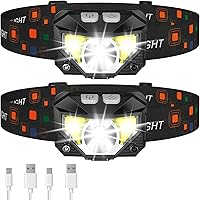
The LHKNL headlamp is a 2-pack with USB-C cables, a motion sensor mode and 8 lighting modes. It weighs 1.87 oz and runs for 4 to 10 hours when fully charged.
That makes it useful for night setup and for checking a mantle or globe without holding a flashlight in your teeth.
The Energizer 3-pack plugs into a standard outlet and turns on by itself when power fails. Each light runs for up to 3 hours and is rated as impact resistant up to 1 meter.
Keep one near the lantern so you can find it in a dark room.
The BLACK+DECKER dustbuster is a 1.4 lb cordless handheld vacuum with a built-in crevice tool and a wall mount. It runs for 10 minutes per charge.
It helps you clear ash, dirt and food crumbs after a camping meal or a garage lantern session.
Rule: one wide fuel lantern plus hands-free and auto-on lights covers the whole room.
What is a dual fuel generator and how does it work?
A dual fuel generator is a power unit that can run on two fuels, often gasoline and propane, through a selector or a mixed-fuel setup. It is not the same as a dual-fuel Coleman lantern.
The generator makes electricity, while the lantern makes light directly from a flame.
The link matters in an outage. A lantern gives cordless light, while a generator can run a refrigerator, fan or phone charger.
Some households use both for immediate light and appliance power.
Read What Is a Dual Fuel Generator and How Does It Work? to learn fuel switching, selector valves and runtime trade-offs. Propane is often cleaner for home storage.
Storage rules overlap for all fuels, with cool, ventilated storage away from ignition sources. A generator must run outdoors and far from windows because of exhaust and carbon monoxide risks.
What is a dual fuel inverter generator and how does it work?
A dual fuel inverter generator makes cleaner power than a standard generator and can run on two fuels, often gasoline and propane. That cleaner power matters for laptops, phones and some medical devices that need stable electricity.
Inverter generators use electronics to smooth the output. They are often quieter and more fuel-efficient than standard generators of similar size.
Dual-fuel versions let you switch fuels to extend runtime or to use propane for easier storage.
For lantern owners, the question is whether you need a generator at all. A Coleman lantern needs no electricity.
If your only goal is light, a lantern plus rechargeable lights is simpler and cheaper. If you need a refrigerator or well pump during an outage, a generator earns its place.
Read What Is a Dual Fuel Inverter Generator and How Does It Work? before you shop. It covers fuel switching, noise, runtime and safe outdoor placement.
How does a rechargeable light bulb work?
A rechargeable light bulb has a built-in battery and LED that keep it lit when the power goes out. It screws into a standard socket and charges while power is on, then acts like a lantern or flashlight in an outage.
It suits people who do not want to store liquid fuel. It gives light in its room with no flame, fumes or pumping, so it is safer for bedrooms and hallways than a fuel lantern.
It is not a replacement for a Coleman lantern outdoors. A bulb needs a working socket and gives less light than a bright mantle lantern, which works at a campsite or garage with no power.
Read how does a rechargeable light bulb work to compare charging, battery life and brightness. Use bulbs for instant indoor light and a fuel lantern for high outdoor light.
Which Coleman lantern fuel should you buy today?
Buy Coleman fuel for a classic liquid-fuel lantern, propane cartridges for a propane lantern, and gasoline only for a rated dual-fuel model. That one match decides the rest of your purchase.
If you are starting from zero, check the lantern's fuel label before you shop. Then buy a small amount of the correct fuel, a funnel for liquid fuel or spare cartridges for propane, and spare mantles and a globe.
Add a headlamp so your hands stay free.
For outage prep, add auto-on plug-in lights for hallways and bedrooms. Keep one fuel lantern for wide room light and one headlamp for tasks.
Store all fuel outdoors or in a detached ventilated space, away from heat and sparks.
Rule: match the fuel to the label on your lantern, then add hands-free light for setup and repair.
Frequently asked questions
Can I use unleaded gasoline in a Coleman lantern?
Only if your specific Coleman model is rated for unleaded gasoline. Many classic liquid-fuel lanterns use Coleman fuel, not gasoline, and some dual-fuel models accept both.
Check the model label and manual.
Fuel additives and seals differ by design.
Is Coleman fuel the same as propane?
No. Coleman fuel is a liquid fuel for pressurized liquid-fuel lanterns.
Propane is a gas stored under pressure in a small canister.
Each lantern type needs its own fuel, regulator and connection.
Do not interchange them.
How do I know which fuel my Coleman lantern uses?
Look for the fuel name printed on the tank, fount, valve or instruction label, then confirm it in the manual for that model. Older liquid-fuel lanterns usually need Coleman fuel.
Propane lanterns use a threaded propane cartridge.
How should I store Coleman lantern fuel at home?
Store fuel outdoors or in a well-ventilated detached space, away from heat, sparks and living areas. Keep the container closed, upright and labeled.
Follow local fire codes and the fuel maker's storage directions.
Why does my Coleman lantern sputter or burn yellow after refueling?
Wrong fuel, low pressure, a clogged generator or a damaged mantle can change the flame. Stop use, let the lantern cool and check the fuel type, pressure and parts.
Do not keep relighting a lantern that leaks or flares.