6 Best Solar Panel Kits (November 2026)
The best complete solar panel kits include the ECO-WORTHY 200 Watts 12 Volt/24 Volt Solar for flexible small off-grid systems, the SOLPERK Solar Panel Kit 20W 12V Solar for maintaining 12V batteries, and the Renogy 200W 12V N-Type RV Solar Panel for RV installation.
On this page (7 sections)
- The best solar panel kits for different setups
- How do you choose between 100W, 200W and 400W kits?
- Should you choose a PWM or MPPT solar controller?
- Do solar panel kits include batteries and inverters?
- How should you plan installation and care?
- More guides on this topic
- Which complete solar panel kit should you buy?
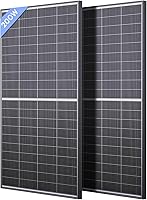
The best solar panel kit for most small off-grid systems is the ECO-WORTHY 200 Watts 12 Volt/24 Volt Solar. It combines 200 watts of monocrystalline panel capacity, a 30A PWM controller and wiring parts for a 12V or 24V connection.
Choose the SOLPERK 20W kit for maintaining a 12V battery, the Renogy 200W kit for an RV-focused setup, or the ECO-WORTHY 400W kit when you need more panel capacity. For portable campsite bundles, see our solar panel and battery kits for camping guide.
These are complete solar panel kits in different sizes, so the right pick depends on your daily load, battery and mounting area.
Start by estimating your load and battery needs with our guide to which solar panel size do I need. If your project is a shed or cabin, compare the space and power advice in our guides to the best solar panel kits for sheds and best solar panel kits for cabins.
Our picks at a glance
-
1
 Best for flexible small off-grid systems
ECO-WORTHY 200 Watts 12 Volt/24 Volt Solar
9.7/10 our score
See it on Amazon -
2
 Best for maintaining 12V batteries
SOLPERK Solar Panel Kit 20W 12V Solar
9.5/10 our score
See it on Amazon -
3

- 4
 Check it
Renogy 100W 12V Solar Panel Starter Kit
Best for a simple 100W starter system - 5
 Check it
ECO-WORTHY 400 Watt 12 Volt Premium Solar
Best for larger 12V power systems - 6
 Check it
Rvpozwer 200 Watt Solar Panel Kit
Best for a single 200W panel
The best solar panel kits for different setups
The best complete solar panel kit depends on whether you need battery maintenance, RV power, a compact 100W starting point or a larger 400W system. We compared panel output, controller type, voltage, included wiring and the stated use for each kit.
Our score weighs specs, features and buyer feedback against what you're shopping for. The products are listed from highest score to lowest score.
| Product | Best for | Power | Voltage | Controller | Our score |
|---|---|---|---|---|---|
| ECO-WORTHY 200 Watts 12 Volt/24 Volt Solar | flexible small off-grid systems | 200 watts | 12V or 24V | 30A PWM | 9.7 |
| SOLPERK Solar Panel Kit 20W 12V Solar | maintaining 12V batteries | 20 watts | 12V | 10A smart MPPT | 9.5 |
| Renogy 200W 12V N-Type RV Solar Panel | RV installation | 200 watts | 12V | 30A Adventurer-Li PWM | 9.4 |
| Renogy 100W 12V Solar Panel Starter Kit | a simple 100W starter system | 100 watts | 12V | 30A PWM | 8.9 |
| ECO-WORTHY 400 Watt 12 Volt Premium Solar | larger 12V power systems | 400 watts | 12V | 40A MPPT | 8.8 |
| Rvpozwer 200 Watt Solar Panel Kit | a single 200W panel | 200 watts | 30A | 8.6 |
ECO-WORTHY 200 Watts 12 Volt/24 Volt Solar: Best for flexible small off-grid systems
- 200 watts
- 12V or 24V connection
- 30A PWM charge controller
- 2 x 100W monocrystalline panels
Two 100W monocrystalline panels give this kit a useful starting point for RVs, campers, cabins and other small off-grid systems. It includes mounting brackets, solar cables and connectors.
Pros
- Supports 12V or 24V connection
- Includes 30A controller
- Includes mounting and connection parts
Cons
- Two-panel layout needs more mounting space
- PWM controller is less advanced than MPPT
The ECO-WORTHY 200 Watts 12 Volt/24 Volt Solar is the most flexible choice in this group. It includes 2 x 100W monocrystalline solar panels, a 30A PWM charge controller, 2 sets of Z mounting brackets, 16.4 ft 10AWG solar cables, 2-in-1 connectors and a 4.92 ft tray cable.
The panels measure 35.2 x 23.1 x 1.3 in each according to the listed dimensions, and the aluminum frames are designed for outdoor use. ECO-WORTHY states that the panels can produce up to 800Wh per day under 4 hours of full sunshine.
You can connect the panels in series for 24V or in parallel for 12V. That choice should follow the voltage of your battery, controller and other system parts.
Do not choose the wiring arrangement by panel wattage alone.
This is the strongest fit for a small RV, camper, cabin or shed system where 200W is useful and system voltage may change. For a dedicated setup, see our RV solar panel kits for 12V systems guide.
It is less convenient if you have room for only one panel.
Buy it when you want 200W with 12V or 24V connection options.
SOLPERK Solar Panel Kit 20W 12V Solar: Best for maintaining 12V batteries
- 20 watts
- 12V battery charging
- 10A smart MPPT controller
- 360-degree adjustable bracket
The 20W panel is designed for charging and maintaining 12V rechargeable batteries. Its adjustable bracket and included connection pieces suit vehicles, boats, trailers and similar small battery systems.
Pros
- Small 20W format
- MPPT controller
- Adjustable mounting bracket
Cons
- Not intended for high-power loads
- Limited to 12V systems
The SOLPERK Solar Panel Kit 20W 12V Solar is designed for maintaining 12V rechargeable batteries rather than powering a large off-grid load. Its title identifies a 20W panel and a 12V battery charger and trickle maintainer for small stationary or vehicle use.
The kit includes a smart 10A MPPT controller, a 360-degree adjustable mounting bracket, an alligator clip, an O-ring and mounting accessories. The controller has a three-stage charging design and indicator lights for charging status, which helps you see at a glance whether charging is happening.
SOLPERK identifies the panel as monocrystalline with A+ solar cells and states a cell efficiency range of 21% to 30%. The panel uses low-iron tempered glass and a corrosion-resistant aluminum frame for outdoor use in changeable weather.
This kit suits a car, motorcycle, boat, tractor, trailer or other application with a 12V rechargeable battery. Its 20W output is not the right starting point for running high-draw appliances, but it can help keep a stored battery topped up between uses.
Buy it when battery maintenance matters more than running loads.
Renogy 200W 12V N-Type RV Solar Panel: Best for RV installation
- 200 watts
- 12V output
- Adventurer 30A PWM controller
- Bluetooth module and cable set
This RV-focused kit combines two 100W monocrystalline panels with a 30A Adventurer-Li controller. It also includes cables, branch connectors, a Bluetooth module and a cable entry housing.
Pros
- Designed for RVs and campers
- 30A controller
- Includes Bluetooth module
Cons
- 12V system only
- Two-panel layout needs roof space
The Renogy 200W 12V N-Type RV Solar Panel is the best fit for an RV or camper installation that needs a 200W, 12V system. The kit includes 2 Renogy 100W 12V monocrystalline panels and an Adventurer-Li 30A PWM flush-mount controller.
Renogy includes a 30 ft 10AWG adaptor kit, a 16 ft 10AWG tray cable, one pair of branch connectors, a BT-1 Bluetooth module and a cable entry housing. It also includes pre-drilled panels and plug-and-play cables for mounting and connection work.
The controller supports lithium, lead-acid and gel batteries. Renogy also identifies protection against overcharging, overload, short circuit and reverse polarity.
The panels measure 41.8 x 20.9 x 1.4 in, so measure your available RV roof or mounting area first. For installation steps, follow our guide on how to install a Renogy solar panel kit.
Buy it when you want a detailed 200W RV package with Bluetooth hardware.
Renogy 100W 12V Solar Panel Starter Kit: Best for a simple 100W starter system
- 100 watts
- 12V output
- 30A PWM controller
- Expansion up to 400 watts
The 100W panel and 30A Wanderer controller form a straightforward starting point for an RV, boat, trailer or small off-grid system. Renogy states that the system supports expansion up to 400W.
Pros
- Simple single-panel starting point
- 30A controller
- Supports several battery types
Cons
- Lower starting output than the 200W kits
- Extra panels are needed for expansion
The Renogy 100W 12V Solar Panel Starter Kit is the simplest starting point for a small 12V system. It pairs a 100W panel with a 30A Wanderer PWM controller, cable and Z-brackets for a roof or ground mount.
Renogy states that the panel can generate an average of 500Wh per day, with results varying by sunlight. The panel uses a 22.5% cell efficiency rating and has an aluminum frame built for outdoor mounting.
The 30A controller supports AGM, gel, flooded and lithium batteries. Renogy also states that the system can expand up to 400W with additional solar panels, so the starter size does not have to be the final size.
A 100W starting point is easier to place than a 200W or 400W array, but it gives you less panel capacity at the beginning. Review your daily watt-hour target before choosing it for a cabin, shed or RV, and think about how much headroom you want for cloudy days.
Buy it when you want one 100W panel and room to expand later.
ECO-WORTHY 400 Watt 12 Volt Premium Solar: Best for larger 12V power systems
- 400 watts
- 4 x 100W monocrystalline panels
- 40A MPPT controller
- Bluetooth module
Four 100W panels and a 40A MPPT controller give this kit the highest panel capacity in the group. The Bluetooth module can send system data to a phone.
Pros
- Highest panel capacity here
- MPPT controller
- Bluetooth monitoring
Cons
- Needs the most mounting space
- 12V system requires careful wiring and load planning
The ECO-WORTHY 400 Watt 12 Volt Premium Solar is the largest system here. It includes 4 x 100W monocrystalline panels, a 40A MPPT charge controller, Bluetooth module and mounting Z brackets.
Each panel uses a 3.2 mm low-iron glass surface and a 35 mm aluminum alloy frame. The panels measure 35.2 x 23 x 1.37 in, so four-panel placement requires careful planning on an RV roof, boat or building.
ECO-WORTHY states that the system can generate an average of 1.6kWh per day depending on sunlight. The MPPT controller has a stated tracking efficiency of up to 99% and peak conversion efficiency of 98%.
The Bluetooth module transmits panel, battery and load data to a phone. Choose this kit when the extra panel capacity fits your energy plan and mounting area.
For a complete battery setup, compare the best Renogy solar panel and battery kits.
Buy it when you need the highest panel capacity in this roundup.
Rvpozwer 200 Watt Solar Panel Kit: Best for a single 200W panel
- Single 200W N-type panel
- 25% stated conversion efficiency
- 30A charge controller
- 10AWG solar and tray cables
A single 200W N-type panel can simplify panel-to-panel connections compared with two 100W panels. The kit includes a 30A controller, 10AWG cables and black Z brackets.
Pros
- Single-panel format
- 200W capacity
- Includes controller and cables
Cons
- Connection limits need careful attention
- Less product detail is available than for several other picks
The Rvpozwer 200 Watt Solar Panel Kit uses one 200W N-type panel instead of two 100W panels. The title identifies 25% efficiency, while the included product details identify a 30A charge controller, 10AWG solar cable, tray cable and black Z brackets.
A single-panel layout can simplify the panel arrangement when your mounting area works better with one larger board. The panel weighs 20.4 lb and has 60 cells, so handling and roof space need a little more thought than with a smaller panel.
Rvpozwer states an average daily generation of 1,000Wh or more under 5 to 6 hours of sunshine. That figure depends on sunlight and should not be treated as a guaranteed daily result for every season or location.
The usage guidance calls for inspecting the panels every 2 weeks and clearing leaves, dirt or other obstructions. It also limits parallel or series connections to 3 panels, so check the complete wiring plan before expanding.
Buy it when a single 200W panel suits your mounting space.
How do you choose between 100W, 200W and 400W kits?
Choose a 100W kit for a smaller starting system, 200W for a more useful general-purpose setup, and 400W when your energy target and mounting area justify the larger array. Panel wattage is only one part of the system.
A 100W kit may work for lighter loads or a first expansion step. The Renogy 100W kit includes a 30A controller and can expand up to 400W with additional panels.
A 200W kit gives you more panel capacity without the space commitment of four panels. The ECO-WORTHY 200W kit offers 12V or 24V connection options, while the Renogy and Rvpozwer 200W options are centered on 12V systems.
The ECO-WORTHY 400W kit has four 100W panels and a 40A MPPT controller. It needs more mounting room and more careful planning around cable paths, shading and battery capacity.
For smaller systems, compare the best small solar panel kits. If you are focused on a specific output, see the best 400 watt solar panel kits and best 200 watt solar panel kits with inverters.
Should you choose a PWM or MPPT solar controller?
Choose PWM for a simpler controller in a matched system. Consider MPPT when the kit includes it and you want maximum power point tracking.
The controller must match the panel arrangement, battery voltage, and expected current before you mount anything. That check matters more than the controller type alone.
The ECO-WORTHY 200W, Renogy 200W, and Renogy 100W kits use PWM controllers. The ECO-WORTHY 400W and SOLPERK 20W kits use MPPT controllers.
Controller type is therefore part of the kit choice, not a later add on. A complete kit with the right controller included is often easier than buying parts separately and hoping they match.
A controller rating is not the same as panel wattage. The 30A and 40A ratings describe current capacity, so follow the wiring and battery instructions when connecting components.
A larger panel does not automatically mean a better match. A 200W array wired for the wrong voltage can be less useful than a smaller array that fits the battery and controller cleanly.
PWM systems suit straightforward setups where panel voltage and battery voltage are already close. They keep the parts list simpler and provide basic regulation without extra tracking features.
MPPT systems can make better use of panel power when conditions vary through the day. They are worth considering when the kit already has one or when you plan a larger array.
Do not add panels or change series and parallel connections without checking controller limits. The Rvpozwer kit allows a maximum of 3 panels in parallel or 3 panels in series.
Series and parallel choices change voltage and current in different ways. The battery type matters as much as the panel count, so check that the controller, cables, and battery all support your planned arrangement.
Heat, shade, and panel angle can also affect what the controller receives. A tidy install with short, well routed cables and a panel kept clear of dirt will usually work better than a rushed setup.
Place the controller where you can see its indicators and reach the connections for checks. Label the battery connections carefully and test the system before you rely on it for regular use.
Build a simple care routine around the panel, bracket screws, cable runs, and controller lights. Clear anything that shades the surface and check that connectors remain fully seated.
Do solar panel kits include batteries and inverters?
These kits focus on panels, charge controllers and connection hardware, so you should confirm the battery and inverter separately. A charge controller regulates energy going from the panels to a battery, while an inverter changes stored DC power into AC power for compatible loads.
The SOLPERK kit is aimed at maintaining a 12V rechargeable battery. The Renogy kits identify compatibility with battery types, but the product information here does not identify a battery as included.
For battery-focused shopping, compare the best solar panel kits with batteries, best 200 watt solar panel kits with batteries and best 100 watt solar panel kits with batteries.
If you need AC output, review the best solar panel kits with inverters before choosing a panel package. For a 200W system with a charge controller, see the best 200 watt solar panel kits with charge controllers.
How should you plan installation and care?
Plan the panel position, cable route, controller location, and battery connection before mounting anything. Keep the panel arrangement, controller rating, and battery voltage consistent throughout the system.
Sketch the layout on paper first, including where cables will cross the roof or wall and where the controller will sit inside. That planning can save drilling in the wrong place and make the wiring easier to follow later.
Measure the mounting area against the panel size before you order brackets or fix screws. A panel that fits on paper may not fit once you allow room for cable bends, roof features, or a second panel.
Clear shade and dirt from the panel surface because indirect sunlight, cloudy conditions, heat, and buildup can reduce output. Rvpozwer recommends checking panels every 2 weeks for leaves, foreign objects, and bird droppings.
Use a soft cloth and clean water for routine cleaning, and avoid harsh scrubbing that could mark the glass. A quick look after a storm or dusty weather will show whether a clean is needed.
Use the included cables and connectors only within their stated limits. Avoid impacts during handling, and inspect connections before energizing the system.
Support long cable runs so they do not rub against sharp edges or flap in wind at speed. Keep tray cable and solar cable separated from moving parts and heat sources where possible.
The ECO-WORTHY 200W kit supports both 12V and 24V connection types. The rest of your equipment, including the battery, controller, and inverter, must match the selected voltage.
If you later move from 12V to 24V, review the whole system as one unit. Changing one part without checking the others can create a setup that does not work as intended.
Mount the controller in a dry spot with some airflow and room to see its display or indicator lights. Keep it away from heat and make sure the battery leads are secure before final tightening.
Test the system in stages and watch how it behaves in real sun. Note the time of day, weather, and battery reading so you have a baseline for later comparison.
Seasonal change is normal, so expect output to vary through the year. Shorter days, lower sun, and more cloud will reduce charging, and your load plan should allow for that.
Keep a simple maintenance rhythm and stick to it. Clear the panel, check bracket screws, look for cracked or chafed cable, and confirm that every connector is fully seated.
That routine takes little time and can catch small problems early. It also keeps the system ready for the trips, work, or backup use you bought it for.
More guides on this topic
- Best 100 Watt Solar Panel Kits with Inverters
- Use this guide when a 100 watt panel is your starting point and you also need AC power from an inverter, rather than DC charging alone.
- It helps you compare panel size, controller and inverter fit before you commit to a smaller system that may need to grow later.
- Read it alongside your load plan so the wattage, battery and inverter are sized as one system from the start.
Which complete solar panel kit should you buy?
The ECO-WORTHY 200 Watts 12 Volt/24 Volt Solar is the best overall choice when you want 200W, a 30A controller and flexibility between 12V and 24V wiring. Pick the SOLPERK 20W kit for maintaining one 12V battery.
Choose the Renogy 200W kit for an RV-focused package with Bluetooth hardware and a cable entry housing. Choose the Renogy 100W starter kit when you want a smaller first step with room to expand.
For the largest system here, the ECO-WORTHY 400W kit supplies four 100W panels and a 40A MPPT controller. If one 200W panel fits your space better, the Rvpozwer kit is the most direct match.
Match the final pick to your battery, mounting area and daily load rather than wattage alone. A smaller kit that fits your roof, wiring and budget will usually serve you better than a larger array that feels crowded.
For another solar comparison, see our guide to the best solar panel kits with lights or compare the best Renogy solar panel kits.
Our top 3 picks at a glance
-
1
Best for flexible small off-grid systems
ECO-WORTHY 200 Watts 12 Volt/24 Volt Solar
9.7/10 our score
See it on Amazon -
2
Best for maintaining 12V batteries
SOLPERK Solar Panel Kit 20W 12V Solar
9.5/10 our score
See it on Amazon -
3
Frequently asked questions
What should a complete solar panel kit include?
A complete solar panel kit should match the panel output with a charge controller, connection cables and mounting hardware. Some kits also include branch connectors, brackets, a cable entry housing or Bluetooth monitoring.
Check whether a battery and inverter are included, because these kits do not all contain the same parts.
Are monocrystalline solar panel kits better?
Monocrystalline solar panel kits can be a strong choice when you want a high-efficiency panel in a limited mounting area. The picks here use monocrystalline panels or N-type technology, but total system fit also depends on wattage, controller type, voltage and available sunlight.
What is the difference between PWM and MPPT controllers?
PWM controllers are a simpler way to regulate charging between a panel and battery. MPPT controllers can track the panel's maximum power point and may make better use of available panel power, but the controller must still match the system voltage, battery and wiring.
How many watts should a small solar panel kit have?
Choose wattage from your daily energy use, battery size and available sunlight. A 20W kit suits battery maintenance, while 100W to 200W kits are more useful starting points for small RV or cabin systems.
A 400W kit is better when you need more panel capacity and have room to mount it.
Do these solar panel kits include an inverter?
The listed kits center on solar panels and charge controllers, and the supplied product information does not identify an inverter as an included component. If you need standard household AC power, choose an inverter that matches your battery voltage and expected load.
See our guide to solar panel kits with inverters.