9 Best Renogy Solar Panels (November 2026)
The best Renogy solar panels for portable, roof and off-grid charging include the Renogy 400W Portable Solar Panel for high-capacity portable charging, the Renogy Solar Panels 100W 2PCS for expandable roof arrays, and the Renogy 200W Portable Solar Panel for Power for compact portable charging.
On this page (6 sections)
- Which Renogy solar panels suit each installation?
- Best Renogy solar panels by format and size
- How do you choose Renogy panel wattage and format?
- Are Renogy flexible solar panels different from folding panels?
- What should you check before connecting a Renogy panel?
- Which Renogy solar panel should you choose?
The best Renogy solar panels cover different jobs: portable charging, RV roof installs and larger fixed arrays. The Renogy 400W Portable Solar Panel leads for high-capacity portable use, while the 100W and 200W rigid options fit installations where you have a set mounting area.
We compared panel format, rated power, stated cell efficiency, included equipment and the electrical details that affect setup. The right Renogy flexible solar panel is a separate choice from these rigid and folding models, so verify the format before you plan a mount.
Our picks at a glance
-
1
 Best for high-capacity portable charging
Renogy 400W Portable Solar Panel
9.6/10 our score
See it on Amazon -
2

-
3
 Best for compact portable charging
Renogy 200W Portable Solar Panel for Power
9.4/10 our score
See it on Amazon
- 4
 Check it
Renogy Solar Panels 200 Watt N-Type
Best for compact RV roof installs - 5
 Check it
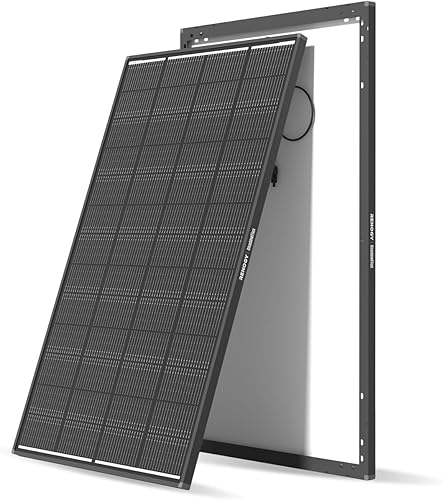
Renogy ShadowFlux Solar Panel 200 Watt
Best for partly shaded installations - 6
 Check it
Renogy 100 Watt Solar Panel N-Type
Best for a single-panel 12V setup - 7
 Check it
Renogy 100W 12V Solar Panel Starter Kit
Best for a ready-to-wire starter setup - 8
 Check it
RENOGY REGO 200W Portable Solar Panel
Best for splash-resistant outdoor use - 9
 Check it
Renogy Bifacial Solar Panel 1180W N-Type 16BB
Best for large fixed arrays
Which Renogy solar panels suit each installation?
The 400W suitcase is the clearest choice for movable high-capacity charging, and the 200W portable panel is easier to carry for smaller power station setups. For a roof, compare the rigid 100W and 200W panels with your mounting space, controller and battery system.
If you're still estimating your array, start with which solar panel size you need. Cell type can also matter when comparing panels, so see what a monocrystalline solar panel is.
| Product | Best for | Power | Format | Weight | Our score |
|---|---|---|---|---|---|
| Renogy 400W Portable Solar Panel | high-capacity portable charging | 400W | Foldable portable suitcase | 30.2 lb | 9.6 |
| Renogy Solar Panels 100W 2PCS | expandable roof arrays | Two rigid panels | 9.5 | ||
| Renogy 200W Portable Solar Panel for Power | compact portable charging | 200W | Foldable portable panel | 13.89 lb | 9.4 |
| Renogy Solar Panels 200 Watt N-Type | compact RV roof installs | 200W | Rigid panel | 9.2 | |
| Renogy ShadowFlux Solar Panel 200 Watt | partly shaded installations | 200W | Rigid panel | 9.1 | |
| Renogy 100 Watt Solar Panel N-Type | a single-panel 12V setup | 100W | Rigid panel | 9.0 | |
| Renogy 100W 12V Solar Panel Starter Kit | a ready-to-wire starter setup | 100W | Starter kit | 8.9 | |
| RENOGY REGO 200W Portable Solar Panel | splash-resistant outdoor use | 200W | Foldable portable panel | 8.1 | |
| Renogy Bifacial Solar Panel 1180W N-Type 16BB | large fixed arrays | Two rigid bifacial panels | 7.9 |
Best Renogy solar panels by format and size
These Renogy picks are ordered by their assigned scores, with different formats serving different charging needs. A high score does not mean every panel is right for every battery, roof or power station.
Our score weighs specs, features and buyer feedback against what you're shopping for.
Renogy 400W Portable Solar Panel: Best for high-capacity portable charging
- 400W maximum power
- Folds to 33.7 x 27.95 in
- 30.2 lb
- MC4 output cables
The 400W foldable suitcase suits portable power stations and battery systems when you need a high panel rating in a movable format. Match its MC4 connectors and electrical limits to your equipment.
Pros
- 400W rating in a foldable format
- Carry case and kickstands
- IP67 rating
Cons
- Heavier than smaller portable panels
- 4-in-1 adapter sold separately
The Renogy 400W Portable Solar Panel is the top choice when you want a portable panel with a higher rated output than the 100W and 200W options here. It folds to 33.7 x 27.95 in, weighs 30.2 lb and includes a carry case and kickstands.
Renogy describes its construction as fiberglass-reinforced with ETFE coating and an aluminum backsheet. The panel has an IP67 rating, and Renogy provides a 3-year materials and workmanship warranty.
Its MC4 output cables connect to compatible equipment, but the 4-in-1 adapter is sold separately. For use with a 12V or 24V battery system, pair it with a compatible solar charge controller and check your controller's electrical limits first.
Choose this model if you can handle its folded size and weight and need a movable 400W-rated panel. Check connector and input requirements before pairing it with a power station.
Renogy Solar Panels 100W 2PCS: Best for expandable roof arrays
- Two 100W rigid panels
- 25% stated cell efficiency
- 16BB N-Type cells
- IP67 rating
Two separate 100W panels give you placement flexibility for a roof or off-grid array. Their connectors and voltage must suit the charge controller and battery system.
Pros
- Two panels can be positioned separately
- 25% stated cell efficiency
- 5-year material and workmanship warranty
Cons
- Requires mounting and system wiring
- Plan space for both panels
Two 100W panels give you a combined 200W rating in separate rigid modules. That can make them easier to place around roof features than one larger panel, provided you have room for both frames and the wiring.
Renogy specifies 16BB N-Type cells and 25% conversion efficiency for this set. The panels measure 34.1 x 22.8 x 1.2 in each, and the stated warranty for materials and workmanship is 5 years.
The pair is suited to a 12V battery system, but the panels still need a compatible controller and a correctly sized installation. Read our best 100 watt solar panel options if you'd rather compare single-panel choices.
Pick this set if two separate modules fit your roof layout better than one panel. Make sure your planned wiring keeps voltage and current within the controller's limits.
For an RV installation, see how to wire solar panels on an RV.
Renogy 200W Portable Solar Panel for Power: Best for compact portable charging
- 200W maximum power
- Folds to 23.72 x 22.99 x 1.97 in
- 13.89 lb
- USB-C PD and dual USB-A
This foldable panel is lighter than the 400W suitcase and includes USB outputs for direct device charging. Its MC4 output still needs a compatible power station or solar charging setup.
Pros
- Portable 200W format
- USB-C PD and dual USB-A outputs
- Four kickstands
Cons
- 4-in-1 adapter sold separately
- Confirm power station input compatibility
This 200W portable panel folds to 23.72 x 22.99 x 1.97 in and weighs 13.89 lb. For another portable option, see the EcoFlow 220W panel review.
Its smaller packed size and direct USB-C PD and dual USB-A outputs make it useful when you want to charge devices as well as connect to a compatible power station.
The panel uses 16BB N-Type cells and has a stated efficiency of 25%. Four kickstands offer 40°, 50° and 60° positioning angles, and the panel has an accessory pouch and reinforced grommets.
It outputs through MC4 cables, and Renogy's 4-in-1 adapter is sold separately. Confirm the voltage, current and connector requirements of your power station before connecting it.
For Jackery-specific setup, see how to use Jackery solar panels.
For readers comparing portable formats, our guide to the best portable 200 watt solar panel looks at more options. Choose this Renogy if direct device ports and a lighter foldable format matter to you.
Renogy Solar Panels 200 Watt N-Type: Best for compact RV roof installs
- 200W rigid panel
- 25% stated cell efficiency
- 16BB N-Type cells
- 24V system suitability
This rigid 200W panel is aimed at space-conscious van and RV installations. Check the panel's voltage against the controller's input limit and the battery system before wiring.
Pros
- 25% stated cell efficiency
- Made for 12V and 24V battery systems
- 10-year material and workmanship commitment
Cons
- Rigid format needs a fixed mounting area
- Controller sold separately
Renogy's rigid 200W N-Type panel targets installations where roof space is limited, including Class B vans. It measures 49.7 x 30.1 x 1.2 in and weighs 23.4 lb.
The panel uses 16BB N-Type cells and states 25% efficiency. Renogy describes it as suitable for 12V and 24V battery systems, but the controller's maximum PV input voltage must also fit the panel arrangement.
This is a roof panel, so plan a fixed mounting area and cable route before buying. The controller is not included, and series wiring changes the array's voltage.
Choose this model for a 200W rigid panel in a compact roof layout. If you're comparing a different brand in the same category, see our best ECO-WORTHY solar panel picks.
Renogy ShadowFlux Solar Panel 200 Watt: Best for partly shaded installations
- 200W rigid panel
- ShadowFlux anti-shading technology
- 25% stated cell efficiency
- IP67 rating
ShadowFlux is intended for installations where trees, roof features or other obstructions may shade parts of the panel. Renogy recommends an MPPT controller and specifies a minimum 50V PV input limit.
Pros
- Designed for partial shading
- 25% stated cell efficiency
- 5-year output and material and workmanship commitment
Cons
- Needs a compatible controller
- Keep more than half the panel in direct sun for best results
ShadowFlux is the Renogy 200W panel in this group designed for partial shading from objects such as leaves, roof features or rigging. Renogy says its anti-shading technology reduces the effect of shaded areas and helps lower hot-spot risks.
It uses N-Type cells with 16BB technology and states 25% efficiency. The rigid panel measures 49.69 x 30.08 x 1.18 in, weighs 23.8 lb and carries a 5-year output and materials and workmanship commitment.
Renogy recommends an MPPT controller, with at least a 50V maximum PV input and charging current above 10A. Keep more than half the panel in direct sunlight for best results.
Choose ShadowFlux if some partial shade is hard to avoid and the controller requirements fit your system. For more on travel-ready panel formats, compare our best folding solar panels.
Renogy 100 Watt Solar Panel N-Type: Best for a single-panel 12V setup
- 100W rigid panel
- 25% stated cell efficiency
- 16BB N-Type cells
- IP67 rating
The single 100W panel suits a smaller roof or an array that may grow later. Pair it with a controller whose PV input rating matches the panel and system wiring.
Pros
- Compact 100W size
- 25% stated cell efficiency
- 10-year material and workmanship commitment
Cons
- Controller and mounting hardware not included
- Rated output varies with conditions
This single 100W panel is a smaller rigid option for an RV roof or off-grid array. Its stated dimensions are 34.1 x 22.8 x 1.2 in, and it weighs 13 lb.
Renogy specifies 16BB N-Type cells and 25% conversion efficiency. The panel is intended for a 12V system and has an IP67 rating, but it does not include a charge controller or mounting hardware.
The published maximum voltage is 22.79V, so use that figure when checking controller compatibility. Rated power is measured under standard conditions; sunlight, temperature, dirt and shade can reduce actual output.
This is a sensible format to consider if a single panel fits your energy plan and roof. Add another only after checking the controller and wiring limits.
Renogy 100W 12V Solar Panel Starter Kit: Best for a ready-to-wire starter setup
- 100W panel
- 30A PWM charge controller
- Cables and Z-brackets included
- Expansion up to 400W
This kit combines a 100W panel with a 30A PWM controller, cables and Z-brackets. It supports compatible AGM, gel, flooded and lithium batteries, with additional panels for expansion up to 400W.
Pros
- Includes controller and mounting brackets
- Supports several battery types
- Can expand up to 400W
Cons
- PWM controller rather than MPPT
- Check included cable needs for your installation
The 100W 12V Starter Kit packages a rigid panel with a 30A PWM charge controller, cables and Z-brackets. It suits a buyer who wants those core parts together instead of selecting them separately.
The kit supports compatible AGM, gel, flooded and lithium batteries. Renogy says it can expand up to 400W with additional panels, so check the controller's system requirements and the battery's charging limits before expanding.
The panel's stated efficiency is 22.5%, and the kit includes a 10-year panel materials and workmanship plan plus a 2-year controller plan. The controller has an RS232 Bluetooth port for an optional BT-1 module.
Choose this kit if its included PWM controller and mounting parts fit your setup. It provides a more complete starting point than a panel alone, though you still need to confirm cable lengths and battery compatibility.
RENOGY REGO 200W Portable Solar Panel: Best for splash-resistant outdoor use
- 200W foldable panel
- 23.5% stated conversion efficiency
- USB-C PD and dual USB-A
- IP65 rating
The REGO foldable panel offers portable charging with direct USB outputs and mounting holes. Its IP65 rating covers splashes, so avoid prolonged soaking or heavy rain.
Pros
- Direct USB charging
- Foldable with mounting holes
- 2-year materials and workmanship warranty
Cons
- Not intended for prolonged soaking or heavy rain
- 4-in-1 adapter sold separately
The RENOGY REGO 200W is a foldable portable option with USB-C PD and two USB-A ports for direct device charging. It weighs 13.89 lb according to its description and has mounting holes, buckles and Velcro straps.
Its stated efficiency is 23.5%, and its IP65 rating is for splash and dust resistance. Avoid prolonged soaking or heavy rain, and note that the output cables are MC4, with the 4-in-1 adapter sold separately.
Renogy provides a 2-year materials and workmanship warranty and a 12-year output warranty with a stated minimum of 80% of rated power. Check the exact power station connector and input limits before use.
Pick the REGO if portable charging and USB outputs are priorities. Its splash rating calls for more care around rain than the IP67 rigid and portable panels above.
Renogy Bifacial Solar Panel 1180W N-Type 16BB: Best for large fixed arrays
- Two 590W rigid panels
- 1180W combined rated power
- Bifacial design
- IP68-rated junction box
This two-panel set is intended for larger fixed installations with room for the panels and compatible system equipment. Renogy says the transparent backsheet can add energy production depending on conditions.
Pros
- High combined rated power
- Bifacial design
- N-Type cells with 16BB technology
Cons
- Large, heavy panels need planned mounting
- System components and electrical compatibility need checking
This set includes two 590W rigid panels for a combined rated output of 1180W. Each panel weighs 58.4 lb, so it needs a planned mounting area and installation hardware suited to the roof or ground array.
The panels use N-Type cells and 16BB technology, with a transparent backsheet for bifacial generation. Renogy says the design can increase energy production by 5% to 30%, depending on conditions.
The set's scale makes it a fit for a larger fixed system rather than a portable camping setup. Confirm the controller, inverter, battery, mounting and wiring ratings as a complete system before installation.
Choose this set only if your project calls for two large fixed panels and the equipment supports their combined output. Its high wattage alone does not determine whether it fits your system.
How do you choose Renogy panel wattage and format?
Match panel wattage to your daily energy use, battery capacity and available sunlight, then choose a format that fits the installation. A larger watt rating cannot overcome an undersized controller or incompatible power station input.
For portable charging, compare folded dimensions and weight with how far you'll carry the panel. A rigid roof panel stays in place, while a folding panel can be repositioned as the sun moves.
A 100W panel is a smaller building block, while 200W panels provide more rated power per module. The 400W portable suitcase suits higher portable output, and the 1180W bifacial pair is for much larger fixed arrays.
If you need a portable backup source for an RV campsite, solar may work alongside a generator. Our guide to the best portable dual fuel generator for RV camping covers a separate backup option.
Are Renogy flexible solar panels different from folding panels?
Yes. Flexible panels are designed to bend within their approved limits, while folding panels use hinged sections for storage and setup; neither format should be assumed to fit every curved or uneven surface.
The Renogy models featured here include rigid framed modules and foldable portable panels. They do not tell you which Renogy flexible solar panel will suit a curved roof, so check the specific model's bend limits, mounting instructions and heat guidance before installation.
A folding panel may be easier to store between trips, while a flexible panel may suit a surface that cannot take a rigid frame. Compare both with your actual mounting surface and installation needs.
What should you check before connecting a Renogy panel?
Check the panel's maximum voltage and current against the charge controller or power station input limits. Then verify connector type, system voltage, battery chemistry and whether a controller or adapter cable is included.
Series wiring increases voltage, while parallel wiring increases current. The selected arrangement must stay within every connected component's ratings, including controller input limits and cable capacity.
The portable panels here use MC4 output cables, and some require a separately sold adapter to connect to a power station. Our guide to Renogy solar panel cables and connectors explains what to check before you join components.
Which Renogy solar panel should you choose?
Choose the Renogy 400W Portable Solar Panel if you need high rated output in a foldable format, or the 200W portable panel if lighter carrying and direct USB charging matter more. For roofs, select a rigid 100W or 200W panel based on available space and your controller's limits.
Pick ShadowFlux when partial shade is a concern, the starter kit when you want a panel and PWM controller together, and the bifacial 1180W set only for a larger fixed array. The best Renogy solar panels are the ones whose format, wattage and electrical ratings fit your equipment.
Our top 3 picks at a glance
-
1
Best for high-capacity portable charging
Renogy 400W Portable Solar Panel
9.6/10 our score
See it on Amazon -
2
-
3
Best for compact portable charging
Renogy 200W Portable Solar Panel for Power
9.4/10 our score
See it on Amazon
Frequently asked questions
Are Renogy flexible solar panels a good fit for curved surfaces?
A flexible panel can suit a surface where a rigid framed module cannot sit flat, but confirm its allowed bend radius, mounting method and heat limits before choosing one. The Renogy models in this comparison are rigid or foldable formats, so they are not substitutes for a flexible panel.
Check the exact model guidance before attaching any panel to a curved roof.
Should I choose a Renogy portable or rigid solar panel?
Choose a portable panel if you'll reposition it between campsites or use it with a compatible power station. A rigid panel is better suited to a planned roof or fixed off-grid installation, where you can mount it and wire it through a compatible controller.
Compare stored size, available roof area and connector requirements before deciding.
How do I choose a Renogy solar panel size?
Start with your daily energy use in watt-hours, then account for sunlight, shading, battery capacity and controller limits. A 100W panel is a smaller building block, while 200W and 400W formats provide higher rated power when conditions and equipment allow.
Use our solar panel size guide to work through the sizing steps.
What is the difference between Renogy N-Type and ShadowFlux panels?
Both product lines use N-Type cells and state 25% efficiency for the models here. ShadowFlux adds anti-shading technology intended to reduce output losses when parts of the panel are shaded.
Neither feature removes the need to place panels in good sun and match their electrical limits to the controller.


