Best 400 Watt Solar Panels: Top 9 Picks (November 2026)
The best 400 watt solar panels include the Callsun N-Type 16BB 400W Bifacial Solar Panel for partial shade, the Renogy 400W Portable Solar Panel (best portable solar suitcase), and the Renogy Solar Panels 400 Watt N-Type for Class B vans.
On this page (3 sections)
The best 400 watt solar panels give you high output in a smaller array than several 100W modules, but the right choice depends on where you will install them. Fixed rooftops favor compact rigid N-type panels, while camping and power station users need a foldable solar suitcase.
We compared the stated power, cell design, efficiency, panel count, dimensions, connectors and intended use for each pick. Our score weighs specs, features and buyer feedback against what you're shopping for.
For help with voltage, battery sizing and controller matching, read our guide to which solar panel size do I need.
Our picks at a glance
-
1
 Best for partial shade
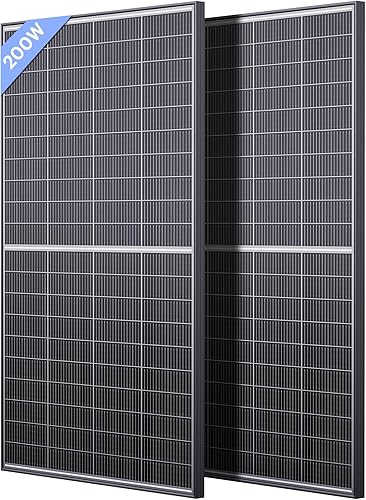
Callsun N-Type 16BB 400W Bifacial Solar Panel
9.7/10 our score
See it on Amazon -
2

-
3

- 4
 Check it
ECO-WORTHY 400W Solar Panels N-Type 4pcs
Best for DIY 12V systems - 5
 Best for long-term rooftop useCheck it
- 6
 Best for reflective groundCheck it
- 7
 Check it
CTOLITY 400W Portable Solar Panel for Power
Best for cable flexibility - 8
 Best for large off-grid arraysCheck it
- 9
 Check it
DOKIO 400W 31V Monocrystalline Solar Panel
Best for simple shed installations
Which 400 watt solar panel is best for each use?
The Callsun is the best overall match for buyers who want bifacial output and shade tolerance. Renogy leads for portable charging, while the ECO-WORTHY four-panel kit gives DIY users more freedom to spread 400W across a roof or rack.
| Product | Best for | Power | Size | Materials | Our score |
|---|---|---|---|---|---|
| Callsun N-Type 16BB 400W Bifacial Solar Panel | partial shade | 400W total from 2 x 200W panels | 51.3 x 30.3 x 1.4 in per panel | Tempered glass, aluminum alloy frame, N-type monocrystalline cells | 9.7 |
| Renogy 400W Portable Solar Panel | portable solar suitcase | 400W | Fiberglass, ETFE coating, aluminum backsheet | 9.6 | |
| Renogy Solar Panels 400 Watt N-Type | Class B vans | 400W total from 2 x 200W panels | 49.7 x 30.1 x 1.2 in per panel | Aluminum, monocrystalline silicon and tempered glass | 9.5 |
| ECO-WORTHY 400W Solar Panels N-Type 4pcs | DIY 12V systems | 4 x 100W panels | 35.63 x 23.03 x 1.18 in per panel | 9.4 | |
| HQST 400W Solar Panel | long-term rooftop use | 2 x 200W panels | Monocrystalline silicon, aluminum, tempered glass and polymer | 9.2 | |
| JJN 400W Bifacial Solar Panel | reflective ground | 400W | 53.7 x 30.3 x 1.18 in | Aluminum, monocrystalline silicon and tempered glass | 9.0 |
| CTOLITY 400W Portable Solar Panel for Power | cable flexibility | 400W | 8.7 | ||
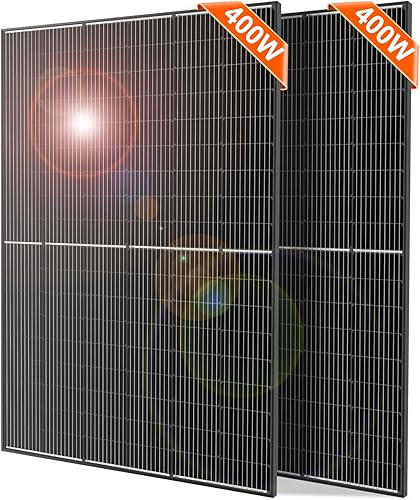
| DOKIO 800W Solar Panels | large off-grid arrays | 800W total from 2 x 400W panels | Aluminum, monocrystalline silicon and tempered glass | 8.5 | |
| DOKIO 400W 31V Monocrystalline Solar Panel | simple shed installations | 400W maximum power | 67.8 x 44.6 x 1.2 in | Monocrystalline silicon | 8.0 |
Best 400 watt solar panels for fixed installations
Rigid panels make the most sense when you have a permanent roof, shed, cabin or RV mounting plan. Measure the available surface first, then leave room for mounting hardware, cable routing and access around the array.
Callsun N-Type 16BB 400W Bifacial Solar Panel: Best for partial shade
- 2 x 200W N-type panels
- 25.6% efficiency
- Bifacial design
- Dual-module parallel anti-shade design
Two 200W N-type bifacial panels can be connected in series for 400W total power. The divided design helps limit the effect of partial shade on one section.
Pros
- 25.6% stated efficiency
- Bifacial power generation
- Suitable for RV, marine, rooftop and off-grid use
Cons
- Two panels need more mounting space than one module
- Actual output changes with sunlight and temperature
Callsun earns the top score because its 400W total comes from two 200W N-type bifacial panels, rather than one very large module. Each panel measures 51.3 x 30.3 x 1.4 inches and weighs 23.8 lb.
The 16BB cell design has a stated efficiency of 25.6%. Its bifacial construction can collect direct, reflected and diffuse light from the rear when the installation leaves suitable space behind the panel.
The dual-module parallel design divides each panel into two operating sections. If one section is partly shaded by a tree or building, the other section can continue producing power.
Two panels in series reach about 54.62V open-circuit voltage and 400W total under the stated configuration. Check your power station's voltage and current limits before wiring them.
The tempered glass, corrosion-resistant aluminum frame and IP68 junction box suit outdoor use. Choose Callsun when partial shade or a 60V-class portable power station matters most.
Renogy Solar Panels 400 Watt N-Type: Best for Class B vans
- 2 x 200W N-type panels
- 25% efficiency
- 16BB cell design
- 24V system suitability
Two compact 200W modules give Class B van owners a 400W N-type array for tight roof spaces. Renogy also describes the panels as suitable for 12V and 24V battery systems with the right controller.
Pros
- 25% stated efficiency
- Compact panel footprint
- 16BB N-type cells
Cons
- Requires a charge controller and battery for an off-grid system
- Series wiring needs a controller with suitable PV input voltage
Renogy's N-type pair is a strong choice for a Class B van because each panel measures 49.7 x 30.1 x 1.2 inches. The package contains two 200W panels for 400W total power.
Its 16BB cells have a stated efficiency of 25%. The 24V system designation describes the battery-system fit, not the panel's actual voltage, so the charge controller still needs to match the panel arrangement.
Renogy describes the panels as suitable for 12V and 24V battery systems, including lithium, AGM and deep-cycle batteries. A charge controller, battery and suitable cables are still needed to complete an off-grid system.
The aluminum, monocrystalline silicon and tempered glass build suits roof, marine, cabin and farm installations. Choose this pair when a compact rigid layout matters more than portability.
For more brand-specific comparisons, see our guide to best Renogy solar panels.
HQST 400W Solar Panel: Best for long-term rooftop use
- 2 x 200W N-type panels
- 16BB Grade A+ cells
- Up to 25.4% efficiency
- IP65 protection
HQST combines two 200W N-type panels with a compact footprint for vans, trailers, boats, rooftops and off-grid systems. The brand describes a 30-year service life with 87.4% output.
Pros
- Compact 200W panels
- 16BB N-type cells
- Rated for low-light performance
Cons
- The package contains two panels
- IP65 is lower than the IP67 or IP68 protection stated for some picks
HQST uses two compact 200W N-type panels with 16BB Grade A+ cells. Each panel is 46.3 x 30.1 x 1.2 inches, which can make roof planning easier than using fewer but wider modules.
The brand states up to 25.4% efficiency and describes the cells as suitable for low-light conditions. HQST also gives a 30-year service-life claim with 87.4% output, which is useful to consider when comparing long-term rooftop plans.
The aluminum, tempered glass and polymer construction has IP65 protection. The panels are described for RVs, trailers, boats, rooftops, farms, tiny houses, sheds and off-grid systems.
Choose HQST if you want a compact two-panel arrangement and a long stated service-life target. Its lower protection rating than some other picks makes installation details and cable placement worth checking.
JJN 400W Bifacial Solar Panel: Best for reflective ground
- 2 x 200W modules
- 23% efficiency
- Bifacial cells
- 10BB cell design
JJN uses a bifacial design that can gain more from reflective surfaces behind the panels. Its compact 200W modules suit RVs, boats, campervans and off-grid cabins.
Pros
- Bifacial design
- IP65 junction box and IP67 connectors
- 10BB Grade A cells
Cons
- The stated rear-side gain depends on the ground surface and installation
- The package contains the solar panel only
JJN offers two 200W bifacial modules with a stated efficiency of 23%. Each panel is 53.7 x 30.3 x 1.18 inches, and the package contains the solar panel only.
The bifacial design can gain more from a white reflective surface behind the panels. JJN describes possible rear-side gains that vary by surface, including grass, sand and gravel, so installation conditions matter.
Its 10BB Grade A cells, black corrosion-resistant aluminum frame, IP65 junction box and IP67 connectors suit outdoor RV, home, farm, camping and marine use. The panels are rated for 2400Pa wind loads and 5400Pa snow loads.
Choose JJN when you have a reflective mounting surface and want two rigid modules. Avoid assuming the rear-side gain will be the same on every roof or ground surface.
Best 400 watt solar panels for flexible layouts
Smaller panels can fit around vents, roof edges and existing hardware, but they need more mounts and cable connections. A single large module uses fewer connections, though it demands a larger uninterrupted surface.
ECO-WORTHY 400W Solar Panels N-Type 4pcs: Best for DIY 12V systems
- 4 x 100W panels
- 25% stated efficiency
- 16BB N-type bifacial cells
- MC4 connectors
Four 100W panels let you arrange a 400W array around a roof, shed or RV layout. The smaller modules can be easier to position, but they also require more mounting points and connections.
Pros
- Four-panel layout offers placement flexibility
- N-type bifacial design
- Pre-drilled mounting holes
Cons
- More panels and connections to install
- The four panels arrive across two boxes
ECO-WORTHY divides 400W into 4 x 100W N-type bifacial panels. Each panel measures 35.63 x 23.03 x 1.18 inches, so the layout can work where two 200W panels cannot fit cleanly.
The 16BB cells have a stated efficiency of 25%. Pre-installed bypass diodes sit in IP68-rated junction boxes, and each panel has a 35-inch cable.
The panels are designed for 12V and 24V battery charging in on-grid, off-grid and hybrid systems. Pre-drilled holes and MC4 connectors support a straightforward DIY installation, but four panels mean more mounting points and branch connections.
Choose ECO-WORTHY when layout flexibility is more important than minimizing hardware. The complete set arrives across two boxes, so check that both arrive before starting the installation.
DOKIO 400W 31V Monocrystalline Solar Panel: Best for simple shed installations
- 400W monocrystalline panel
- 31V output
- 9.84 ft MC4 cable
- Pre-drilled mounting holes
A single 400W module can reduce the number of branch connections compared with four 100W panels. Its long MC4 lead and pre-drilled holes fit shed, greenhouse, yard and cabin projects.
Pros
- One large 400W module
- Long built-in MC4 cable
- Pre-drilled mounting holes
Cons
- Large footprint can be difficult on small roofs
- The controller must suit the panel's voltage and current
DOKIO's 400W monocrystalline panel is a single large module measuring 67.8 x 44.6 x 1.2 inches. Its 9.84 ft MC4 cable can help reach a controller without an immediate extension.
The panel has a stated 31V output and 13.24A amperage capacity. Its 400W rating is measured under standard test conditions, so heat, shade, cable length and controller performance affect actual output.
Pre-drilled holes align with common Z-brackets, rails and tilt mounts. The tempered glass panel and aluminum frame are intended for outdoor yard, greenhouse, shed, cabin, patio and off-grid use.
For a 12V system, DOKIO prioritizes parallel wiring. Use series wiring only when the charge controller has a suitable high-input range.
Choose this panel when you want one 400W module and long built-in leads. Measure the installation area carefully because its footprint is larger than the two-panel options.
DOKIO 800W Solar Panels: Best for large off-grid arrays
- 2 x 400W panels
- 31V output
- 9.84 ft MC4 lead per panel
- 12V/24V system use
This two-panel DOKIO package supplies 800W total, so it suits buyers planning a larger yard, shed, cabin or off-grid array. The long leads can reduce the need for immediate extensions.
Pros
- 800W total array
- 9.84 ft lead per panel
- MC4 adapters can connect to many power stations
Cons
- Large panels need substantial installation space
- The controller and inverter must handle the total current
DOKIO's 800W package contains two 400W monocrystalline panels, each measuring 67.8 x 44.6 x 2.4 inches. It is the right scale for a larger yard, shed, cabin or off-grid system rather than a small RV roof.
Each panel has a 9.84 ft MC4 lead. The package uses fewer connections than eight 100W panels, which can make a large array cleaner to wire.
DOKIO describes the panels for 12V and 24V systems, with AGM, gel and LiFePO4 batteries when paired with a suitable PWM or MPPT controller. For 12V systems, parallel wiring is the stated default.
The pair provides 800W under standard test conditions. Size the controller and inverter for the total current, and check that the installation area can support two large rigid modules.
Choose this package when your system needs more than one 400W panel. It is too large for buyers who only need a compact portable charging setup.
Best 400 watt solar panels for portable power stations
Portable panels trade permanent mounting for faster setup and easier storage. They still need matching voltage, current and connector requirements, even when an adapter makes the physical connection simple.
Renogy 400W Portable Solar Panel: Best portable solar suitcase
- Foldable 400W design
- 30.2 lb weight
- Carry case
- IP67 protection
This foldable Renogy panel is made for RV trips, camping, travel and home backup. Its carry case and kickstands make temporary placement easier than a rigid roof panel.
Pros
- Portable foldable format
- 23% stated efficiency
- MC4 output cables
Cons
- Adapter cable may be needed for some power stations
- Portable format is not a permanent roof installation
Renogy's 400W portable solar panel is the best portable suitcase here because it folds to 33.7 x 27.95 inches and weighs 30.2 lb. It also includes a carry case for RV trips, overlanding, camping and home blackout backup.
Fiberglass reinforcement, ETFE coating, an aluminum backsheet and IP67 protection suit repeated outdoor travel. The panel has a stated efficiency of 23% and uses parallel wiring to reduce the impact of individual shadows.
Renogy gives compatibility examples that include Jackery Explorer 1000 v2, EcoFlow DELTA 3 and DELTA 3 Max, Anker SOLIX S2000, C1000 Gen 2 and C2000 Gen 2, BLUETTI AC180 and Elite 100 V2. Compatibility still depends on matching voltage, current and connector requirements.
The panel has MC4 output cables only. A Renogy 4-in-1 adapter cable is sold separately, so confirm the input connection before ordering.
Choose Renogy when you need 400W in a foldable format. For fixed installations, compare it with our guide to best rigid solar panels.
CTOLITY 400W Portable Solar Panel for Power: Best for cable flexibility
- Foldable 400W design
- 36V output
- MC4, DC, XT60 and Anderson cable options
- QC3.0 USB outputs
CTOLITY targets portable power station users who need a foldable panel with several connection options. Kickstands make temporary outdoor setup practical for camping, travel and backup power.
Pros
- Foldable portable format
- Multiple cable and output types
- 23.4% stated efficiency
Cons
- Power station input limits still need to match
- A portable panel needs safe storage between uses
CTOLITY is a foldable 400W solar panel for power stations, with a stated 40V DC output and 23.4% efficiency. Its MC4, DC, XT60, Anderson and QC3.0 USB outputs give it more connection options than a basic rigid module.
Kickstands support temporary setup for camping, travel, RV use and emergency backup. The ETFE-laminated surface is described as dustproof and high-temperature resistant, with IP65 waterproof protection.
The panel is designed to work with most portable power stations through MC4 connectors. That does not remove the need to check the power station's maximum solar voltage, current and connector requirements.
Choose CTOLITY if cable flexibility matters and you want a foldable panel. Its lower score reflects the smaller amount of product-specific information compared with the more established portable Renogy option.
How do you choose among 400 watt solar panels?
Choose a fixed rigid panel for a permanent roof, a foldable panel for travel, and a multi-panel kit when your surface has vents or awkward edges. Then verify the controller, battery and power station limits before connecting anything.
How much space do 400 watt solar panels need?
A 400W array may use one large module, two 200W modules or four 100W modules. Two 200W panels give more placement options than one large panel, while four 100W panels can fit around obstructions but need more hardware and connections.
Measure the usable surface, not just the total roof area. Include space for brackets, cable bends, ventilation and access for future inspection.
What does 400W mean in daily use?
400W is the maximum rated power under standard test conditions. It does not mean the panel produces 400W throughout the day because sunlight changes with weather, season, panel angle, shade and heat.
Your battery and controller also affect usable energy. A panel may be capable of more power than a portable power station can accept at one time.
Do you need a microinverter for a 400 watt solar panel?
You need a microinverter when your system is designed to turn the panel's DC power into AC power at the panel level. You do not need one for every battery-based setup, where a charge controller sends DC power to a battery and an inverter can supply AC later.
Read how to choose a microinverter for a 400 watt solar panel before choosing a grid-connected layout. Match the microinverter's input range to the panel's voltage and current.
How should you set up and care for a 400 watt solar panel?
Mount rigid panels with compatible hardware, keep cables supported, avoid pulling on connectors and inspect the glass, frame and junction box after delivery. Keep portable panels folded and stored safely when they are not in use.
Follow the panel and controller instructions for wiring order. For maintenance, remove loose dirt with a soft method and avoid damaging the glass, connectors or cable seals.
Which 400 watt solar panel should you buy?
Choose the Callsun N-Type 16BB 400W Bifacial Solar Panel if you want the best balance of efficiency, bifacial generation and partial-shade tolerance. Pick the Renogy portable suitcase for travel, or the Renogy N-type pair for a compact Class B van roof.
Choose ECO-WORTHY when four smaller modules will fit your layout better. Pick DOKIO when you need one large 400W panel or an 800W two-panel array for a shed, cabin or larger off-grid system.
For home backup planning, compare your battery and inverter needs with Top 7 Watt Dual Fuel Generator For Home Backup and Top 7 Watt Dual Fuel Generator For Home Backup.
Our top 3 picks at a glance
-
1
Best for partial shade
Callsun N-Type 16BB 400W Bifacial Solar Panel
9.7/10 our score
See it on Amazon -
2
-
3
Frequently asked questions
What is the best 400 watt solar panel for most buyers?
The Callsun N-Type 16BB 400W Bifacial Solar Panel is the strongest overall choice here because it uses two 200W N-type bifacial panels, reaches 25.6% stated efficiency and divides the panel into independently operating sections for partial-shade conditions.
Choose a portable Renogy model if you need temporary placement instead of a fixed array.
Is one 400 watt solar panel really 400 watts?
A 400 watt solar panel has a maximum rated power of 400W under standard test conditions. Real output changes with sun angle, heat, shade, wiring, controller efficiency and the input limit of the device you are charging.
A 400W rating is a comparison point, not a promise of 400W every hour.
How many batteries can a 400 watt solar panel charge?
A 400W panel does not have a fixed battery count. The right number depends on battery voltage, battery capacity, daily sunlight, charge-controller limits and your energy use.
Use a compatible charge controller between the panel and battery, then match its PV input range and charging current to your wiring plan.
Should 400 watt solar panels be wired in series or parallel?
Series wiring raises voltage while keeping the current of one panel, while parallel wiring keeps voltage similar and adds current. Use the arrangement that stays within your controller or power station's voltage and current limits.
The Renogy 400W N-type data specifically notes different controller requirements for single, parallel and series connections.
Can a 400 watt solar panel power a home?
A 400W solar panel can contribute to a home backup or off-grid system, but one panel cannot run every household load continuously. You also need a suitable charge controller, battery and inverter, sized around your appliances and expected sunlight.
For backup planning, start with your daily watt-hour use instead of the panel rating alone.


