Best 2000-Watt Solar Generators: Top 8 Picks (November 2026)
The best 2000 watt solar generators include the Jackery Solar Generator 1000 v2 and 200W for fast charging and light carry, the BLUETTI Elite 30 V2 Portable Power Station for compact emergency backup, and the EF ECOFLOW Solar Generator Delta 3 Classic for 1800W home essentials.
On this page (11 sections)
- How we picked the best 2000-watt solar generators
- The best 2000-watt solar generators in detail
- How these 2000W solar generators compare
- What does 2000 watts actually mean for your devices?
- Should you pick 1800W, 2000W or 2400W output?
- How fast should a 2000 watt solar generator charge?
- What size solar panel do you need with a 2000W station?
- Is a 2000 watt solar generator good for home backup?
- Which ports should you check before you buy?
- How do you set up and care for a solar generator?
- Which 2000W solar generator should you buy?
The best 2000 watt solar generator for most buyers is the OUPES Mega 1 Lite, because it gives you true 2000W output and 1024Wh capacity with a panel included. The Jackery 1000 v2 kit is a close alternative if you want lighter carry and very fast charging.
Our score weighs specs, features and buyer feedback against what you are shopping for.
A 2000 watt solar generator is really a battery station plus a solar panel. The watt rating tells you what you can run at once.
The watt hour rating tells you how long you can run it. You need both numbers before you choose.
Our picks at a glance
-
1
 Best for fast charging and light carry
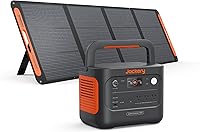
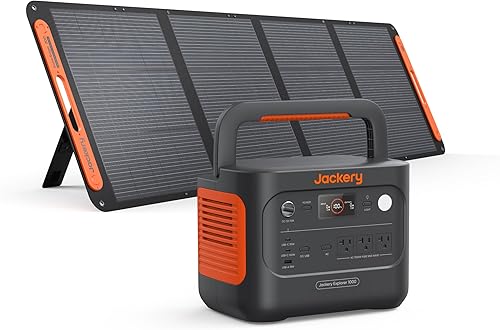
Jackery Solar Generator 1000 v2 and 200W
9.6/10 our score
See it on Amazon -
2
 Best for compact emergency backup
BLUETTI Elite 30 V2 Portable Power Station
9.4/10 our score
See it on Amazon -
3
 Best for 1800W home essentials
EF ECOFLOW Solar Generator Delta 3 Classic
9.4/10 our score
See it on Amazon
- 4
 Check it
OUPES Mega 1 Lite Solar Generator
Best true 2000W starter kit - 5
 Check it
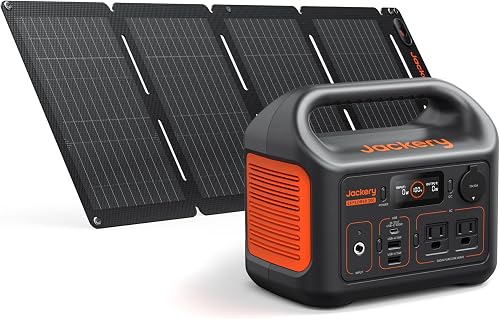
Jackery Solar Generator 300 and 40W Solar
Best for hiking and small devices - 6
 Check it
OUPES Mega 1 Solar Generator with 100W
Best for ports and expansion - 7
 Check it
GRECELL 2400W Portable Power Station 1843.2Wh Solar
Best for longer home backup - 8
 Check it
AFERIY Portable Power Station 1024Wh Solar Generator
Best for compact 1800W backup
How we picked the best 2000-watt solar generators
We compared output, capacity, charge time, weight, ports and included panels across these eight models. We also checked which designs suit home backup, RV travel, camping and emergency use.
No pick here is perfect for every load.
We focused on models near the 2000 watt class, plus smaller and larger options that help you judge size correctly. That range shows why a light 300W kit and a heavy 2400W station solve different problems.
Use the comparison below to match the station to your devices.
The best 2000-watt solar generators in detail
Jackery Solar Generator 1000 v2 and 200W: Best for fast charging and light carry
- 1070Wh, 1500W AC, 3000W surge
- 200W solar panel included
- 1 hour emergency charging via app
- LiFePO4, 4000 cycles to 70%
A 1070Wh Jackery station with a 200W panel, 1500W output and one hour emergency charging for camping, road trips and emergencies.
Pros
- Fast one hour charging option
- Light for its capacity
- 200W panel included
Cons
- 1500W output is below 2000W
- Panel and station ship separately
The Jackery Solar Generator 1000 v2 and 200W suits campers and road trip drivers who want fast charging and light carry. It gives 1070Wh with 1500W AC and a 3000W surge.
That covers fridges, electric pots and AC units in short bursts, according to Jackery. The 1070Wh size sits close to the 1024Wh class, so runtime for small loads is similar.
Its one hour emergency charging is the headline feature. Jackery says you enable it in the app before charging.
Normal full charging defaults to 1.7 hours to protect battery health. Solar charging to 80% takes about 6 hours with the 200W panel.
The app also offers a 30 dB quiet overnight mode and an efficiency mode.
At 23.8 lb, it is lighter than the 2000W OUPES models. You get two USB-C ports, one USB-A port, one DC car port and three AC ports.
The LFP battery is rated for 4000 cycles to over 70% capacity.
The trade off is output. At 1500W, it will not match a true 2000W station for high draw appliances.
The panel and station ship separately, so check both parts on arrival.
BLUETTI Elite 30 V2 Portable Power Station: Best for compact emergency backup
- 288Wh, 600W AC, 1500W surge
- 9.4 lb portable design
- 10ms UPS
- 380W fast wall charge
A very light 288Wh station with 600W output, 1500W surge and 10ms UPS for laptops, CPAP, lights and small devices.
Pros
- Very light and compact
- Fast UPS switch
- Power Lifting mode to 1500W
Cons
- 288Wh limits runtime
- 600W continuous output
The BLUETTI Elite 30 V2 suits people who need a very light emergency station for small devices. It has 288Wh with 600W continuous output and 1500W surge in Power Lifting Mode.
That surge helps with a small kettle or toaster, while normal use suits lights, speakers, car fridges and laptops. It is aimed at daily and outdoor needs rather than heavy home loads.
At 9.4 lb, it is the easiest station here to carry into a storm or a car. BLUETTI says standby use is low, with 4.5W AC standby.
Lower self use means more of the 288Wh goes to your devices. The compact 9.8 by 7 by 6.6 inch size also helps with storage in a small space.
Its 10ms UPS protects CPAP machines, laptops and routers during a sudden outage. Wall charging is 380W, with 0 to 80% in 45 minutes.
Solar, car and combined charging are also supported. BLUETTI lists 9 total outlets and app control by Bluetooth or Wi-Fi.
The trade off is capacity. At 288Wh, runtime is short for anything beyond small devices.
This is not a replacement for a 1024Wh station for a fridge or tools.
EF ECOFLOW Solar Generator Delta 3 Classic: Best for 1800W home essentials
- 1024Wh, 1800W AC, 3600W surge
- 220W bifacial panel included
- 0 to 80% in 45 minutes via AC
- Under 10ms UPS
A 1024Wh station with 1800W output and a 220W bifacial panel for fridges, microwaves, laptops and home backup.
Pros
- 220W panel included
- Fast AC charging
- X-Boost to 2600W
Cons
- Panel and station arrive separately
- 1800W is below 2000W rated
The EF ECOFLOW Delta 3 Classic suits home users who want 1800W output with a strong 220W panel. It has 1024Wh, 1800W AC and 3600W surge, with X-Boost expandable to 2600W for heavier loads.
That makes it a good fit for fridges, microwaves and laptops within its limits. The surge rating matters most at startup for motor driven loads.
Its 220W bifacial panel is the largest included panel in this group. EcoFlow says solar recharging takes 5.8 hours with that panel.
AC charging reaches 0 to 80% in 45 minutes with X-Stream. Those times help you plan a weekend trip or an outage.
A larger panel than 100W kits means faster off grid recovery in sun.
The station has under 10ms UPS for PCs, servers and medical devices. LiFePO4 cells are rated for 10 plus years of daily use.
The panel converts up to 25% of sunlight, according to EcoFlow. The 100W USB-C output also helps larger laptops.
The trade off is that the station and panel arrive separately. You also get 1800W, not 2000W, so check high draw loads before you buy.
OUPES Mega 1 Lite Solar Generator: Best true 2000W starter kit
- 1024Wh, 2000W AC, 4500W surge
- 100W foldable panel included
- 0 to 100% AC in 46 minutes
- LiFePO4, 3500+ cycles
A true 2000W, 1024Wh kit with a 100W foldable panel, 46 minute AC charge and dual 140W USB-C ports.
Pros
- True 2000W rated output
- 46 minute full AC charge
- 9 ports for many devices
Cons
- 100W panel is slower than 220W
- 26.7 lb is not ultra light
The OUPES Mega 1 Lite suits buyers who want a true 2000W rating in a complete starter kit. It has 1024Wh, 2000W AC and 4500W surge.
That surge helps with coffee makers, electric grills and hair dryers that need a strong startup. For everyday camping, the rating gives headroom beyond small lights and phone charging.
Its 46 minute AC charge is fast for this class. The included 100W foldable panel has monocrystalline cells and converts up to 23% of sunlight.
The panel folds to briefcase size with a handle and kickstand. That foldable design helps with trunk storage and carrying to a campsite.
At 26.7 lb, it is portable but not light. You get 9 ports, including 4 AC outlets, 2 USB-C, 2 USB-A and 1 car socket.
Dual 140W USB-C PD ports help laptops and phones charge without bulky adapters. App control by Bluetooth or Wi-Fi adds remote monitoring.
The trade off is solar speed. A 100W panel will top up slowly compared with a 220W panel.
LiFePO4 gives 3500 plus cycles to 80% capacity, which supports long term use.
Jackery Solar Generator 300 and 40W Solar: Best for hiking and small devices
- 292Wh, 300W AC, 600W surge
- 40W panel included
- 7.5 lb station
- LiFePO4, 4000+ cycles
An ultra light 292Wh Jackery kit with 300W output and a 40W panel for laptops, drones, cameras and camping lights.
Pros
- Very light at 7.5 lb
- 100W USB-C PD port
- Good for hiking carry
Cons
- 300W output limits appliances
- 40W panel charges slowly
The Jackery Solar Generator 300 and 40W suits hikers and photographers who carry power on foot. It has 292Wh with 300W AC and 600W surge.
That handles laptops, drones, cameras, camping lights and small devices well. The total output must stay under 300W, so load planning is essential.
At 7.5 lb for the station, it is built for carry. The integrated handle and light build make it easy to pack with camping gear.
Jackery says the Explorer 300 is 17% lighter than the class average. That weight advantage is the main reason to choose it over larger stations.
Its 40W panel is best for maintenance charging. Jackery says 80% takes about 7.5 hours with the 40W panel, or about 2.8 hours with a 100W panel.
Wall charging via USB-C takes about 3 hours for a full charge. You get 2 AC outlets, a 100W USB-C PD port, 2 USB-A ports and a 120W car port.
The trade off is clear. At 300W, it cannot run kitchen appliances, power tools or a fridge.
Choose it for mobility and small devices, not for home backup loads.
OUPES Mega 1 Solar Generator with 100W: Best for ports and expansion
- 1024Wh, 2000W AC, 4500W surge
- 100W panel included
- Expandable to 5120Wh
- 13 ports
A 2000W, 1024Wh station with 13 ports, expandable capacity and a 100W panel for camping, RV travel and outages.
Pros
- 13 ports for many devices
- Expandable to 5120Wh
- 36 minutes to 80% via AC
Cons
- Extra batteries are separate
- 27.8 lb carry
The OUPES Mega 1 suits campers and RV users who want many ports and future expansion. It has 1024Wh with 2000W AC and 4500W surge.
That runs microwaves, power tools and mini fridges within its limits. The high surge helps with startup loads that draw more for a short moment.
Its 13 ports are a major advantage. You get 4 AC outlets, 2 USB-C PD 100W ports, 4 USB-A ports, 2 DC5521 ports and 1 car socket.
That lets you charge phones, laptops, car fridges and tools at once. Fewer adapters are needed when many devices travel together.
Capacity can expand from 1024Wh to 5120Wh with 2 B2 extra batteries. AC charging reaches 80% in 36 minutes.
Dual AC plus solar charging reaches 80% in 26 minutes, according to OUPES. Solar input can reach 800W maximum with larger panels.
The trade off is weight and cost of expansion. At 27.8 lb, it is heavier than the Jackery 1000 v2.
The included 100W panel is a starter panel, so solar recharging will be slow without larger panels.
GRECELL 2400W Portable Power Station 1843.2Wh Solar: Best for longer home backup
- 1843.2Wh, 2400W AC
- 55 lb portable design
- Wireless charging pad
- AC, solar and car input
A 1843.2Wh, 2400W station for home backup, TV, lights, fans and kitchen appliances, with solar charging option.
Pros
- Largest capacity here
- 2400W continuous output
- Wireless charging pad
Cons
- 55 lb is heavy to carry
- Solar panel is optional
The GRECELL 2400W station suits home backup first and camping second. It has 1843.2Wh with 2400W continuous AC power.
That is the largest capacity and highest continuous output in this group. The extra capacity matters when an outage lasts beyond a short top up.
That size helps with TV, monitors, lights, fans, game consoles, kitchen appliances, tools and electric stoves or heaters within limits. At 55 lb, it is a station you place once and leave in place, rather than carry often.
The two side handles help with short moves between rooms or into a vehicle.
Its 1843.2Wh capacity means longer runtime than the 1024Wh models. You get 4 AC ports, 2 USB-A, 2 USB-C, 2 DC, 1 car charger and a 10W wireless charging pad.
Input options include AC, DC car and optional 200W solar panel. USB-C PD100W support helps laptops.
The trade off is portability. At 55 lb with two side handles, it is travel friendly only for short moves.
The solar panel is optional, so an included panel is not part of this price logic. Choose it for longer home use.
AFERIY Portable Power Station 1024Wh Solar Generator: Best for compact 1800W backup
- 1024Wh, 1800W AC, 3600W peak
- 25.57 lb, compact size
- Under 10ms UPS
- 13 ports
A compact 1024Wh, 1800W station with under 10ms UPS, 13 ports and four charging methods for home and camping.
Pros
- Compact for 1024Wh
- Fast UPS switch
- AC plus solar charging
Cons
- Solar panel is optional
- 1800W is below 2000W
The AFERIY 1024Wh station suits buyers who want compact size with 1800W output. It has 1024Wh, 1800W AC and 3600W peak.
That covers home backup, camping and outdoor emergencies for many everyday loads. The peak rating helps with short startup draw from appliances.
At 25.57 lb and 13.77 by 8.66 by 10.35 inches, it is about 16% smaller and 25% lighter than similar models, according to AFERIY. That size fits a car trunk, RV or backpack more easily than larger stations.
Compact size is useful if storage space is limited.
Its under 10ms UPS protects computers, cameras, medical freezers and smart feeders. Charging options include AC, solar, car and AC plus solar.
AC charging reaches 80% in 55 minutes, and combined charging reaches 80% in 35 minutes. Operation below 30 dB in most daily use helps with quiet settings.
The trade off is that the solar panel is optional. You also get 1800W, not 2000W, so high draw loads need a check.
LiFePO4 gives 4000 plus cycles and a 10 year lifespan claim.
How these 2000W solar generators compare
| Product | Best for | Capacity | AC Output | Weight | Our score |
|---|---|---|---|---|---|
| Jackery Solar Generator 1000 v2 and 200W | fast charging and light carry | 1070Wh | 1500W | 23.8 lb | 9.6 |
| BLUETTI Elite 30 V2 Portable Power Station | compact emergency backup | 288Wh | 600W | 9.4 lb | 9.4 |
| EF ECOFLOW Solar Generator Delta 3 Classic | 1800W home essentials | 1024Wh | 1800W | Not stated in data | 9.4 |
| OUPES Mega 1 Lite Solar Generator | true 2000W starter kit | 1024Wh | 2000W | 26.7 lb | 9.4 |
| Jackery Solar Generator 300 and 40W Solar | hiking and small devices | 292Wh | 300W | 7.5 lb | 9.3 |
| OUPES Mega 1 Solar Generator with 100W | ports and expansion | 1024Wh | 2000W | 27.8 lb | 9.1 |
| GRECELL 2400W Portable Power Station 1843.2Wh Solar | longer home backup | 1843.2Wh | 2400W | 55 lb | 9.1 |
| AFERIY Portable Power Station 1024Wh Solar Generator | compact 1800W backup | 1024Wh | 1800W | 25.57 lb | 8.7 |
The table shows a clear split. True 2000W models run high draw appliances more easily, but they weigh more.
Smaller stations carry well, but they limit what you can run. Capacity matters just as much as output for real runtime.
The GRECELL has the most capacity at 1843.2Wh, so it runs longer at home. The OUPES models give true 2000W output with 1024Wh.
The Jackery 1000 v2 gives less output but lighter carry and fast charging.
Reading the comparison by use case
For camping, weight and panel size matter most. For home backup, capacity and UPS speed matter most.
For RV travel, port count and charging options matter most.
Match the station to the load list first. Then check weight and charging time.
That order avoids buying excess output you cannot carry or excess capacity you cannot recharge.
What does 2000 watts actually mean for your devices?
2000 watts is the AC output limit, not the battery size. Battery size is shown in watt hours, like 1024Wh.
A 2000W station with 1024Wh can run a 2000W load for about 30 minutes in ideal terms.
Real runtime is shorter because of losses and self use. A 100W load lasts far longer than a 1000W load on the same station.
Always add up the watts of devices you plan to run at once.
Watts, watt hours and surge power
Watts tell you instant power. Watt hours tell you total stored energy.
Surge or peak watts tell you short startup power for motors and compressors.
A fridge may run at a lower wattage but need surge to start. That is why surge ratings here range from 1500W to 4500W.
Choose surge for startup, and continuous watts for running loads.
Should you pick 1800W, 2000W or 2400W output?
Pick 1800W if your loads are everyday home and camping devices. The EcoFlow and AFERIY models fit that group well.
Pick 2000W if you want more headroom for kitchen appliances and tools.
Pick 2400W only if you need longer home backup and can handle 55 lb. Output alone does not fix a small battery.
A 2400W station with 288Wh would still run out fast.
If you are torn between sizes, our Which Is Better 2000 Watt or 4000 Watt Generator? guide helps you judge the step up. You can also read Is It Worth Buying 2000 Watt or 4000 Watt Generator? before you move to a larger class.
How fast should a 2000 watt solar generator charge?
Wall charging is fastest for most buyers. Several models here reach 80% in 36 to 55 minutes via AC.
That suits a quick top up before a trip or an outage.
Solar charging is slower and depends on sun and panel size. A 100W panel may take many hours for 1024Wh.
A 220W panel cuts that time to about 5.8 hours, according to EcoFlow.
Wall, solar, car and combined charging
Use wall charging at home for speed. Use solar at camp for off grid top ups.
Use car charging for road trips when sun is weak.
Combined AC plus solar charging can be fastest on some models. The OUPES Mega 1 lists 26 minutes to 80% with dual charging.
Check that your cables and panels match the station inputs.
What size solar panel do you need with a 2000W station?
A 100W panel is fine for slow top ups and small devices. A 200W to 220W panel charges a 1024Wh station in a more practical time.
Larger panels help only if the station accepts higher solar input.
The Jackery 1000 v2 kit includes a 200W panel. The EcoFlow kit includes a 220W panel.
The OUPES kits include 100W panels. Match the panel to how often you camp off grid.
Panel size does not change AC output. It only changes how fast the battery refills.
For home backup, wall charging often matters more than panel size.
Is a 2000 watt solar generator good for home backup?
Yes, for essentials, if you plan loads carefully. A 1024Wh station can run lights, laptops, routers, phones and a fridge for limited time.
It will not run a whole house for long.
UPS matters for sensitive devices. BLUETTI, EcoFlow, OUPES and AFERIY list UPS switch times from under 10ms to under 20ms.
That helps computers and medical devices during a sudden cut.
For a bigger step up in output and capacity, see our best 3000 watt solar generator guide. That class suits longer outages and heavier appliances, but it also adds weight and cost.
Which ports should you check before you buy?
Count AC outlets first, because most home appliances use them. Then count USB-C ports for laptops and phones.
USB-A ports help older devices and accessories.
The OUPES Mega 1 has 13 ports, which suits many devices at once. The AFERIY also has 13 ports.
The Jackery 1000 v2 has fewer ports but still covers laptops, phones and car devices.
Check PD wattage for laptops. Jackery lists 100W USB-C.
OUPES Mega 1 Lite lists dual 140W USB-C. AFERIY lists 140W PD USB-C.
Higher PD helps larger laptops charge faster.
If you plan to pair a station with a separate inverter, our renogy 2000w inverter review helps you compare that route. A built in station is simpler for most camping and backup use.
How do you set up and care for a solar generator?
Charge the station before your first trip. Store it at a partial charge if you will not use it for weeks, based on the maker instructions.
Keep vents clear during use.
Use the panel in direct sun and angle it toward the sun through the day. Keep cables dry and avoid stretching them across walkways.
Store the panel folded and the station in a cool, dry place.
Check battery level before an outage or trip. Run a load test with your fridge or key devices at home.
That test shows real runtime better than any label.
Which 2000W solar generator should you buy?
Pick the OUPES Mega 1 Lite if you want true 2000W output and a complete kit. Pick the Jackery 1000 v2 if you want lighter carry and one hour charging.
Pick the GRECELL if you want 1843.2Wh for longer home backup.
Pick the BLUETTI Elite 30 V2 if you need ultra light emergency power for small devices. Pick the Jackery 300 if you hike with power.
Pick the EcoFlow or AFERIY if 1800W fits your loads and you want strong backup features.
The best 2000 watt solar generator is the one whose output, capacity and weight match your devices. Start with your load list, then choose the station that covers it with room to spare.
Our top 3 picks at a glance
-
1
Best for fast charging and light carry
Jackery Solar Generator 1000 v2 and 200W
9.6/10 our score
See it on Amazon -
2
Best for compact emergency backup
BLUETTI Elite 30 V2 Portable Power Station
9.4/10 our score
See it on Amazon -
3
Best for 1800W home essentials
EF ECOFLOW Solar Generator Delta 3 Classic
9.4/10 our score
See it on Amazon
Frequently asked questions
What does 2000 watt mean on a solar generator?
It usually means the AC output rating, not the battery size. Capacity in watt hours tells you how long that output can run.
A 2000W station with 1024Wh can run a 2000W load for about half an hour in ideal terms, and much longer for smaller loads.
Can a 2000 watt solar generator run a fridge?
Many models here can run a fridge, because fridges draw less than 2000W once running. Startup surge matters, so check surge ratings and your fridge label.
Run the fridge alone first to see how the station responds.
How long does a 1024Wh station last?
Runtime depends on load size. At 100W, 1024Wh lasts about 10 hours before losses.
At 500W, expect about 2 hours.
At 1000W, expect about 1 hour.
Always plan with a safety margin.
Do I need a solar panel included?
A panel helps for off grid use, but wall charging is faster at home. Kits with 100W to 220W panels suit camping and slow top ups.
For a full recharge from solar alone, a larger panel or more sun time is needed.
Is LiFePO4 better for a solar generator?
LiFePO4 batteries in these models list 3500 to 4000 plus cycles. That supports longer daily use than many older lithium types.
The benefit is service life, not more power on day one.