Best 3000-Watt Solar Generators: Top 8 Picks (November 2026)
The best 3000 watt solar generator include the Jackery Solar Generator 1000 v2 and 200W for portable camping power, the PECRON Portable Power Station F3000LFP for home backup, and the EF ECOFLOW Solar Generator Delta 3 Classic for fast charging.
On this page (9 sections)
- Our best 3000 watt solar generator picks for every use
- 3000 watt solar generator comparison: output, capacity and weight
- How we compared these solar generators
- What size solar generator do you actually need?
- Which battery size fits home backup, RV use or camping?
- How fast should a solar generator charge?
- Portability: how much weight is too much?
- Buying advice: what to check before you order
- Verdict: which 3000 watt solar generator should you buy?
The best 3000 watt solar generator for most buyers is the Jackery Solar Generator 1000 v2 and 200W, because you get 1500W output, 1070Wh capacity and a 200W panel in a 23.8 lb package.
If you need true multi-day backup, the PECRON F3000LFP and Anker SOLIX F3000 offer 3072Wh capacity with 3600W output.
A 3000 watt label can cover different rated output, surge output and battery capacity.
We compared each pick on continuous watts, Wh capacity, charging speed, weight, ports and expansion.
Our picks at a glance
-
1
 Best for portable camping power
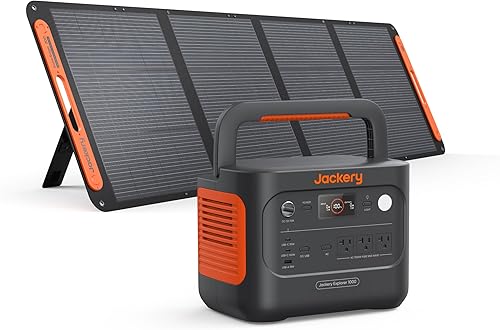
Jackery Solar Generator 1000 v2 and 200W
9.6/10 our score
See it on Amazon -
2

-
3

- 4
 Check it
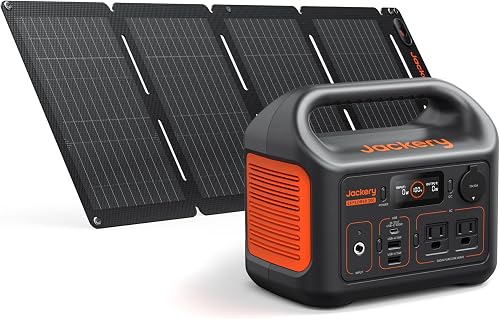
Jackery Solar Generator 300 and 40W Solar
Best for ultralight travel - 5
 Check it
OUPES Mega 1 Solar Generator with 100W
Best for expandable capacity - 6
 Check it
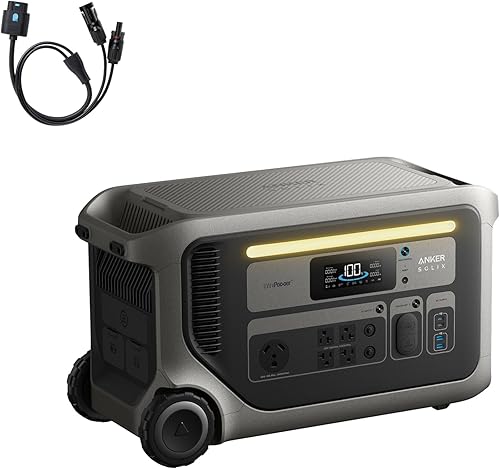
Anker SOLIX F3000 Portable Power Station
Best for large RV and home loads - 7
 Check it
PECRON Portable Power Station F3000LFP with Cart
Best for moving heavy backup power - 8
 Check it
DABBSSON Portable Power Station 3000L
Best for RV hookup
Our best 3000 watt solar generator picks for every use
The picks below cover light travel, fast charging, RV power and heavy home backup.
Start with the job you need done, then check weight and capacity.
Jackery Solar Generator 1000 v2 and 200W: Best for portable camping power
- 1070Wh capacity
- 1500W AC output, 3000W surge peak
- 200W solar panel included
- LFP battery, 4000+ cycles
- 1-hour emergency charging via app
- 23.8 lb
A lighter 1500W pick with quick charging and a panel in the box. It suits camping, road trips and short emergency loads.
Pros
- Light for its output
- Fast charging options
- Panel included
Cons
- Not a true 3000W continuous output
- 1070Wh limits long backup
This Jackery suits campers, road trippers and households that want a grab and go emergency kit.
Its 1500W AC output with a 3000W surge peak can run larger appliances such as a fridge, AC units or an electric pot for shorter periods, while the 1070Wh battery sets the real limit on run time.
You get a 200W solar panel in the box, and Jackery says the station can reach 80 percent in 6 hours with that panel.
AC charging is much faster, with a default 1.7 hour full charge to protect battery health or a 1 hour emergency mode through the app.
At 23.8 lb, it is far easier to carry than the 3072Wh stations here, and the foldable handle helps with loading into a car.
Ports include two USB-C ports, one USB-A port, one DC car port and three pure sine wave AC ports, so several devices can charge at once.
The LFP battery keeps over 70 percent capacity after 4000 cycles, which supports long term ownership.
The trade off is less stored energy for home backup, and a 1500W continuous rating rather than 3600W.
That makes it a strong portable choice, not a multi day home replacement for heavy loads.
PECRON Portable Power Station F3000LFP: Best for home backup
- 3072Wh capacity
- 3600W output
- LiFePO4 battery
- 1800W AC charging in 2 hours
- 1600W solar input
- 13 ports
- UPS mode
A true high-capacity 3600W station for fridges, air conditioners and power tools. It targets 2 to 3 days of home essentials.
Pros
- Large 3072Wh capacity
- Fast 2-hour AC charge
- Many ports
Cons
- Heavy at 63.3 lb
- Solar panel not included
This PECRON suits home backup first, with a 3072Wh LiFePO4 battery and 3600W pure sine wave output.
That combination targets refrigerators, air conditioners and power tools, and PECRON describes 2 to 3 days of home essentials as the use case.
Charging is a strength, with 1800W AC input for a 2 hour full charge.
Solar input reaches 1600W, with a 25 to 120V input range, so check your panel voltage before you connect an existing array.
Triple charging options include AC, solar and car, which gives flexibility when wall power is not available.
The station weighs 63.3 lb and has 13 ports, including 6 AC outlets, 2 USB-C ports with 100W PD, 2 USB-A ports, 1 car port and 2 DC outputs.
That port mix suits laptops, drones, CPAP machines, cameras and phones at the same time.
UPS mode switches in 8 to 20ms, which helps protect computers and medical devices during an outage.
You will want a fixed spot and a plan to move it, since this is storage room power rather than hiking power.
Against lighter picks, you gain capacity and output, but you give up easy portability.
EF ECOFLOW Solar Generator Delta 3 Classic: Best for fast charging
- 1024Wh capacity
- 1800W output, 3600W surge
- 220W solar panel included
- 0-80% in 45 minutes via AC
- 5.8-hour solar recharge with 220W panel
- Under 10ms UPS
- LiFePO4 battery
Fast AC and solar charging in a mid-size package. The 220W panel is included, which simplifies off-grid setup.
Pros
- Panel included
- Very fast charging
- UPS under 10ms
Cons
- 1024Wh is mid-size
- 1800W rated output
This EcoFlow suits buyers who want speed and a panel included in one box.
It delivers 1800W output with 3600W surge through X-Boost, plus a 1024Wh battery for fridges, microwaves, laptops and smaller home loads.
X-Boost can expand output up to 2600W for heavier loads, which helps with appliances that need extra starting power.
EcoFlow says AC charging reaches 80 percent in 45 minutes, and the included 220W panel can recharge it in 5.8 hours.
That solar time shows why panel size matters: a small panel keeps you going, but it does not match wall charging.
The 220W bifacial panel uses N-Type solar cells with an energy conversion rate up to 25 percent when connected to an EcoFlow station.
The under 10ms UPS helps protect PCs, servers and medical devices during a switch.
LiFePO4 cells are rated for 10 plus years of daily use, with a smart battery management system for safer operation.
Against the 3072Wh picks, you trade stored energy for a lighter, faster and more portable setup.
It suits flexible home and outdoor use where quick refill matters more than maximum capacity.
Jackery Solar Generator 300 and 40W Solar: Best for ultralight travel
- 292Wh capacity
- 300W AC output, 600W surge
- 40W solar panel included
- LiFePO4 battery, 4000+ cycles
- 7.5 lb for the station
- 2 AC outlets, USB-C PD, USB-A, car port
A very light pick for phones, laptops, drones and cameras. It suits hikes and tent camping where weight matters most.
Pros
- Very light and portable
- Panel included
- Long-cycle LiFePO4
Cons
- Only 300W output
- 292Wh for small devices
This Jackery suits tent camping, hiking, hunting and light emergency use.
The station weighs 7.5 lb on its own, with 292Wh capacity and 300W AC output, so it fits phones, laptops, drones and cameras rather than kitchen appliances.
Rated output is 300W with a 600W peak surge, and total connected devices should stay under that limit.
A 40W panel is included, and Jackery says a 100W panel can reach 80 percent in about 2.8 hours.
The included 40W panel is slower, at about 7.5 hours to 80 percent, so treat it as a maintenance and top up option for small devices.
Ports include 2 AC outlets, a 100W USB-C PD port, 2 USB-A ports and a 120W car port, which covers six devices.
LiFePO4 chemistry delivers over 4000 charge cycles before reaching 70 percent capacity, with more than 11 years of service life.
The integrated handle and light weight make it easy to carry on long hikes or pack with other camping gear.
This is not a home backup choice for a fridge, and that limit is exactly why weight stays so low.
Choose it for travel and small devices, and step up in size for larger appliances.
OUPES Mega 1 Solar Generator with 100W: Best for expandable capacity
- 1024Wh, expandable to 5120Wh
- 2000W output, 4500W surge
- 100W panel included
- 0-80% in 36 minutes via AC
- Up to 800W solar input
- 13 ports
- Under 20ms UPS
- 27.8 lb
Strong output with expansion to 5120Wh using extra batteries. It suits longer off-grid stays and home backup planning.
Pros
- Expandable capacity
- Fast charging
- Panel included
Cons
- Extra batteries cost more
- Expansion needs extra batteries
This OUPES suits weekend trips, tailgating, camping and RV travel where you also want a path to longer stays.
It offers 2000W output, 4500W surge and 1024Wh capacity, with expansion to 5120Wh using 2 extra B2 batteries.
That surge peak helps with microwaves, power tools and mini fridges that draw more at startup.
A 100W panel is included, and solar input can reach 800W with larger panels.
OUPES says AC charging reaches 80 percent in 36 minutes, and combined AC plus solar charging can reach 80 percent in 26 minutes.
With optimal panels, solar alone can reach 80 percent in 1.3 hours, which shows the value of a larger array.
At 27.8 lb, it sits between the light Jackery picks and the heavy 3072Wh stations.
Ports total 13, including 4 AC outlets, 2 USB-C PD 100W ports, 4 USB-A ports, 2 DC ports and 1 car socket.
UPS kicks in within 20ms, and Bluetooth or Wi-Fi app control plus an LCD display show input, output and battery level.
The trade off is that expansion means buying extra batteries, so compare the full system cost before you choose it over a single large station.
Anker SOLIX F3000 Portable Power Station: Best for large RV and home loads
- 3072Wh capacity, expandable to 24kWh
- 3600W output
- 2400W solar recharge
- 6000W combined recharge
- 120/240V output
- 91.5 lb
A heavy, high-end station built for demanding home and RV loads. Solar and generator charging can work together.
Pros
- Expandable to 24kWh
- 240V option with pairing
- High solar input
Cons
- Heaviest pick at 91.5 lb
- Panel not included
This Anker SOLIX suits large homes, RVs and emergency planning where weight is less important than capacity and output.
It has 3072Wh capacity, 3600W output and expansion to 24kWh, plus 120/240V output options.
Solar recharge reaches 2400W, and combined recharge reaches 6000W when you pair a fuel generator with solar.
That combined input can refill the station quickly during an outage, while pass through charging lets you run appliances during recharge.
Anker also highlights low idle consumption, including a claim of 42 hours for a 190W fridge and 125 hours of AC idle standby.
You can pair two power stations for 240V output, which suits demanding appliances that need more than standard 120V outlets.
Starting capacity is aimed at keeping essential appliances powered for 10 hours, with batteries expanding that planning horizon.
Smart features can store free solar energy or low cost off peak electricity with an optional inlet box and smart meter.
The cost of that power is size and weight at 91.5 lb and 25.6 x 11.8 x 14.8 inches.
This is a station you place once, plan around, and move only when you must.
PECRON Portable Power Station F3000LFP with Cart: Best for moving heavy backup power
- 3072Wh capacity
- 3600W output
- LiFePO4 battery
- 1800W AC charging
- 1600W solar input
- 13 ports
- Cart included
- 63.3 lb station
The same core power as the standard PECRON, plus a cart for moving it. That helps when a 63.3 lb station stays in one place.
Pros
- Cart helps transport
- Large capacity
- Fast AC charging
Cons
- Still heavy to lift
- Cart warranty differs
This PECRON with cart suits buyers who want the F3000LFP core power but need help moving it.
The station has 3072Wh capacity and 3600W output, with 1800W AC charging and 1600W solar input.
The cart is the practical difference in this roundup.
A 63.3 lb station is hard to carry through a house or into an RV storage bay, so a cart helps at home even if it adds little on a trail.
Ports match the standard model, with 6 AC outlets, USB-C, USB-A, car port and DC outputs, plus UPS mode.
UPS switching takes 8 to 20ms, and app monitoring shows real time power use.
AC charging reaches full in 2 hours, while solar input accepts 25 to 120V, so panel voltage needs checking.
Warranty is listed as 2 plus 3 years for the station, with cart coverage for one year.
Choose the cart version for a fixed home spot, and choose a lighter station if you plan to carry power on foot.
The core trade off stays the same: large capacity for home essentials in exchange for weight and bulk.
DABBSSON Portable Power Station 3000L: Best for RV hookup
- 3072Wh capacity
- 3000W AC output, 3600W Power Boost
- TT-30 RV outlet
- AC, solar and vehicle charging
- App monitoring
- 59.5 lb
A 3000W station with a dedicated RV outlet and app control. It suits RV trips and home backup for everyday essentials.
Pros
- Dedicated TT-30 outlet
- App monitoring
- Multiple recharge options
Cons
- Solar panel optional
- Lower rated output than 3600W picks
This DABBSSON suits RV owners and home backup buyers who want a dedicated RV connection.
It has 3072Wh capacity and 3000W AC output, with Power Boost support up to 3600W for compatible appliances.
The built-in TT-30 outlet is the standout feature for campsite and travel stop use.
You can also recharge from AC wall power, compatible solar panels or a supported vehicle source, so check solar input limits before you buy panels.
Solar input compatibility is listed as 12 to 60V, which is narrower than some rivals and matters for panel choice.
At 59.5 lb, it is lighter than some 3072Wh rivals but still a two hand lift.
The app lets you check battery level, monitor input and output power, and adjust supported settings.
Built in protection features help safeguard the station during operation, including overload and short circuit protection.
Solar panels are optional here, so budget for that separately if you want a full solar kit.
Package includes the station, AC charging cable, car charging cable and user manual, with a 5 year warranty listed as 3 years standard plus 2 year extended.
3000 watt solar generator comparison: output, capacity and weight
Capacity in Wh drives run time, continuous watts drive which appliances start and run, and weight drives whether you will actually carry it.
| Product | Best for | Capacity | AC output | Weight | Our score |
|---|---|---|---|---|---|
| Jackery Solar Generator 1000 v2 and 200W | portable camping power | 1070Wh | 1500W | 23.8 lb | 9.6 |
| PECRON Portable Power Station F3000LFP | home backup | 3072Wh | 3600W | 63.3 lb | 9.5 |
| EF ECOFLOW Solar Generator Delta 3 Classic | fast charging | 1024Wh | 1800W | Not stated in data | 9.4 |
| Jackery Solar Generator 300 and 40W Solar | ultralight travel | 292Wh | 300W | 7.5 lb station | 9.3 |
| OUPES Mega 1 Solar Generator with 100W | expandable capacity | 1024Wh | 2000W | 27.8 lb | 9.1 |
| Anker SOLIX F3000 Portable Power Station | large RV and home loads | 3072Wh | 3600W | 91.5 lb | 9.0 |
| PECRON Portable Power Station F3000LFP with Cart | moving heavy backup power | 3072Wh | 3600W | 63.3 lb | 8.7 |
| DABBSSON Portable Power Station 3000L | RV hookup | 3072Wh | 3000W | 59.5 lb | 8.1 |
How we compared these solar generators
We checked rated AC output, surge output, Wh capacity, charging time, solar input, port count, UPS speed, expansion and weight.
We also noted whether a solar panel is included, since that changes setup cost and speed.
We did not test these units.
Scores come from the specs and features above, matched to the search for portable solar supported electricity at home, for RVs and outdoors.
For a smaller step down, our guide to the best 2000 watt solar generator helps if 2000W output and about 1024Wh capacity already meet your loads.
If you need a comparison with fuel models, our dual fuel generator propane runtime guide covers a different backup path.
Why surge ratings need context
Surge and boost ratings help an appliance start, but they do not add stored energy.
A 3600W surge on a 1024Wh station still leaves you with 1024Wh to spend.
That is why we separate peak claims from continuous output in every product write up above.
What size solar generator do you actually need?
Start with the loads you must run, not the headline watt class.
Add up the watts for appliances that run at the same time, then check surge needs for motors.
Capacity decides how long that load can run.
A 1024Wh station suits an evening or a camping trip, while 3072Wh suits a longer outage with essential appliances cycling through the day.
If you are unsure between sizes, compare a best 2000 watt solar generator pick with these 3000 watt options.
The smaller class is often lighter and cheaper to expand later.
How to estimate run time
Use a simple check: Wh capacity divided by load watts gives a rough hour estimate before losses.
A 100W load on a 1024Wh battery points to about 10 hours in ideal math, and real run time will be lower.
Anker SOLIX says its F3000 can run a 190W fridge for 42 hours, while other stations list different test loads.
Treat those numbers as comparisons between stations, not promises for your fridge.
Your fridge cycles on and off, and its average draw matters more than its peak draw.
Which battery size fits home backup, RV use or camping?
Home backup favors 3072Wh stations such as the PECRON and Anker SOLIX models.
Their 3600W output can handle heavier appliances, and their larger batteries cover fridges and lights for longer.
RV use sits in the middle.
The DABBSSON 3000L has a TT-30 outlet for RV setups, while the OUPES Mega 1 offers expansion to 5120Wh for longer off-grid stays.
Camping favors weight and a panel in the box.
The Jackery 1000 v2 at 23.8 lb and the smaller Jackery 300 at 7.5 lb are easier to load into a car than a 91.5 lb station.
For RV buyers, also check the Top 7 Watt Dual Fuel Generator For Propane Runtime list if you want fuel backup alongside solar.
When expansion makes sense
OUPES expands from 1024Wh to 5120Wh, PECRON can expand to 10752Wh, and Anker SOLIX can expand to 24kWh.
Expansion also adds cost, cables and storage space.
If you only need power for one night, a larger built-in battery may be simpler.
Buy expansion when your outage plan is multi-day or your RV stays are long.
How fast should a solar generator charge?
Fast charging matters most when outages repeat or you use the station daily.
PECRON reaches a full charge in 2 hours via AC, while OUPES reaches 80% in 36 minutes.
Solar charging speed depends on panel size and sun.
EcoFlow says its 220W panel recharges the Delta 3 Classic in 5.8 hours, while Jackery says its 200W panel reaches 80% in 6 hours for the 1000 v2.
A small included panel, like 40W or 100W, is best for top-ups and small devices.
If you pair solar with a separate inverter setup later, our renogy 3000w inverter review explains one common component path.
What to check before you connect solar panels
Check voltage and watt limits before you connect panels.
PECRON accepts 25 to 120V solar input, DABBSSON lists 12 to 60V compatibility, and Anker SOLIX uses 165V or 60V ports.
Those ranges are not interchangeable.
A panel array that fits one station may exceed the input limit of another, so confirm the range first.
Also check connectors and cables in the box, since some kits sell panels or extra cables separately.
Portability: how much weight is too much?
A 7.5 lb Jackery 300 can go in a backpack, while a 91.5 lb Anker SOLIX F3000 needs a fixed spot in a garage, shed or RV bay.
Mid-weight picks at 23.8 lb and 27.8 lb suit car camping and tailgating.
Heavy 3072Wh stations at 59.5 lb to 91.5 lb suit home backup best.
The PECRON cart version helps with that class, since moving the station around the house is a weekly job.
Measure your storage space before you buy, since a station that is 25.6 inches long needs a different compartment than one under 20 inches long.
UPS and app control: who needs them?
UPS mode matters if you run PCs, servers, medical devices or other sensitive gear during an outage.
EcoFlow switches in under 10ms, OUPES in under 20ms, and PECRON in 8 to 20ms.
App control helps you check battery level, input and output without walking to the station.
Those features do not replace capacity, so choose them after you confirm output, capacity and weight fit your loads.
Buying advice: what to check before you order
Check the continuous AC watts, not just surge watts.
Check Wh capacity next, since 1024Wh will not match 3072Wh for home backup.
Check whether a panel is included, since Jackery and EcoFlow include panels in these kits while PECRON, Anker SOLIX and DABBSSON need panels bought separately or already owned.
Check size, weight and storage space before you order.
Check expansion and warranty terms, since extra batteries, carts and cables can change the full cost of ownership.
Use our best 2000 watt solar generator guide as a reality check if your loads are modest.
Verdict: which 3000 watt solar generator should you buy?
Pick the Jackery Solar Generator 1000 v2 and 200W for camping, road trips and light emergency use.
It balances 1500W output, 1070Wh capacity and 23.8 lb weight with a panel included.
Pick the PECRON Portable Power Station F3000LFP for home backup.
Its 3072Wh capacity, 3600W output and 2-hour AC charging target fridges, air conditioners and power tools.
Pick the EF ECOFLOW Delta 3 Classic for fast charging with a panel in the box.
Pick the Anker SOLIX F3000 for large RV and home loads where expansion to 24kWh matters more than portability.
Pick the DABBSSON 3000L if a TT-30 RV outlet is a top priority.
For ultralight travel, the Jackery Solar Generator 300 wins on weight at 7.5 lb for small devices.
For expandable mid-size power, the OUPES Mega 1 points to 5120Wh with extra batteries.
If your needs are smaller, step down to a best 2000 watt solar generator and save weight.
Our top 3 picks at a glance
-
1
Best for portable camping power
Jackery Solar Generator 1000 v2 and 200W
9.6/10 our score
See it on Amazon -
2
-
3
Frequently asked questions
What does 3000 watt mean on a solar generator?
It can mean rated AC output, surge output, or capacity class. Check the separate Wh capacity and continuous watts before you compare run time for a fridge, air conditioner or power tool.
How long will a 3072Wh solar generator run a fridge?
Run time depends on the fridge draw, cycling and inverter losses. A 3072Wh station gives far more energy than a 1024Wh model, but no single runtime fits every fridge or load pattern.
Do I need a solar panel included?
A panel in the box makes setup simpler and creates a ready kit. If you already own compatible panels, a station-only model can be a better value and gives you more panel choice.
Can a solar generator replace a fuel generator?
It can for quiet, indoor and short-duration needs with no exhaust or fuel storage. A fuel model still suits very long outages where recharge time and fuel supply matter more than noise.