
Which Is Better 2000 Watt or 4000 Watt Generator?
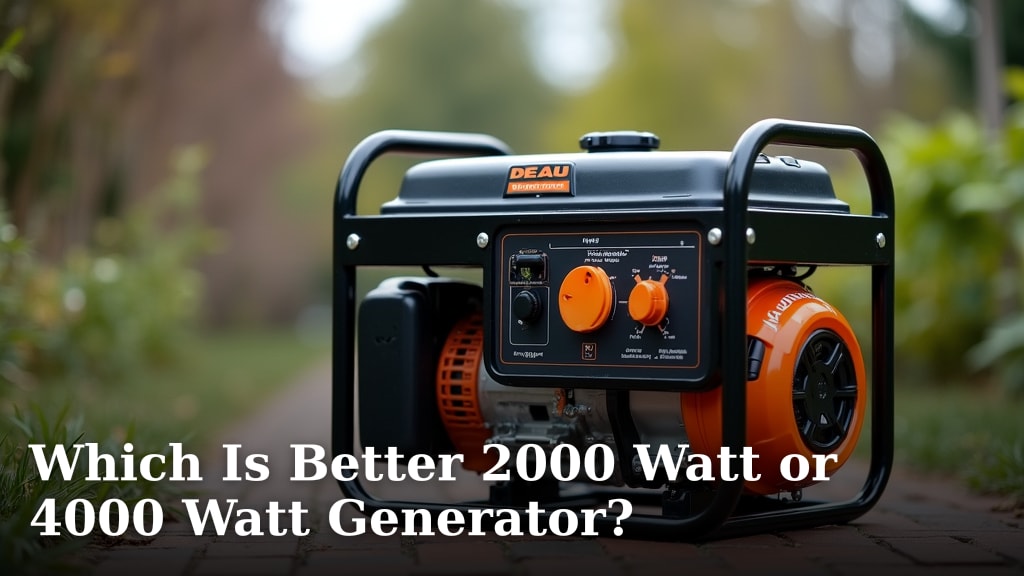
When choosing between a 2000 watt or 4000 watt generator, the 4000-watt model is generally better if you need to power more appliances or larger items. However, the 2000-watt generator is often more portable and fuel-efficient for lighter uses. Your best choice depends on your specific power needs.
We found that many people overestimate how much power they truly need. It’s easy to grab the biggest generator, but that’s not always the smartest or most economical decision. Thinking about what you’ll actually plug in helps you pick the right generator size without waste.
- 2000W is good for small electronics and basic camping.
- 4000W handles more appliances, like a fridge or microwave.
- Bigger isn’t always better; consider portability and fuel.
- Match the generator to your actual power requirements.
Let’s walk through exactly how to figure out your power needs and choose the perfect generator for your situation.
Choosing the Right Generator: 2000W vs. 4000W
Deciding between a 2000-watt and a 4000-watt generator really boils down to your specific power requirements. It’s like picking a car; a compact car is great for city driving, but you’ll need an SUV for a big family road trip. We’ll help you figure out what your “road trip” looks like.
Understanding Generator Wattage
Wattage tells you how much power a generator can produce. Think of it as the horsepower for your electronics. Every appliance has a wattage rating. You’ll usually see two numbers: starting watts and running watts.
Starting Watts vs. Running Watts
Appliances with motors, like refrigerators or air conditioners, need an extra surge of power to start up. This is their starting wattage. Once they’re running, they use less power, which is their running wattage. Always account for starting watts when planning your generator use.
- Running Watts: The continuous power an appliance uses.
- Starting Watts: The brief, higher power surge needed to turn on some appliances.
What Can a 2000-Watt Generator Power?
A 2000-watt generator is perfect for smaller, more essential tasks. It’s like a reliable multi-tool for your basic needs. We found that many people choose these for camping trips or as an emergency backup for a few critical items.
You can typically run things like a few lights, charge your phone, power a laptop, or even a small coffee maker. It’s ideal for situations where you need to keep things simple and light.
Typical Uses for a 2000W Generator
- Camping: Powering LED lights, charging devices, a small fan.
- Tailgating: Running a portable TV, a small blender, or a radio.
- Light Home Backup: Keeping a few lights on, charging phones, maybe a small space heater.
- Small Tools: Operating very light-duty power tools like a drill (check wattage).
What Can a 4000-Watt Generator Power?
A 4000-watt generator gives you significantly more power and flexibility. It’s like upgrading from a bicycle to a motorcycle – you can cover more ground and carry more. This size is popular for RVs, larger job sites, or as a more robust home backup.
You can run more appliances simultaneously, or power larger items that a 2000-watt unit couldn’t handle. Imagine keeping your refrigerator cold during an outage or using a microwave.
Typical Uses for a 4000W Generator
- Home Backup: Running a refrigerator, a few lights, a TV, and charging devices.
- RV/Camping: Powering an RV’s AC unit (smaller models), microwave, lights, and entertainment.
- Construction Sites: Operating circular saws, air compressors, and other medium-duty tools.
- Outdoor Events: Powering sound systems, lighting, and food preparation equipment.
Key Differences Beyond Wattage
It’s not just about how much power they produce. There are other important factors that help you decide. Think about the overall experience of owning and using each size.
| Feature | 2000-Watt Generator | 4000-Watt Generator |
|---|---|---|
| Portability | Lightweight (30-60 lbs), easy to carry. | Heavier (90-120 lbs+), often has wheels. |
| Fuel Efficiency | Generally more fuel-efficient for its output. | Consumes more fuel, especially under heavy load. |
| Noise Level | Often quieter, especially inverter models. | Usually louder, though inverter tech helps. |
| Cost | Lower initial purchase price. | Higher initial purchase price. |
| Maintenance | Simpler, potentially less frequent. | Can be more complex due to larger engine. |
Portability and Weight
This is where 2000-watt generators really shine. They are often light enough for one person to carry, making them ideal for adventures where you need to move them around a lot. A 4000-watt generator is a much heavier machine. While many have wheels, they are not designed for easy, single-person transport.
Fuel Consumption and Run Time
A smaller engine typically means less fuel used. If you’re running a few lights, a 2000-watt generator can sip fuel for hours. A 4000-watt unit, especially when powering a heavy load, will drink more gasoline. This means you’ll need to carry more fuel for longer run times, which adds to the overall weight and hassle.
Noise Level
Nobody likes a noisy generator, especially when camping or during a power outage. We found that 2000-watt inverter generators are often incredibly quiet, sometimes no louder than a normal conversation (under 60 dB). Larger 4000-watt models, even inverter types, tend to be noticeably louder because of their bigger engines.
How to Calculate Your Power Needs
This is the most important step! Don’t just guess. It’s like packing for a trip; you wouldn’t just throw things in, you’d think about what you need. Grab a pen and paper, or open a spreadsheet. You need to identify every item you want to power.
Step-by-Step Calculation Guide
- List Your Appliances: Write down everything you might want to plug in.
- Find Running Watts: Look for the wattage label on each appliance. It’s usually on the back or bottom.
- Identify Starting Watts: For motor-driven items, find their starting watts. If not listed, a general rule is 2-3 times their running watts.
- Sum Running Watts: Add up the running watts for all items you want to use simultaneously.
- Add Highest Starting Wattage: Take the single highest starting wattage from your list and add it to your total running watts. You only need to account for one item starting at a time.
The total you get is your minimum required wattage. Always add a little extra for a safety margin. Many experts recommend adding 10-20% to avoid overloading your generator (Consumer Reports).
Making Your Final Decision
Now that you have a better understanding of what each generator offers and your own power needs, the choice should be clearer. Think about your primary use case and prioritize accordingly.
Consider Your Usage Scenarios
Are you primarily camping or needing a light backup? The 2000-watt model shines there. Do you need to run larger appliances or multiple tools? The 4000-watt is likely your better bet. If you find your needs sometimes fit one category and sometimes the other, you might consider inverter generators that can be paralleled (linked together) to combine their power.
Generator Selection Checklist
- What appliances do you absolutely need to power? (List them out!)
- What is the total running wattage? And the highest starting wattage?
- How portable does it need to be? Will you move it frequently?
- Is noise a major concern? (e.g., camping, neighborhood backup)
- What’s your budget for purchase and fuel?
- Do you plan to expand your power needs in the future?
Conclusion
Choosing between a 2000-watt and a 4000-watt generator doesn’t have to be complicated. We’ve shown you that the best choice truly depends on your specific situation and what you need to power. Think about portability, noise, and fuel, not just raw wattage. Accurately calculating your power needs is the most important step.
By taking the time to assess your appliances and usage, you’ll avoid overspending or ending up with a generator that can’t meet your demands. Use our checklist and power calculation steps. You’re now equipped to make an informed decision and confidently select the generator that’s just right for you.
Frequently Asked Questions
Can I use a 2000-watt generator to run a small refrigerator?
Yes, many small, energy-efficient refrigerators can run on a 2000-watt generator. Always check your refrigerator’s starting and running wattage, as these can vary. A small camping fridge or mini-fridge is often a good fit.
Is it possible to link two 2000-watt generators to get 4000 watts?
Yes, if you have two “parallel-ready” inverter generators, you can often connect them with a special kit to double your power output. This gives you the flexibility of having two smaller, portable units or one larger, combined power source when needed.
How much fuel does a 4000-watt generator typically use compared to a 2000-watt model?
A 4000-watt generator will generally consume significantly more fuel, especially when running under a heavy load. While a 2000-watt generator might run for 8-10 hours on a gallon of gas for light use, a 4000-watt unit could burn through a gallon in 2-4 hours, depending on the load.
What is the main benefit of an inverter generator, especially for these wattages?
Inverter generators produce cleaner, more stable power, which is safer for sensitive electronics like laptops and smartphones. They are also typically much quieter and more fuel-efficient than conventional generators of similar wattage, making them popular for camping and home backup.
Should I buy a generator with slightly more wattage than my calculated needs?
Yes, it’s always a good idea to choose a generator with a little extra capacity beyond your calculated minimum. This provides a safety margin for unexpected power surges and prevents overloading the generator, which can extend its lifespan and improve performance.
