What Is a Blue Gas Can For?
A blue gas can usually signals a fuel container meant for a specific fuel or use, but color alone is not a universal fuel standard. Read the label, confirm the fuel type, and never store an unknown liquid in a blue container.
On this page (11 sections)
- What is a blue gas can for?
- Does blue always mean diesel?
- What do common gas can colors mean?
- What should you check before using a blue container?
- Which fuel container suits a boat or marine setup?
- Which container works for small gasoline equipment?
- Which container is better for larger everyday refills?
- How should you store a blue gas can?
- Can a blue gas can be used for a generator?
- What is the safest way to identify different fuels?
- What should you remember about blue gas cans?
A blue gas can is usually a fuel container identified by its color, but blue does not have one universal meaning for every brand or location. The label, fuel marking, cap, and manufacturer instructions matter more than the color.
Some people search for blue containers because they want to separate gasoline, diesel, marine fuel, or another liquid. That is a sensible storage habit, but color conventions can differ.
Before filling any container, identify what it is approved to hold and check that it is clean, intact, and clearly marked.
What is a blue gas can for?
A blue gas can may be for a particular fuel or use, but its color alone does not prove fuel compatibility. Blue containers can appear in marine, industrial, agricultural, and general fuel-storage settings.
Do not treat blue as a guaranteed code for diesel or any other fuel. A blue container may be designed for gasoline, diesel, water, or a brand-specific storage system.
The container's printed fuel type and instructions should control your decision.
If you need a larger approved container, compare this fuel storage container guide before choosing a size or shape.
Does blue always mean diesel?
No. Blue does not always mean diesel.
Fuel colors are not consistent enough to identify an unknown container safely.
A workplace may use blue labels for diesel, while another brand may use blue for a different product line. Marine containers may also use colors that reflect the brand or application rather than a universal fuel rule.
Use a simple identification system:
- Read the fuel type printed on the container.
- Check the cap, body, and any molded markings.
- Keep a written label on the container if the original marking is unclear.
- Store different fuels in separate, clearly marked containers.
- Never fill an unidentified container based only on its color.
A color code can support your system, but it should not be the only identification method.
What do common gas can colors mean?
Common colors may suggest a fuel type, but the label still takes priority. Red is often associated with gasoline, yellow may be used for diesel, and green can identify another fuel or storage category depending on the product and region.
These conventions are useful for quick visual separation, especially when several containers are stored together. They are not a substitute for reading the container markings.
For another color-specific explanation, see what is a green gas can for. If you are comparing yellow containers, read what is a yellow gas can for.
Why should you avoid relying on color alone?
Color can fade, labels can peel, and containers can be reused incorrectly. A blue container that once held another liquid may contaminate fuel, create a reaction risk, or make the contents impossible to identify later.
Write the fuel type and date of filling on a durable label when your storage setup allows it. Do not rely on memory, especially if several people handle the containers.
What should you check before using a blue container?
Check the fuel type, container condition, closure, and storage instructions before filling it. A suitable container should be intended for the fuel you plan to store and should not show cracks, bulges, leaks, or damaged fittings.
Look for these details:
- The approved fuel type
- A secure cap or closure
- A body without cracks or severe damage
- Clear capacity markings
- Any required vent, spout, or fitting
- Safety or compliance markings
- Instructions for transport and storage
Do not use a container that smells strongly of an unknown chemical or has an uncertain history. If the container is damaged, set it aside and review how to repair a plastic gas can before deciding whether it can be safely restored.
Which fuel container suits a boat or marine setup?
A marine fuel tank should match the boat's outboard system and the fuel setup you use. A larger container can reduce refilling trips, but its size also affects lifting, securing, and storage.
The Scepter 12 Gallon Portable Marine Gas Can is a 12-gallon red gasoline tank for boats. It has a built-in fuel gauge, molded hand holds, a 2-way vented cap, and a 5-layer HDPE shell.
Its dimensions are 22.9 in L by 14.3 in W by 13.9 in H.
This tank suits boaters who need more capacity than a small portable can. Its fuel line is sold separately, and it accepts standard 1/4 NPT marine tank fittings, so check your boat's connection before ordering.
Its tall profile may make it harder to fit under a low shelf or in a narrow compartment. Measure the storage area and plan how you will secure the tank during transport.
Which container works for small gasoline equipment?
A 2.5-gallon gasoline can is easier to carry than a large tank and suits smaller refueling jobs. It can be useful for equipment that does not need a large reserve, as long as you follow the equipment and fuel-can instructions.
The No-Spill No Spill 1405 2.5 Gallon Gasoline Gas Can has a thumb button control, a 7/8-inch funnel spout, an attached dust cover, and an integrated 20 mesh stainless steel screen. It is made from HDPE and is marked for gasoline.
This size suits readers who want more control while filling small equipment. The smaller capacity also means less weight when full, though it requires more frequent refilling than a 5-gallon can.
Keep the dust cover closed when the spout is not in use. Store the can upright and inspect the cap and spout before each fill.
Which container is better for larger everyday refills?
A 5-gallon gasoline can suits people who want more fuel capacity for yard tools, recreational vehicles, motorcycles, or similar gas-powered equipment. The larger size reduces refill trips but needs more lifting space and careful handling.
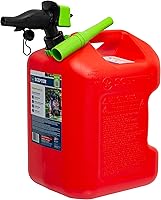
The Scepter 5 Gal Gas Can has an 18-liter capacity, a SmartControl spout, a spout extender, and an included funnel. It is a red gasoline-only container with 5-layer construction, a rear handle, and a flame mitigation device.
The controllable flow can help you use a smaller stream for a narrow opening or more flow for a larger one. The included funnel is useful when the equipment's filler neck is difficult to reach.
A 5-gallon container is not automatically the best choice for every user. Compare the filled weight you can safely carry, the storage space available, and the fuel amount your equipment actually needs.
For generator planning, see this guide to a gas can for generator.
How should you store a blue gas can?
Store the container upright in a cool, well-ventilated place away from flames, sparks, heat, and living areas. Keep the cap closed and use the container only for its identified fuel.
Do not store fuel beside a furnace, water heater, grill, or other ignition source. Keep children and pets away from the storage area, and follow local rules for household fuel storage.
Avoid leaving a fuel container in direct sunlight or inside a hot vehicle. During transport, keep it upright and secured so it cannot tip over or slide around.
A bottom-spout design may change how you position and secure a container. Read about gas can bottom spout designs before choosing one for your setup.
Can a blue gas can be used for a generator?
Use a blue gas can with a generator only when it is clearly approved for the generator's fuel and the fuel type matches the generator. A dual-fuel generator may accept gasoline and propane, but a gas can is for liquid fuel storage, not propane storage.
Turn the generator off and let hot parts cool before refueling. Move the container carefully, keep the spout controlled, and wipe up any spill before restarting the equipment.
If your generator uses more than one fuel, read how to switch a dual fuel generator from gas to propane for the separate fuel-change process.
For a larger container, follow how to use 5 gallon gas can guidance on carrying, pouring, and storing the can.
What is the safest way to identify different fuels?
Use the printed fuel type, a durable label, and separate storage locations together. This gives you more protection against accidental mixing than color alone.
Keep gasoline, diesel, and other liquids in their own containers. Do not pour one fuel into a container that still contains another fuel, and do not use a container for drinking water after it has held fuel.
Inspect the container before filling it again. Replace it if the body, cap, spout, vent, or fitting is cracked, leaking, badly deformed, or impossible to identify.
What should you remember about blue gas cans?
Choose a blue gas can by its labeled fuel type and approved use, not by color alone. Red, yellow, green, and blue may help you organize containers, but conventions vary across brands and settings.
Pick the Scepter 12 Gallon Portable Marine Gas Can for a larger boat fuel tank with a gauge. Pick the No-Spill 2.5 Gallon Gasoline Gas Can for smaller gasoline refills and thumb-button flow control.
Pick the Scepter 5 Gal Gas Can when you need an 18-liter gasoline container with a funnel and controllable spout.
Before filling any container, read its markings, inspect its condition, and confirm that the fuel matches your equipment. Keep the fuel type visible so the container remains identifiable every time it is moved or stored.
Frequently asked questions
What is a blue gas can for?
A blue gas can may be intended for a specific fuel, marine use, or another storage purpose, but blue is not a universal fuel code. Check the container label, cap, markings, and manufacturer instructions before filling it.
If you cannot identify the container or its prior contents, do not use it for fuel.
Can I put gasoline in a blue gas can?
Only put gasoline in a blue gas can when the container is clearly marked and approved for gasoline. Color does not confirm compatibility.
Check the fuel type, safety markings, and condition first, then use the container only for the fuel it identifies.
Are blue gas cans for diesel?
Some blue fuel containers are used for diesel, but color conventions vary by brand, region, workplace, and application. Do not assume that blue means diesel.
Confirm the label and fuel rating, and keep diesel containers separate from gasoline containers.
What color gas can is used for gasoline?
Red is commonly associated with gasoline containers, but color is not a substitute for a label or fuel rating. Gasoline containers must be approved for gasoline and kept closed, upright, and away from ignition sources.
Follow the container instructions and local safety rules.