What Is a Yellow Gas Can For?
A yellow gas can is a fuel container color-coded for diesel, not gasoline. It helps you identify the fuel at a glance and store it in an approved container made for that fuel type.
On this page (10 sections)
- What color is a gas can for gasoline and diesel?
- Why does a yellow gas can matter for diesel?
- Can you put gasoline in a yellow can?
- What should you check before you buy a yellow gas can?
- How do you store a yellow gas can safely?
- Which yellow can fits boats and outboard motors?
- Which can fits lawns, generators, and yard tools?
- How does a yellow metal gas can compare with plastic?
- How do you label and organize fuel cans at home?
- What are the common mistakes with yellow gas cans?
A yellow gas can is for diesel fuel storage, because yellow is the standard color code for diesel containers. Gasoline should go in a red can, so color helps prevent a costly mix-up.
That color code is the main point of what is a yellow gas can for. It tells you and anyone else who picks it up that the fuel inside is diesel, even before you read a label.
What color is a gas can for gasoline and diesel?
Red means gasoline and yellow means diesel. That pairing is the rule most fuel stations, makers, and safety guides use in North America.
Green and blue cans have other uses in some systems. Blue often marks kerosene, while green can mark oil or other special fuels, so check the label on your own can.
You can compare the color system in our guide to what is a green gas can for.
Color is not a replacement for a label. A faded, borrowed, or repainted can can mislead the next person, so check the molded marking and the fuel name on the side.
A fuel storage container should also have an approved cap, a flame mitigation device where required, and a spout that matches the fuel.
Why does a yellow gas can matter for diesel?
Diesel and gasoline need different handling, and a wrong pour can damage an engine. Gasoline in a diesel engine can ruin fuel system parts, and diesel in a gasoline engine can foul plugs and run poorly.
The yellow color gives you a fast check before you lift the can. You can see the intended fuel from across a storage area without reading small print in poor light.
That matters in shared spaces. A family member, a helper, or a boat crew member may grab the center can, and color is often the first thing they notice.
Color coding also helps you keep habits separate, from fill-ups to storage spot to the equipment you refuel. A yellow metal gas can follows the same code, so yellow metal still points to diesel unless the maker clearly labels it for another fuel.
Can you put gasoline in a yellow can?
No, you should not put gasoline in a yellow diesel can. The next person may trust the color and pour it into diesel equipment.
That risk is not just about your own use today. Containers get loaned, stored in shared sheds, and left at campsites, where the next user may not know the history.
Gasoline also has stricter vapor and flash point concerns than diesel. An approved red gasoline can is built and labeled for that fuel, with a cap and spout that match gasoline rules.
If you find gasoline in a yellow can, do not pour it into diesel equipment to empty it. Label it clearly for gasoline, move it only if you can do so safely, and follow local rules for disposal or use in gasoline equipment.
When in doubt, stop and read the can.
What should you check before you buy a yellow gas can?
Check the fuel label, capacity, spout, and cap before you buy. A diesel can should say diesel, not just fuel, and the size should fit your storage space.
Capacity changes how heavy the can is when full. Diesel weighs about 7 lb per gallon, so a full 5-gallon can can be heavy for some people to lift and hold steady.
A smaller can is easier to control during a pour. A larger can saves trips but asks more strength and adds risk if you lose your grip or need to climb a step.
The spout matters for your equipment. A wide funnel helps with a truck or tractor, while a narrow spout helps with small tanks and reduces splash.
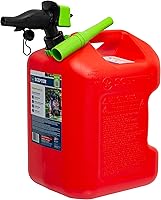
That red can is not a diesel can. It is useful here as a contrast, because keeping red for gasoline and yellow for diesel makes the system clear in your storage area.
How do you store a yellow gas can safely?
Store diesel in a cool, dry, ventilated place away from living spaces and ignition sources. Keep the cap closed and the can upright on a flat surface.
Keep cans out of reach of children and pets, and lock them away if you can. Do not store them near a water heater, furnace, or other ignition source.
Avoid filling a can inside a truck bed or on a trailer where static can build up. Set the can on the ground, keep the nozzle in contact with the opening, and fill slowly.
Leave a small air space at the top as the maker directs. Inspect for cracks, a warped cap, a damaged spout, or a missing flame device before each use.
Our guide on how to use 5 gallon gas can covers filling, carrying, and pouring steps that apply to diesel cans too.
Which yellow can fits boats and outboard motors?
A marine tank needs a different design than a regular diesel can. Boat tanks often need a vented cap, a fuel gauge, and a fitting that matches a fuel line.
For gasoline-powered boats, the tank should be a gasoline marine tank, not a yellow diesel can. That distinction is why color and label checks matter before you buy any tank for water use.
This tank is for gasoline marine use, based on its red color and gasoline marking. It is not a yellow diesel can, but it shows how a boat tank differs in fittings and venting from a hand-carry can.
The Scepter marine tank holds 12 gallons and has a tall profile with hand holds. Its built-in fuel pick-up and sight gauge help you check the level without opening the tank.
The 2-way vented cap releases pressure above 5 PSI and allows air flow while refueling, according to Scepter. The shell is a 5-layer HDPE construction that resists rust, corrosion, and UV damage.
A boat owner should confirm the fuel line fitting before ordering. The fuel line is sold separately, and the tank accepts standard 1/4 NPT marine fittings, so match that part to your motor.
Which can fits lawns, generators, and yard tools?
Small gasoline equipment needs a red gasoline can, and diesel equipment needs a yellow diesel can. The size should match how often you refuel and how far you carry the can.
For a mower, blower, trimmer, or chainsaw, a small gasoline can is easier to handle. You fill it less often than a tiny tank, but you do not carry a full 5-gallon load across a yard.
The Scepter 5-gallon can is a red gasoline can, not a diesel can. Its SmartControl spout lets you control flow, and the maker says the included funnel helps with fast fills.
The can has a flame mitigation device, a 5-layer build, and EPA and CARB compliance for gasoline storage. That set of features suits people who refill mowers, ATVs, and other gas-powered gear.
For generator work, a gas can for generator should match the fuel your generator allows. Some generators run on gasoline, some on propane, and some on both, so read the maker label before you fill any can.
How does a yellow metal gas can compare with plastic?
A yellow metal gas can and a plastic diesel can share the same color code. The choice comes down to weight, durability, and how you store and carry it.
Plastic cans are often lighter and will not rust. Metal cans are often rigid, can resist some impacts well, and may suit rough work areas.
Both types need the same checks. Confirm the diesel label, an approved cap, a sound spout, and no leaks, cracks, or missing safety parts.
A yellow metal gas can listing is worth a close read before you buy. Check the maker, the fuel type in the title and label, and the vent and spout design.
Plastic cans can crack after a hard drop or long sun exposure. Either way, retire a can that no longer seals or has a damaged safety device.
How do you label and organize fuel cans at home?
Group cans by fuel type and keep labels facing out. Red gasoline cans in one spot, yellow diesel cans in another, and specialty cans clearly marked will cut down on errors.
Put a written label on each can if the molded text is hard to read. The label should state the fuel name in large letters, not just an abbreviation.
Keep a simple list near the storage area. It can note what is in each can, when it was filled, and which equipment it feeds.
Do not stack cans in a way that hides caps or vents, since a tipped or leaking can can go unnoticed for weeks.
For a truck or off-road trip, a gas can holders for jeeps helps keep cans upright and out of the cabin. Secure the can and keep it away from heat.
If you switch fuels on a generator, our guide on how to switch a dual fuel generator from gas to propane helps you plan which can you need next.
What are the common mistakes with yellow gas cans?
The top mistake is using color as the only check. Always read the fuel name on the can, especially if it is old, borrowed, or repainted.
Another mistake is storing gasoline in a yellow can for space reasons. That breaks the code other people rely on and can lead to a wrong pour later.
Overfilling is a common error with any fuel can. Leave the air space the maker requires, wipe drips, and close the cap fully before you move the can.
Using a can with a missing or damaged flame device is also a mistake. A can without that safety part should not be used for fuel storage.
Keeping fuel for years without checking it can cause problems, since diesel and gasoline age and pick up moisture. Use the oldest fuel first, and do not pour leftover fuel back into a clean can.
Frequently asked questions
What is a yellow gas can for?
A yellow gas can is for diesel fuel storage. The color is a quick visual ID so diesel does not get poured into gasoline equipment.
Gasoline belongs in a red can, and some makers use other colors for other fuels.
Can I store gasoline in a yellow can?
No, you should not store gasoline in a yellow can. Yellow signals diesel to other people who may handle the container.
Use a red gasoline can for gasoline so a mistake is less likely.
Is a yellow metal gas can different from a plastic one?
The fuel ID is the same. A yellow metal gas can is also for diesel, while metal build may suit people who prefer that shell.
Check the maker label for the approved fuel before you buy.
What size yellow can should I buy for diesel?
Size depends on how much diesel you use and how much weight you can carry. A smaller can is easier to lift when full, while a larger can means fewer trips.
Make sure the outlet fits your equipment tank.