What Causes Generator Transfer Switch Not Working?
On this page (7 sections)
- Troubleshooting Common Generator Transfer Switch Issues
- Power Supply and Protection: Breakers and Fuses
- The Heart of the Matter: Wiring Connections
- The Brains of the Operation: Control Boards and Components Modern transfer switches often have electronic control boards. These boards manage the switching process and communicate with your generator. If this board malfunctions, the whole system stops working. Faulty Control Board The control board is a complex piece of equipment. It has many small electronic components. Sometimes, these components can fail due to age, power surges, or manufacturing defects. If the control board isn’t working, it can’t signal the transfer switch to move from utility power to generator power, or vice versa. Diagnosing a faulty control board can be tricky. Often, there are no visible signs of damage. You might need specialized tools or knowledge to test its functions. Many experts recommend that if you suspect the control board, it’s best to call a qualified electrician. They have the equipment to test it properly. Issues with Generator or Utility Signal Transfer switches rely on sensing voltage from both the utility power and the generator. If yours will not engage, follow our guide to fixing a transfer switch. If the switch doesn’t detect a proper signal from either source, it might not initiate the transfer. This could be due to a problem with the incoming power lines or the generator’s output. For example, if your utility power is fluctuating wildly, the switch might think it’s still on and won’t switch to the generator. Similarly, if the generator isn’t producing a stable voltage, the transfer switch might refuse to engage. Checking the voltage at the terminals using a multimeter is how an electrician would diagnose this. It’s important for the switch to receive a consistent and correct signal. Mechanical Moving Parts: Relays and Contactors
- External Influences and Safety Features
- Conclusion
- Frequently Asked Questions
A generator transfer switch not working is usually caused by a few common issues. Most often, it’s due to a blown fuse or tripped breaker within the transfer switch itself or in your main electrical panel. Other frequent culprits include loose wiring connections or a faulty control board. Don’t worry, these issues are often fixable!
When your generator transfer switch malfunctions, it prevents your generator from powering your home safely. This can leave you in the dark during an outage. Understanding the root cause is key to getting your backup power restored quickly. We’ve researched common problems to help you troubleshoot effectively. Understanding the root cause is key to getting your backup power restored quickly, and what a generator transfer switch is used for can help.
- Blown fuses or tripped breakers are top suspects.
- Loose wiring connections can also cause failures.
- A faulty control board might be the issue.
- Simple checks can often pinpoint the problem.
- Safety first when dealing with electrical components.
Let’s walk through exactly what might be causing your transfer switch to act up so you can get it back online.
Troubleshooting Common Generator Transfer Switch Issues
It can be frustrating when your generator transfer switch isn’t working as it should. You rely on it for power during outages. Let’s figure out why it might be acting up. We’ll walk through the most common reasons, starting with the simplest checks.
Power Supply and Protection: Breakers and Fuses
One of the most frequent culprits is a simple electrical protection device. Your transfer switch likely has its own breakers or fuses. These protect the switch itself and your generator from electrical surges.
Tripped Circuit Breakers
Think of a circuit breaker like a tiny, resettable fuse. If too much electricity tries to flow through it, it “trips” to cut off power. This prevents damage to your wiring and appliances. Your transfer switch may have a dedicated breaker. It’s often located right on the switch unit.
We found that many transfer switch issues stem from a tripped breaker. If you see a breaker handle that’s not in the “on” position, try flipping it off and then back on. If it trips again immediately, there’s a more serious problem. This usually indicates a short circuit or an overloaded circuit. It’s a safety mechanism doing its job.
Blown Fuses
Older transfer switches, or some specific models, might use fuses instead of breakers. A fuse contains a thin wire that melts and breaks the circuit when too much current flows. Unlike breakers, fuses can’t be reset. You have to replace them.
If your switch uses fuses, you’ll need to inspect them. Carefully remove the fuse and look at the metal wire inside. If the wire is broken or looks burnt, the fuse is blown. You’ll need to replace it with a fuse of the exact same rating. Using the wrong fuse is a fire hazard.
Many transfer switch manuals will show you where the fuses are located and what type to use. Always disconnect power before attempting to replace a fuse. Safety first!
The Heart of the Matter: Wiring Connections
Electrical connections are like the arteries of your transfer switch. If they aren’t clean and tight, power can’t flow properly. Loose or corroded wires are a very common cause of transfer switch failure.
Loose Wire Connections
Vibrations from the generator or even just the passage of time can cause wire nuts and terminals to loosen. When a connection is loose, it creates resistance. This resistance can lead to overheating and intermittent power failures. It might also prevent the switch from activating at all.
You’ll need to open up the transfer switch enclosure to check these. Make sure the power is completely off before you touch anything. Gently tug on each wire connected to the terminals. If any wire feels loose, carefully tighten the screw terminal or re-secure the wire nut. Clean any corrosion you find with a wire brush. A clean connection ensures good conductivity.
Corroded Terminals
If your transfer switch is in a damp environment, like a garage or an outdoor shed, corrosion can be a real problem. Green or white powdery buildup on metal terminals is a sign of corrosion. This buildup acts as an insulator, blocking electrical flow.
To fix this, you’ll need to disconnect the wires and clean the terminals thoroughly. A small wire brush or even fine-grit sandpaper can work. Make sure to remove all traces of corrosion. After cleaning, re-secure the connections tightly. This can often bring a dormant switch back to life. It’s a simple fix with big results.
The Brains of the Operation: Control Boards and Components
Modern transfer switches often have electronic control boards. These boards manage the switching process and communicate with your generator. If this board malfunctions, the whole system stops working.
Faulty Control Board
The control board is a complex piece of equipment. It has many small electronic components. Sometimes, these components can fail due to age, power surges, or manufacturing defects. If the control board isn’t working, it can’t signal the transfer switch to move from utility power to generator power, or vice versa.
Diagnosing a faulty control board can be tricky. Often, there are no visible signs of damage. You might need specialized tools or knowledge to test its functions. Many experts recommend that if you suspect the control board, it’s best to call a qualified electrician. They have the equipment to test it properly.
Issues with Generator or Utility Signal
Transfer switches rely on sensing voltage from both the utility power and the generator. If yours will not engage, follow our guide to fixing a transfer switch. If the switch doesn’t detect a proper signal from either source, it might not initiate the transfer. This could be due to a problem with the incoming power lines or the generator’s output.
For example, if your utility power is fluctuating wildly, the switch might think it’s still on and won’t switch to the generator. Similarly, if the generator isn’t producing a stable voltage, the transfer switch might refuse to engage. Checking the voltage at the terminals using a multimeter is how an electrician would diagnose this. It’s important for the switch to receive a consistent and correct signal.
Mechanical Moving Parts: Relays and Contactors
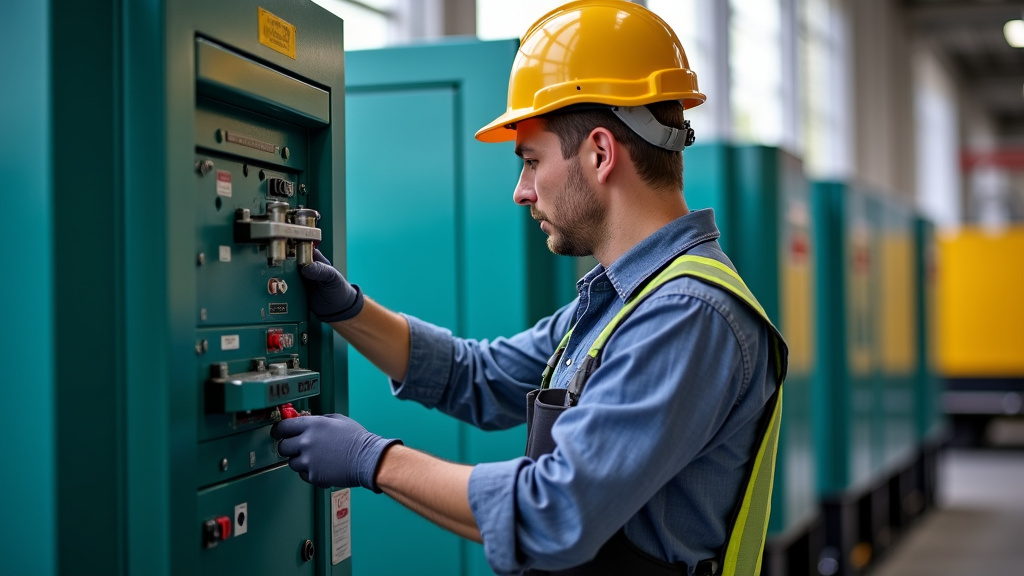
Transfer switches use mechanical parts to physically move the electrical connections. Relays and contactors are the workhorses here. If these get stuck or worn out, the switch can’t operate.
Stuck or Worn Relays/Contactors
Relays and contactors are like electrical switches that are operated by an electromagnet. They allow a low-voltage control signal to switch high-voltage circuits. Over time, the contacts inside can become pitted, burned, or simply wear out. This prevents a solid electrical connection.
If a relay or contactor is stuck, the switch might remain in one position and refuse to move. It could also fail to make a good connection even when it tries to switch. Like control boards, diagnosing and replacing these parts usually requires an expert. We found that replacing these components can restore function, but it’s a job for someone experienced with high-voltage systems.
External Influences and Safety Features
Sometimes, the problem isn’t within the switch itself but is related to how it’s being used or protected.
Improper Installation
A transfer switch must be wired correctly according to local electrical codes. If it wasn’t installed properly, it might not function reliably. Incorrect wiring can lead to the issues we’ve already discussed, like tripped breakers or loose connections. Many codes require a licensed electrician to perform the installation. A professional installation is key to long-term reliability.
Overload Conditions
Your generator has a specific wattage limit. If you try to power too many appliances at once, you can overload the generator. This overload can trip breakers on the generator or the transfer switch. It can also cause the switch to behave erratically, as it tries to manage an impossible power demand. Always check the total wattage of your appliances before powering them on.
Transfer Switch Size Mismatch
The transfer switch itself is rated for a certain amperage. If your generator’s output exceeds this rating, it can damage the switch. Likewise, if your home’s electrical needs are higher than the switch can handle, you might experience problems. Ensure your generator and transfer switch are appropriately sized for your home’s power requirements.
Here’s a quick checklist to guide your initial checks:
- Check all breakers on your transfer switch and main electrical panel.
- If your switch uses fuses, inspect them for blown fuses.
- Ensure all external wiring connections are tight and free of corrosion.
- Verify your generator is producing stable voltage when running.
- Confirm you are not attempting to power too many appliances at once.
- Check if the transfer switch is the correct size for your generator and home.
Remember, when dealing with electrical systems, safety is paramount. If you’re ever unsure or uncomfortable, it’s always best to consult a licensed electrician. They have the expertise and tools to diagnose and repair issues safely. Getting your transfer switch working means you’re prepared for the next power outage.
Conclusion
You’ve learned that a generator transfer switch not working usually boils down to a few common culprits. We found that tripped breakers, blown fuses, and loose wiring are frequent offenders. Sometimes, it’s a more complex issue with the control board or mechanical parts. Don’t forget external factors like improper installation or overloading. By following the initial checks, you can often pinpoint the problem yourself. If you’re ever unsure or dealing with internal components, remember that calling a qualified electrician is the safest and most effective next step to get your power back.
Frequently Asked Questions
Can I just reset a tripped breaker on my transfer switch?
Yes, you can often reset a tripped breaker. If the breaker trips again immediately after you reset it, there’s likely a more serious issue like a short circuit. In that case, it’s best to stop and call a professional electrician.
How do I know if my transfer switch is the wrong size?
If your transfer switch is undersized, you might experience frequent breaker trips on the switch or erratic behavior when the generator is running. Your generator’s wattage and your home’s power needs should match the transfer switch’s amperage rating for proper operation.
What does it mean if my generator transfer switch is making a humming noise but not switching?
A humming noise often indicates that the transfer switch’s relay or coil is trying to engage but failing. This could be due to a faulty relay, a weak signal from the generator, or an internal mechanical issue within the switch. It’s a sign that professional inspection is likely needed.
Can a power surge damage my transfer switch?
Absolutely. A significant power surge, either from the utility grid or from the generator itself, can damage sensitive electronic components like the control board or burn out fuses. This is why transfer switches often have built-in surge protection, but extreme events can still cause failure.
Should I clean the terminals on my transfer switch if I see corrosion?
Yes, cleaning corrosion from terminals is a good maintenance step and can resolve connection issues. Make sure to completely disconnect all power from the switch before you begin cleaning. Use a wire brush or fine sandpaper to remove the corrosion, ensuring a clean surface for optimal electrical conductivity.