Starting Watts vs Running Watts: Generator Difference (November 2026)
Starting watts are the brief surge a motor needs to start, and running watts are the steady power it uses after that. Generator starting watts vs running watts matters because a generator must handle both numbers, not just the lower continuous rating.
On this page (12 sections)
- Quick verdict: starting watts vs running watts
- Generator starting watts vs running watts side by side
- Why motors need a starting surge
- How running watts set your everyday load
- The sizing method that uses both numbers
- What can a 2000 watt generator run
- What can a 3000 watt generator run
- What can a 5000 watt generator run
- Larger sizes still need the same check
- Fuel choice and starting power
- Who should buy which rating
- Verdict on generator starting watts vs running watts
Starting watts are the brief surge a motor needs to start, and running watts are the steady power it uses after that. Generator starting watts vs running watts is the first sizing check for any load with a motor.

 Best for fuel shutoff replacement
Rllyer 168P Petcock Fuel Valve for Briggs
Quick verdict: starting watts vs running watts
Pick a generator by its surge capacity for startup, then by its continuous rating for everything that stays on. A unit that handles the steady load can still fail to start a compressor.
Running watts describe normal work after startup. Starting watts describe a short spike, usually lasting only a few seconds.
That spike can be 2 to 3 times the running draw on some motors, and sometimes more.
Our score weighs specs, features and buyer feedback against what you're shopping for. We compared the ratings and checked which loads sit behind each number.
How the two ratings work together
A generator rating is not a single promise. It is two promises made for two different moments.
The first moment is startup, when the motor fights inertia. The second moment is the long stretch after that, when the motor spins and the load settles.
That split explains why a product page can list one headline wattage while your sizing work needs two numbers. The headline helps you compare class.
The split helps you decide if a specific fridge, pump or tool will actually start and stay on.
Generator starting watts vs running watts side by side
Starting watts protect startup; running watts protect everyday operation. You need both numbers before you promise a generator will run a fridge, pump or power tool.
| Point | Starting watts | Running watts |
|---|---|---|
| Timing | Brief spike at motor startup | Steady draw after startup |
| Main risk | Tripping or failing to start | Overloading during normal use |
| Typical source | Compressors, pumps, some tools | Lights, electronics, motors at speed |
| Sizing role | Largest single motor load | Sum of loads running together |
Think of starting watts as a gate and running watts as the road after the gate. The gate must open, and the road must carry the traffic.
Running watts matter more over time because they describe every minute after startup. Starting watts matter more in the first seconds because they decide whether that stretch ever begins.
A careful buyer checks the gate first, then measures the road.
Why motors need a starting surge
Motors need extra torque to begin turning, so they pull extra power for a moment.
A compressor, pump or motor-driven tool sits still before startup. At rest, it presents more resistance than a motor already spinning at speed.
The generator must supply that burst or the motor may hum, stall or trip the breaker.
Once the motor reaches speed, resistance drops and current falls. Running watts capture that lower, steady state.
Starting watts capture the higher peak.
This is why a generator that seems large enough on paper can still refuse to start one appliance. The peak, not the steady draw, sets the first test.
Which loads usually cause the spike
Compressors in fridges and freezers are a common example. Pumps, air tools and some power tools can behave the same way because they also start from rest.
Lights and chargers usually do not create a large spike because they have no motor to spin up.
That difference is a useful sorting tool. Put motor loads in one column and non motor loads in another.
Then size the generator for the motor column first, because that column controls the startup test.
How running watts set your everyday load
Running watts are the number you add up for normal use. Lights, chargers and appliances at speed draw their running watts continuously.
List each item you expect to run together. Add their running watts, then leave headroom for items you may add or for a motor starting while others are already on.
A generator loaded near its limit has no room for a surge. Even a small motor can push the total past the rating if the base load is already high.
Running watts also reveal a second risk that has nothing to do with startup. If the steady total sits too close to the continuous rating, the generator runs with little margin for hours.
That leaves no room for a second appliance, a battery charger or a slightly tired motor that draws more than its label.
A practical check is to separate must run loads from nice to run loads. Must run loads form the base total.
Nice to run loads only join when the base total leaves clear room for both their running watts and their starting surge.
The sizing method that uses both numbers
Add the running load first, then check the worst starting surge against the generator limit. That order prevents the most common sizing error.
Start with a short list of loads you will actually run. Write the running watts for each one.
Add them to get your base load.
Next, find the largest motor load on that list. Identify its starting watts.
Ask whether the generator can absorb that surge while the other loads are already running.
If startup fails, you can shed load, stagger starts or choose a larger generator. You do not need to guess, and you do not need to treat the 2 numbers as interchangeable.
Staggering starts to fit the math
Staggering means starting one motor at a time and letting it reach speed before you switch on the next motor load. Lights and electronics can usually join early because they add steady draw without a large spike.
Motor loads are the ones that benefit most from a clear runway.
That habit can rescue a borderline setup. If the base load already fills much of the generator, delaying the largest motor until other items are off gives the surge the best chance.
The order of switching on matters as much as the total on paper.
What can a 2000 watt generator run
A 2000 watt class generator suits small loads when starting surge stays under the limit. What can a 2000 watt generator run depends on whether any motor load is in the mix.
Lights, phone chargers and small electronics have modest running watts and little surge. A small fridge or pump changes the math because its compressor needs a startup burst.
Our guide to what can a 2000 watt generator run breaks down that class by load type. Use it to separate steady loads from motor loads before you commit.
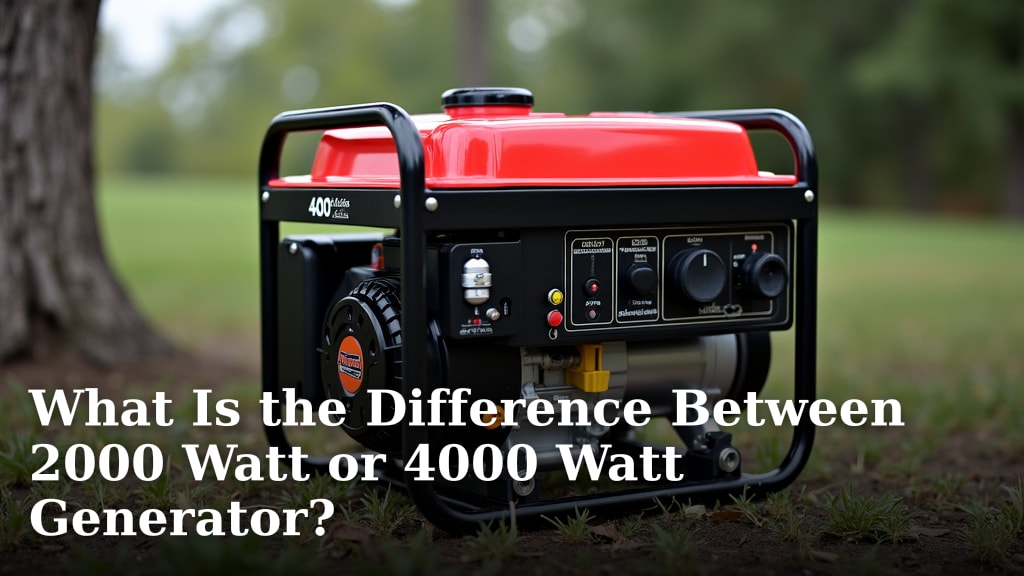
If you are choosing between sizes, What Is the Difference Between 2000 Watt or 4000 Watt Generator? helps you see where the jump in continuous output actually helps.
The jump helps most when it creates room for a motor surge on top of a base load. A larger class does not change the rule, it only raises the limit that the surge must stay under.
That is why the same two step check appears at every size in this guide.
What can a 3000 watt generator run
A 3000 watt class generator covers more household loads, but motor startup still decides the limit. What can a 3000 watt generator run is best answered load by load.
A single washer, fridge or pump can fit when its starting watts stay within the generator surge capacity. Add a second motor load and the base running watts may leave too little room for the next startup.
Our guide to what can a 3000 watt generator run walks through that balance. It also shows why running watts alone can mislead you.
The same logic applies at other sizes. Our what can a 1000 watt generator run guide shows the small end, and what can a 4000 watt generator run shows a step up.
At this size, the outlet layout and load order start to matter. A fridge may start cleanly on its own, then a pump may struggle if lights and chargers already fill the base load.
Sizing by total running watts alone hides that timing problem.
What can a 5000 watt generator run
A 5000 watt class generator handles larger household loads, yet surge still applies. What can a 5000 watt generator run must be checked against both ratings.
A fridge, freezer, fan and lights can share a 5000 watt class unit when the combined running load fits. Starting a pump or compressor while the rest are on is the moment to watch.
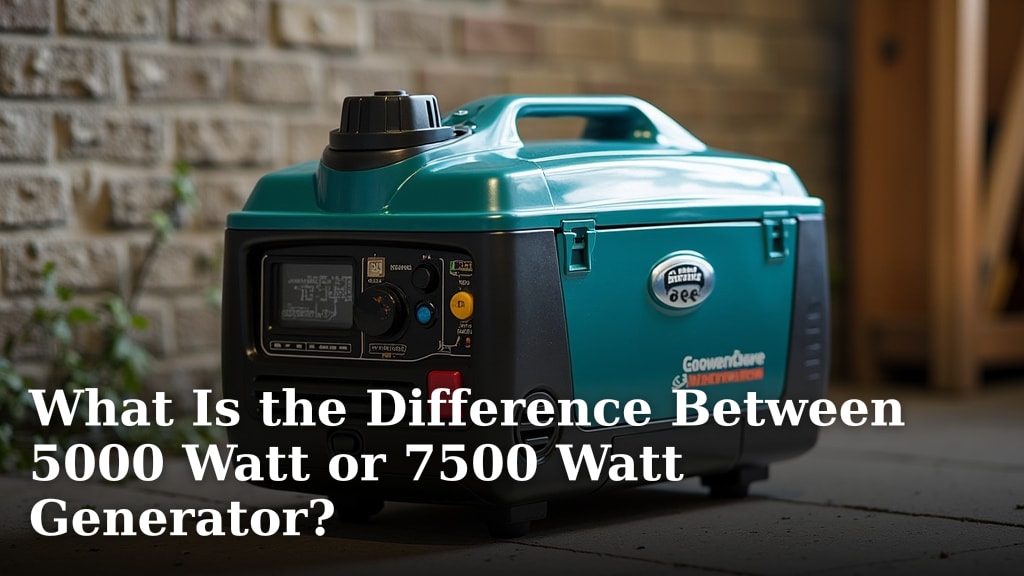
Our guide to what can a 5000 watt generator run covers that household mix. If you are weighing a larger jump, What Is the Difference Between 5000 Watt or 7500 Watt Generator? puts the next size in context.
Larger classes follow the same rule. Our what can a 9000 watt generator run guide and what can a 3500 watt generator run guide use the same check.
A 5,500 watt output figure, such as the one listed for the DuroMax XP5500HX, tells you the class. The spare room, not the headline, absorbs the surge.
Larger sizes still need the same check
Bigger generators give more headroom, not a free pass on surge math. What can a 10000 watt generator run still depends on motor loads and staggered starts.
Our what can a 10000 watt generator run guide, what can a 12000 watt generator run guide and what can a 13000 watt generator run guide start from the same question. Which loads run together, and which motor starts last?
Mid sizes follow the same pattern. Our what can a 1500 watt generator run guide, what can a 1200 watt generator run guide, what can a 1800 watt generator run guide and what can a 3600 watt generator run guide each separate steady loads from startup loads.
Headroom lets the base load and the surge coexist. It does not help if every motor load starts at the same second.
Even a large generator can trip when several compressors demand their spike together.
Fuel choice and starting power
Dual fuel gives you fuel options, but it does not erase the starting surge. What Is the Difference Between Dual Fuel or Tri Fuel Generator? is a separate choice from watt sizing.
Gasoline and propane change storage, availability and maintenance habits. The motor still needs a startup burst, and the generator still has a continuous rating to respect.
Our What Is the Difference Between Dual Fuel or Tri Fuel Generator? guide covers fuel trade-offs. Use it after you have sorted your watt numbers, not instead of sorting them.
A generator that will not start is also a generator that will not run. If a starting battery is weak, our guide on How to Charge a Generator Starting Battery? covers the maintenance side.
Fuel access can affect real world starting too. A generator with a shutoff valve that leaks, sticks or fails to close can create problems before wattage ever matters.
That is the point where a small part, such as a threaded fuel valve assembly listed for specific generator engines, becomes relevant to keeping the unit ready.
Who should buy which rating
Buy by the largest motor load plus the base load, in that order. That rule serves home backup, RV and jobsite users the same way.
Choose a smaller generator when loads are mostly lights and electronics with no large compressor. Choose a larger one when a fridge, pump or well motor must start while other loads are already on.
For RV use, outlet layout matters alongside watts. A 120/240V outlet and GFCI outlets help you match the load to the right outlet rather than forcing every item through one rating.
For home backup, stagger starts when you can. Start the largest motor first, let it reach speed, then add the rest.
Our what can a 6500 watt generator run guide helps you test that household and RV mix at the next size up. Buyers who plan to move the unit often should also weigh weight and handling, as a 131 pound portable generator still needs help or a wheel and handle setup to move safely.
Verdict on generator starting watts vs running watts
Starting watts decide whether a motor will start; running watts decide whether the generator can keep working. Generator starting watts vs running watts is not a contest between 2 labels.
It is a 2 step check you run on every load list.
Add the running watts for everything that stays on. Check the largest starting surge against the generator limit.
Shed load or size up if either step fails.
That method will save you from the most common disappointment, which is a generator strong enough on paper but unable to start the one appliance you bought it for.
Frequently asked questions
What is the difference between starting watts and running watts?
Starting watts are the short burst needed to get a motor turning, often several times the running draw for compressors and pumps. Running watts are the steady power used once the motor is at speed.
A generator must cover the starting surge first, then keep supplying the running load without overloading.
Can a generator run on running watts alone?
No, because motors need a higher surge to start. If you size only by running watts, the generator may trip or struggle when a fridge, pump or tool starts.
Add the starting surge for the largest motor load, then check that the combined running load stays within continuous output.
Why are starting watts higher than running watts?
Motors draw extra current at startup to build torque and speed against inertia and load. That extra draw lasts only seconds for most household appliances.
Once the motor reaches full speed, current falls to the lower running level.
What should I add up first when sizing a generator?
List every load you plan to run at once, write its running watts, then mark the largest motor load and its starting watts. Keep the total running load within the generator rating and make sure the starting surge does not push the unit past its limit when that motor starts.
Does a dual fuel generator change starting watts?
Dual fuel changes fuel choice, not the basic surge principle. The motor still needs extra power to start, and the generator still has a continuous rating.
Check the maker figures for the exact model and fuel setup before you assign loads.