What Can a 5000-Watt Generator Run?
A 5000-watt generator can run several household essentials at once, as long as their combined running watts stay within the generator's rated output and startup surges fit its limits. Check the appliance labels and generator manual before connecting loads.
On this page (9 sections)
- What can a 5000-watt generator run at the same time?
- How do starting watts and running watts change the plan?
- How do you calculate a safe appliance combination?
- Which appliances should you prioritize?
- Can a 5000-watt generator run a refrigerator, freezer, and lights?
- Can a 5000-watt generator run an air conditioner or well pump?
- How can you connect selected home circuits?
- What should you know about fuel and operating time?
- Is a 5000-watt generator enough for your needs?
A 5000-watt generator can run several household essentials at once, as long as their combined running watts stay within its rated output and motor startup surges fit its limits. Check the appliance labels and generator manual before connecting loads.
A useful plan starts with the devices you need most, not every appliance in the house. For a smaller load plan, see the 1200-watt generator load guide.
Add their running watts, then account for the short surge some motors draw when they start.
What can a 5000-watt generator run at the same time?
A 5000-watt generator can support a mix of essential appliances if their running watts total less than 5000 watts and their startup demand stays within the generator's surge rating. The exact combination depends on each appliance's label and the generator's own ratings.
For example, you might plan around a refrigerator, lights, a television, and a small kitchen appliance. That is only a possible combination, not a guarantee: refrigerators and other motor-driven equipment may draw extra power at startup, and the watts vary by model.
Write down what you want powered during an outage. Include anything likely to run at the same time, such as a sump pump cycling while lights and a refrigerator stay on.
A 5000-watt rating also doesn't mean you can use every outlet for a separate 5000-watt load. The generator's total output is shared across connected devices, and the manual may set limits for individual outlets or circuits.
How do starting watts and running watts change the plan?
Running watts are the power an appliance uses while operating; starting watts are the brief extra power some motors need to start. Your generator must handle both the ongoing load and the startup surge.
A refrigerator, freezer, air conditioner, well pump, or sump pump can have a higher starting demand than its running demand. If two motors start together, their surges can overlap and push the total above the generator's limit.
For the full explanation, see generator starting watts vs running watts. Check the generator manual for rated running watts and surge capacity, because “5000 watts” can refer to different ratings across models.
When possible, start one large motor at a time. Turn off nonessential loads before starting equipment, then add them back after the motor is running.
How do you calculate a safe appliance combination?
Add the running watts for every appliance you expect to use at once, then check the largest startup surge. Keep the total below the generator's rated running output and follow its manual for surge limits.
Use this simple worksheet:
- Find the running watts for each appliance on its label or manual.
- Add the running watts of the devices that may operate together.
- Identify motor-driven devices and find their starting watts.
- Account for the startup surge of the largest motor, or more than one if they may start together.
- Leave a margin for uncertainty and avoid treating the full rating as a target.
If a device gives amps and volts rather than watts, use the conversion method in the appliance or generator instructions. Don't guess at an appliance's demand from its size or appearance.
The generator's output may also change with fuel type or operating conditions, depending on the model. Use the rating that applies to your exact generator setup.
Which appliances should you prioritize?
Prioritize equipment that protects people, food, and the home, then add comfort loads only if the watt budget allows. Refrigeration, medical devices with appropriate backup planning, lights, communications, and a sump pump may be higher priorities than optional cooking or entertainment appliances.
Make a short list in order of importance. Note which devices are essential, which can be used briefly, and which can wait until other loads are off.
A window air conditioner or space heater can consume a substantial share of a generator's output, but actual demand depends on the unit. Check its label and don't assume both heating and cooling equipment can run alongside multiple motors.
Never connect a generator directly to a home outlet or wiring. For household circuits, use a correctly installed transfer switch or other approved connection method, and follow local electrical requirements.
Can a 5000-watt generator run a refrigerator, freezer, and lights?
It may run those loads together if their combined running watts and startup surges fit the generator's limits. Check the appliance labels and consider whether refrigerator and freezer compressors could start at the same time.
LED lights generally use less power than many heat-producing appliances, but the wattage still depends on the bulbs and fixtures. Include the actual load rather than assuming lights are negligible.
If a motor starts and the generator struggles, reduce other loads and consult the manual. Don't keep resetting a breaker or forcing an overloaded generator to run.
For a smaller power plan, compare what a 3000-watt generator can run and what a 2000-watt generator can run. Those guides can help you decide whether a smaller unit fits your essential-load list.
Can a 5000-watt generator run an air conditioner or well pump?
It depends on the specific air conditioner or pump and its startup watts. Add its running demand to the other loads, then check whether the generator can handle the startup surge.
Central air conditioning may require more power than a portable generator can supply, while smaller room units may be more plausible. Don't rely on a general appliance estimate; use the equipment nameplate and manufacturer instructions.
Well pumps also vary by motor and installation. If the label doesn't show starting demand, ask the pump or generator manufacturer or a qualified electrician how to size the system.
For both types of equipment, stagger starts where practical and switch off other high-demand loads first. Keep a written sequence near the generator so anyone using it understands which loads to start and when.
How can you connect selected home circuits?
A transfer switch lets a portable generator supply selected home circuits through a dedicated connection. Have a qualified electrician confirm the equipment and installation for your generator and electrical panel.
The Reliance Controls 31410CRK Pro/Tran is a 10-circuit, 30-amp transfer switch kit designed for generators up to 7500 maximum running watts. Its circuit capacity is not a promise that every selected circuit can run at once; keep the generator's own watt limit in view.
A transfer switch helps prevent unsafe backfeeding when properly installed and used as directed. The Reliance Controls PB30 is a 30-amp power inlet box designed for generators up to 7500 running watts, and it can connect to compatible transfer switches or panels.
Ask an electrician to verify compatibility, wiring, and circuit selection. Never improvise a connection with a cord through a window or a plug-to-plug cord.
What should you know about fuel and operating time?
A generator's watt capacity doesn't tell you how long it will run on a tank. Runtime depends on the model, fuel type, tank size, and electrical load, so use the generator manual for fuel and operating guidance.
Keep fuel in an approved container and follow local rules for storage. The No-Spill 1405 is a 2.5-gallon gasoline can with a thumb-button control for pouring and an attached spout cover.
Store gasoline away from living areas, ignition sources, and the running generator. Refuel only as directed by the generator maker, with the unit shut down and cool.
Operate portable generators outdoors, far from doors, windows, and vents, to keep exhaust away from occupied spaces. Follow the generator manual and local safety guidance, and use working carbon monoxide alarms in the home.
Is a 5000-watt generator enough for your needs?
A 5000-watt generator may suit a plan built around selected essentials rather than whole-house use. For a smaller capacity class, see what a 4000-watt generator can run.
Write down each device, verify its running and starting watts, and make sure the combined load fits the generator's ratings.
Choose a larger generator if your essential loads exceed that budget or several high-starting motors must run together. For a larger load plan, see what a 10000-watt generator can run.
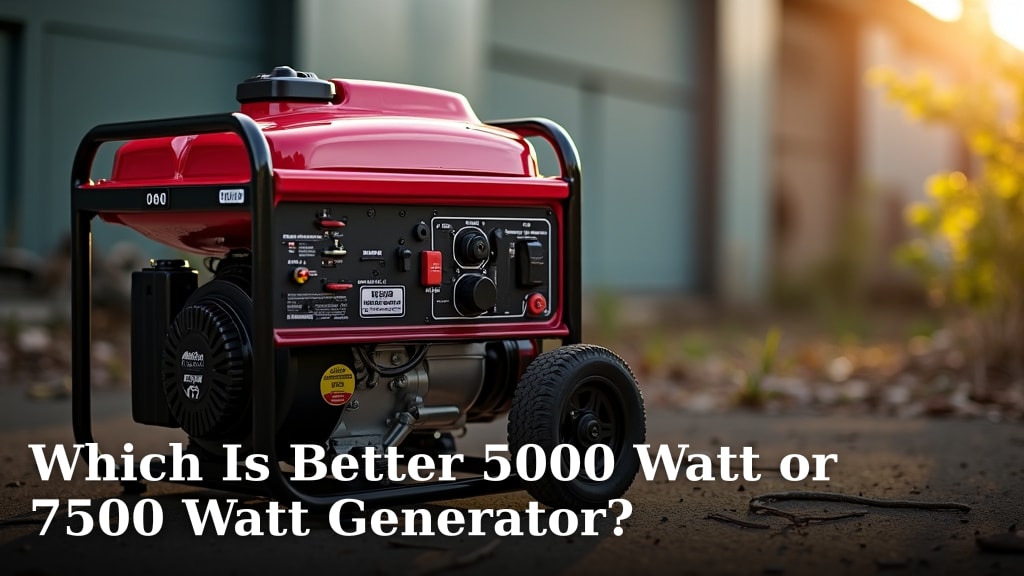
Compare the trade-offs in Which Is Better 5000 Watt or 7500 Watt Generator?.
If your list fits with room for startup surges, group loads by priority and add them gradually. That gives you a clearer answer to what a 5000 watt generator can run in your home.
Frequently asked questions
Can a 5000-watt generator run a house?
A 5000-watt generator can power selected household circuits or appliances, but it may not run an entire house at once. Add the running watts of the loads you want, allow room for startup surges, and use a transfer switch installed by a qualified electrician for connected home circuits.
Can a 5000-watt generator run a refrigerator and air conditioner?
Possibly, if both appliances' running watts and startup surges fit the generator's limits along with any other connected loads. Check each nameplate or manual, then avoid starting both motors at once unless the generator instructions say it can handle that surge.
How many appliances can a 5000-watt generator run?
There is no fixed appliance count because refrigerators, lights, pumps, and cooking devices use different amounts of power. Add each appliance's running watts and keep the total below the generator's rated running output, while accounting for the largest motor startup surge.
Does a 5000-watt generator have enough power for a well pump?
It may, but pump size and startup demand vary. Check the pump label or manual for running and starting watts, include other loads that will operate at the same time, and confirm the generator's rated and surge outputs support that combination.